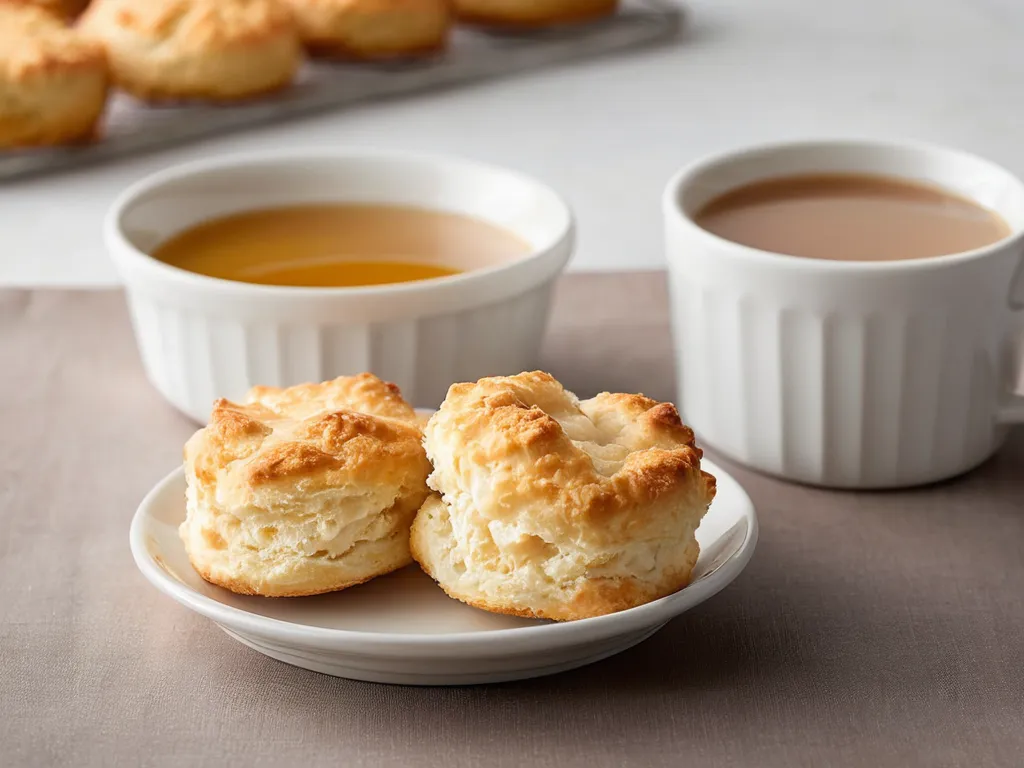
TL;DR: Pat the dough to 3/4 inch, fold it two or three times (like a letter), then stamp with a round cutter — no twisting. Use cold butter plus butter-flavored shortening for the restaurant texture. Real buttermilk only. Bake at 450°F with sides touching. 35 minutes total.
KFC biscuits are one of the most searched copycat recipes in American food — and one of the most misunderstood. Most recipes describe them as drop biscuits or produce a flakier, more laminated result than the actual restaurant version. KFC’s biscuit is soft, tall, slightly sweet, and mildly tangy. The texture is closer to a Southern cathead biscuit than a flaky layered biscuit from a French-influenced cookbook. Getting that right requires understanding what KFC actually uses and why.
Cut Biscuit, Not Drop: What Kind of Biscuit Is This?
Drop biscuits are made from wet, sticky dough scooped directly onto the pan — no shaping, no cutting. You see them at Red Lobster (the cheddar-garlic biscuits) and at some Southern diners. They spread as they bake and get their texture from the loose dough, not from any structural shaping.
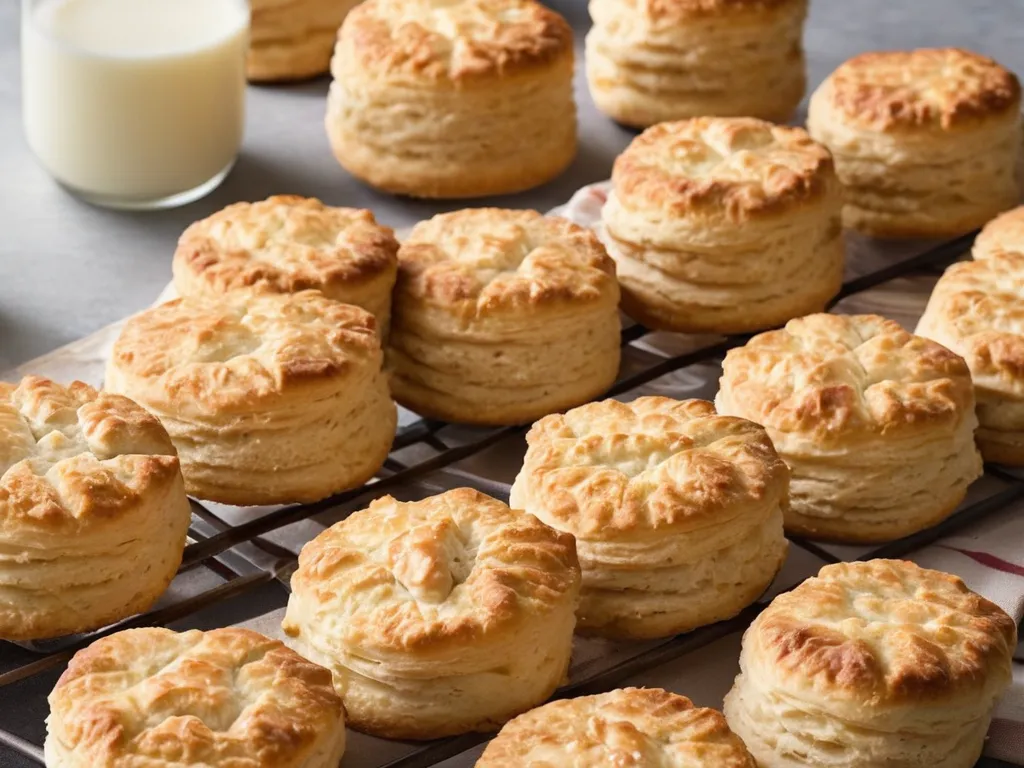
KFC biscuits are cut biscuits: the dough is firm enough to pat into a slab, fold, and stamp with a round cutter. This distinction matters for one practical reason — cut biscuits rise taller and more evenly than drop biscuits, because the cutter creates a uniform cylinder of dough that can only expand upward. Drop biscuits expand in all directions based on how the wet dough falls.
The confusion comes from the fact that KFC biscuits are soft and uniform (which drop biscuits often are), not flaky and shatter-prone (which laminated cut biscuits often are). KFC’s softness comes from shortening and a light fold, not from being poured onto a pan.
The Fat Question: Butter vs. Shortening
KFC’s actual biscuit ingredient list (from USDA databases and brand nutrition disclosure) specifies palm oil and palm kernel oil — a commercial solid-fat blend, not butter, not lard. This produces the KFC biscuit’s characteristic soft, pillowy interior: shortening has a higher melting point than butter (approximately 117°F vs. 91°F), so it stays solid longer in the oven. When shortening melts, it releases steam and creates lift — but the pockets are smaller and more numerous than butter pockets, producing a uniform, tight crumb rather than distinct flaky shards.
For home cooks, palm shortening is hard to find outside specialty stores. Butter-flavored Crisco is the closest widely-available substitute and what most tested KFC copycat recipes settle on. Plain (unflavored) shortening works but lacks the butter note that comes from KFC’s finishing brush.
The half-butter/half-shortening blend (4 tablespoons cold butter + 2 tablespoons cold shortening) used in this recipe is the practical compromise: the shortening provides the softer, more uniform restaurant crumb; the butter provides flavor that all-shortening biscuits lack. If you want the closest-to-KFC texture and don’t mind slightly less flavor complexity, use 6 tablespoons of butter-flavored Crisco and skip the butter entirely. If you want richer flavor and don’t mind a slightly more flaky result, use 6 tablespoons of cold unsalted butter.
The Fold-Then-Cut Method
The stub recipe (and many KFC copycats) skips the folding step and pats the dough straight to thickness. This makes a serviceable biscuit but misses the subtle layering that gives KFC biscuits their slight pull-apart quality when you split them open.
The fold: after the dough comes together, you pat it into a rough rectangle and fold it in thirds — left to center, right over — then turn 90 degrees, pat it back out, and fold again. Two folds is plenty for KFC; a third is optional if you want a little more definition. Each letter fold stacks three sheets of dough, so two folds yields roughly six to ten thin layers in the baked biscuit. This is deliberately light — not the intense, many-fold lamination of croissant dough or a Cracker Barrel–style biscuit. The goal is a subtle pull-apart, not shattering flakiness, which is exactly the KFC profile.
The key is doing this quickly without warming the dough. Use a bench scraper to lift and move rather than your palms, which transfer heat. If the dough feels sticky or the fat is starting to soften, refrigerate it for 5 minutes before cutting.
Buttermilk: Two Jobs, One Ingredient
Buttermilk does two things in a biscuit that no other liquid does the same way:
Leavening: Buttermilk is acidic (pH around 4.5). When it contacts the baking soda in the dry mix, it produces CO2 bubbles — immediate lift that starts before the biscuit even enters the oven. The baking powder (also in the recipe) is double-acting: it produces a first rise when it contacts liquid, and a second rise when it hits heat. Using both baking soda (reacts with buttermilk’s acid) and baking powder (reacts with heat) is what drives the height without requiring extensive lamination.
Tenderizing: The lactic acid in cultured buttermilk weakens gluten protein bonds. Gluten forms when flour and water mix and the proteins hydrate — it’s what gives bread its chew and structure. For biscuits, you want minimal gluten development. Buttermilk’s acid helps by interrupting some of the cross-linking, producing a more tender crumb than water or plain milk would.
Why real buttermilk matters: The milk-plus-vinegar trick (1 tablespoon vinegar per cup of milk) provides acid for the leavening reaction, but lacks the bacterial fermentation byproducts of true cultured buttermilk. These compounds — primarily lactic acid and diacetyl — contribute the distinctive buttermilk flavor depth. For most biscuit recipes, the difference is minimal. For KFC biscuits, where the tangy buttermilk flavor is a recognizable part of the product, use real full-fat cultured buttermilk.
Why Touching Sides Makes Taller Biscuits
Place biscuits spaced 2 inches apart on a pan and they expand in all directions — taller, wider, and with a rounded, crispy bottom edge. Place them touching (or barely touching) and their neighbors function as physical walls. The dough can only rise upward. This produces taller biscuits with a slightly softer bottom edge (where the dough merges slightly with the neighbor) — which is exactly the KFC biscuit profile: tall, with a soft, pull-apart side rather than a crispy individual edge.
This is not a trick — it’s a deliberate textural choice. For crispier, more individually-defined biscuits, space them apart. For the taller, softer, pullable biscuits KFC is known for, crowd them.
How KFC Biscuits Compare to Other Chain Biscuits
The three most-copied chain biscuits in the U.S. are KFC, Popeyes, and Cracker Barrel. All three use buttermilk and a cut-biscuit technique. They diverge in fat, fold intensity, and flavor profile:
| Biscuit | Main fat | Fold / layering | Flavor | Texture |
|---|---|---|---|---|
| KFC | Palm-oil shortening | Light (2 folds) | Mild, faintly sweet | Soft, uniform, pillowy |
| Popeyes | Real butter, high ratio | Moderate | Rich, buttery | Flaky, slightly crumbly |
| Cracker Barrel | Butter | Heavy (3+ folds) | Butter-forward | Tall, distinctly layered |
KFC biscuits: Palm oil–based shortening, light fold (two cycles), mild sweetness (from the sugar), soft and uniform. Neutral enough to work with honey, gravy, or fried chicken without competing.
Popeyes biscuits: Real butter and a higher butter-to-flour ratio. Richer, more distinctly buttery, with a glossy finish and slightly more pronounced layers. The signature texture is flakier and slightly more crumbly than KFC’s.
Cracker Barrel biscuits: More folds than KFC (the “letter fold” repeated 3+ times), which builds more distinct layers. Slightly taller and more clearly layered when split. The flavor is more butter-forward.
Red Lobster biscuits: Drop biscuits, not cut. Cheddar and garlic are baked in. A completely different category — not comparable to the above three, which are all plain buttermilk biscuits.
Cost and Comparison
A single biscuit at KFC runs $1.29–1.49 individually, or around $1.00 each in a meal combination. The homemade version of this recipe costs approximately $0.20–0.30 per biscuit — about 5–7 times cheaper. The ingredient difference: real unsalted butter and full-fat cultured buttermilk at home versus commercial palm shortening and a proprietary mix at the restaurant. Both approaches make a good biscuit. The home version tastes fresher; the restaurant version costs significantly more.
Serving and Storage
Biscuits are best within 10 minutes of leaving the oven. The butter-brush finish is sticky and the interior is at its lightest immediately post-bake.
With honey: The classic KFC pairing. The slight sweetness of the biscuit and the honey reinforce each other without either becoming cloying.
Split over KFC Mashed Potatoes and Gravy: A split biscuit over the gravy acts as a sponge. KFC offers this as the Famous Bowl; doing it at home produces something closer to a biscuits-and-gravy plate.
With KFC Fried Chicken: The original pairing. The soft, mildly sweet biscuit provides relief from the spiced chicken coating. Serve as the last course of the meal or between bites.
Storage: Biscuits dry out quickly. Wrap leftovers in foil and reheat in a 350°F oven for 5–6 minutes. Do not microwave — the steam softens the crumb into something gummy and dense. Leftover biscuits that are more than 6 hours old benefit from a fresh brush of melted butter before reheating.
Freeze unbaked: The dough does not freeze well after baking. For make-ahead biscuits, cut and freeze the raw biscuits on a sheet pan, then bag them once solid. Bake from frozen at 425°F for 18–20 minutes — they’ll rise slightly less but taste essentially the same.
More from the KFC Copycat Set
These KFC sides were built to go together:
- KFC Mac and Cheese — KFC’s signature creamy cheddar mac; pairs with biscuits the way a diner mac pairs with cornbread
- KFC Mashed Potatoes and Gravy — brown gravy over smooth, peppery mashed potatoes; split a biscuit over the top and it soaks up every drop
- KFC Original Recipe Fried Chicken — the 11-herb-and-spice crispy chicken the biscuit was designed to accompany
See all KFC copycat recipes →