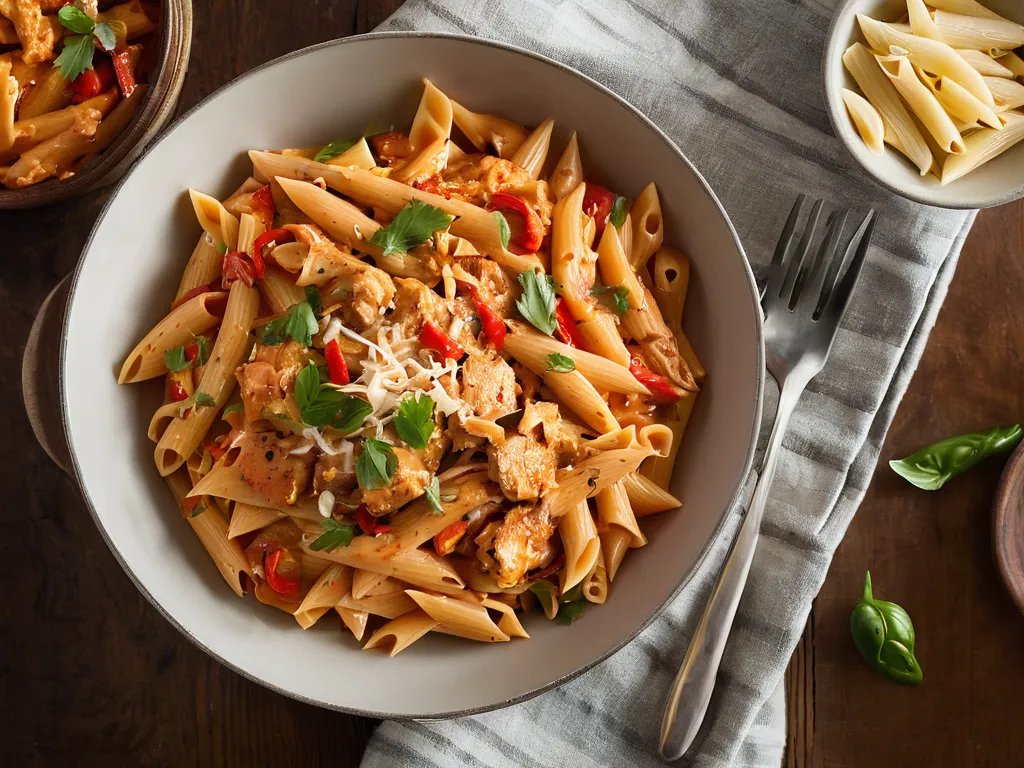
Copycat Chili’s Cajun Chicken Pasta
Prep time: 15 min Cook time: 25 min Servings: 4
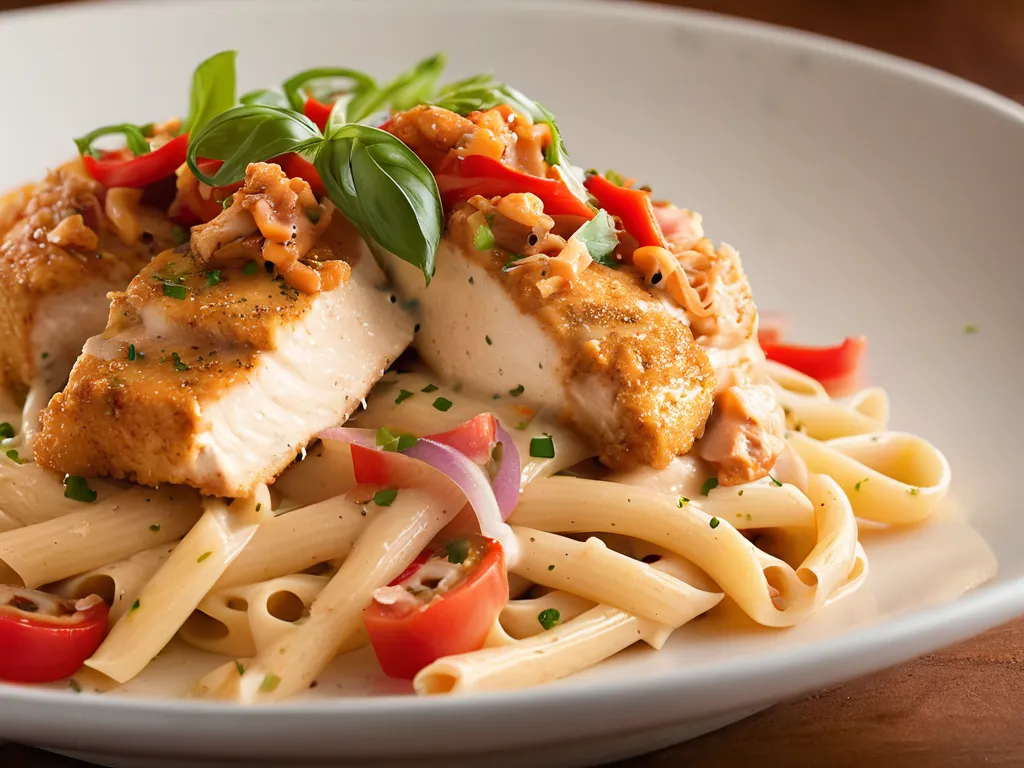
Most copycat recipes get the sauce wrong. Chili’s Cajun Pasta uses an Alfredo-style base — butter, heavy cream, and freshly grated Parmesan — not a spicy cream sauce. The Cajun seasoning goes on the chicken as a rub before it is seared. The sauce stays white and creamy. The heat lands in each bite of chicken, and the Alfredo rounds it out. Getting this distinction right is what separates an accurate copycat from a generic chicken pasta.
On the current chilis.com menu, the dish is simply called “Cajun Pasta” and comes with garlic toast — a detail most home versions skip. The base lets you pick grilled chicken or shrimp; the Ultimate Cajun Pasta piles on both proteins (and, at some locations, diced tomatoes and green onions). This recipe builds the grilled-chicken version and notes exactly where to add shrimp or tomatoes to hit the Ultimate.
Which Cajun Pasta Is Which?
| Menu item | Protein | Extra toppings | Comes with |
|---|---|---|---|
| Cajun Pasta | Grilled chicken or shrimp (pick one) | Chile spices, Parmesan | Garlic toast |
| Ultimate Cajun Pasta | Grilled chicken and shrimp | Chile spices, Parmesan (some locations add diced tomatoes and green onions) | Garlic toast |
Every version shares the same white Alfredo base — penne in butter, cream, and Parmesan — with the Cajun heat coming from the seasoned protein on top, never stirred into the sauce.
The Most Important Technique
The Cajun rub goes on the chicken before searing — not into the sauce. Press it firmly into the surface and let the chicken sit for 5 minutes before it hits the pan. This allows the spice crust to form properly during searing. You want a dark, aromatic exterior on the chicken. Once sliced, those seasoned edges contrast directly with the white Alfredo sauce underneath, which is the visual and flavor signature of the dish.
If you stir Cajun seasoning into the sauce, you end up with an orange cream sauce that tastes muddled — spicy throughout but without the contrast that makes the dish work. Keep them separate.
The Alfredo Sauce
Use freshly grated Parmesan from a block. Pre-shredded Parmesan is coated in potato starch and cellulose to prevent clumping in the bag; those coatings prevent smooth melting and produce a grainy texture in the sauce. A block of Parmesan grated fresh on a box grater takes under two minutes and produces a sauce that is cohesive and glossy.
Keep the heat low when building the Alfredo. Heavy cream can break if it boils aggressively; Parmesan can seize if added to a pan that is too hot. Gentle simmer for 3 to 4 minutes of reduction, then add the cheese in two additions, stirring between each. If the sauce tightens too much after you add the pasta, the reserved pasta water loosens it without diluting the flavor — the starch in that water is what makes it work.
How Rich and Spicy Is This Dish?
The restaurant version runs approximately 1,180 calories per plate with 53g fat, 110g carbohydrates, and roughly 3,300 to 3,470mg sodium — nearly 150 percent of the daily recommended sodium intake. Most of that sodium comes from the combination of commercial Cajun seasoning (already salted), Parmesan (naturally salty), and butter. At home, using unsalted butter and tasting the Cajun rub before applying it to the chicken gives you real control. This recipe’s home version comes in around 950 calories and 1,180mg sodium per serving.
The spice level is moderate. The Cajun rub delivers genuine heat in each bite of chicken, but the Alfredo tempers it significantly — the overall dish reads as lightly to moderately spicy, not aggressive. To increase heat: add an extra half-teaspoon of cayenne to the rub. To reduce heat: cut the rub to 1.5 tablespoons and omit the cayenne.
Garlic Toast
Chili’s serves Cajun Pasta with garlic toast. To make it: halve a soft hoagie roll or use thick-cut Italian bread. Mix 2 tablespoons softened butter with 1/4 teaspoon garlic powder and 1 teaspoon dried parsley. Spread on the cut side and broil for 2 to 3 minutes until golden. It is not complicated, but it makes the plate feel complete — and the toast is genuinely useful for soaking up the Alfredo sauce left on the plate.
Storage & Reheating
Store leftovers in an airtight container in the refrigerator for up to 3 days. The Alfredo sauce will thicken considerably as it cools because the Parmesan sets with the cream. To reheat: add 2 to 3 tablespoons of milk or chicken broth per serving to a pan, warm over medium-low heat, and stir continuously until the sauce re-emulsifies and loosens. Microwave also works — add a tablespoon of liquid, cover loosely, and heat in 60-second intervals, stirring between each.
Do not freeze this dish. Cream and Parmesan-based sauces separate when frozen and thawed, turning grainy and broken on reheating. If you want to meal prep, cook and store the chicken and sauce separately from the pasta in the refrigerator, and boil fresh penne when you are ready to eat.