
Pin It

Papa John's Pizza Dough

Papa John's Pizza Dough
Jump to Recipe
Prep 20 min Cook 15 min Serves 4
Quick answer: To make copycat Papa John's pizza dough, bloom active dry yeast with both sugar and honey in 110°F water — that dual sweetener is the secret behind the chain's signature sweet, deep-golden crust. Stir in bread flour (12–14% protein for real chew), olive oil, and salt, then knead 8–10 minutes until soft and slightly tacky. Rise 1 hour until doubled, hand-stretch to a 14-inch round with a thick edge, and bake at 475°F. The non-negotiable finishing step: brush the hot crust with melted butter and garlic powder the moment it leaves the oven.

Papa John's Pizza Dough

Copycat Papa John's pizza dough: 6 pantry ingredients, under $1 vs. $15 delivery. The honey-sugar secret behind that soft, sweet golden crust.

Easy Prep: 20 min Cook: 15 min Total: 35 min4 servings ~$3.15/serving
Prep20 min
Cook15 min
Total35 min
Servings
4
At home~$3.15/serving
vs
Restaurant~$14.17/serving
You save ~78%

The Story Behind the Recipe

Copycat Papa John's pizza dough: 6 pantry ingredients, under $1 vs. $15 delivery. The honey-sugar secret behind that soft, sweet golden crust.

Nutrition Facts

Per serving (4 servings)
Calories390
Total Fat10g
Total Carbs62g
Dietary Fiber2g
Sugars6g
Protein12g
Sodium620mg

* Estimated values based on standard recipe preparation. Actual values may vary.

Ingredients

Instructions

💡
Pro tip: This recipe tastes even better the next day. The flavors need time to meld together in the fridge.
❄️
Storage: Keeps in an airtight container in the fridge for up to 2 weeks. Freezer-friendly for up to 3 months.
🎃 Free Halloween cookbook — download now The Copycat Halloween Cookbook A ready-made, photo-illustrated PDF of our best halloween copycat recipes — free to download, no building required. Pay what you want to support if you love it.

Free PDF — instant download. We'll also send new seasonal copycat recipes now and then; unsubscribe anytime. Or just download it →

Copycat Papa John’s Pizza Dough

Prep time: 20 min Cook time: 15 min Servings: 4

Papa John’s built their reputation on “better ingredients, better pizza,” and the dough is where that promise starts. Their crust is softer and slightly sweeter than most chain competitors. It doesn’t crack when you fold a slice, and it has a bread-like quality that makes even the naked edge of the crust worth eating — especially after the garlic butter brush that’s become their trademark.

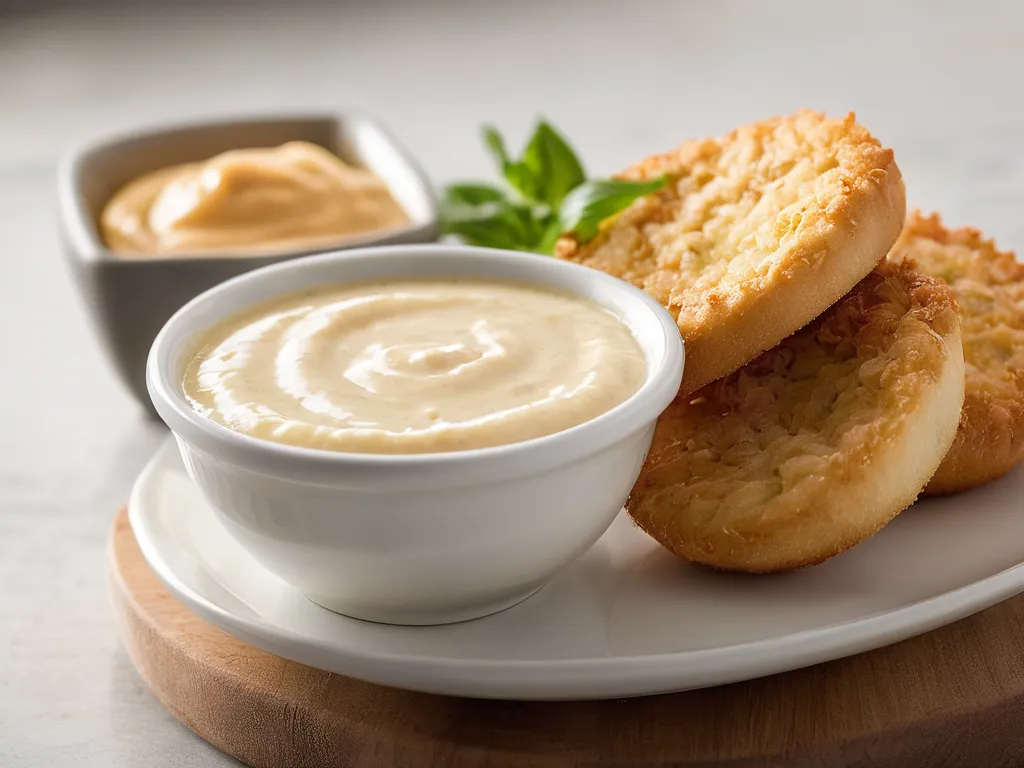
This recipe recreates that dough using the two ingredients that set Papa John’s apart from other chains: honey and sugar. Both go into the yeast mixture, and together they produce a slightly sweet, golden crust with a tender crumb. The garlic butter finish on the crust is non-negotiable — it’s what makes a Papa John’s pizza taste like a Papa John’s pizza. For the side cup you dunk the crust into, make our Papa John’s garlic sauce, and if you’re building a full spread, our Papa John’s special sauce covers the sweet-tangy pizza base.

Papa John’s has never released its official dough formula, so treat this as a researched copycat rather than the exact chain recipe — the sweet honey crust and garlic-butter edge are recreated to taste and behave like the real thing.

Why Make It at Home?

A large cheese pizza from Papa John’s costs $15-18 depending on location. The dough itself costs about $1 in ingredients. Add $2-3 for sauce, cheese, and toppings and you have a complete pizza for under $5. That’s a $10-13 savings on a single pizza night.

The dough recipe also scales easily. Double it for two pizzas, or triple it for a pizza party. Three large pizzas at Papa John’s runs $40-50. Three homemade pizzas using this dough costs roughly $12-15 total. The math gets better the more you make.

What Makes Papa John’s Dough So Good

The sweetness is the first thing you notice. Most pizza chains use sugar in their dough, but Papa John’s adds both sugar and honey. The honey contributes a more complex sweetness than sugar alone and also helps the crust brown faster in the oven. That’s why Papa John’s crust has that deep golden color compared to the paler crusts you see from other chains.

The texture is deliberately soft. Papa John’s dough has a higher hydration than most commercial pizza doughs, meaning there’s more water relative to flour. This produces a lighter, more open crumb structure with small air pockets throughout. The bread flour in this recipe provides enough gluten strength to support that extra moisture without making the crust dense or gummy.

The garlic butter crust brush might be the single most important element of the Papa John’s experience. Every pizza comes with that distinctive garlic aroma wafting from the box, and it comes from the seasoned butter painted on the crust. It turns an otherwise ordinary pizza edge into something you actually want to eat. In this recipe, a simple mix of melted butter and garlic powder applied right out of the oven nails it.

Tips & Variations
  • Use bread flour, not all-purpose. Bread flour has 12-14% protein compared to all-purpose at 10-12%. That extra gluten gives the crust its characteristic chew and prevents it from turning cracker-like.
  • Don’t rush the rise. A full hour produces the best texture. If your kitchen is cold, place the covered bowl inside an oven with just the light turned on — the gentle heat creates an ideal proofing environment.
  • Cold-ferment for better flavor. After the initial rise, punch down the dough, wrap it tightly, and refrigerate for 12-24 hours. The slow ferment develops complex flavors that a room-temperature rise can’t match.
  • Stretch by hand for authenticity. Rolling pins compress the air pockets. For a lighter, more authentic Papa John’s texture, stretch the dough using your fists and knuckles, letting gravity help pull it into shape.
  • Make garlic knots with the scraps. If you trim the dough to a perfect circle, roll the scraps into balls, bake for 10 minutes at 400F, and toss in garlic butter. Nothing wasted.
Scaling the Dough (Weights & Baker’s Percentages)

Cup measurements are fine for one pizza, but the moment you double or triple the batch, small scooping errors compound and the crust texture drifts. Weighing in grams keeps the sweet, tender crumb identical whether you’re making one pizza or five. Here are the exact weights for this recipe scaled up:

Ingredient1 pizza (14”)2 pizzas3 pizzas
Bread flour360 g (3 cups)720 g1,080 g
Warm water (110°F)240 g (1 cup)480 g720 g
Olive oil27 g (2 tbsp)54 g81 g
Honey21 g (1 tbsp)42 g63 g
Sugar12 g (1 tbsp)24 g36 g
Active dry yeast7 g (1 packet)14 g21 g
Salt6 g (1 tsp)12 g18 g

Bakers describe every dough as percentages of the flour weight, which is why the recipe holds up at any scale. This dough runs at roughly 66% hydration (water ÷ flour) — on the higher, softer end for pizza, which is exactly what gives Papa John’s crust its bread-like, foldable crumb. The full profile: flour 100%, water 66%, olive oil 7.5%, honey 5.8%, sugar 3.3%, yeast 2%, salt 1.7%. Keep those ratios and the dough behaves the same no matter how much you make.

How Papa John’s Dough Differs From Other Chains

If your copycat tastes close but not exact, the gap is almost always sweetness and hydration, not technique. Most chain and homemade doughs use a pinch of sugar purely to feed the yeast; Papa John’s uses noticeably more sugar plus honey, which is why the crust reads as sweet and browns to that deep gold. Compared to a lean New York-style dough (~60% hydration, no fat, no sweetener) or Domino’s firmer hand-tossed crust, this recipe is softer, sweeter, and enriched with oil — closer to a light dinner-roll dough than a crackery pizzeria base. If you want it even closer to the chain, nudge the honey up before you touch anything else, and don’t skip the garlic-butter brush — flavor-wise, that finish does as much work as the dough itself.

Storage & Reheating

Unbaked dough stores beautifully. After the first rise, divide into portions, wrap each tightly in plastic wrap, and refrigerate for up to 3 days or freeze for up to 3 months. Thaw frozen dough overnight in the refrigerator, then bring it to room temperature for 30 minutes before shaping.

Baked crusts (without toppings) can be par-baked at 400F for 7 minutes, cooled, and frozen between sheets of parchment paper. When you want pizza, pull a crust from the freezer, add toppings, and bake at 475F for 10-12 minutes. This is the ultimate weeknight shortcut — homemade pizza in less time than delivery. Store par-baked crusts in freezer bags for up to 2 months.
🥗

Make It Healthier

Love Papa John's Pizza Dough but want a lighter version? Try these simple swaps:

  • ✓Replace 1 cup bread flour with white whole wheat flour for more fiber and nutrients
  • ✓Use olive oil instead of butter for the crust brush to swap saturated fat for monounsaturated
  • ✓Reduce sugar and honey by half — the dough still rises well with less sweetener

Frequently Asked Questions

Why is Papa John's crust sweet?

Papa John's crust tastes noticeably sweet because the dough is made with both sugar and honey, not just the small amount of sugar most pizza chains use to feed the yeast. The honey adds a rounder, more complex sweetness than sugar alone and, because honey browns faster than plain flour, it also gives the crust its deep golden color. Papa John's has never published its exact formula, so this is a copycat recreation — but the sweet, tender, bread-like character comes reliably from that honey-plus-sugar combination in the yeast bloom.

Can I use all-purpose flour instead of bread flour?

You can, but the crust will be softer and less chewy. Bread flour has 12–14% protein versus 10–12% in all-purpose, and that extra protein forms more gluten — which gives Papa John's dough its characteristic pull and prevents the edge from turning cracker-crisp. If all-purpose is all you have, add an extra 2–3 minutes of kneading to build gluten, and expect a slightly more tender, less structured crust. For the closest copycat result, bread flour is worth buying.

What is the Papa John's garlic butter made of?

The crust brush in this copycat is simply melted butter mixed with garlic powder, painted over the exposed crust edge the instant the pizza comes out of the oven so the heat blooms the garlic aroma. Papa John's also serves its famous cup of dipping 'garlic sauce' on the side, which is a different, richer emulsion — for that, make our [Papa John's garlic sauce](/blog/copycat-papa-johns-garlic-sauce). Use the simple butter-and-garlic-powder mix for the crust and the dipping sauce alongside for the full experience.

Can I make the dough ahead or freeze it?

Yes — and cold-fermenting actually improves it. After the first rise, punch the dough down, wrap it tightly, and refrigerate 12–24 hours (up to 3 days); the slow ferment develops deeper flavor a quick room-temperature rise can't match. To freeze, portion the risen dough, wrap each ball tightly in plastic, and freeze up to 3 months. Thaw overnight in the fridge, then let it sit at room temperature 30 minutes before shaping so it stretches without tearing or snapping back.

Why is my dough not rising or too sticky?

A dough that won't rise almost always means dead yeast or water that was too hot — above 120°F kills yeast, so aim for 110°F (warm, not hot, to the wrist) and confirm the bloom gets foamy and smells yeasty in 5–7 minutes before proceeding. If it never foams, the yeast is dead; start over. Overly sticky dough usually just needs a little more flour worked in a tablespoon at a time, or a few more minutes of kneading — Papa John's dough is meant to be soft and slightly tacky, so resist adding so much flour that it turns stiff.

What oven temperature is best for Papa John's style crust?

Bake at 475°F. Home ovens can't reach the very high deck temperatures of a commercial pizza oven, so 475°F is the practical sweet spot — hot enough to set and brown the sweet crust in 12–15 minutes without drying it out. A preheated pizza stone or steel gets the bottom crispest; give it at least 45 minutes to fully heat. If your oven runs hot and safely reaches 500°F, you can go there and pull the pizza a couple of minutes sooner for extra edge color.

How many pizzas does this dough recipe make?

One batch makes a single 14-inch original-crust pizza (the size this recipe is written for), which slices into 4 large or 8 smaller pieces. If you prefer thinner crust, the same dough will stretch into two 10-inch thin-crust pizzas. To feed a crowd, scale the recipe using the gram-weight table below rather than eyeballing cups — pizza dough is a ratio, and weighing keeps the sweet-crust texture consistent from a single pizza up to a triple batch.

Can I use instant yeast instead of active dry yeast?

Yes. Instant yeast (also sold as rapid-rise or bread-machine yeast) works in this dough with two small changes: use about 25% less by weight (roughly 5g instead of a full 7g packet), and skip the separate 5–7 minute bloom — you can stir instant yeast straight into the flour, then add the warm water, sugar, and honey. The rise may run slightly faster, so judge by the dough doubling in size rather than by the clock. Active dry yeast is used in the main recipe because the visible foamy bloom is the surest way to confirm your yeast is alive before you commit the flour.

Love this recipe? Share it!

Free PDF: our 12 most-wanted copycat recipes — instant download.

Made it? Buy us a coffee

Every recipe here is free, with no paywalls. If this one was a hit at your table, a small tip keeps new copycats coming.

$

Papa John's is a trademark of its owner, used here only to describe the dish this recipe recreates. This is an independent copycat written in our own words — Copycat Spices is not affiliated with, endorsed by or sponsored by Papa John's.

Ratings & Reviews

—
No ratings yet

Rate this recipe

Click a star to rate

Leave a Review

0/500

CS

Copycat Spices Editorial

Researched + fact-checked. Every recipe on Copycat Spices is built from published sources — official ingredient lists, brand-published recipes, interviews and food-science references — and fact-checked before it goes live, then written as clear, step-by-step instructions for home cooks of all skill levels.

Learn more about our mission →