Copycat Popeyes Biscuits
Prep time: 15 min Cook time: 14 min Servings: 4
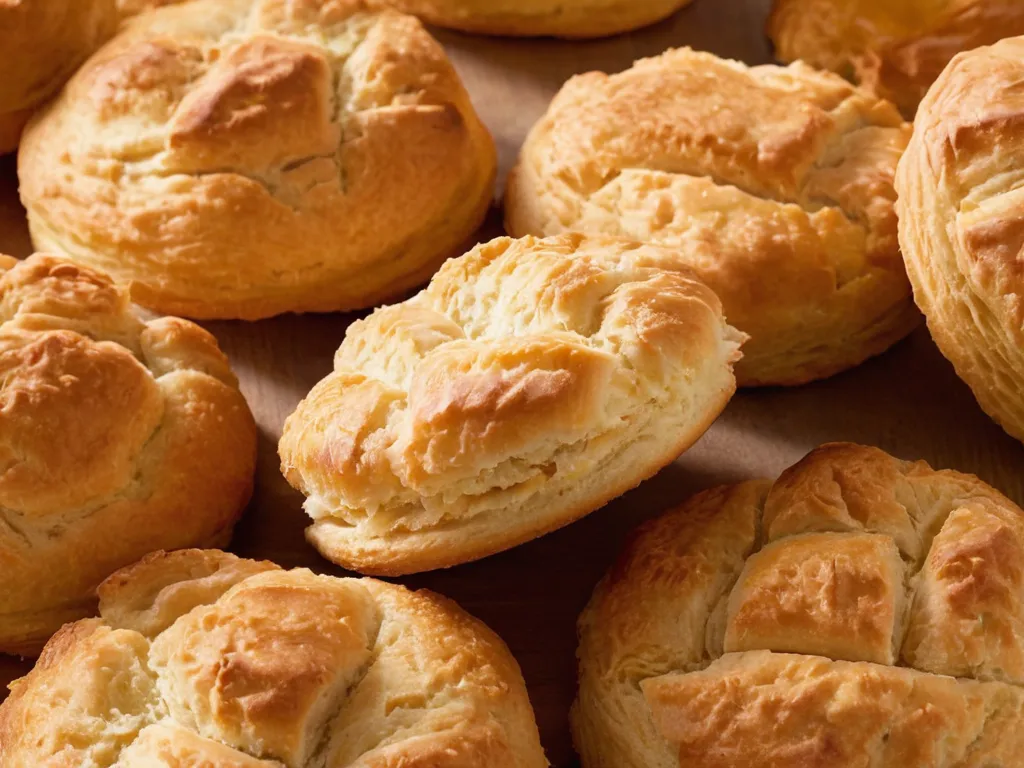
Popeyes biscuits are the unsung hero of the menu. They arrive wrapped in foil, somehow both crumbly and tender, with a buttery sweetness that makes them dangerously easy to eat. They have a devoted following that sometimes outpaces the chicken itself, and for good reason. The biscuit is rich, slightly salty, and finishes with a honey-butter glaze that nudges it just past savory into addictive territory.
This recipe recreates that experience with seven pantry ingredients and about 30 minutes of your time. The method relies on cold butter, minimal handling, and a hot oven. The folding technique builds the flaky layers that distinguish a Popeyes biscuit from a dense hockey puck. If you have made biscuits before, the only new move here is the garlic powder in the dry mix and the honey butter finish.
No special equipment is required beyond a baking sheet and something to cut butter into flour. A pastry cutter works best, but two forks or even your hands will get the job done. The biscuits bake fast at 450°F, so stay close to the oven.
Why Make It at Home?
A single Popeyes biscuit costs about $1.29 and you rarely order just one. A family meal with four biscuits runs $5.16 just for the bread. This recipe produces 8 biscuits for roughly $1.20 total, which comes out to about $0.15 per biscuit. That is an 88% savings per biscuit.
Beyond cost, homemade biscuits come out of the oven hot and fresh rather than sitting in a warming drawer. The honey butter glaze goes on while the biscuits are still steaming, which means it soaks into every crevice instead of sitting on top of a lukewarm surface. The difference between a fresh biscuit and one that has been held for 20 minutes is enormous.
What Makes Popeyes’ Biscuits So Good
Three things set Popeyes biscuits apart from generic fast food bread. First, the buttermilk. It reacts with the baking powder to create lift and tenderness while adding a subtle tang that balances the butter and sugar. Most fast food biscuits skip buttermilk in favor of cheaper ingredients, and the result is noticeably flat.
Second, the butter-to-flour ratio is generous. Popeyes does not hold back on fat, and that is what gives the biscuit its richness. The cold butter pieces melt during baking, creating steam pockets that become flaky layers. If you have ever pulled a Popeyes biscuit apart and seen those thin sheets of dough separated by air, that is the cold butter doing its work.
Third, the honey butter finish. It is simple but effective. The combination of salted butter and honey creates a sweet-savory glaze that makes the exterior slightly sticky and deeply flavorful. Without it, you have a good biscuit. With it, you have a Popeyes biscuit.
Tips & Variations
-
Keep everything cold. Cold butter is non-negotiable. If your kitchen is warm, cube the butter and freeze it for 15 minutes before starting. Cold butter creates steam pockets during baking, which is where the flaky layers come from.
-
Do not twist the biscuit cutter. Press straight down and lift straight up. Twisting seals the edges of the dough and prevents the biscuit from rising properly. If you do not have a biscuit cutter, use the rim of a drinking glass dipped in flour.
-
Pack them together on the sheet. Biscuits placed with their sides touching push each other upward during baking, resulting in taller biscuits with softer sides. Leave space only if you prefer crispier edges all around.
-
Add cheddar for a variation. Fold 1/2 cup of shredded sharp cheddar into the dough after adding the liquids. It does not replicate a Popeyes item, but it makes a fantastic biscuit for chili or soup.
-
Double the honey butter. Seriously. Make more than you think you need. Leftover honey butter stores in the fridge for a week and is excellent on toast, pancakes, or cornbread.
Storage & Reheating
Biscuits are best within 2 hours of baking. After that, store in an airtight container at room temperature for up to 2 days or in the refrigerator for up to 5 days. They freeze well for up to 2 months when wrapped individually in plastic wrap and placed in a freezer bag.
Reheat in a 350°F oven for 5 to 7 minutes until warmed through. Wrap in foil if you want softer sides, or leave uncovered for a crispier exterior. A quick brush of fresh honey butter after reheating brings them back to life. Microwaving works in a pinch but tends to make biscuits chewy rather than flaky, so use it only as a last resort.
More Popeyes Copycat Recipes
Biscuits are the side that earns its own fan base — here’s the full Popeyes spread to build them into:
- Popeyes Chicken Sandwich — the pickle-brined, spicy-mayo flagship that these biscuits are made to sit next to.
- Popeyes Cajun Fries — the other Popeyes side worth mastering: boldly seasoned, Louisiana-spice battered fries.
- Popeyes Cajun Mashed Potatoes — the creamy, peppery-gravy mashed potatoes that round out the full Popeyes comfort food spread.
See all Popeyes copycat recipes →