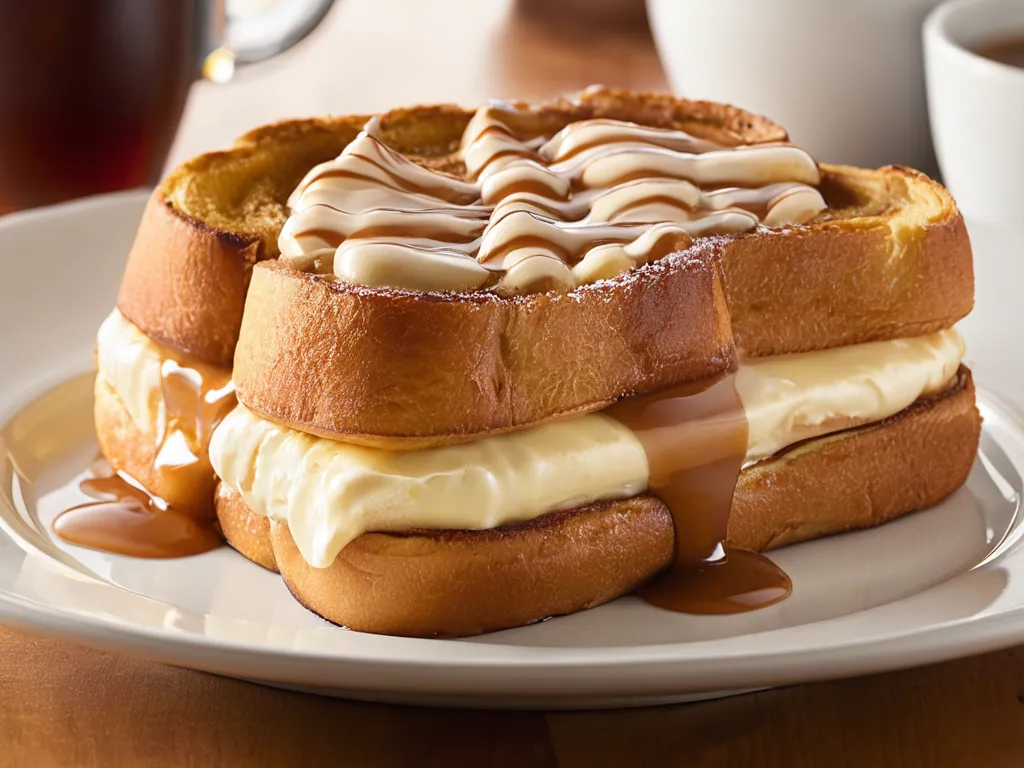
Copycat IHOP Stuffed French Toast — Recreating the Discontinued Original
Prep time: 15 minutes | Cook time: 15 minutes | Serves: 4
IHOP discontinued its original Stuffed French Toast in 2017, ending a 14-year run that made it one of the chain’s most beloved menu items. Multiple Change.org petitions appeared after its removal. Tasting Table has documented it as one of the most-requested items in IHOP’s history. And people are still searching for how to make it.
This copycat recreates the original — including the one detail that almost no other recipe gets right.
The Most Important Detail: It Was Cinnamon-Raisin Bread
Every major copycat recipe for IHOP Stuffed French Toast recommends brioche or challah. Those are good choices for a stuffed French toast. But they are not what IHOP’s original used.
The original Stuffed French Toast (the one that ran from 2003 to 2017) used thick-cut cinnamon-raisin bread. Two slices, sandwiched around a sweet cream cheese filling. The cinnamon and raisin sweetness were baked into the bread itself, not just in the egg batter — which meant every bite had a depth of cinnamon flavor and a burst of sweetness from the raisin that plain bread cannot replicate.
This distinction is why most copycat versions taste slightly off even when everything else is right. The bread is doing work that the batter alone can’t do.
For the most authentic recreation: Use thick-sliced cinnamon-raisin bread — Arnold, Pepperidge Farm Swirl Cinnamon Raisin, or similar. Slice at 3/4 to 1 inch if you buy an unsliced loaf; use the pre-sliced version as-is.
For a richer, more restaurant-general version: Brioche or challah gives a buttery, golden crust with more richness. This was what IHOP used in its 2017 Cheesecake Stuffed French Toast LTO — confirmed in IHOP’s own press release, which specifically named “our soft, buttery brioche loaf.” It is not the original, but it produces a genuinely excellent stuffed French toast.
Either way: use day-old bread. Fresh cinnamon-raisin bread and fresh brioche are both too soft — they compress when you spread the filling and absorb egg batter too fast, turning soggy. One night in the refrigerator (or a few hours uncovered on the counter) firms the bread to the right texture.
The History: 2003–2017
IHOP introduced the Stuffed French Toast around 2003. The format was simple and stayed mostly consistent through the years: two thick slices of cinnamon-raisin bread with sweet cream cheese filling inside, served with glazed strawberries, whipped cream, and powdered sugar. Over the years IHOP added flavor variations — Peach Vanilla, Strawberry Vanilla (with chopped fresh strawberries folded into the filling itself) — but the core product stayed the same.
In 2017, IHOP quietly discontinued it. No announcement, no fanfare. For a product with that much customer attachment, the absence was noticed quickly. Forums, Facebook groups, and petition sites documented the backlash.
On November 28, 2017 (National French Toast Day), IHOP launched a limited-time Cheesecake Stuffed French Toast in three flavors — OREO Cookies and Cream, Strawberry Cheesecake, and Toffee Apple Cheesecake — using brioche instead of cinnamon-raisin bread. IHOP’s press release described it as “thick slices of our soft, buttery brioche loaf.” The LTO ran through January 1, 2018 and then ended.
In 2022, IHOP introduced the “Thick ‘N Fluffy” French Toast line that currently anchors their French toast menu. It is not stuffed, uses different bread, and is a different product. There is currently no cream-cheese-filled stuffed French toast on IHOP’s standard menu at most locations.
The Cream Cheese Filling
The filling is three ingredients: softened cream cheese, powdered sugar, and vanilla extract.
Softening is not optional. This is the step people rush, and it ruins the recipe when they do. Cold cream cheese — even cream cheese that has been on the counter for 15 minutes — will not beat into a smooth, spreadable filling. It will be lumpy no matter how long you beat it, and it will tear the bread when you try to spread it.
Full room temperature (45–60 minutes on the counter) beats into smooth frosting-like cream cheese in about 30 seconds with a hand mixer. Alternatively, microwave in 10-second bursts, stirring after each, for about 20–30 seconds total — the goal is soft but not melted.
Use powdered sugar, not granulated. Granulated sugar does not fully dissolve into cold cream cheese and leaves a slightly gritty texture. Powdered sugar incorporates instantly.
The finished filling should look like soft cream cheese frosting: smooth, spreadable, no visible lumps.
Strawberry Vanilla variation: Fold 1/4 cup of finely chopped fresh strawberries into the finished filling. The strawberries soften and warm slightly during cooking. This was one of IHOP’s offered variations and adds a bright fruit note to every bite.
The Batter: Adding Flour for Restaurant-Crispier Results
Standard French toast batter is eggs and milk. For a closer approximation of the restaurant’s crust — which is noticeably crisper than homemade — add 3 tablespoons of flour to the batter.
The flour coats the outside of the bread more uniformly, creates a slightly more substantial crust during cooking, and keeps the egg custard from absorbing too deeply into thick bread. It is the technique used by several well-tested copycat recipe developers for this dish. The batter with flour looks slightly thicker when whisked; this is normal.
If you prefer the simpler batter, omit the flour — the result is softer but still good.
Do not oversoak. Ten seconds per side is correct for thick stuffed French toast. Longer than that and the batter saturates through to the filling. The bread should be moist and coated on the outside, not saturated throughout.
Cooking Temperature: Slower Than You Think
This is where most stuffed French toast fails at home: too-high heat.
The cream cheese filling inside needs time to warm through — it will not warm in 2 minutes. If you cook at medium or medium-high heat, the exterior browns or even burns before the center is warm. You end up with an overcooked crust and a cold, stiff interior.
Use medium-low heat — 325–350°F on an electric griddle, or a setting that produces a gentle steady sizzle when bread touches the pan. At this temperature, the exterior develops a proper, deeply golden crust in about 4 to 5 minutes — it is not underbaked; it is given time to color slowly while the heat penetrates to the center.
Test doneness by pressing the center lightly with a finger: it should feel firm and hot, not cold or squishy. If it feels cold, cover loosely with foil and cook 2 more minutes to trap heat around the filling.
The IHOP Toppings
The original Stuffed French Toast was served with:
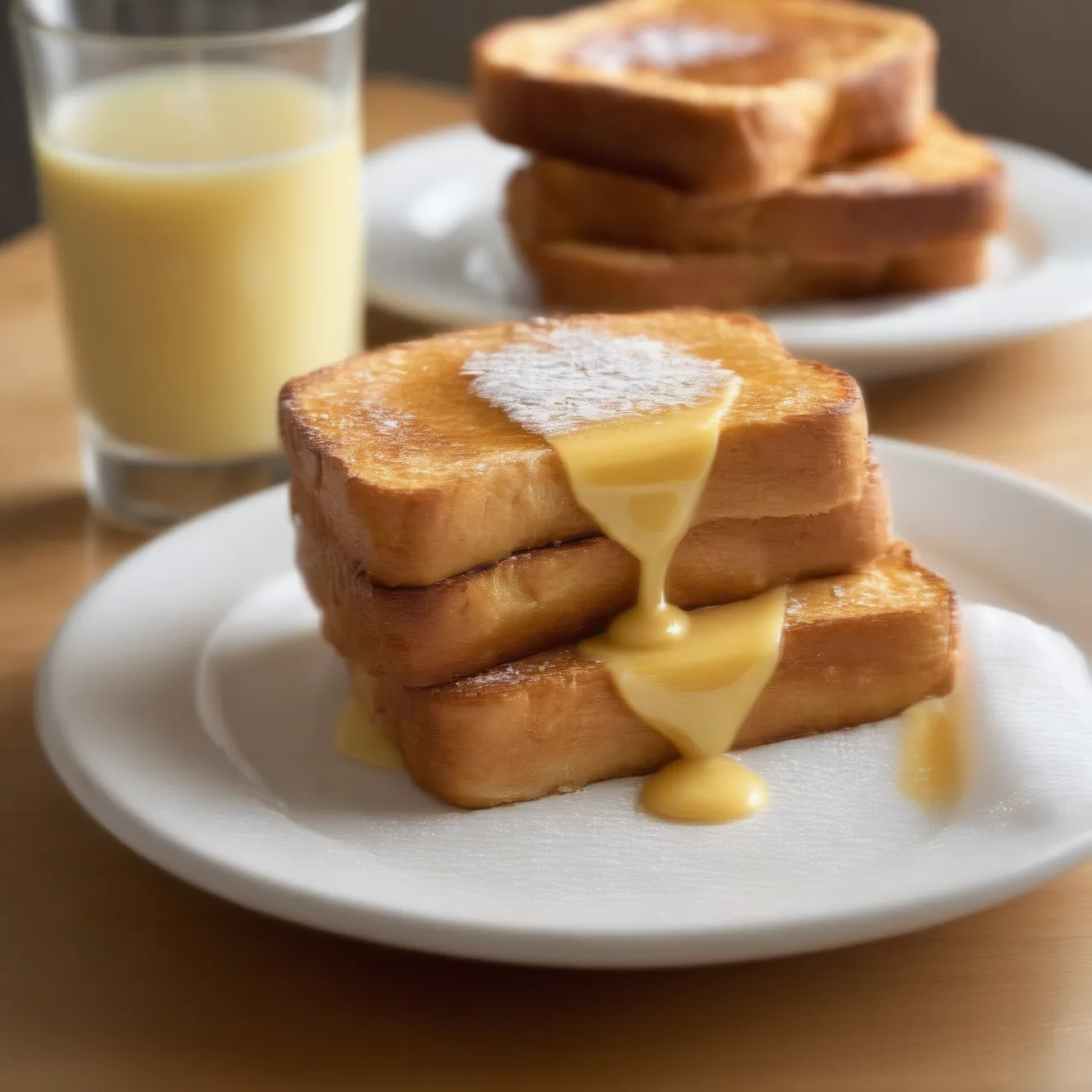
- Powdered sugar dusted over the top
- Glazed or fresh sliced strawberries
- Whipped cream
- Maple syrup on the side
At home, fresh sliced strawberries are better than glazed — they hold their texture and don’t make the already-sweet dish cloying. Dust the powdered sugar while the toast is hot so it melts slightly into the surface. Whipped cream should be real dairy whipped cream, not the aerosol kind, if you want the flavor to match.
Cost Comparison
When IHOP carried Stuffed French Toast, aggregated pricing suggests it ran approximately $10–13 per order. At home: thick-sliced cinnamon-raisin bread (~$2.50 per loaf for 8 slices), one block of cream cheese ($2.50), eggs and milk ($0.75), butter and powdered sugar ($0.25) — under $6 total for four full servings, about $1.50 per serving.
For more IHOP at home, the IHOP Buttermilk Pancakes copycat uses a higher-butter ratio that gets close to the fluffy, slightly tangy restaurant stack. The IHOP Chicken and Waffles covers the crispy-battered fried chicken on a Belgian waffle for the savory contrast. The IHOP New York Cheesecake Pancakes uses a similar cream cheese filling technique in pancake format, and can run alongside stuffed French toast on the same griddle for a full brunch spread.