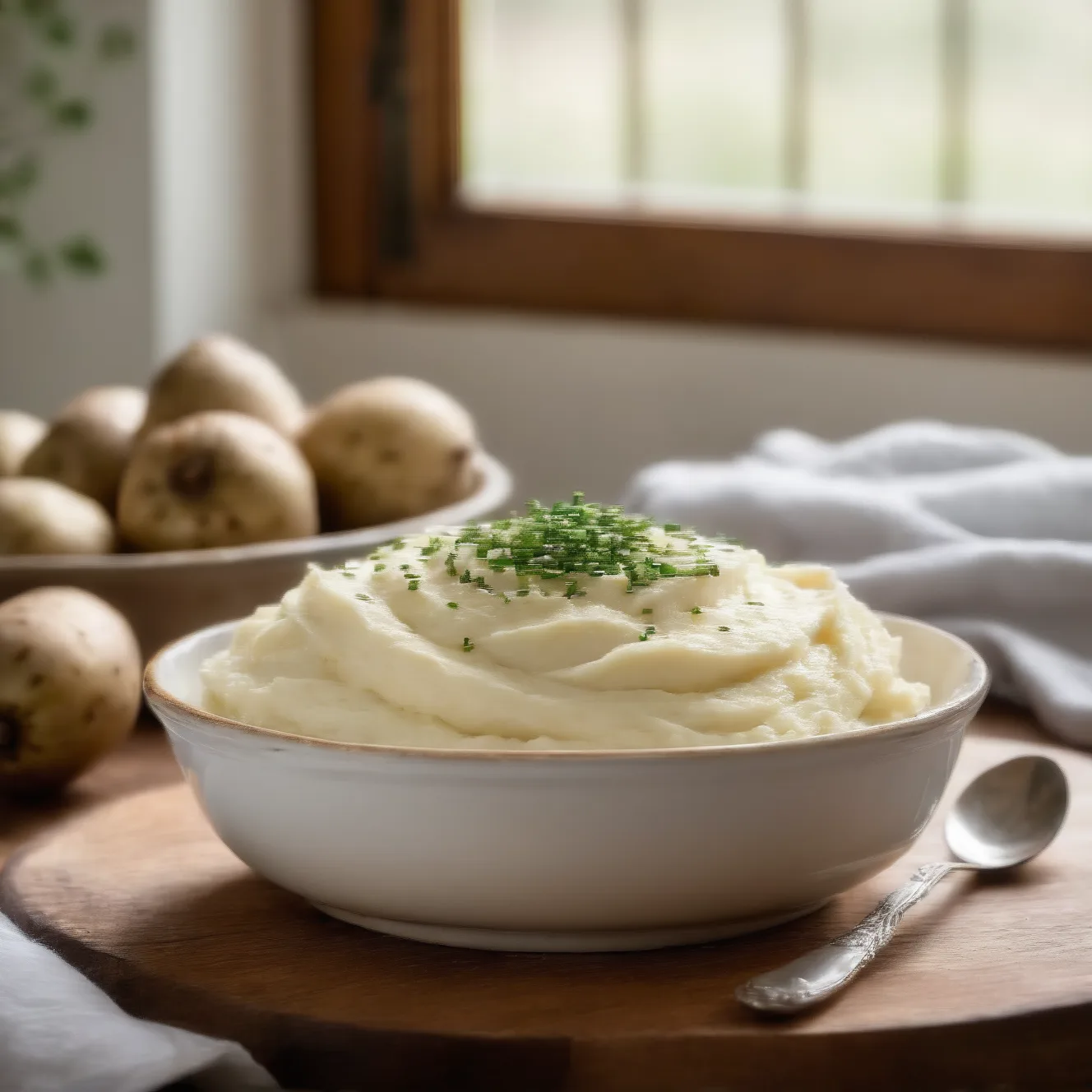
Copycat Bob Evans Mashed Potatoes
Prep time: 10 minutes Cook time: 25 minutes Servings: 6
Bob Evans opened his first restaurant — The Sausage Shop — on his farm in Rio Grande, Ohio in 1962, built on the sausage business he’d started there in 1948. Today, with more than 400 locations across roughly 18 states concentrated in the Midwest, Bob Evans has never dropped the homestyle identity. Nowhere is that clearer than the mashed potatoes: real potatoes, real butter, real cream. While KFC makes no secret of using instant flakes (the gravy is the point there), Bob Evans markets genuine potatoes as a cornerstone of its farm-fresh brand.
Bob Evans also sells a refrigerated grocery line — Original, Roasted Garlic, and Loaded mashed potato products — and its refrigerated mashed potatoes are the best-selling refrigerated side dish in the U.S. The grocery version is a solid shortcut, but it relies on emulsifiers and stabilizers for that shelf-stable smoothness. Made from scratch at home, with the right potato, the right fat ratio, and one technique most recipes skip, you get the same silky result without any of that.
That technique is steam-drying: after draining the boiled potatoes, returning them to the hot pot over low heat for 2 minutes to drive off excess moisture before the butter goes in. That detail — combined with sour cream instead of cream alone — is what separates these from a generic home mash.
Why It Works
Yukon Golds outperform russets for mashing. Russets are high-starch, low-moisture potatoes built for baking. Yukon Golds are medium-starch with a naturally buttery, slightly sweet flavor and creamy flesh that holds fat better. They mash to a silkier texture with less butter required to reach the same richness.
Steam-drying is the professional trick. After draining, most recipes say “return to the pot to dry.” Most home cooks skip this. Those 2 minutes of low heat evaporate surface moisture that would otherwise sit between the potato cells and block fat absorption. The result: the butter and cream bind into the potato rather than forming a greasy pool under it.
Warm cream, room-temperature butter. Cold butter and cold cream both lower the potato’s temperature mid-mash and trigger starch retrogradation — the starch molecules tighten back up and produce a dense, gluey texture. Starting with soft butter and warm cream keeps everything fluid and gives you a longer window to mash and fold before the texture sets.
Sour cream ≠ extra tang. At the quantities used here, sour cream doesn’t read as sour — it reads as richer. The fat content of full-fat sour cream is nearly as high as heavy cream, but its protein content gives the mashed potatoes a slightly thicker body that holds its shape on the plate instead of spreading flat.
Cost Comparison
| Bob Evans restaurant | Homemade (per serving) | |
|---|---|---|
| Mashed potato side | ~$4–5 | ~$0.70–0.85 |
| Full 6-serving batch | — | ~$4–5 total |
| Grocery store refrigerated | ~$4–5 for 24 oz | Similar per serving |
Making this at home costs roughly the same per serving as buying the refrigerated grocery store version — but with better flavor, no stabilizers, and full control over salt and fat levels. The restaurant price is per individual order; the home batch serves six for the same cost.
The Grocery Store Version
Bob Evans sells Original, Roasted Garlic, and Loaded refrigerated mashed potato products in the dairy case at most major grocery chains. They’re a legitimate shortcut for a weeknight: the base texture is good because they use real potatoes. The main differences from this recipe are a slightly thinner consistency (more liquid, more stabilizers) and less butter presence than homemade. For the Thanksgiving table, make these from scratch. For a Tuesday with grilled chicken, the grocery store version is fine.
Variations
Loaded. Fold in 1/4 cup of sharp cheddar, 3 strips of crumbled cooked bacon, and 2 tablespoons of sliced scallions after adding the cream. Bob Evans sells this as their “Loaded” version; it’s worth the upgrade for casual dinners.
Roasted garlic. Slice the top off one head of garlic, drizzle with olive oil, wrap in foil, and roast at 400°F for 45 minutes while the potatoes boil. Squeeze the softened cloves directly into the mash before adding the cream. Much more complex than garlic powder; less harsh than raw garlic.
Lighter version. Replace the heavy cream with whole milk and the sour cream with full-fat Greek yogurt. The texture is slightly thinner but the flavor difference is minimal; the yogurt’s tang is nearly identical to sour cream’s. Save about 60 calories per serving.
Make-ahead for Thanksgiving. Make the full batch up to 2 days before. Transfer to a 9x13 baking dish, smooth the top, and press plastic wrap directly onto the surface. Refrigerate. Day-of: dot the top with 2 tablespoons of butter, cover with foil, bake at 325°F for 30 minutes. Stir once and serve.
Storage and Reheating
Refrigerator: Store covered for up to 3 days. The potatoes will thicken as they sit — that’s normal.
Reheating on the stovetop: Add 2–3 tablespoons of milk or cream to the pot, set over medium-low heat, and stir frequently until warmed through. Add another pat of butter if they look dry. Takes about 5 minutes.
Reheating in the oven: Transfer to a baking dish, dot with butter, cover with foil, and bake at 325°F for 25–30 minutes. Better for larger quantities.
Freezing: Possible but not ideal. The potatoes thaw somewhat grainy compared to fresh. If you freeze them, thaw overnight in the refrigerator and reheat with extra cream.
Tips
- Cube the potatoes evenly. Uneven pieces cook at different rates; the small ones overcook and get waterlogged while the large ones finish.
- Salt the boiling water generously. Potatoes absorb almost no salt from cooking water, but salting the water from the start seasons them more deeply than salting only at the end.
- Don’t rush the mashing. Add the butter in pieces and let each piece melt in before adding the next. This gives you better control over texture.
- White pepper over black. White pepper has a softer, earthier heat and doesn’t add dark specks to the mash. The grocery store Bob Evans product actually uses black pepper, but white pepper produces a cleaner-looking, more refined result at home. One jar lasts for months.
For more restaurant-style sides, see our KFC Mashed Potatoes and Gravy — the instant-potato version that proves the gravy is the real star. For a full homestyle spread, pair these with Cracker Barrel Biscuits or Popeyes Mashed Potatoes for a side-by-side comparison of three very different styles.