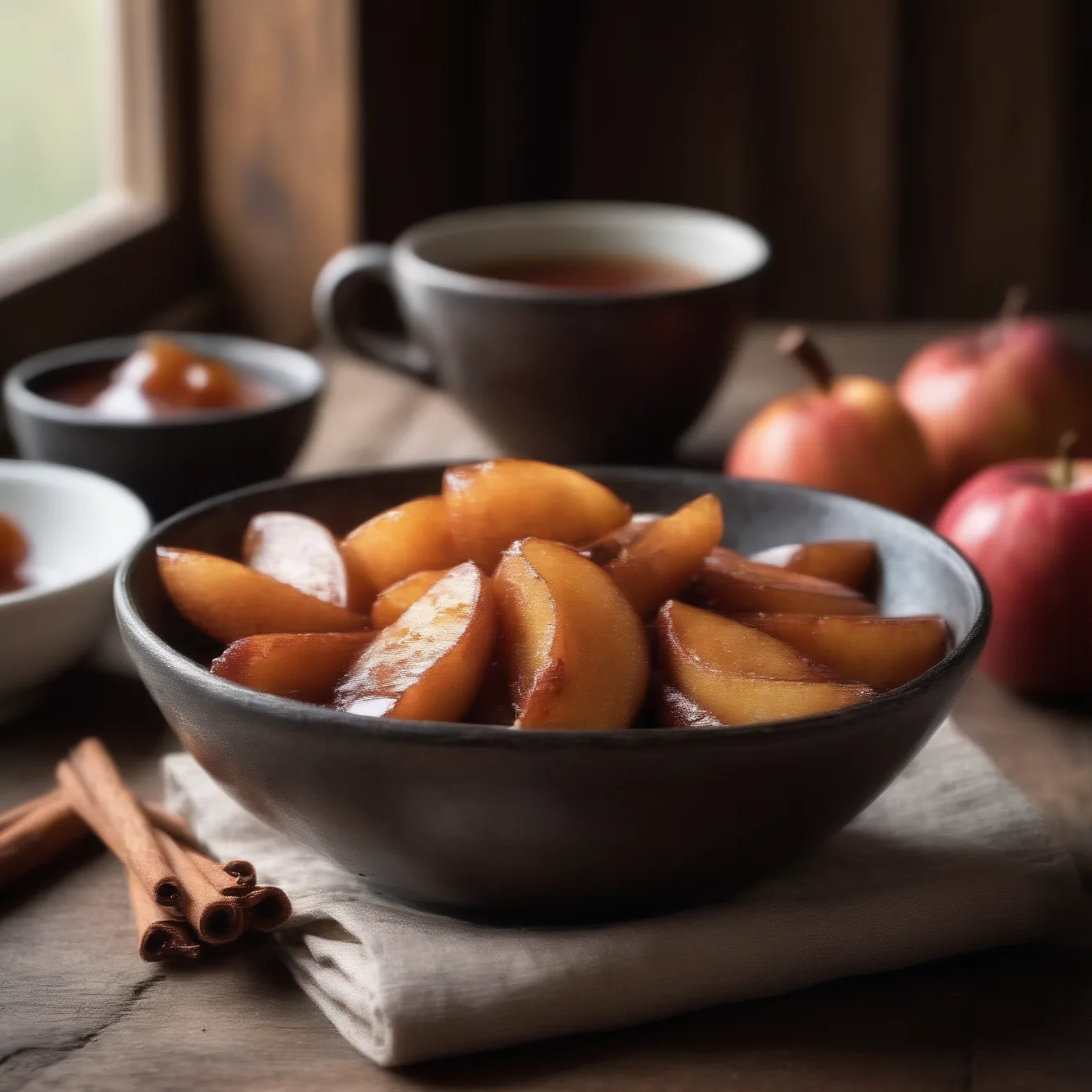
Cracker Barrel Fried Apples
TL;DR: Cracker Barrel’s fried apples are a Southern glazed apple side dish — butter, brown sugar, cinnamon, and Granny Smith apples cooked until tender in a thick, glossy sauce. Not actually fried. Ready in 25 minutes. The apple variety and cornstarch slurry are the two decisions that separate great results from mushy ones.
Cracker Barrel’s menu is built on Southern comfort standards, and the fried apples are one of the most-requested sides they serve — warm enough to feel like dessert, savory enough to pair with a pork chop or a plate of biscuits. They hit the table alongside eggs at breakfast and come back again at dinner as a topping for pancakes or a side with chicken.
The recipe looks simple because it is. The technique is where people go wrong — wrong apple, too much sugar too early, or raw-flour thickening that clouds the sauce.
Why They’re Called “Fried” When They’re Not Deep Fried
This is one of the more common questions, and the answer is historical.
In traditional Appalachian and Southern cooking, “frying” referred to any skillet-based cooking — not just deep-frying. Cast iron was the universal cookware, and cooking in a skillet with fat was “frying” regardless of how much oil was involved. Fried apples, fried cabbage, fried potatoes — these are all skillet dishes cooked in butter or lard, not submerged in oil.
The Appalachian version of fried apples predates Cracker Barrel by generations. It was a simple way to use surplus fall apples, cooked quickly in a cast-iron skillet with whatever sweetener was available — sorghum, molasses, brown sugar. Cracker Barrel (founded 1969 in Lebanon, Tennessee, by Dan Evins) formalized the dish as a menu side, but the recipe traces directly to the Appalachian tradition.
So “fried apples” means: apples cooked in a skillet in butter, which is exactly what this recipe is.
Why Apple Variety Matters More Than Technique
The most common failure with this recipe is using the wrong apple. Soft, low-pectin apple varieties turn to applesauce when cooked — even briefly. The right apple stays firm in the center while becoming tender at the edges, which gives you that Cracker Barrel texture: slices with structure, not mush.
Apple pectin is the structural molecule in apple cell walls. Granny Smith apples have high pectin content and cell walls that resist breaking down under heat. When you cook a Granny Smith slice for 8 minutes in a buttery glaze, you get a tender slice with a slight bite. When you cook a McIntosh slice for the same 8 minutes, you get thick applesauce.
Apple variety guide for this recipe
| Apple | Holds Shape? | Flavor | Notes |
|---|---|---|---|
| Granny Smith | Excellent | Tart | Best match for the Cracker Barrel original |
| Honeycrisp | Very good | Sweet-tart | Reduce brown sugar by 2 tbsp |
| Braeburn | Very good | Spiced, tart | Good complexity |
| Pink Lady | Good | Tart-sweet | Stays very firm |
| Jonagold | Good | Mild, sweet | Works if you like less tartness |
| Gala | Marginal | Sweet | Cut thick, reduce cook time |
| Fuji | Marginal | Very sweet | Gets soft quickly |
| McIntosh | Poor | Tart-soft | Turns to mush |
| Red Delicious | Poor | Mild | No flavor, falls apart |
The tartness of Granny Smith is also functional: it balances the brown sugar and makes the glaze taste complex rather than flat-sweet. A sweet apple plus brown sugar plus cinnamon can be cloying. A tart apple plus brown sugar plus cinnamon is balanced.
The Cornstarch Slurry: Why It Makes a Better Sauce
The sauce at Cracker Barrel is glossy, clear, and clingy — it coats each apple slice and doesn’t run off the plate. That finish comes from cornstarch, not from extended sugar reduction.
Why cornstarch and not flour: Flour thickens sauces opaque and needs longer cooking to eliminate the raw-flour taste. Cornstarch produces a clear, shiny sauce with no flavor of its own, has roughly twice the thickening power (1 tablespoon cornstarch replaces about 2 tablespoons of flour), and sets with just a brief simmer. Its granules begin to swell and thicken around 150°F and reach full strength as the glaze comes up to a bubble — which is why it firms up so fast once the slurry hits the hot pan.
The critical technique: Always mix cornstarch into a cold liquid first — the apple juice in this recipe — before adding it to the hot skillet. Adding dry cornstarch directly to a hot pan creates lumps that do not dissolve no matter how hard you stir. The slurry (cornstarch dissolved in cold liquid) disperses evenly when poured into the hot glaze.
Once the slurry hits the pan, the sauce thickens quickly — usually within 60 to 90 seconds. Stir gently and pull the pan from the heat as soon as you see the glossy consistency. Don’t keep it at a hard boil: prolonged boiling and over-stirring rupture the swollen starch granules, and the mild acidity of apple juice speeds that along, so an overcooked cornstarch sauce actually thins back out.
The Brown Sugar Question
Light brown sugar is the standard for this recipe: enough molasses for warmth and depth without being as heavy as dark brown sugar. If you only have dark brown sugar, use it — the molasses flavor will be more pronounced, which some people prefer.
The pinch of salt is not optional. It amplifies the sweetness by blocking bitter receptors on the tongue, making the sugar taste more intense while reducing the one-note sweetness that unsalted sweet dishes can have.
Adding vanilla extract off heat (not while the pan is on the burner) preserves the top volatile aromatics in the vanilla that burn off under direct heat. The heat of the pan after removal is enough to bloom the vanilla without destroying it.
Six Ways to Serve
Cracker Barrel positions fried apples as a breakfast side, but the dish is genuinely versatile:
1. Over buttermilk pancakes. Spoon the warm apples and glaze directly over thick pancakes instead of (or alongside) maple syrup. The glaze saturates the pancake surface the way syrup does, with more complexity.
2. With Cracker Barrel biscuits. Split a biscuit, spoon warm apples over the cut side, and eat with a fork. The butter in the biscuit and the butter in the glaze layer. This is the most traditional Appalachian serving.
3. Alongside pork. Pork chops, pork tenderloin, and pan-seared pork loin all pair with warm fried apples. The tradition predates Cracker Barrel: apples and pork are a classic pairing in Appalachian and German-American cooking because the apple’s acidity cuts pork’s richness. Serve the apples as a sauce spooned over the meat.
4. Over vanilla ice cream. The contrast of warm glazed apples against cold ice cream is the dessert version of this dish. Add a pinch of flaky sea salt on top of the ice cream for a caramel-apple angle.
5. With oatmeal. Stir a portion of cooked fried apples into steel-cut oatmeal in the morning. The glaze seasons the oatmeal and eliminates the need for added sugar. Works equally well with overnight oats served cold.
6. Over pound cake or French toast. Spoon warm apples and glaze over thick-cut brioche French toast in place of syrup, or serve alongside a slice of pound cake as a composed dessert. For the French toast pairing, consider a version with a splash of bourbon added to the skillet with the sugar.
Make-Ahead and Storage
Fried apples improve overnight. The cinnamon and nutmeg bloom further into the glaze, the flavors deepen, and the apples absorb more of the sauce. This is a legitimate make-ahead recipe.
Refrigerator: Store in an airtight container for up to 5 days. The sauce will thicken to a jam-like consistency when cold (cornstarch gels further as it chills). Add a splash of apple juice or water when reheating and the sauce loosens back to the right consistency.
Reheat: Stovetop over medium-low heat for 3 to 4 minutes, stirring gently, is the best method — the sauce re-loosens evenly. Microwave at 50% power in 60-second intervals, stirring between, works fine. Avoid high-power microwaving, which can make the glaze bubble unevenly and the apples get too soft.
Freeze: Possible, but quality drops. Freezing ruptures apple cell walls, so the texture softens on thawing. The glaze also separates and needs stirring when reheated. Freeze for up to 2 months in airtight containers. After thawing, the texture is better suited for toppings (ice cream, oatmeal) than as a standalone side where firmness matters.
Scaling Up for Holidays
This recipe doubles and triples easily. For a holiday batch:
- Use a 6-quart Dutch oven
- Work in two batches for the initial sauté if your pan is crowded — piled apples steam rather than sauté
- Make the cornstarch slurry proportionally (1 tablespoon cornstarch per batch of 6 apples)
- The cooked apples hold in a 200°F oven for up to 45 minutes without significant texture loss
For the full Cracker Barrel breakfast experience at home, serve alongside Cracker Barrel hashbrown casserole, Cracker Barrel buttermilk pancakes, and Cracker Barrel biscuits. The fried apples bridge the sweet and savory sides of that meal. For the same warm-fruit-and-ice-cream idea as a dessert, see Cracker Barrel peach cobbler.