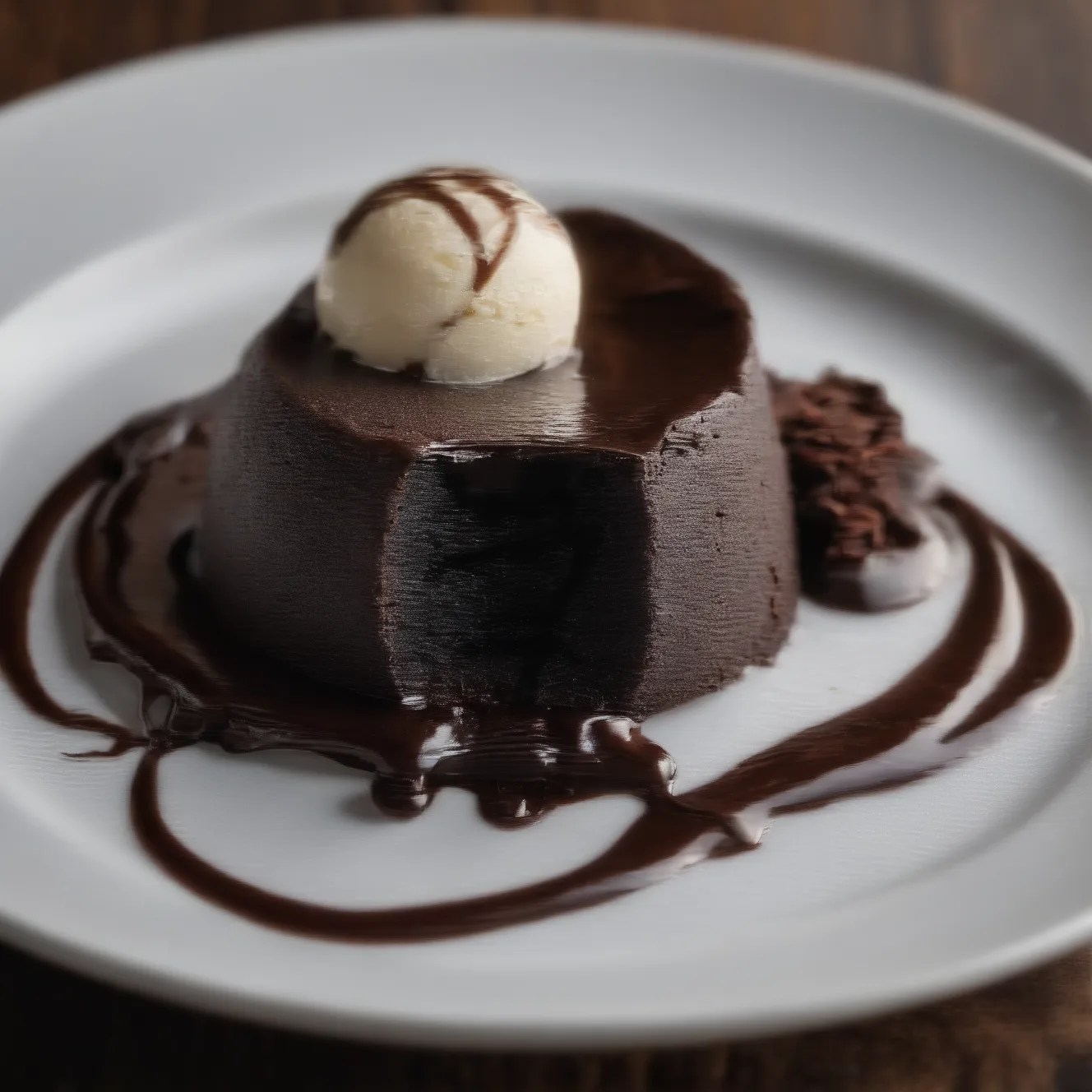
Copycat Chili’s Molten Chocolate Lava Cake
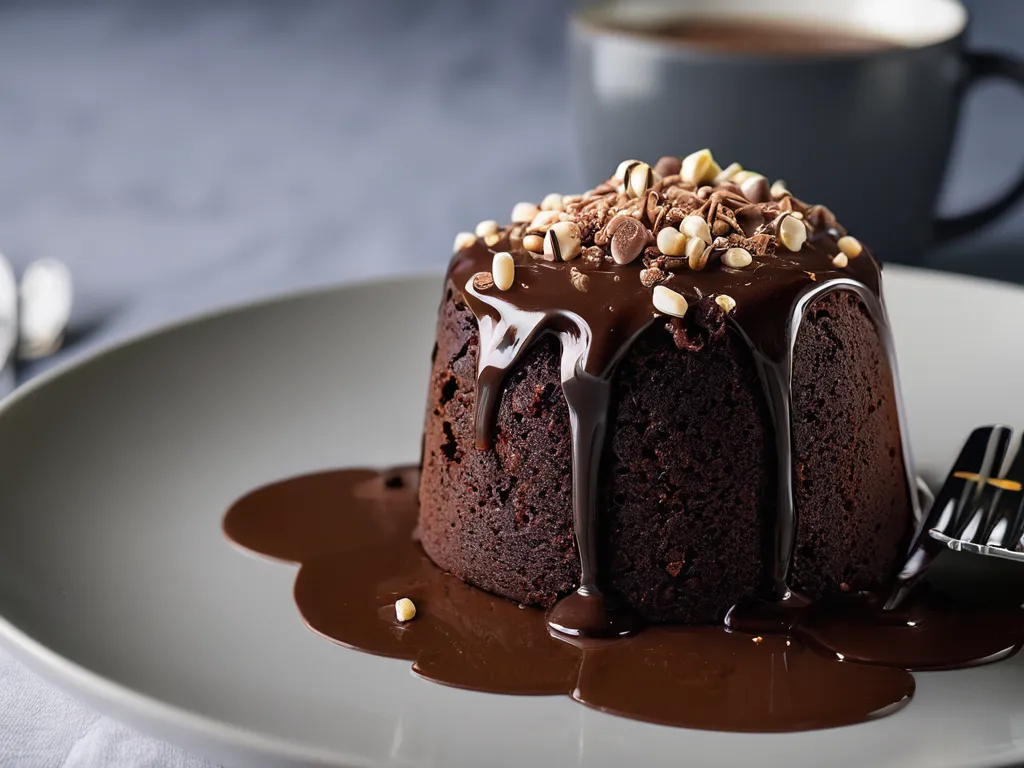
Chili’s Molten Chocolate Lava Cake is the restaurant dessert that never goes out of style. Since Chili’s added it to the menu in 1998 — the same year molten lava cake was making its way from upscale restaurant tasting menus into casual dining — the chain has sold tens of millions of them. The server sets it down with a scoop of Blue Bell Homemade Vanilla Ice Cream, a caramel drizzle, and a chocolate shell that cracks when you tap it. When you push a spoon through the center, the interior flows out.
At the restaurant it costs approximately $7–9 depending on location. Made at home, each cake comes out to about $1.50.
The challenge isn’t the ingredients. It’s the timing. A lava cake is intentionally undercooked — the outer edge sets into a moist, fudgy cake while the center stays liquid. Too little time and the outside is raw. One minute past the window and the center sets fully and you have a chocolate cupcake without frosting. The target is narrow, and every oven is different. But once you find your oven’s number, you’ll be consistent every time.
TL;DR
Melt 4 oz bar chocolate (not chips) with 4 tablespoons butter. Stir in sifted powdered sugar, 2 eggs + 2 yolks, vanilla, 6 tablespoons flour. Divide into buttered and cocoa-dusted 6-oz ramekins. Bake at 425°F for 12–13 minutes — edges set, center jiggles. Invert immediately onto plates, serve with vanilla ice cream. Batter can be made 24 hours ahead and baked straight from the fridge (add 1–3 minutes). About $1.50/serving vs. ~$8 at Chili’s.
The Chocolate Matters More Than Anything Else
The most common copycat mistake is using chocolate chips. Chips contain stabilizers designed to hold their shape through baking — they resist melting. For a lava cake, you need chocolate that melts completely and flows freely when the crust is broken.
Use a bar of semisweet or bittersweet chocolate at 60–70% cacao. Ghirardelli, Guittard, and Valrhona are all reliable choices at most grocery stores. Chop it yourself. The slightly higher cacao percentage also means a cleaner chocolate flavor with less sweetness competing with the powdered sugar in the batter.
Milk chocolate is too sweet and has less cocoa butter, making the center denser and less fluid.
Ramekin Prep Is the First Place People Fail
A lava cake needs to release cleanly from the ramekin. If it sticks — even in one small spot — the cake tears apart when you invert it and the molten center spills before it reaches the plate.
Use soft (not melted) butter and get it into every surface of the ramekin: the bottom, the full sides, and the top rim. Then add a small spoonful of unsweetened cocoa powder (not Dutch-process — it can make the exterior look grey) and rotate until every coated surface has a thin dusting. Tap out the excess. The cocoa acts as a dry lubricant and also adds a thin chocolate crust on the outside of the cake.
Set the prepared ramekins on a sheet pan so you can move them in and out of the oven without touching each individually.
Room-Temperature Eggs and Powdered Sugar
Two technique details that look like minor fussiness but actually matter:
Room-temperature eggs. Cold eggs added directly to warm melted chocolate can cause the chocolate to seize and become grainy. Pull the eggs out of the refrigerator 20–30 minutes before you start. If you forgot, put them in a bowl of warm (not hot) water for 5 minutes.
Powdered sugar, not granulated. Granulated sugar doesn’t fully dissolve in the short mixing time without heat — you end up with a slightly gritty batter and an uneven texture. Powdered sugar (confectioners’ sugar) disperses instantly and creates a smoother, more uniform batter. Sift it first to prevent lumps.
The One Technique That Changes Everything: Not Overmixing
Once the flour goes in, mix only until you see no dry flour — about 15–20 strokes with a rubber spatula. Overmixing develops gluten, which tightens the batter. Tighter batter can resist the molten center flowing when the crust is cut. The batter should look smooth and glossy, not stiff.
The Baking Window
At 425°F, a 6-oz ramekin filled to 2/3 depth needs 12–13 minutes. At exactly 12 minutes, open the oven and do the jiggle test: tap one ramekin with a wooden spoon or the tip of your finger. The outer 1–1.5 inches should be completely still. The center should move in one slow wave — like set gelatin being nudged, not like water sloshing.
If the whole surface still moves, give it 1 more minute. If the center looks completely set (matte, domed, immobile), you’ve gone too far — the center is cooked. There’s no fixing that; it’s still edible but not a lava cake.
Most home ovens are not calibrated accurately. If your oven runs hot (common), the cakes may be done at 10–11 minutes. Get an inexpensive oven thermometer and check it once — the data is useful for every recipe you bake, not just this one.
Serving: Speed and Order
You have about 90 seconds from when the cakes come out of the oven before the residual heat finishes cooking the center. The sequence:
- Pull from the oven.
- Let sit in the ramekins for exactly 60 seconds. This lets the edge set enough to unmold cleanly but doesn’t cook the center further.
- Run a thin knife around the inside edge of each ramekin.
- Place a plate upside-down on top of the ramekin, hold both firmly, and flip in one motion.
- Lift the ramekin away. Tap the bottom if it doesn’t release immediately.
- Add ice cream and serve within 30 seconds.
Plate everything you need — plates, ice cream ready to scoop — before the cakes go in the oven. Molten lava cake is not a dessert you assemble leisurely.
Make-Ahead Method (For Dinner Parties)
This is the most useful thing to know: the batter holds in the refrigerator for up to 24 hours. Pour the finished batter into the prepared ramekins, cover each tightly with plastic wrap, and refrigerate. When you’re ready to serve, bake them straight from cold — do not bring to room temperature.
Cold batter requires 13–16 minutes at 425°F (the extra time is for the outside to heat through before the center starts to cook). Start checking at 13 minutes with the jiggle test.
The refrigerator-ahead method actually gives you a wider window of doneness because the thermal gradient between the edges and center is larger — the edges warm up faster relative to the center. Experienced restaurant pastry cooks often prefer the cold-start method for exactly this reason.
Variations
Salted caramel center: Omit the molten chocolate center concept and instead freeze a tablespoon of thick salted caramel sauce in an ice cube tray until solid. Press one frozen caramel cube into the center of each filled ramekin before baking. The heat melts the caramel during baking, creating a caramel lava effect instead.
Espresso chocolate: Add 1 teaspoon of instant espresso powder to the melted chocolate mixture. Coffee amplifies chocolate flavor without adding a detectable coffee taste — it just makes the chocolate taste more chocolate-y. Chili’s doesn’t do this, but it raises the bar significantly.
Peanut butter lava: Freeze 1 tablespoon of peanut butter mixed with a pinch of salt and a teaspoon of honey per ramekin until solid (about 1 hour). Press one frozen peanut butter disc into the center of the batter. The hot cake melts it during baking, creating a peanut butter flow instead of chocolate. Use dark chocolate in the batter to balance the sweet peanut butter.
Cost vs. the Restaurant
Chili’s Molten Chocolate Lava Cake is approximately $7–9 per serving (prices vary by location; confirm at your local Chili’s or on the app). Chili’s official nutrition for the full dessert as served — with the Blue Bell ice cream and caramel drizzle — is approximately 1,171 calories per serving. The homemade version in this recipe, with a 1/2-cup scoop of vanilla ice cream, runs approximately 620–650 calories per cake.
| Chili’s (as served) | This homemade version | |
|---|---|---|
| Price per serving | ~$7–9 | ~$1.50 |
| Calories | ~1,171 | ~620–650 (with ice cream); ~460 without |
| Chocolate | Molten center + crunchy chocolate shell | 60–70% bar chocolate, no shell |
| Topping | Blue Bell Homemade Vanilla + caramel drizzle | Your choice of vanilla ice cream |
| Make-ahead | No | Yes — batter holds 24 hrs in the fridge, 1 month frozen |
Four restaurant servings at ~$8 each is $32. This recipe makes four cakes for approximately $6 total: about $2.50 for 4 oz of quality bar chocolate, $1.50 for butter and eggs, $0.50 for flour and powdered sugar, and vanilla ice cream shared across other uses. About $1.50 per cake.
More Chili’s Recipes
- Chili’s Skillet Queso — five ingredients, done in ten minutes, the one Chili’s copycat everyone should know
- Chili’s Southwest Eggrolls — spicy chicken and black bean filling; good before the lava cake
- Chili’s Texas Cheese Fries — the ranch-queso combo that makes sense as an appetizer course
- Chili’s Baby Back Ribs — for when you want the main course to match the dessert occasion
See all Chili’s copycat recipes →