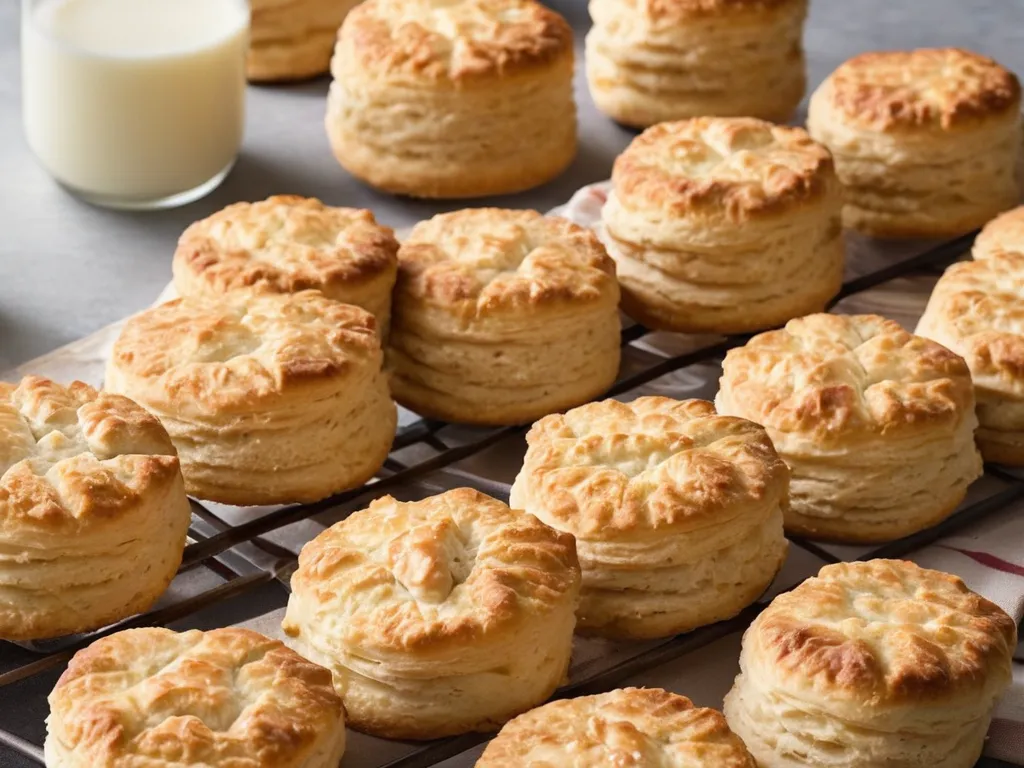
Copycat Cracker Barrel Biscuits
Prep time: 15 min Cook time: 12 min Servings: 4
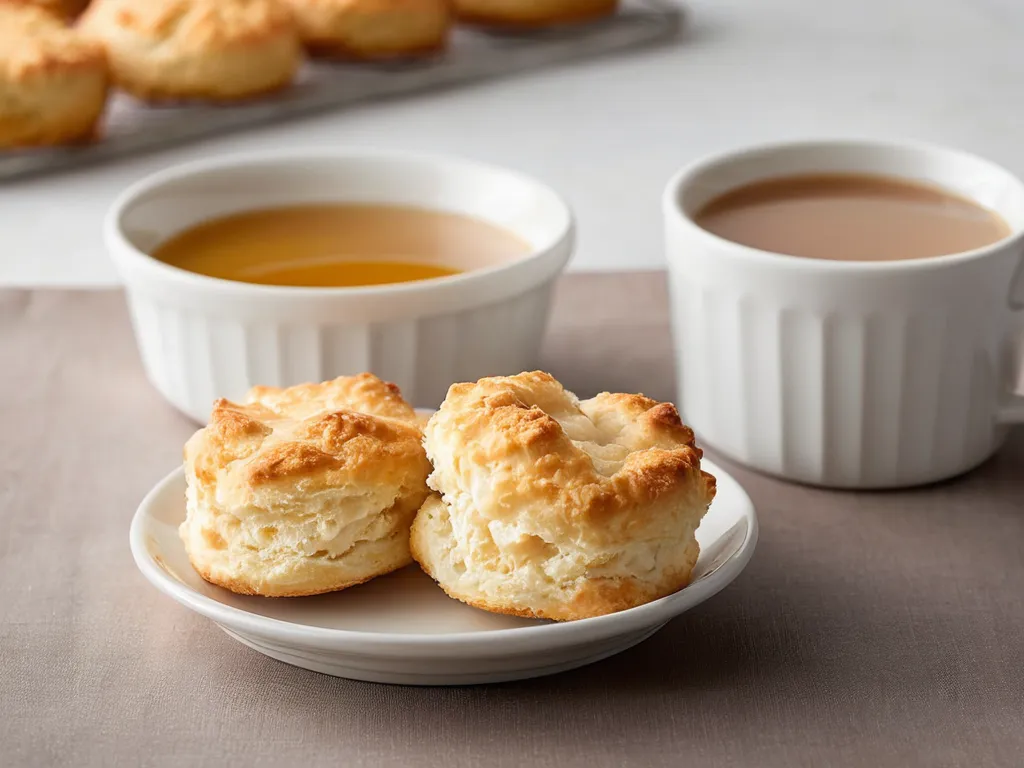
Cracker Barrel biscuits arrive at the table before you even order, and they set the tone for the entire meal. Tall, tender, with layers that pull apart like pages of a book, slathered in butter or dragged through sawmill gravy. They are arguably the best thing on the menu, and they are the simplest to replicate at home.
The technique behind these biscuits is not a secret. Cold butter, cold buttermilk, minimal handling, and high heat. That is the entire playbook. Where most home bakers go wrong is overworking the dough or using room-temperature ingredients. Keep everything cold, handle the dough as little as possible, and your biscuits will rise tall and flaky every single time.
This recipe yields about 8 biscuits, which serves 4 people generously at 2 biscuits each. Scale it up easily for a crowd — just keep the ratios consistent and make sure your butter stays cold throughout.
Why Make It at Home?
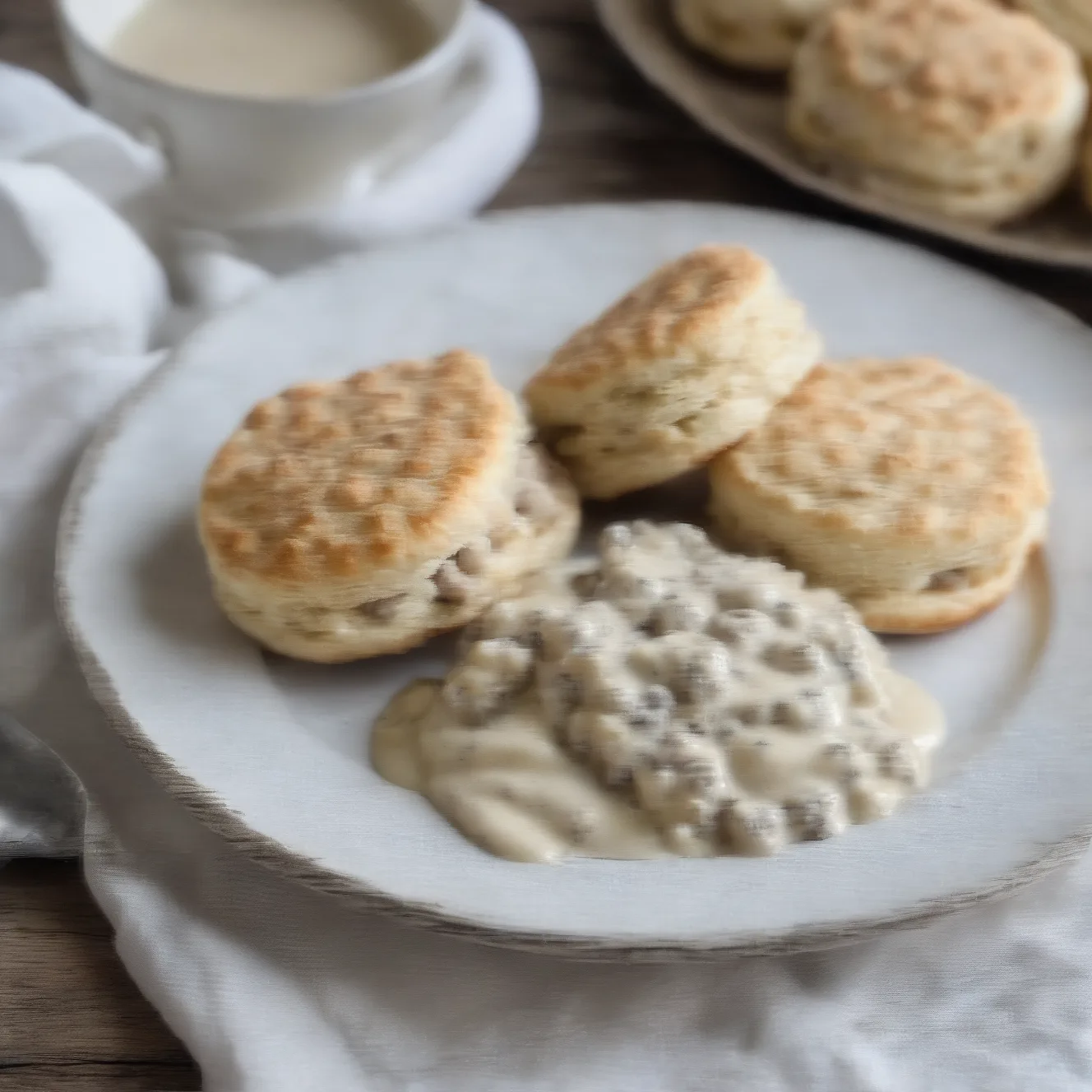
A Cracker Barrel breakfast with biscuits and gravy costs around $11 to $13 per person. This batch of biscuits costs under $2 total to make. Even if you add homemade sausage gravy, you are looking at roughly $5 to feed four people. That is less than the price of a single biscuit-based breakfast at the restaurant. The ingredients are basic pantry items, so you can make these on a whim any morning without a special shopping trip.
What Makes Cracker Barrel’s Biscuits So Good
The foundation of a Cracker Barrel biscuit is the ratio of fat to flour. They use a generous amount of butter relative to the flour, which creates a rich, tender crumb rather than a dry or bready one. The buttermilk reacts with the baking soda and baking powder to produce lift, and its acidity tenderizes the gluten, keeping the biscuit soft inside.
What separates a great biscuit from a decent one is the lamination. Folding the dough in thirds three times creates alternating layers of butter and flour. When the biscuit hits the hot oven, the butter melts, the water in the butter creates steam, and those layers puff apart. This is the same principle behind puff pastry, just applied in a much simpler way.
Cracker Barrel also bakes their biscuits touching each other on the pan. This forces them to rise upward instead of spreading outward, producing that tall, proud shape. The sides stay soft while the top and bottom develop a light golden crust. Brushing with melted butter straight out of the oven adds shine and a final layer of richness.
Tips & Variations
- Freeze your butter. Grating frozen butter on a box grater and then tossing it with the flour is even faster than cutting it in and keeps it colder longer.
- Do not twist the cutter. Pressing straight down and lifting straight up keeps the edges clean and allows the layers to rise without being sealed shut.
- Use a food processor carefully. You can pulse the butter and flour together in 3 to 4 short pulses, but stop well before the mixture looks uniform. You want visible butter pieces.
- Add cheddar and chives. Fold in 1/2 cup shredded sharp cheddar and 2 tablespoons chopped chives after adding the buttermilk for a savory variation.
- Make drop biscuits. If you want to skip the cutting and folding, increase the buttermilk to 1 cup and scoop the dough directly onto the baking sheet with a large spoon. They will not be as layered but still taste great.
Storage & Reheating
Baked biscuits keep at room temperature in an airtight container or zip-top bag for 2 days, or in the refrigerator for up to 4 days. They also freeze well for up to 2 months — wrap individually in plastic wrap and place in a freezer bag.
Reheat biscuits in a 350 degree F oven for 5 to 7 minutes until warmed through. You can also split them and toast them cut-side down in a buttered skillet over medium heat for 2 minutes. Microwaving works in a pinch but tends to make biscuits rubbery, so the oven or skillet method is strongly preferred. For frozen biscuits, reheat directly from frozen at 350 degrees F for 10 to 12 minutes.
More Cracker Barrel Copycat Recipes
Biscuits rarely show up alone at Cracker Barrel — round out the table with these staples:
- Cracker Barrel Buttermilk Pancakes — thick, fluffy buttermilk pancakes with crispy golden edges, the other Cracker Barrel breakfast essential that comes with every morning plate.
- Cracker Barrel Hashbrown Casserole — the restaurant’s most-ordered side: frozen shredded hashbrowns baked with sharp cheddar and cream of chicken until golden and bubbling.
- Cracker Barrel Chicken Fried Steak — cube steak double-breaded in seasoned flour and pan-fried crispy, smothered in white cream gravy for a full Southern comfort plate.
See all Cracker Barrel copycat recipes →