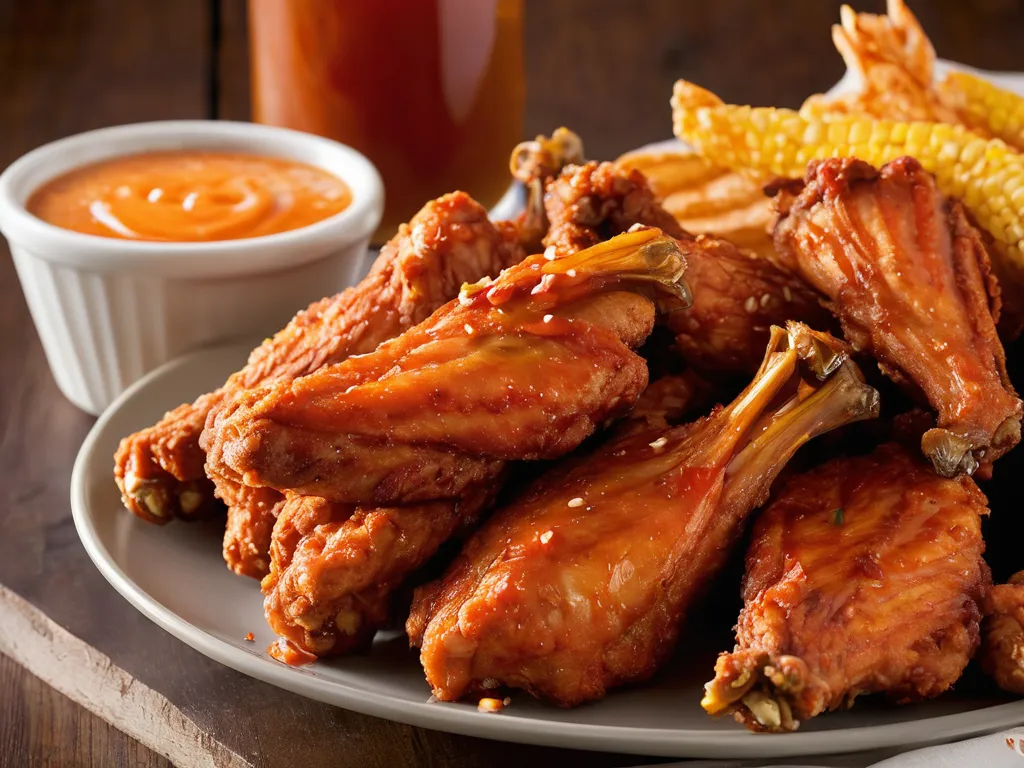
Copycat Hooters Wings
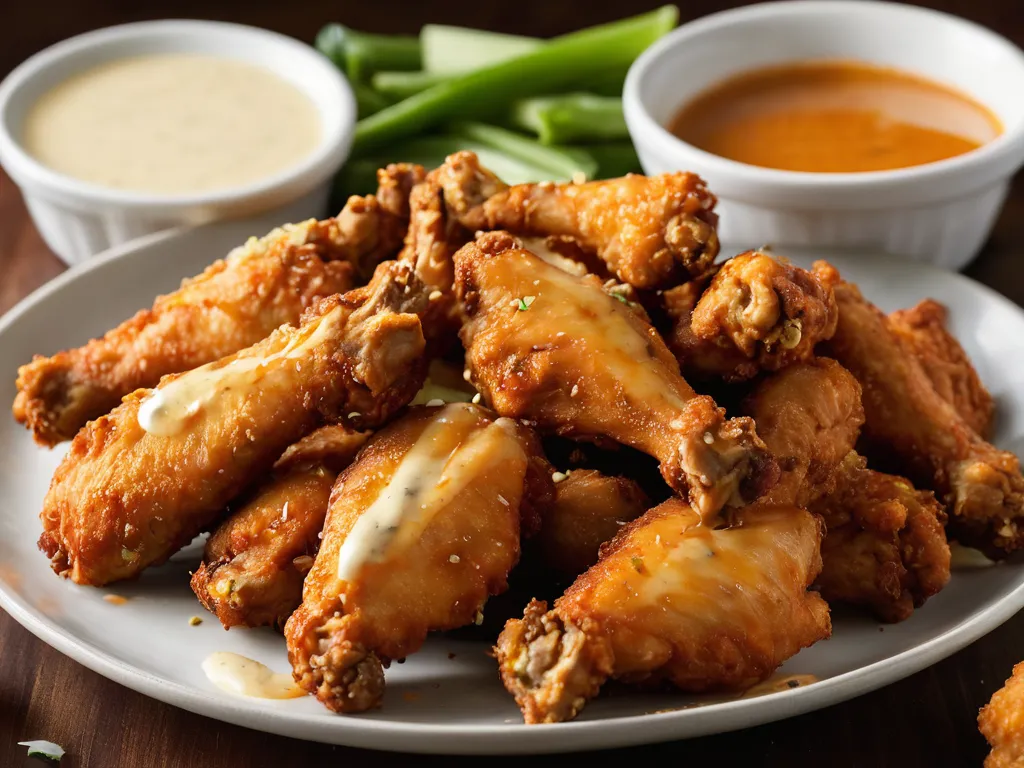
Two techniques every Hooters copycat recipe misses: the wings are breaded, and they’re refrigerated before they’re fried. Hooters has coated each wing in a seasoned flour mixture since they opened in Clearwater, Florida in 1983 — that’s not a detail, it’s the product. The 60–90 minute cold rest after breading is what sets the coating and turns a standard breaded wing into the extra-crunchy result Hooters is known for.
Most home cooks fry naked wings, get frustrated that the result tastes like a generic buffalo wing rather than Hooters, and assume the difference is the sauce. It’s mostly these two technique gaps.
TL;DR
Dry the wings thoroughly. Press into seasoned flour (all-purpose + whole wheat blend). Transfer to a rack and refrigerate uncovered 60–90 minutes — this step is the difference. Deep-fry at 375°F for 10–12 minutes until deeply golden. Toss in warm sauce immediately. Sauce ladder: Mild is butter-heavy, barely any heat; Medium is classic 1:1 buffalo balance; Hot is noticeably spicier; 3-Mile Island adds jalapeño brine and habanero Tabasco for ~30,000–50,000 Scoville; 911 goes higher still but is described as all heat, no flavor. Daytona Beach Style is a different preparation — naked wings, grilled post-sauce — covered below.
What Most Copycat Recipes Get Wrong
Skipping the breading. This is the primary failure. Hooters sells their proprietary wing breading mix commercially — a seasoned enriched flour blend available at hootersfoods.com and some grocery chains. The fact that they sell it is a direct confirmation that the coating is the core technique, not an incidental detail. Most copycat recipes fry naked wings and blame the sauce when the result tastes off.
Skipping the refrigeration rest. After breading, the wings need 60–90 minutes uncovered in the refrigerator before they hit the oil. This step is almost universally absent from copycat recipes and it’s the biggest technique gap. The cold rest dries the surface of the coating, allows the flour to bond more tightly to the chicken skin, and produces a noticeably crunchier result than wings fried straight from the breading station.
Cold oil or overcrowded batches. Below 350°F, the breading absorbs oil rather than crisping, producing greasy wings that fall apart when sauced. Frying 6–8 wings at a time in a Dutch oven keeps the temperature from dropping too far.
The wrong hot sauce base. Hooters’ bottled sauces list aged red cayenne peppers and distilled vinegar as the base — a profile closer to Louisiana Hot Sauce or Crystal than to Frank’s RedHot (which uses aged cayenne but has a vinegar-forward flavor profile that reads differently). Either works, but Crystal or Louisiana Hot Sauce produces a closer result to the restaurant flavor.
The Sauce Ladder
Hooters runs a clear heat escalation. All four classic sauces are cayenne-and-butter based; what changes is the ratio and what’s layered on top.
Mild — The most butter-forward of the lineup. About 3 parts butter to 1 part hot sauce. Very low heat, almost no tingle for anyone with spice tolerance. The dominant flavor is buttery and tangy from the vinegar in the hot sauce. Good for people who want the experience without the burn.
Home ratio: 6 tablespoons butter + 2 tablespoons hot sauce + 1 teaspoon vinegar
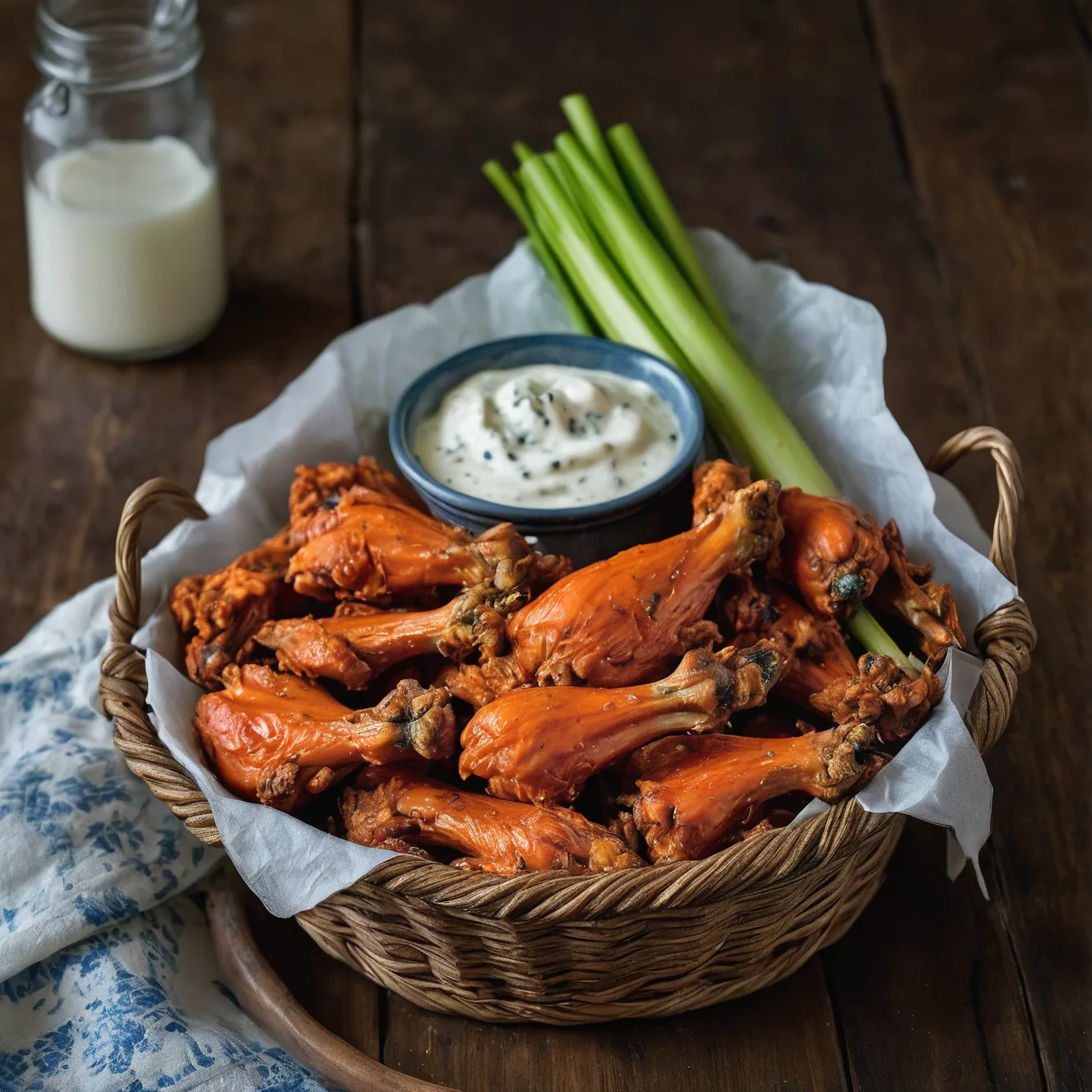
Medium — The classic 1:1 balance that most people think of as “buffalo sauce.” Equal parts hot sauce and butter, which gives you the full tangy cayenne flavor alongside richness. Recognizable as what you’d get at most wing places labeled “Medium.”
Home ratio: 4 tablespoons butter + 4 tablespoons (1/4 cup) hot sauce + 1 teaspoon vinegar
Hot — More hot sauce than butter. The heat is noticeably present and builds as you eat. Still coherent and flavorful rather than just painful — the butter keeps it from being one-dimensional.
Home ratio: 2 tablespoons butter + 1/2 cup Louisiana or Crystal hot sauce + 1 teaspoon vinegar (the primary recipe above)
3-Mile Island — Named after the 1979 Pennsylvania nuclear accident. This isn’t just “more hot sauce.” The bottled Hooters 3-Mile Island sauce adds jalapeño brine, additional red pepper, and Tabasco’s habanero layer on top of the cayenne base, producing heat that builds in stages. The Scoville level runs roughly 30,000–50,000 SHU — well above standard Frank’s RedHot (around 450 SHU) but below pure habanero sauce territory. For most heat-tolerant eaters it’s very manageable; for people who don’t eat spicy food regularly, it’s legitimately challenging.
Home ratio: 2 tablespoons butter + 1/2 cup Louisiana hot sauce + 2 tablespoons habanero hot sauce + 1 tablespoon jalapeño brine (from a jar of pickled jalapeños) + 1 teaspoon white vinegar
911 (off-menu/limited) — A separate hotter-still item that shows up on some Hooters menus. Described by frequent Hooters customers as “all heat, no flavor” — pure burn without the complexity of 3-Mile Island’s layered jalapeño-habanero combination. The 3-Mile Island is generally considered the better choice at the top of the heat range; 911 is for people who have exhausted it. Replicate at home by substituting pure habanero mash or extract for the entire hot sauce component and adding no butter.
Daytona Beach Style: A Different Recipe
Daytona Beach Style wings are not just a different sauce — they’re a different preparation. Hooters introduced this style in 2013 and it starts with naked wings (no flour coating), not breaded.
The process: fry the naked wings at 375°F for 10–12 minutes as usual, then toss in the Daytona sauce, then finish on a hot grill or grill pan to caramelize the sauce and add smoky char. The grilling step is what makes them distinctive — the sauce gets sticky and slightly charred where it contacts the grill grates, and the chicken picks up smoke that the fryer alone can’t provide.
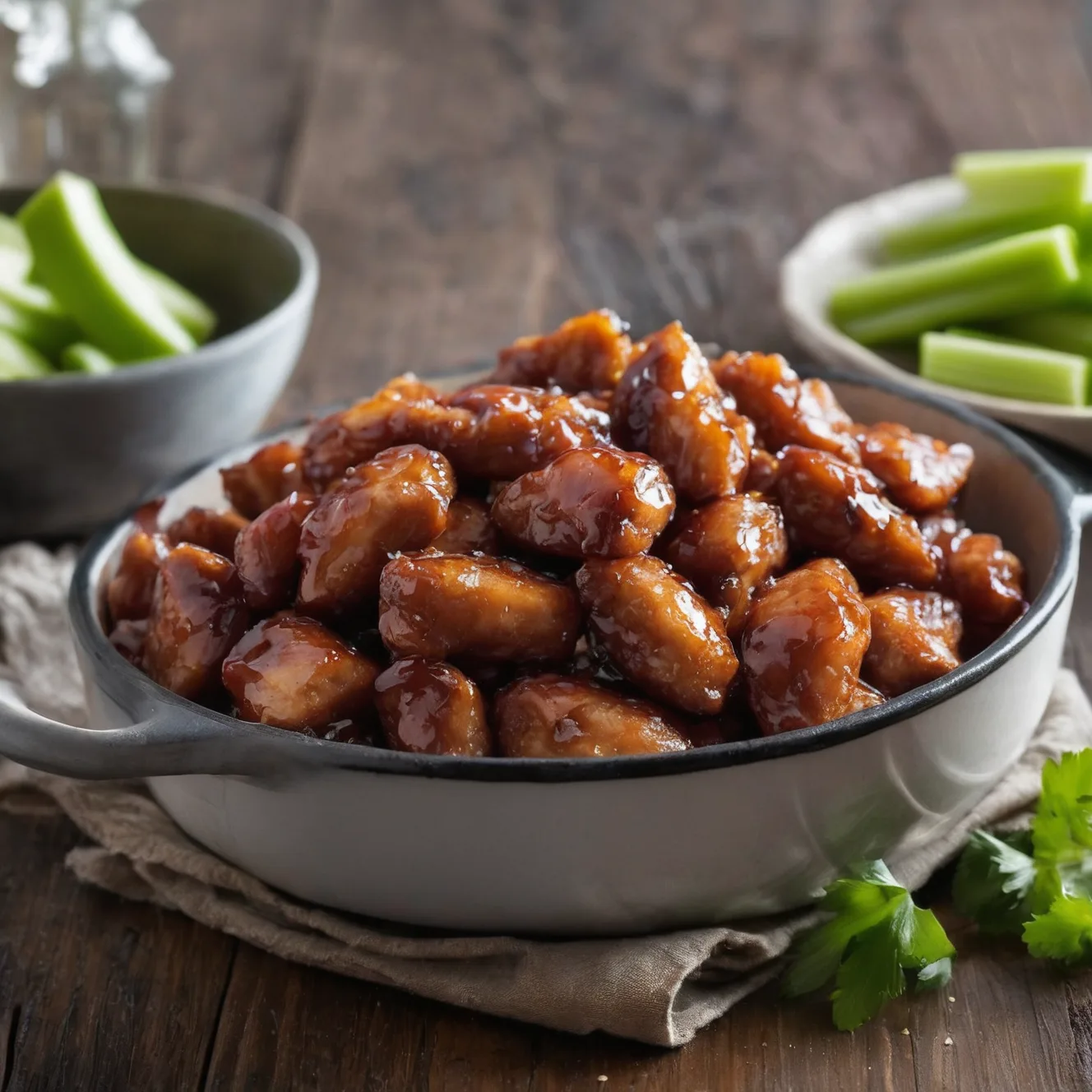
Daytona sauce: Combine 3 parts BBQ sauce (a sweet, tomato-forward style like KC Masterpiece or Sweet Baby Ray’s) + 1 part Frank’s RedHot + 1 tablespoon Worcestershire sauce + 1–2 tablespoons finely minced jalapeño (or jalapeño brine for more heat, less texture). Warm over low heat until combined. Toss the fried naked wings in the sauce, then lay them on a very hot grill or cast-iron grill pan and sear 2–3 minutes per side until the sauce chars in spots.
The flavor profile is entirely different from the classic buffalo sauces: sweet, smoky, sticky, and caramelized rather than vinegar-and-cayenne-forward.
The Breading: Flour, Rest, and Why Both Matter
Hooters’ commercial wing breading mix is an enriched wheat flour blend — the same flour type used in most commercial breading. The home recipe adds a small amount of whole wheat flour as a copycat approximation: whole wheat has a coarser particle size and more bran content, which creates a slightly grainier, more textured crust and browns more readily. If you don’t have whole wheat flour, use an additional 1/4 cup all-purpose — slightly less textured but still correct.
The cayenne and paprika in the breading aren’t just for heat. Paprika contributes to the reddish-orange color of the finished wing and the cayenne provides baseline warmth in the crust itself — even Mild-sauced wings have some interest from the breading.
The cold rest (60–90 minutes on a rack in the refrigerator after breading) is the technique most responsible for Hooters’ level of crunch. The mechanics: the cold dries the surface of the flour coating, draws a tiny amount of moisture from the chicken skin outward into the breading, and creates a paste layer that bonds flour to skin far more adhesively than a fresh-breaded wing has. A wing fried immediately after breading is good. A wing that has rested cold is noticeably crunchier, with a coating that’s set rather than loose. This step adds time but requires no effort — bread them in the afternoon and fry them when you’re ready.
Sauce Emulsification
Every Hooters sauce is an emulsion of hot sauce and butter. When the emulsion holds, you get a glossy, clingy coating that looks like the restaurant version. When it breaks, you get an oily film with hot sauce pooling separately — visually unappealing and it slides off the wing.
Two things keep the emulsion stable: temperature and whisking. Melt the butter until just melted, not bubbling. Add the hot sauce (which is at room temperature or warmed slightly) and whisk vigorously until the mixture is uniform and slightly thickened. Don’t do this over heat — the emulsion is more stable at around 130–140°F than it is near boiling, where the fat molecules have too much energy to stay combined. If the sauce ever looks oily and separated, add 1 teaspoon of cold water and whisk again — water helps re-emulsify.
Cost vs. Hooters
| Hooters (10-piece) | Home (20-wing batch) | |
|---|---|---|
| Price | $13–15 + tip | $13–21 total |
| Per wing | $1.30–1.50 | $0.65–1.05 |
| Sauce choice | 17 options (wet + dry rub) | Any of the four ladders + custom |
| Wait time | 15–25 min (busy nights) | 30 min + 60–90 min fridge rest |
More Wing Chain Copycats
- Copycat Buffalo Wild Wings Garlic Parmesan Wings — BWW’s version is mayo-based, not butter; that’s why most copycats taste off
- Wingstop Lemon Pepper Wings — the dry-style alternative to sauced wings
- Copycat Buffalo Wild Wings Mango Habanero Sauce — sweet tropical heat from a direct competitor
- Buffalo Wild Wings Asian Zing — the sweet chili-ginger sauce at BWW
- Wingstop Atomic Wings — Wingstop’s hottest option, for calibrating where 3-Mile Island sits on your personal heat scale