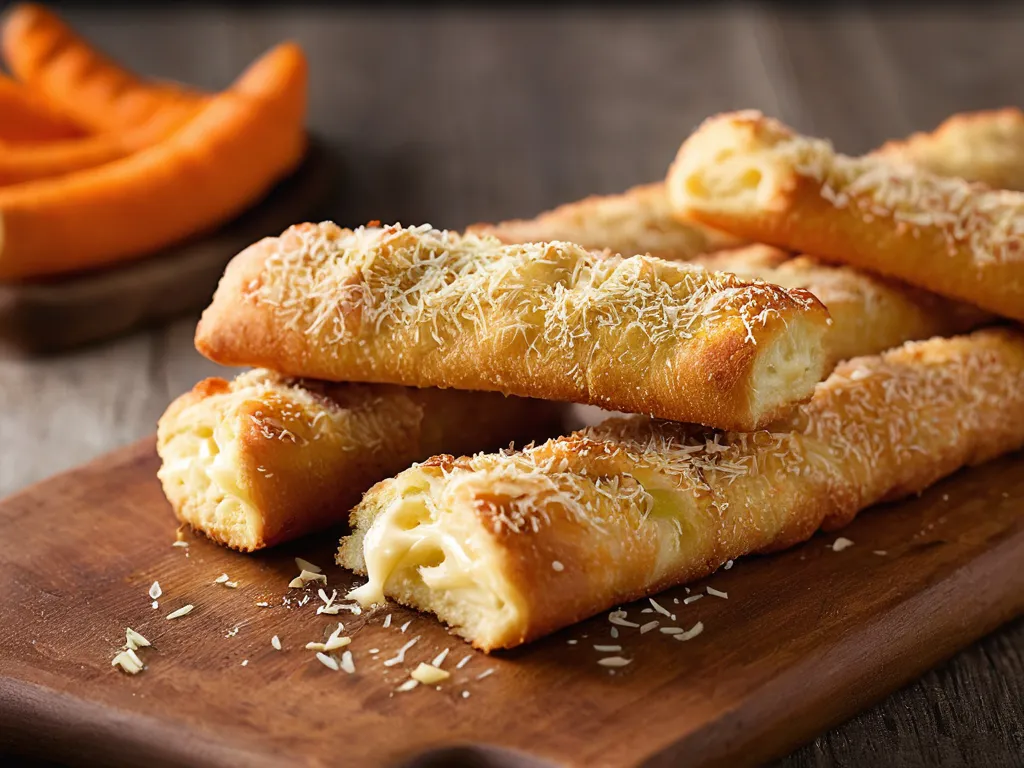
Little Caesars Crazy Bread
Prep time: 10 minutes (plus 20 min to warm the dough) Cook time: 12 minutes Servings: 8 breadsticks
TL;DR
Store-bought pizza dough, cut into strips, baked at 425°F until light golden, then brushed immediately with a garlic-butter-Parmesan coating. Takes 30 minutes. Costs $2–3 per batch versus $4–5 at Little Caesars. The only skill is pulling the bread before it overbakes and applying the butter fast while the surface is still hot.
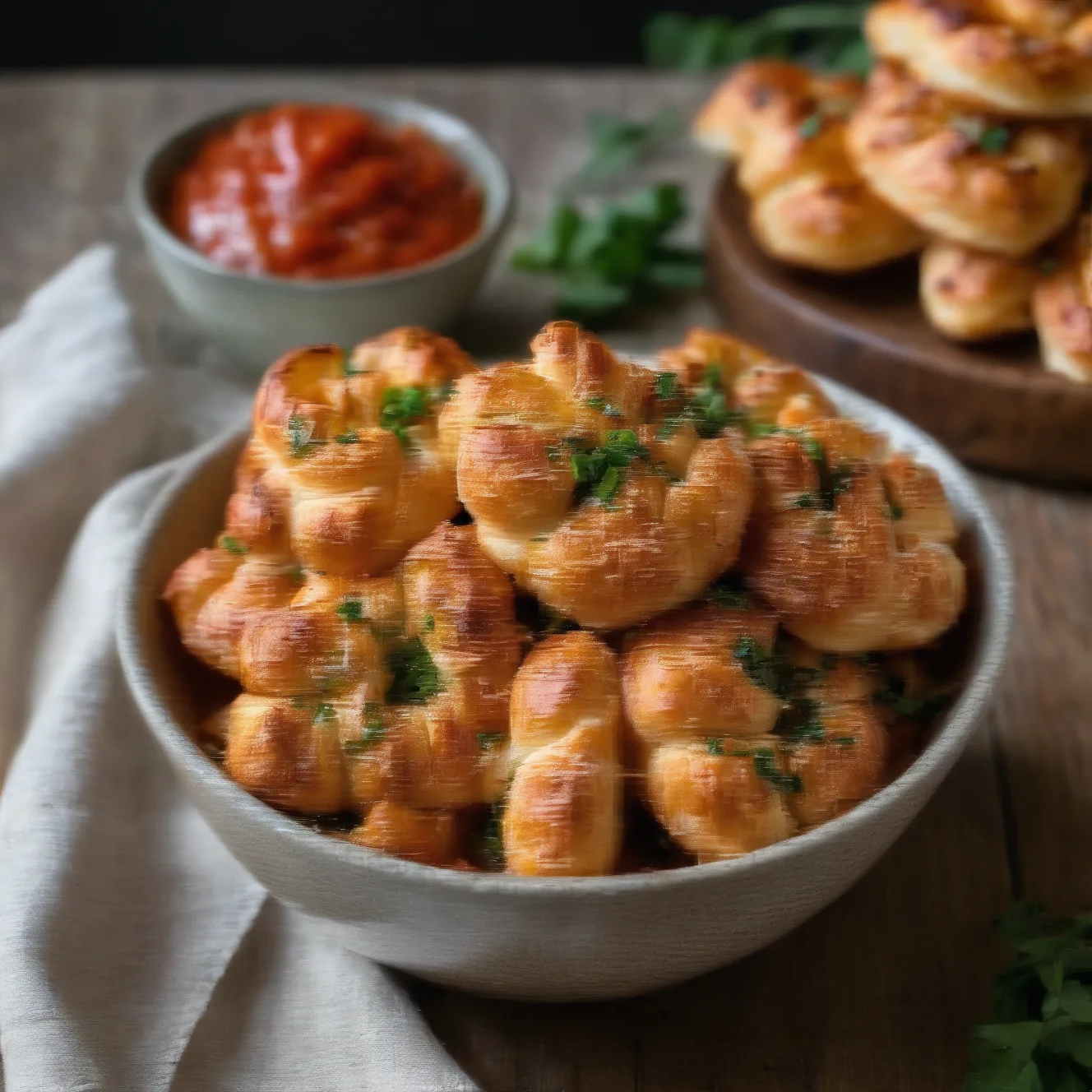
Little Caesars Crazy Bread has been on the menu since 1982 — almost as long as the “Pizza! Pizza!” campaign — and it has outlasted dozens of menu changes for one simple reason: it works. Eight soft, slightly chewy breadsticks slicked with garlic butter and dusted with Parmesan and salt, served alongside their sweet tomato Crazy Sauce. It’s a side that became a ritual.
The copycat is simpler than most people expect. The recipe has five real ingredients — dough, butter, garlic powder, Parmesan, salt — and zero advanced technique. What goes wrong at home isn’t the recipe; it’s the two details that don’t look like details: letting the dough warm up before you shape it, and hitting the just-baked bread with butter immediately, while the surface is still open and hot.
Why Crazy Bread Stays Soft When Most Garlic Bread Goes Hard
Most homemade garlic bread starts from a pre-baked loaf — a baguette, ciabatta, or Italian loaf. You’re adding butter and garlic to a finished product and re-baking it, which means you’re cooking it a second time. That second pass dries it out, thickens the crust, and makes the interior tighter.
Crazy Bread skips the pre-baked loaf entirely. It starts from raw pizza dough and bakes as a single piece, so the interior never has a chance to develop the dense crumb of an established loaf. The whole stick bakes together — a lightly elastic exterior forming around a soft, slightly pillowy center — and then the butter goes on hot, absorbing into the surface instead of sitting on it.
The temperature matters here. Butter applied to hot bread (within 60 seconds of coming out of the oven) gets drawn into the surface as the steam escapes. Butter applied to cooled bread pools on top and stays there. Little Caesars applies their butter sauce immediately in both dine-in and carry-out — that’s not coincidence.
The Dough: What Little Caesars Uses, and the Best Home Substitutes
Little Caesars uses a yeast-leavened pizza dough enriched with oil and a small amount of sugar — similar to standard American-style pizza dough, slightly softer than a Neapolitan dough. It’s not sweet on its own, but the sugar in the dough promotes browning and contributes to the light golden color you see at the edges. The dough is made in large batches centrally and proofed at the store.
For home use:
Store-bought fresh pizza dough (from Trader Joe’s, Whole Foods, or your local grocery’s bakery section) is the closest match and the fastest option. It’s already proofed once and needs only 20–30 minutes at room temperature before stretching. The Trader Joe’s plain pizza dough behaves almost identically to the Little Caesars dough — slightly sweet, very stretchable, and soft throughout after baking.
Pillsbury refrigerated pizza dough (the tube version) works in a pinch but produces a slightly denser result because it’s a quick-rise dough, not a slow-fermented yeast dough. The flavor is milder and the texture less elastic — functional, but the gap is noticeable side-by-side.
Homemade pizza dough gives you the best control. A standard recipe — 3 cups all-purpose flour, 1 cup warm water, 2 1/4 teaspoons active dry yeast, 1 tablespoon olive oil, 1 tablespoon sugar, 1 1/4 teaspoons salt — proofed for 1 hour until doubled, produces an excellent result. The slow yeast fermentation develops more flavor than any store-bought option.
The Garlic Butter: Why Garlic Powder, Not Fresh Garlic
Little Caesars uses garlic powder in their butter sauce, not fresh garlic. This is deliberate, not a shortcut.
Fresh garlic, when applied to hot bread, continues to cook from residual heat and can develop a harsh, bitter edge — especially at the higher concentration needed to coat an entire stick. Garlic powder dissolves evenly in melted butter and distributes uniformly with a pastry brush, giving you garlic flavor in every bite without hot spots or rawness.
The ratio in this recipe — 1 teaspoon garlic powder per 4 tablespoons butter — is modeled on professional copycat testing. Most tested copycat sources land between 3/4 and 1 1/4 teaspoons per 4 tablespoons. Below that line the garlic flavor is too subtle; above it the powder can clump and taste sharp.
Onion powder (1/2 teaspoon) rounds out the garlic note. It’s a background flavor — you won’t taste it distinctly, but the butter will taste flat without it.
The Parmesan: What Little Caesars Uses vs. the Home Upgrade
Little Caesars uses dry, shelf-stable grated Parmesan — the kind in the green Kraft container. Knowing this is the single most useful thing you can learn for replicating the original flavor.
Dry grated Parmesan has a fine, sand-like texture that sticks uniformly to the buttered surface and creates the slightly powdery, intensely salty coating that is distinctly Crazy Bread. It doesn’t melt — it adheres. If you want the restaurant experience as closely as possible, dry shelf-stable Parmesan is the correct choice.
If you want a home upgrade: freshly grated Parmesan from a block melts slightly on contact with the hot butter, adheres differently, and produces a richer, nuttier flavor. It’s objectively a better cheese — but it tastes like an elevated breadstick, not like Little Caesars Crazy Bread specifically. Use it if you’re making this for guests and want something genuinely impressive; use the dry version if you’re making it for nostalgia.
The recipe calls for fresh-grated as the default for quality. If you’re going for maximum authenticity, substitute the same quantity of dry shelf-stable Parmesan.
The Bake: Catching It at the Right Moment
The most common mistake in Crazy Bread copycats is overbaking. Most recipes tell you to bake until golden brown, which produces a breadstick with a chewier, dryer crust — fine, but not Crazy Bread.
The correct call is light golden — the tops should just be starting to color, the sides should be pale to slightly beige, and the bread should sound hollow when tapped lightly but still feel soft when pressed. This happens at 10–12 minutes at 425°F with store-bought dough (slightly longer with cold dough you didn’t warm up enough).
The internal temperature target is 190–195°F — fully cooked through but not dried out. If you’re nervous about whether the center is done, use an instant-read thermometer rather than relying on visual cues.
Crazy Sauce: What’s Actually in It
Crazy Sauce is Little Caesars’ proprietary tomato dipping sauce — sweeter and smoother than standard Italian marinara. It’s classified as a pizza sauce rather than a pasta sauce, which explains the flavor profile: tomato-forward, mildly seasoned, no visible herb flecks, no chunky texture.
The commercial formula is proprietary, but the distinguishing features are: tomato paste as the base (concentrated flavor), minimal herbs (garlic, light oregano), and a small amount of sugar that pushes it toward pizza sauce territory and away from marinara.
Copycat Crazy Sauce:
- 1/2 cup canned tomato sauce
- 1 tablespoon tomato paste (for body and depth)
- 1/4 teaspoon garlic powder
- 1/4 teaspoon sugar
- 1/8 teaspoon dried oregano
- Pinch of salt
Combine in a small saucepan, simmer 3–4 minutes until slightly thickened, and serve warm. Standard jarred marinara also works — the difference is noticeable but either is good.
Crazy Bread vs. Stuffed Crazy Bread: Which to Make
| Crazy Bread | Stuffed Crazy Bread | |
|---|---|---|
| Topping | Parmesan + garlic butter | Mozzarella-filled inside, garlic butter outside |
| Restaurant price | ~$3.99 / 8 sticks | ~$5.99–6.99 / 8 sticks |
| Texture | Pillowy, soft throughout | Bread exterior with a mozzarella pull inside |
| When to choose | Pizza night side, garlic bread sub | When you want a cheese-filled bite |
| Home method | Garlic butter applied post-bake | Fold mozzarella inside each strip before baking, then garlic butter |
Little Caesars’ mozzarella variant is currently called Stuffed Crazy Bread (first introduced in 1995, reintroduced in June 2020) — mozzarella is folded inside the dough before baking, not scattered on top. For a surface-cheese version, scatter 1/2 cup shredded low-moisture mozzarella over the cut strips just before baking and proceed as normal — this produces something closer to their Italian Cheese Bread, a related menu item. The mozzarella layer adds about 30–35 calories per stick.
Serving and Variations
Classic: 8 sticks with Crazy Sauce or marinara. The default.
Pizza night cluster: Serve alongside the Little Caesars Deep Dish copycat for a full-chain meal.
Brushed with both sides baked: For extra buttery coverage, brush the underside of each strip with garlic butter before baking, then brush the tops immediately after. Adds about 2 tablespoons of butter to the recipe.
Herb upgrade: Add 1/4 teaspoon dried Italian seasoning and 1/4 teaspoon dried basil to the butter. Takes it closer to Olive Garden breadstick territory — still good, just a different flavor direction. If that’s what you’re after, the Olive Garden breadsticks copycat is a better starting point.
Dipping variety: Beyond Crazy Sauce, these pair well with garlic-butter dipping sauce, ranch, Caesar dressing, and buffalo sauce. Anything you’d dip pizza into works here.
Practical Notes: Cost, Storage, and Reheating
Cost comparison: An 8-stick order at Little Caesars runs approximately $3.99 depending on location. This recipe makes 8 sticks for about $2–3 in ingredients (about $1.50–2.00 for the pound of dough, $0.40 for the butter, $0.30 for the Parmesan). The main advantage isn’t price — it’s quality: real butter, better cheese, and the ability to pull them at exactly the right moment.
Nutrition — restaurant vs. homemade: The Little Caesars original runs approximately 100 calories per stick (800 calories for the full 8-stick order), with about 3g fat and 135mg sodium per stick — roughly 1,290mg of sodium across a full order. The homemade version in this recipe is higher — about 220 calories and 380mg sodium per stick — because it uses more butter and Parmesan than the restaurant applies. If you’re calorie-conscious, halving the butter brings the homemade version close to the restaurant figure.
Same-day serving: These are meant to be eaten hot, within 15 minutes of coming out of the oven. They’re still good at room temperature but lose some of the textural contrast between the butter-soaked exterior and soft interior.
Reheating: Wrap 2–3 sticks in a damp paper towel and microwave 20–25 seconds. The damp towel creates steam that rehydrates the surface without overcooking. An air fryer at 300°F for 2 minutes is the other reliable method. Avoid dry toaster oven heat — it toughens the exterior.
Freezing: The baked bread does not freeze well. If you want to make ahead, portion and freeze the raw dough in breadstick-sized strips after cutting (don’t bake), then bake directly from frozen at 425°F for 16–18 minutes. Apply butter and Parmesan immediately after baking.
See Also
- Little Caesars Deep Dish copycat — the full pizza to serve alongside
- Domino’s Cheesy Bread copycat — similar concept, cheese-forward variant
- Olive Garden Breadsticks copycat — the herby, garlic-butter rival
- Pizza Hut Breadsticks copycat — sesame-seeded, crispier style