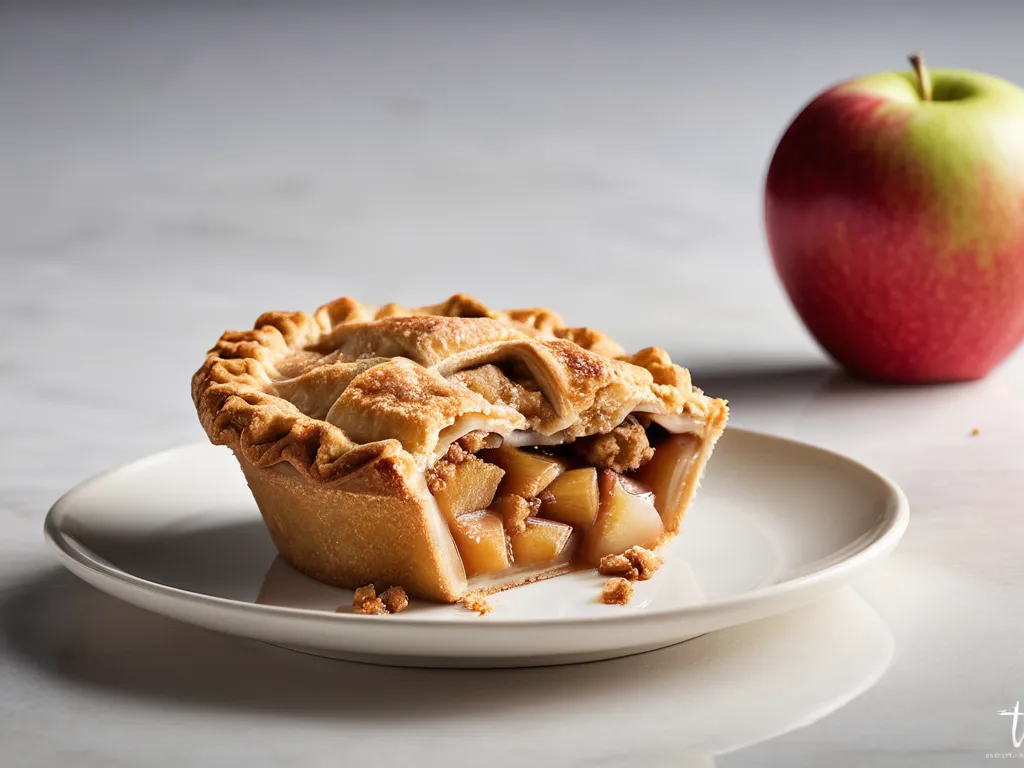
On June 23, 2026, McDonald’s is bringing the fried Hot Apple Pie back to the US for the first time since 1992. It’s a limited-time return tied to America’s 250th birthday — and it’s a reminder of what people have been making at home for three decades since McDonald’s switched to baking.
This recipe covers both: the original fried pie with a proper pie dough crust, and the baked puff pastry version that McDonald’s sells year-round.
A Brief History: 1968, 1992, and the Fried Pie Comeback
McDonald’s introduced the Hot Apple Pie in 1968, the same year as the Big Mac. It was deep-fried from the start — a crispy, bubbling hand pie cooked in beef tallow that became one of the most recognizable fast food desserts in American history.
In 1990, McDonald’s phased out beef tallow under pressure from health advocates who highlighted its saturated fat content. The switch affected both the fries and the apple pie fryers. Then in 1992, McDonald’s converted the pie from fried to baked across most US locations. The stated reason was health and consumer demand. Many customers noticed the difference and were not pleased.
A few American locations never fully made the switch. Hawaii McDonald’s locations reverted to the fried version after customers rejected the baked pie. The Downey, California location — the oldest McDonald’s in the world, originally opened in 1953 — has continued frying its pies. Outside the US, fried apple pies remain standard at McDonald’s in the UK, Mexico, Australia, China, and other markets.
For the 250th anniversary of American independence, McDonald’s announced the fried version is returning to participating US locations starting June 23, 2026 — a limited-time run available while supplies last (reported as about two weeks), timed to the Fourth of July. McDonald’s hasn’t confirmed a hard end date, so availability will vary by location. After that, it returns to being something you make at home.
The Apple Blend McDonald’s Actually Uses
The standard copycat recipe calls for Granny Smith apples, and the recommendation makes intuitive sense: Granny Smiths are tart, firm, and hold their shape in a hot oven or fryer. But McDonald’s filling isn’t particularly tart. It’s notably sweet, with mild apple flavor that works as a backdrop for the cinnamon rather than competing with it.
McDonald’s uses a blend of 5–6 American-grown apple varieties. Confirmed in the mix: Gala, Fuji, Golden Delicious, Jonagold, Ida Red, and Rome. These are all sweeter and less acidic than Granny Smith.
For the closest homemade match: use Fuji, Gala, or Golden Delicious, or a mix of all three. They’re firm enough to hold up during cooking, sweet enough to match McDonald’s flavor profile, and available year-round at most grocery stores.
If you want more complexity than McDonald’s but still want to match the spirit of it, use two Fuji apples and one Granny Smith — the minority of tart apple adds depth without making the filling sour.
Whatever you use: cut to ¼-inch dice. Small, uniform pieces cook evenly, distribute through the pastry without leaving gaps, and release controlled amounts of liquid that the cornstarch can actually manage.
The Two Crust Options Are Not Interchangeable
Puff pastry and pie dough behave completely differently in heat, which is why this recipe treats them as separate methods rather than interchangeable options.
Puff pastry works for baking. The layered butter-and-dough structure puffs dramatically in a hot oven, creating a shatteringly flaky exterior with good visual drama. In hot oil, those same layers absorb fat immediately as they separate — you end up with something greasy and heavy rather than crispy and light. Don’t fry with puff pastry.
Pie dough (a blend of butter and shortening) works for frying. The compact fat-and-flour structure creates a crispy, slightly dense exterior in hot oil — close to what the original McDonald’s pie tasted like. In the oven, pie dough produces a more tender, slightly sturdy result. It works for baking but lacks the drama of puff pastry.
The right tool depends on which method you’re using. The fried version instructions below use pie dough. The baked version uses puff pastry.
Why the Filling Must Cool Before Assembly
The most common reason homemade hand pies have a soggy bottom is hot filling. Hot filling releases steam the moment it contacts the pastry, saturating the dough before the oven or oil can dry it out.
Cold or room-temperature filling has no steam. The crust sets first, then the filling heats from the outside in. The result is a crust that crisps properly before being exposed to moisture.
Practical rule: if the filling is warm enough that you can feel heat radiating from the bowl, it’s still too hot. Let it cool completely — 20 minutes at minimum, or make it the day before and refrigerate it.
Frying the Pies Correctly
The target oil temperature is 350°F — use a thermometer. Too low (below 325°F) means the dough absorbs oil before it crisps; too high (above 375°F) means the outside darkens before the filling heats through.
Fry 2–3 pies at a time. Adding too many pies drops the oil temperature sharply, and recovery takes time. Active bubbling around the pie is normal and expected — it’s water evaporating from the pastry, which is exactly what creates the crust.
Drain on a rack, not paper towels. Paper towels trap steam underneath the pie and soften the bottom crust within minutes. A rack over a sheet pan lets air circulate all around and keeps the crust crisp.
The filling inside will be significantly hotter than the crust. Let the pies rest at least 5 minutes before eating, and expect the filling to stay dangerously hot for longer than the exterior suggests.
Getting the Baked Version Right
For the baked puff pastry version, three things drive the result:
Seal firmly. Puff pastry is springy — a gentle fork crimp that looks sealed at room temperature will pop open when the layers start to expand in the oven. Apply real pressure all the way around the edges.
Vent properly. Cut 3 slits across the top, each about ½ inch long. Without vents, steam lifts the top crust unevenly and splits random seams. With vents, the filling bubbles up visibly through the openings, which tells you the interior is hot and the cornstarch has fully activated.
Bake to real color. Deep amber, not pale gold. Most bakers pull puff pastry too early at the 15-minute mark. At 15 minutes it looks done but isn’t — the layers in the middle are still doughy. Give it the full 20–22 minutes at 400°F. A darker crust means drier pastry, which means actual flake rather than a soggy interior layer.
Cost Breakdown
| Ingredient | Approx. Cost |
|---|---|
| 3 medium Fuji or Gala apples | $1.50–2.50 |
| Puff pastry (2 sheets) | $2.50–4.00 |
| Sugar, cornstarch, cinnamon | $0.50 |
| Butter, lemon, egg | $0.75 |
| Total for 8 baked pies | ~$5.25–7.75 |
| Per baked pie | ~$0.65–0.97 |
For the fried version, the pie dough ingredients cost about $2–3 total, and you’ll use about $0.50 worth of oil. Total for 8 fried pies: roughly $5–6 — about $0.62–0.75 per pie versus $1.29–$1.89 at McDonald’s.
More McDonald’s Copycat Recipes
- Copycat McDonald’s Fries — the double-fried, blanching technique that gets you the right starch structure
- Copycat McDonald’s Big Mac — full build including the Special Sauce formula
- Copycat McDonald’s Hash Brown — grated potato and onion pressed into a rectangle, pan-fried until crispy
- Copycat Cracker Barrel Fried Apples — a standalone cinnamon apple side dish with butter and brown sugar
- Copycat McDonald’s McFlurry — soft-serve base with mix-ins, made at home without special equipment