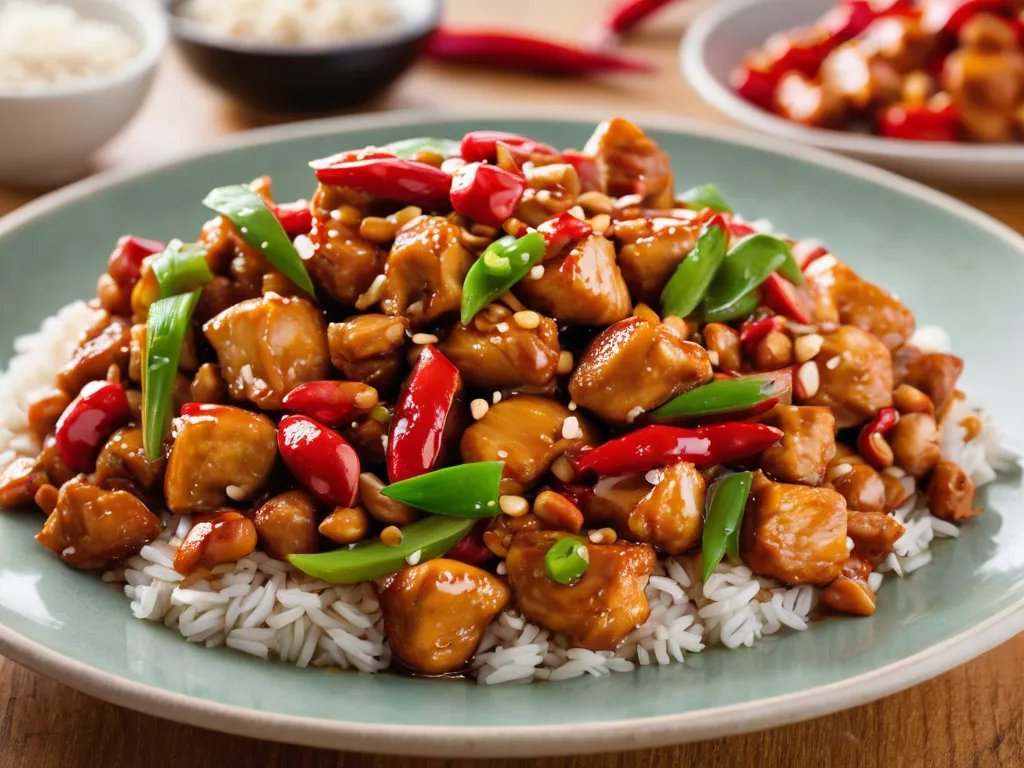
Copycat Panda Express Kung Pao Chicken
Prep time: 15 min Cook time: 12 min Servings: 4
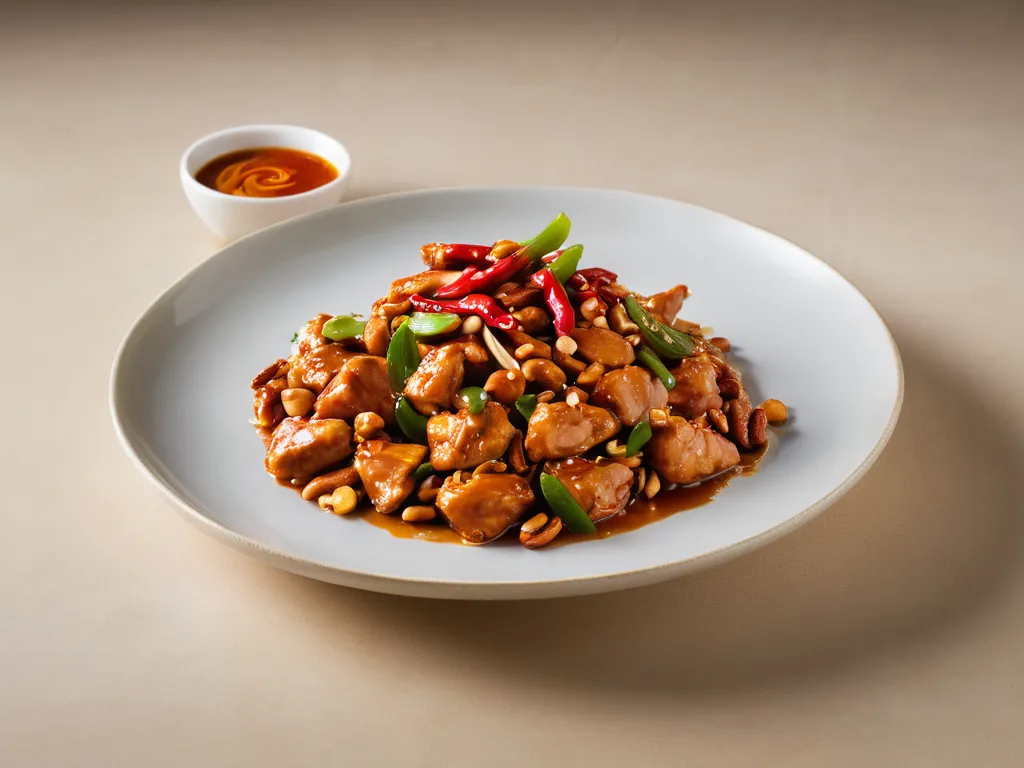
Panda Express Kung Pao Chicken is one of those dishes that hits every note at once — salty, sweet, spicy, and crunchy. The chicken is tender, the peanuts add texture, and those dried chilies deliver a slow burn that builds with every bite. It has been a menu staple for years and remains one of the most ordered items at any Panda Express location.
This version nails the flavor profile using fresh ingredients you can find at any grocery store. The key difference between your kitchen and a Panda Express steam tray is time. Your version goes from wok to plate in under 30 minutes, which means the chicken stays crisp, the vegetables keep their snap, and the sauce coats everything in a glossy, flavorful layer instead of pooling at the bottom of a container.
The recipe works on a weeknight without any special planning. If you can chop vegetables and stir a pan, you can make this.
Why Make It at Home?
A Kung Pao Chicken plate at Panda Express costs around $8.50 for a single serving with a side. This recipe makes four generous portions for roughly $12 total — about $3 per plate. That is a 65% savings, and you get significantly more chicken per serving. Add steamed rice at home for pennies and you are feeding a family of four for less than the cost of two takeout plates.
Beyond cost, you control the oil, salt, and sugar levels. Panda Express uses a heavier hand with sodium and sugar than most home cooks would prefer, and the food sits under heat lamps before it reaches your tray. Fresh from the wok is a different experience entirely.
What Makes Panda Express’s Kung Pao Chicken So Good
The flavor comes from a balance of three forces: the savory-sweet sauce, the dried chili heat, and the roasted peanut crunch. Panda Express uses a dark soy-based sauce with hoisin that gives the chicken a slightly caramelized glaze. The sugar in the sauce is not overwhelming, but it rounds off the vinegar and soy, creating a flavor that keeps you reaching for the next piece.
The dried red chilies are there for aroma and slow heat, not for eating directly. When they hit the hot oil, they release capsaicin into the cooking fat, which then coats every ingredient in the wok. The Sichuan peppercorns add a numbing quality that is subtle but essential — without them, the dish tastes flat.
Peanuts are the final piece. They absorb a small amount of the sauce while keeping their crunch, creating a textural contrast against the tender chicken and soft vegetables. Roasted peanuts work best here because raw peanuts will not have enough flavor to stand up to the sauce.
Tips & Variations
- Use thigh meat. Chicken thighs stay juicier than breast in high-heat cooking. They also absorb sauce better because of their slightly higher fat content.
- Crush, do not grind, the Sichuan peppercorns. You want coarse pieces that release flavor during cooking but can be seen and avoided by anyone who finds the numbing sensation too intense.
- Control the heat. Start with 5 dried chilies if you are sensitive to spice. The full 8 delivers moderate heat that builds over the course of the meal.
- Add celery for crunch. Some Panda Express locations include diced celery. Slice two stalks on a bias and add them with the bell pepper if you want that variation.
- Velvet the chicken for extra tenderness. After tossing with cornstarch, add one egg white and refrigerate for 20 minutes. This creates a silky coating that protects the meat during searing.
Storage & Reheating
Store leftovers in an airtight container in the refrigerator for up to 3 days. The peanuts will soften overnight, which is unavoidable. If that bothers you, keep a handful of extra roasted peanuts and toss them on top after reheating.
Reheat in a skillet over medium-high heat with a splash of water to loosen the sauce. Microwave works in a pinch — cover the container and heat in 60-second intervals, stirring between each. Avoid reheating more than once, as the chicken will dry out. This dish does not freeze well because the vegetables and peanuts lose their texture completely after thawing.
More Panda Express Copycat Recipes
Order it alongside these other Panda Express favorites:
- Panda Express Orange Chicken — the sweet, citrusy counterpart to this spicy chicken; Panda Express’s best-selling item and the natural order-together partner at the counter.
- Panda Express Beijing Beef — crispy flank steak strips in a sweet-tangy sauce with bell peppers; equally bold and addictive, a great way to round out a full Panda spread.
- Panda Express Walnut Shrimp — crispy shrimp in a honey-mayo cream sauce with candied walnuts; a rich, indulgent contrast to the Sichuan heat here.
See all Panda Express copycat recipes →