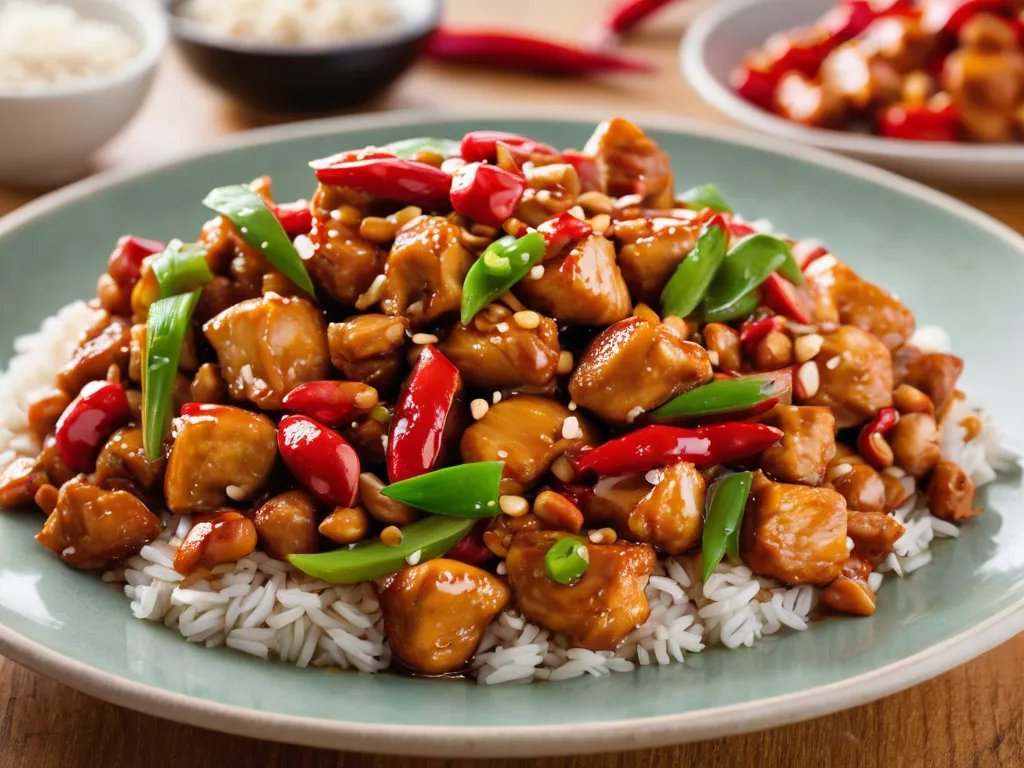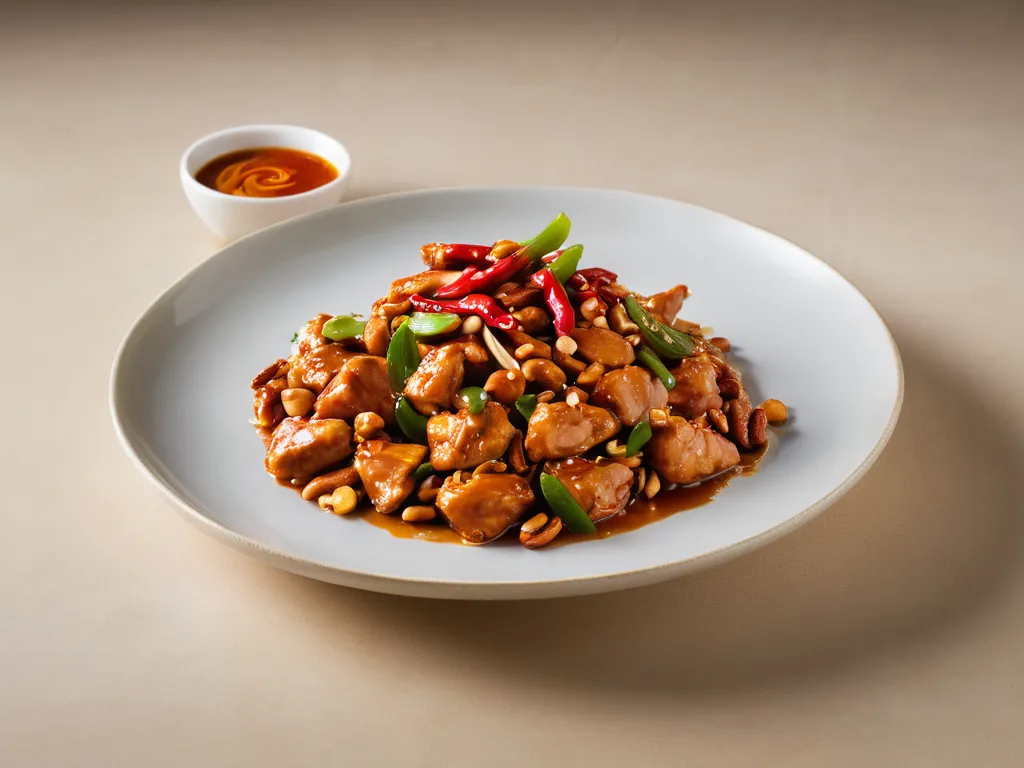
Copycat P.F. Chang’s Kung Pao Chicken
Prep time: 20 min Cook time: 12 min Servings: 4
P.F. Chang’s Kung Pao Chicken sits a tier above the fast-casual version. The chicken is velveted before cooking, the sauce has more depth from black vinegar and dark soy, and the Sichuan peppercorns deliver a numbing tingle that lingers between bites. It is the kind of dish that looks effortless on the plate but involves several deliberate techniques working together.
This recipe captures that sit-down restaurant quality using a method that moves fast once you start cooking. The actual wok time is under 10 minutes. The prep — velveting the chicken, mixing the sauce, prepping the vegetables — takes another 15-20 minutes. Make the sauce and velvet the chicken simultaneously, and the entire dish comes together in half an hour.
The difference between this and a typical takeout version comes down to two things: velveting and blistered chilies. Both are simple techniques that take minutes but transform the final dish from good to restaurant-caliber.
Why Make It at Home?
P.F. Chang’s Kung Pao Chicken runs $16.95 for a single entree, before tax and tip. With a side of rice, you are looking at $20 or more per person. This recipe produces four servings for about $14 in ingredients — roughly $3.50 each. That is close to an 80% savings per plate.
The portion size also favors the home cook. P.F. Chang’s serves a moderate amount of chicken stretched with vegetables and sauce. This recipe uses a full 1.5 pounds of thigh meat divided among four plates, which gives you a noticeably more generous protein serving. Pair it with steamed rice and you have a complete meal for a fraction of the restaurant bill.
What Makes P.F. Chang’s Kung Pao Chicken So Good
The velveting technique is the foundation. Coating chicken in egg white and cornstarch before cooking creates a thin, protective layer that seals in moisture. When the velveted pieces hit the smoking hot wok, the exterior sets into a silky shell while the inside stays juicy. Without velveting, the chicken will dry out and toughen within seconds of hitting high heat. This is the technique that separates restaurant-quality Chinese cooking from most home attempts.
P.F. Chang’s uses Chinese black vinegar in their sauce, which has a malty, complex acidity that rice vinegar cannot replicate. Black vinegar — sometimes labeled Chinkiang vinegar — costs around $3 at any Asian grocery store and keeps indefinitely. It adds a depth to the sauce that tastes like the dish has been slow-developed, even though it comes together in under a minute in the wok. Dark soy sauce contributes color and a slight molasses sweetness that regular soy sauce lacks.
The blistered chilies are another signature move. P.F. Chang’s cooks their dried chilies until they puff and darken, which releases volatile oils into the cooking fat. This infuses every ingredient that enters the wok afterward with a smoky, fruity heat. The peppercorns add the numbing sensation — called ma la in Chinese — that makes the spice interesting rather than one-dimensional.
Tips & Variations
- Velvet for at least 15 minutes. Longer is better, up to 2 hours. The egg white and cornstarch need time to bond to the surface of the chicken.
- Snip the dried chilies and shake out the seeds. This releases more flavor during cooking and prevents any single bite from being overwhelmingly hot. The seeds carry most of the capsaicin.
- Find Chinkiang black vinegar. There is no real substitute. Rice vinegar with a drop of Worcestershire sauce gets you partway there, but the original is worth seeking out. H Mart, 99 Ranch, and most Asian grocery stores carry it.
- Double the sauce for rice bowls. The recipe as written coats the chicken and vegetables without leaving a pool at the bottom. If you want saucy rice, make a second batch of just the sauce.
- Add water chestnuts. Drain a can and toss them in with the bell pepper for a crunchy, neutral-flavored addition that absorbs the sauce.
Storage & Reheating
Store in an airtight container in the refrigerator for up to 3 days. The velveted chicken holds up better than standard stir-fried chicken because the coating retains moisture even after cooling.
Reheat in a wok or skillet over medium-high heat with a teaspoon of water to reactivate the sauce. Stir constantly for 2 minutes until heated through. The peanuts will soften slightly in storage, which is normal. Add a fresh handful on top if crunch matters to you. This dish does not freeze well — the vegetables and peanuts degrade, and the sauce breaks down during thawing.