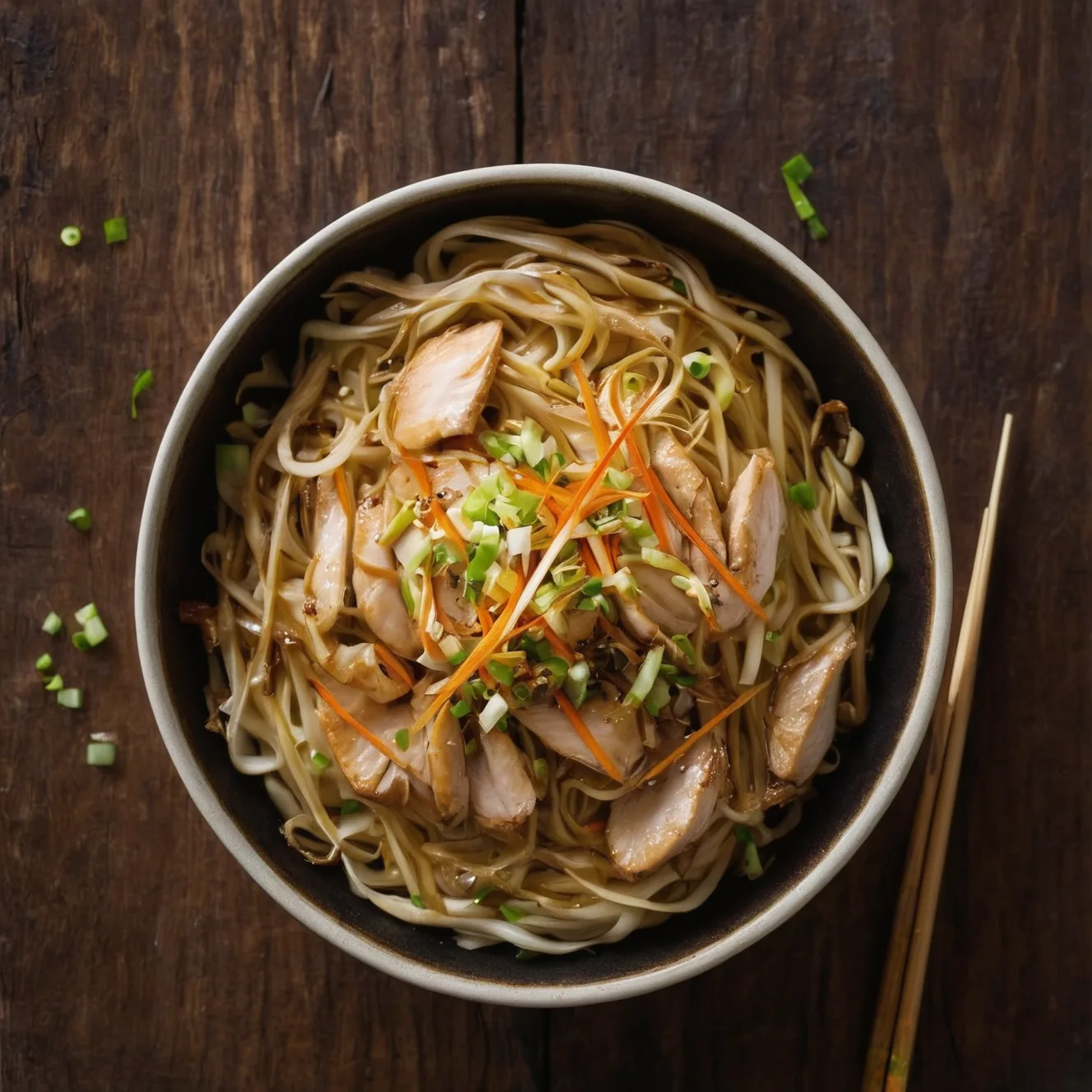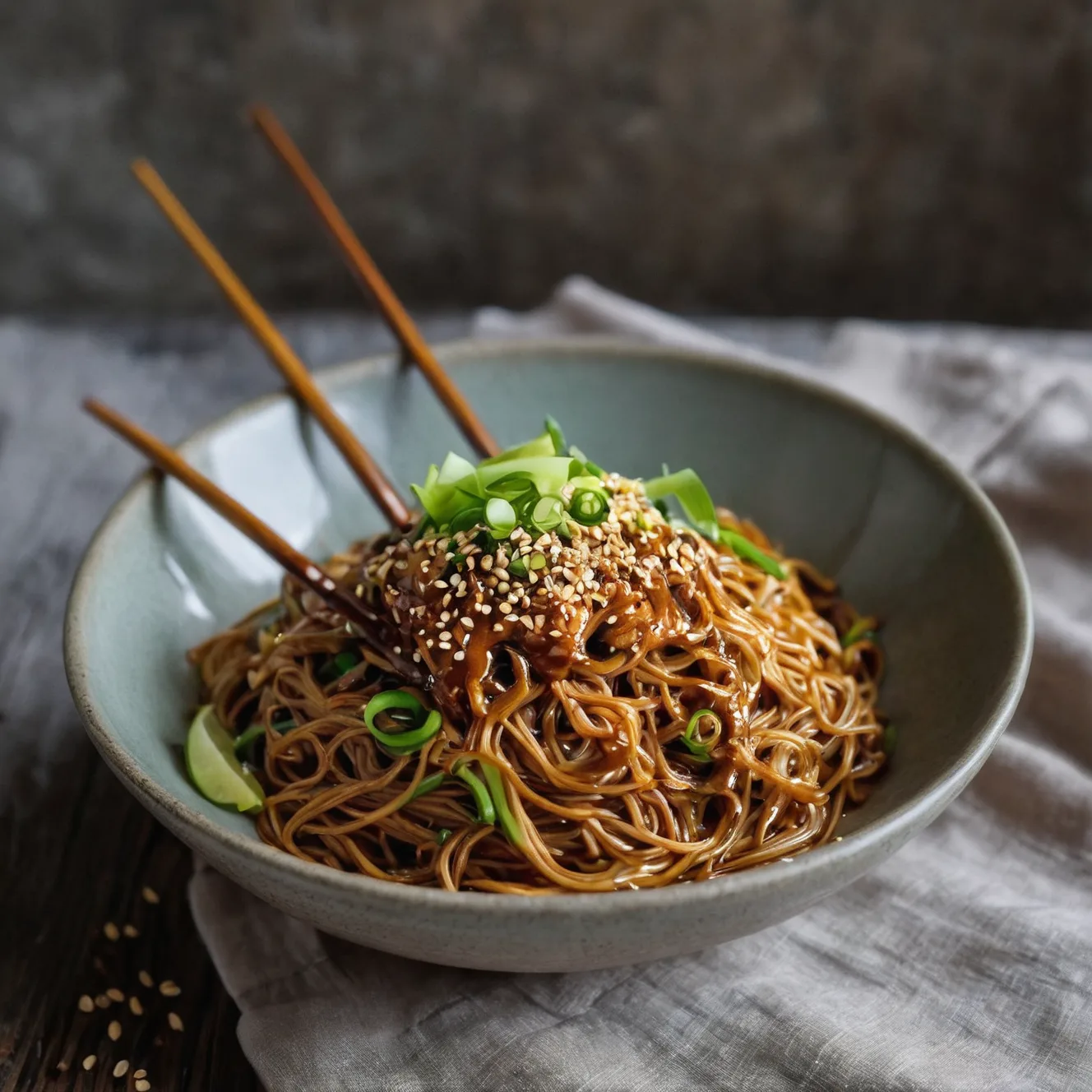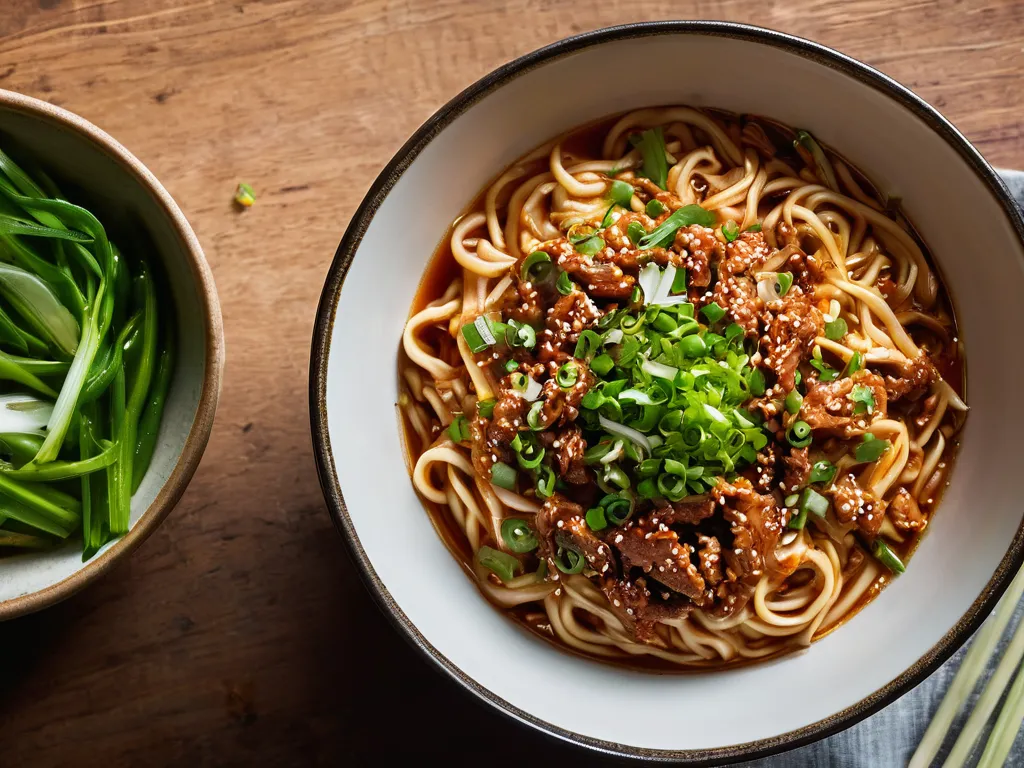
Copycat P.F. Chang’s Dan Dan Noodles
Prep time: 15 min Cook time: 15 min Servings: 4
Dan Dan Noodles at P.F. Chang’s are one of the most ordered dishes on the menu for a reason. The combination of chewy noodles, crispy seasoned pork, and a rich sesame-chili sauce hits every flavor and texture that makes a bowl of noodles satisfying. The sauce is creamy from sesame paste, spicy from chili oil, tangy from black vinegar, and savory from soy — each spoonful delivers all four at once.
This recipe builds the dish in three parallel tracks: the sauce, the pork, and the noodles. Everything converges in the bowl at the end. The technique is less about precision and more about having all three components ready at the same time, which takes about 15 minutes once you have your ingredients measured and prepped.
Dan Dan Noodles originated as Sichuan street food, carried on poles by vendors who walked through neighborhoods selling bowls for pennies. P.F. Chang’s adapted it for American palates by softening the numbing spice and adding more sesame richness. This recipe lands closer to the P.F. Chang’s version but gives you the option to push it toward the Sichuan original by increasing the chili oil and peppercorns.
Why Make It at Home?
Dan Dan Noodles at P.F. Chang’s cost $13.95 for a single bowl. This recipe makes four bowls for approximately $10 in ingredients — about $2.50 per serving. That is an 80% savings. The ingredient list looks long, but most items are shelf-stable pantry staples: sesame paste, chili oil, soy sauce, and black vinegar all last for months and get used across dozens of Chinese recipes.
The home version also lets you control the spice level precisely. P.F. Chang’s serves a relatively mild version to appeal to a broad audience. If you want the authentic Sichuan burn that makes your lips tingle, you can double the chili oil and peppercorns without affecting anything else in the recipe. Conversely, if you are cooking for spice-sensitive eaters, cut the chili oil in half and skip the peppercorns entirely.
What Makes P.F. Chang’s Dan Dan Noodles So Good
The sauce is everything. Chinese sesame paste — made from toasted sesame seeds — has a deeper, nuttier flavor than tahini, though tahini works as a substitute. When thinned with warm chicken broth, it becomes a silky base that clings to noodles without feeling heavy. The chili oil adds heat and a red-orange color that stains the noodles and makes the whole bowl look alive. Black vinegar provides an acidity that cuts through the fat and keeps the dish from tasting monotonous.
The pork component functions as a textural topping rather than a protein centerpiece. Cooked until the edges crisp and the fat renders out, the crumbled pork adds a savory crunch that contrasts with the soft noodles. The preserved mustard greens — ya cai — contribute a fermented, slightly sour note that is subtle but essential. Without them, the pork tastes flat. They are available jarred at any Chinese grocery store for a few dollars and last for months in the refrigerator.
P.F. Chang’s uses a thicker noodle that holds sauce in its ridges and provides a satisfying chew. Fresh Chinese egg noodles from the refrigerated section of an Asian grocery store are ideal, but dried lo mein noodles from any supermarket work well. Avoid thin noodles like angel hair — they cannot support the weight of the sauce and pork.
Tips & Variations
- Toast the sesame paste. If using tahini, warm it in a dry pan for 1 minute to deepen the flavor. Chinese sesame paste does not need this step since the seeds are already toasted.
- Brown the pork aggressively. Do not stir for the first 2 minutes. Let it develop a crust on the bottom of the wok before breaking it up. Crispy pork crumbles are the textural backbone of the dish.
- Reserve noodle water. The starchy cooking liquid is your secret weapon for adjusting sauce consistency. Add it one tablespoon at a time until the noodles are coated but not drowning.
- Make it vegetarian. Replace the pork with crumbled extra-firm tofu, pressed and pan-fried until golden. Use vegetable broth instead of chicken broth. The sauce carries enough flavor to make this swap seamless.
- Add a soft-boiled egg. A 6.5-minute egg, halved, turns this from a noodle bowl into a complete meal with added protein and richness.
Storage & Reheating
Store the pork and sauce separately from the noodles. Noodles absorb sauce as they sit, which makes them gummy by the next day. Kept separate, all three components last 3-4 days in the refrigerator.
To reheat, warm the sauce gently in a small saucepan with a splash of broth to thin it back out. Reheat the pork in a dry skillet to re-crisp the edges. Dunk the noodles in boiling water for 30 seconds to loosen them, then drain and toss with the warm sauce and pork. This extra step of reheating components separately preserves the textures that make the dish worth making. Dan Dan Noodles do not freeze well because the noodles turn mushy after thawing.