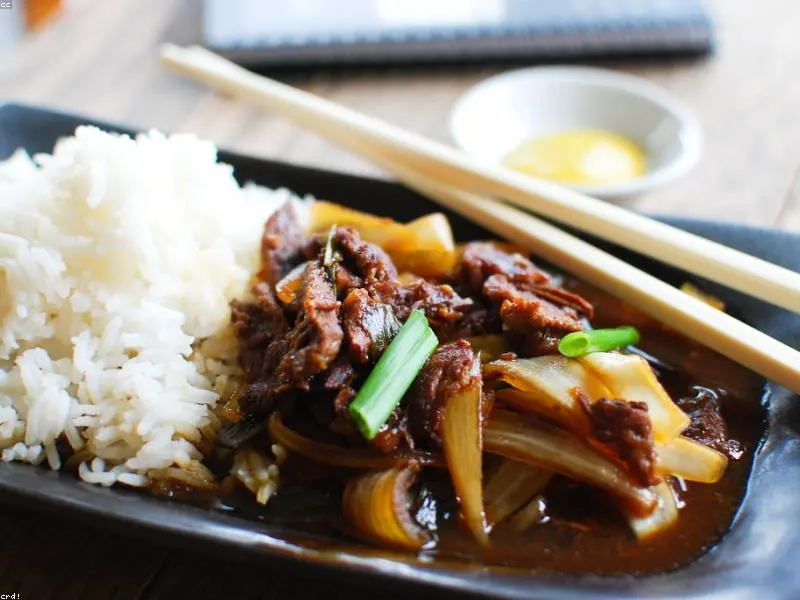
P.F. Chang’s Mongolian Beef Copycat
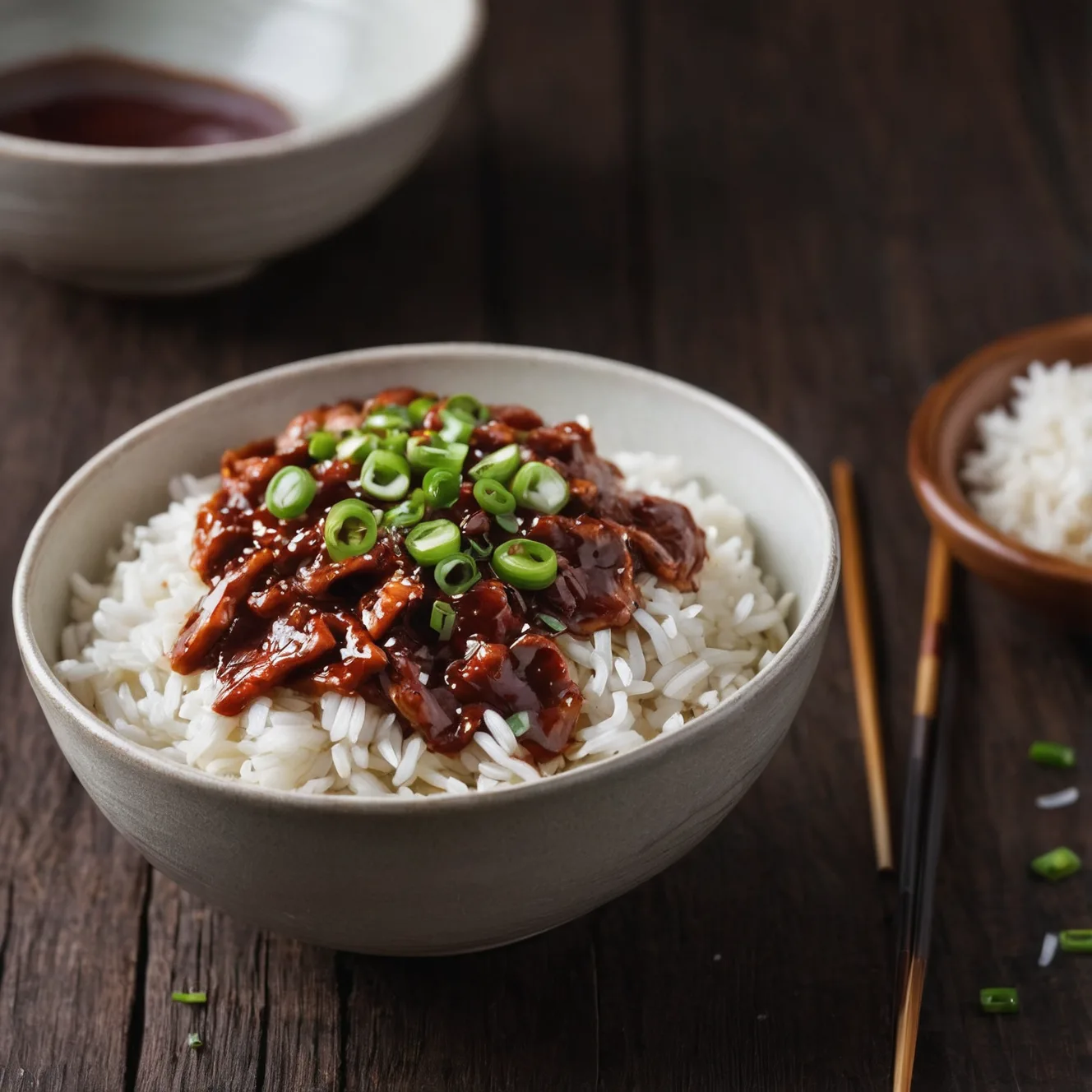
P.F. Chang’s Mongolian Beef is one of the most searched restaurant copycat recipes online — thin-sliced beef with a barely-there crispy coating, tossed in a sweet-savory soy glaze with piles of green onions. The restaurant charges around $19 for a small plate. This version takes 25 minutes and costs about $4 per serving.
The difference between a disappointing home version and a restaurant-quality result is a single step: velveting the beef before it hits the wok. Most copycat recipes skip it. This one doesn’t.
TL;DR: Velvet the flank steak in baking soda for 15 minutes, rinse and dry, coat in cornstarch, sear in a smoking-hot wok in two batches without overcrowding, build the soy-brown sugar glaze in the same pan, add green onions, toss together, serve over rice.
Why Is It Called Mongolian Beef?
Despite the name, Mongolian Beef has no connection to Mongolian cuisine. The name traces to a restaurant concept invented in 1950s Taipei.
Wu Zhaonan, a performer from Beijing who had fled to Taiwan in 1949, opened a Taipei food stall in 1951 and built it around a new idea: diners picked raw ingredients and watched them stir-fried on a large, round iron griddle at very high heat. He wanted to call it “Peking barbecue” after his hometown — but Beijing had just been named the capital of the People’s Republic of China, and the name was politically sensitive in 1950s Taiwan. “Mongolian barbecue” became the safer, marketing-friendly substitute. It was never a geographic claim. When the high-heat, sweet-savory griddle style later migrated to Chinese-American restaurants in the U.S., dishes cooked this way kept the “Mongolian” label.
P.F. Chang’s was founded in 1993 by restaurateur Paul Fleming (the P.F.) and chef Philip Chiang in Scottsdale, Arizona. Their menu was deliberately limited compared to typical Chinese restaurants — a curated selection of Chinese-American dishes executed at a high level in an upscale-casual setting. Mongolian Beef has been one of their signature items since they opened, alongside chicken lettuce wraps as the other dish that made the brand.
The One Step That Separates Restaurant Beef from Home Stir-Fry
Velveting is how Chinese restaurant kitchens make stir-fry beef tender. It’s why the beef at P.F. Chang’s stays silky even after a screaming-hot sear. And it’s why most home stir-fries produce beef that’s chewy or rubbery by comparison.
The mechanism: baking soda dissolved in water creates an alkaline solution. When you coat sliced beef in it for 15 minutes, the baking soda raises the surface pH of the meat. Higher pH slows the rate at which muscle proteins coagulate during cooking — which means when the beef hits the 500°F wok, the proteins don’t instantly seize up into a rubbery mass. The result is beef that sears with a beautiful crust on the outside while remaining tender inside.
Cornstarch works in parallel but does something different: it coats the protein network on the beef’s surface and holds in moisture during the high-heat sear. The combination — baking soda for internal tenderness, cornstarch for surface crisping — is the actual professional method.
How to do it:
- Dissolve 1/4 teaspoon baking soda in 1 tablespoon water
- Toss the sliced beef in the mixture until every piece is coated
- Wait exactly 15 minutes at room temperature — longer makes the texture mushy
- Rinse the beef under cold water two or three times until the water runs clear
- Pat completely dry with paper towels
The rinse is not optional. Residual baking soda on unrinsed beef tastes soapy and chemical. Rinse until you can’t smell the baking soda, then dry the beef as thoroughly as you can before the cornstarch step — surface moisture is the enemy of a proper sear.
The Sauce: Sweet, Savory, Intentionally Sticky
The Mongolian sauce is built from soy sauce, brown sugar, garlic, and ginger — and the ratio matters more than you’d think.
The dish is intentionally sweet. The near-1:1 volume ratio of soy sauce to brown sugar — the balance the most-tested copycats land on to match the restaurant’s flavor — is a deliberate choice, not a mistake. When the sauce hits the hot wok, the sugar caramelizes against the residual cornstarch left from searing the beef, thickening into a glossy glaze that coats every piece rather than pooling at the bottom of the plate.
This is also why you build the sauce in the same unwashed wok. The cornstarch residue left behind from searing is doing real thickening work. Starting with a clean pan means the sauce won’t have enough body.
Adjustments that work:
| Goal | Change | Effect |
|---|---|---|
| Less sweet | Reduce brown sugar to 1/3 cup, add 2 tsp rice vinegar | Slightly thinner glaze, more acidic balance |
| More umami | Add 1 tbsp oyster sauce to the sauce mixture | Deeper savory base note |
| Add heat | Add 1–2 tsp chili garlic sauce or dried red chili flakes | Heat built into every bite |
| Restaurant depth | Add 1 tbsp Shaoxing rice wine | Traditional flavor the restaurant likely uses |
Flank Steak: The Right Cut, Sliced the Right Way
Flank steak is the correct choice. It has a clearly visible grain running in one direction, which makes the critical step — slicing against the grain — easy to execute. Cutting across the muscle fibers rather than with them produces pieces that are shorter in fiber length, which translates directly to tenderness.
The freezer trick: Place the flank steak in the freezer for 20–30 minutes before slicing. A partially frozen steak is firm enough to cut into clean, even slices at 1/8-inch thickness, which is difficult with a fully thawed steak. Restaurant prep kitchens do this every day.
Alternative cuts and how they perform:
| Cut | Grain visibility | Tenderness | Fat | Notes |
|---|---|---|---|---|
| Flank steak | Clear, easy to read | Very good | Low | Best choice; slice thin against grain |
| Skirt steak | Similar to flank | Very good | Moderate | Best substitute; more beefy flavor |
| Sirloin | Less visible | Good | Low–moderate | Works well; slice very thin |
| Ribeye | Marbled throughout | Excellent | High | Premium result; more expensive |
| Chuck | Difficult | Poor | Variable | Avoid — velveting helps but not enough |
Why Cornstarch, Not Flour
Cornstarch and flour are not interchangeable as a beef coating, and flour will not produce the restaurant result.
Cornstarch gelatinizes at high temperature in a fraction of a second, forming a paper-thin, lacquered shell that holds the soy-sugar glaze without collapsing into the sauce. Flour creates a thicker, starchier coating that turns pasty and gummy when liquids are added. Flour also browns more slowly than cornstarch at high heat, which means it can start burning before the beef is properly seared.
The cornstarch coating also serves as the sauce thickener — without it coating the beef and leaving residue in the wok, the glaze won’t have enough body to cling. Shake off any excess cornstarch before searing; a too-thick coating creates an uneven, chalky crust rather than a clean glaze.
Wok vs. Skillet: What Actually Matters
A carbon steel wok is ideal — the sloped sides let you toss the beef efficiently, and thin carbon steel reaches extreme temperatures faster than cast iron, producing the smoky, lightly charred character that restaurant stir-fries have and home versions often lack.
If you don’t have a wok, a large cast-iron skillet is the best alternative. It retains heat better than thin stainless steel and can sustain the high temperatures needed. What to avoid: thin stainless steel pans and non-stick pans. Non-stick coatings are typically rated to 450–500°F maximum, and this dish needs a hotter surface. Non-stick also won’t develop the browned residue that gives the sauce depth.
Preheating is not optional. Heat your wok or skillet over high heat for 2 full minutes before adding oil. A drop of water should evaporate instantly on contact with the surface. If the pan isn’t at that temperature, the beef steams instead of sears — you get gray, wet beef with no crust, and the glaze won’t have the fond to pull from.
Five Mistakes That Produce Rubbery, Gray, or Watery Results
1. Skipping the rinse after baking soda. The residue is real and the soapy taste is obvious. Rinse two or three times.
2. Not drying the beef completely. Wet beef in a hot pan = instant steam = no sear. Pat dry, don’t just blot.
3. Overcrowding the wok. The beef needs space to sear. When pieces touch, the temperature drops and the pan steams. Cook in two batches, always.
4. Moving the beef before it releases. Leave it alone for 1–2 minutes. Properly seared beef releases naturally from the pan; trying to move it too early pulls the crust off and prevents browning.
5. Building the sauce before reducing. Once you add the beef back to the sauce, there’s no time for the glaze to thicken further. Let the sauce boil and reduce for a full 2–3 minutes in the empty wok before returning the beef. It should coat the back of a spoon before the beef goes back in.
What to Serve With P.F. Chang’s Mongolian Beef
Rice: Steamed long-grain white rice is the standard pairing. Jasmine rice has the right fragrance. The sauce pools into the rice and that’s part of the eating experience — don’t serve Mongolian Beef over rice that’s dry or separated.
Add vegetables (optional): The restaurant version is beef and scallions only. If you want vegetables, add broccoli florets, snap peas, or baby bok choy to the wok with the scallion whites — they’ll cook in the sauce glaze for about 2 minutes before you return the beef.
At the same table:
- P.F. Chang’s Chicken Lettuce Wraps — the other dish that defined the P.F. Chang’s brand; opposite textures, same menu
- P.F. Chang’s Kung Pao Chicken — spicier, with peanuts and dried chilies, for variety at the same dinner
- P.F. Chang’s Dan Dan Noodles — noodles round out a PF Chang’s spread
- Benihana Chicken Fried Rice — if you want to build a full restaurant-style meal with a high-heat wok rice side
Restaurant vs. Homemade: At a Glance
| P.F. Chang’s Restaurant | This Copycat | Lighter Version | |
|---|---|---|---|
| Velveting | Yes | Yes | Optional |
| Sauce sweetness | High (1:1 sugar:soy) | High (1:1) | Moderate (2:3 ratio) |
| Cost per serving | ~$19 | ~$4 | ~$4 |
| Time | Order + 20 min wait | 25 min | 20 min |
| Calories | ~600 (est.) | ~520 | ~440 |
| Sodium | High | ~1,200mg | ~900mg |
Frequently Asked Questions
Is Mongolian Beef actually from Mongolia? No. The name comes from a high-heat griddle cooking style created by Wu Zhaonan at a Taipei food stall in 1951. He called it “Mongolian barbecue” to sidestep “Peking barbecue,” the name he first wanted but which was politically sensitive in 1950s Taiwan. The dish is Chinese-American, not Mongolian.
Can I use chicken instead of beef? Yes. Use 1.5 lbs boneless skinless chicken thighs, sliced thin. Apply the same baking soda velveting technique. The sauce and searing method are identical. The result is a clean, restaurant-style Mongolian chicken.
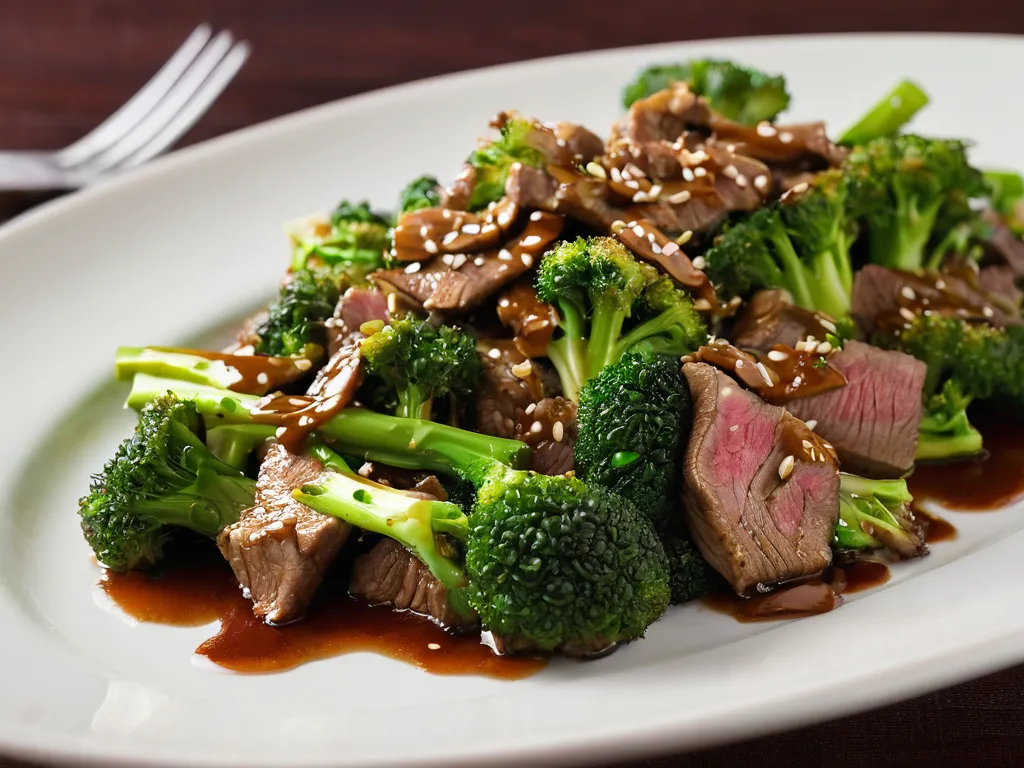
What’s the difference between Mongolian Beef and Beef with Broccoli? The vegetable and the sauce profile. Mongolian Beef uses only green onions; Beef with Broccoli uses broccoli. More importantly, the sauces differ: Mongolian Beef is sweet-forward (high brown sugar ratio), while Beef with Broccoli uses more oyster sauce and less sugar for a deeper, more savory profile.
Can I make Mongolian Beef ahead? The sauce keeps refrigerated for up to a week. But the velveted, cornstarch-coated beef must be cooked immediately after coating — cornstarch absorbs moisture and gets gummy if it sits. Make the sauce ahead; cook the beef fresh.
Why does the recipe call for separating the scallion whites and greens? The white parts are added to the sauce earlier — they’re denser and benefit from the extra 2–3 minutes in the glaze, softening and adding sweetness. The green parts go in at the very end to stay barely wilted and bright, providing freshness and color contrast against the dark glaze.