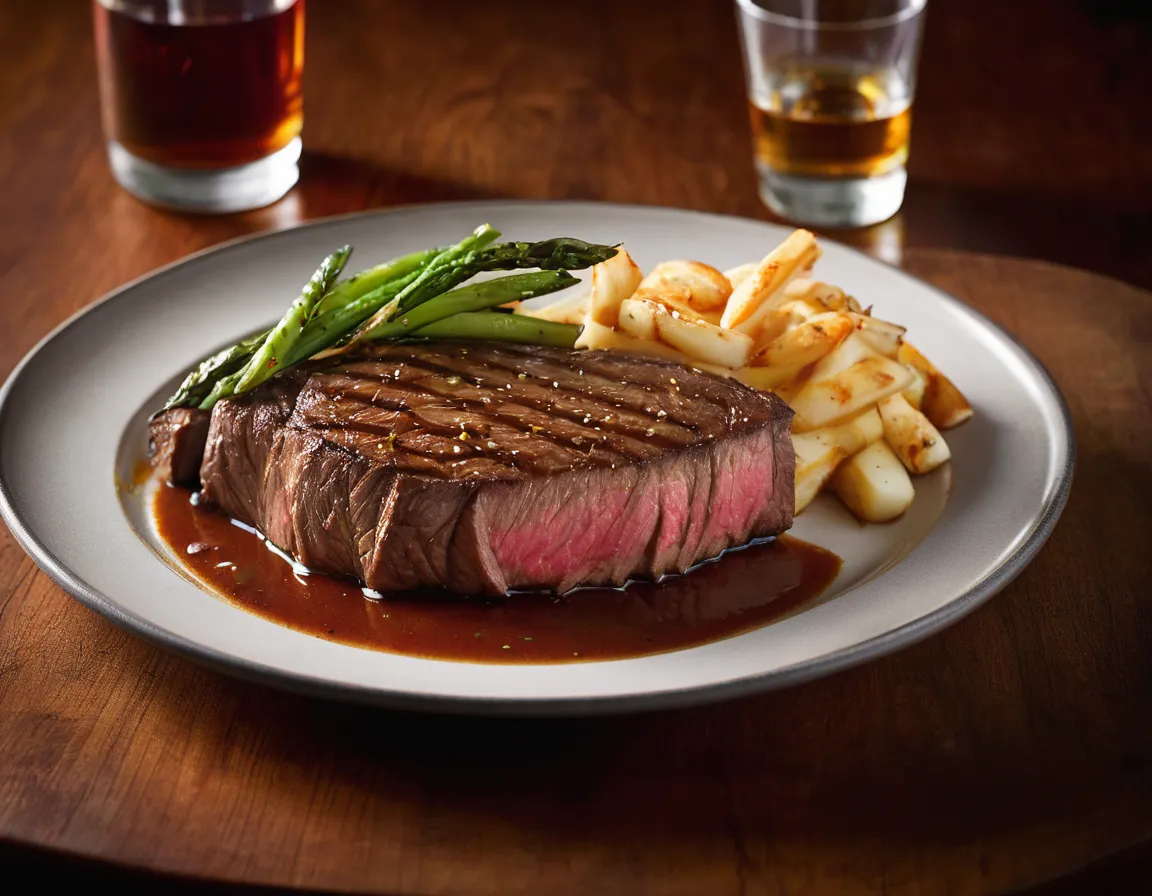
Copycat Applebee’s Bourbon Street Steak
Prep time: 15 minutes (plus 2 hours marinade) Cook time: 20 minutes Servings: 4
Applebee’s Bourbon Street Steak is one of their better menu items: an 8 oz top sirloin seasoned with Cajun spices, flame-grilled, finished in garlic butter and parsley, and served sizzling with sautéed mushrooms and onions over garlic mashed potatoes. It’s a fixture of Applebee’s “Big Easy” menu — the chain’s recurring New Orleans-themed lineup. At around $20 with sides (some Big Easy listings run closer to $23), it’s one of their pricier plates.
Made at home, the full meal for four people — steaks, mushrooms and onions, garlic mashed potatoes, garlic toast — runs about $35–45. That’s roughly $9–11 per plate versus nearly $20 at the restaurant (before tax, tip, and drinks).
The real dish has a few details that most copycat recipes miss. The key ones: the steak is a top sirloin (not NY strip, not ribeye), and the defining finish is garlic butter and parsley — not a bourbon pan sauce reduction. The bourbon, if present, is in the marinade. Understanding these distinctions is what separates a convincing copycat from something that tastes generically good but not specifically like Applebee’s.
What “Bourbon Street” Actually Means
The dish is named after Bourbon Street — the famous commercial corridor running through the French Quarter of New Orleans, lined with jazz clubs, restaurants, and bars. The name is geographic branding for the dish’s Cajun-Creole identity: paprika-forward spice blend, garlic butter finish, the general flavor associations of New Orleans cooking.
Bourbon Street itself is named after the French House of Bourbon, the royal family. The whiskey is named after Bourbon County, Kentucky — which is also named after the French royal family. Both the street and the whiskey trace their names to the same source but have nothing to do with each other.
The dish’s own connection to bourbon whiskey is minimal. Todd Wilbur’s Top Secret Recipes version notes “you won’t need any booze for this recipe” — the core dish is Cajun-spiced sirloin with garlic butter, mushrooms, and onions. Most popular copycat recipes do add a small amount of bourbon to the marinade, which adds a genuine caramel depth. This recipe includes it as an option.
The Cut: Why Top Sirloin Works Here
The official Applebee’s menu describes the dish as “Grilled 8 oz. USDA Select top sirloin is jazzed up with Cajun spices in buttery garlic and parsley, served sizzling with sautéed mushrooms & onions and garlic mashed potatoes.” Top sirloin, not NY strip.
Top sirloin comes from the rear of the loin, just above the hip. It’s a lean cut with a tight grain — less marbling than ribeye or strip, more beefy flavor per ounce than tenderloin. At high heat with a bold Cajun seasoning, it performs well: the lean surface browns evenly, holds the spice rub without excessive fat rendering, and slices cleanly after resting.
For home cooking: look for top sirloin steaks that are 1 to 1.25 inches thick. Thinner than that and medium-rare is nearly impossible to hit — the outside overcooks before the center is done. Thicker cuts need more careful management but have more margin for error.
The Marinade
The marinade does two things: it pre-seasons the interior of the steak (not just the surface the Cajun rub touches) and it adds background depth. A1 steak sauce is a foundational ingredient in the most accurate copycat versions — it’s a blend of tomato puree, vinegar, raisin paste, and spices that adds savory complexity without tasting recognizably like A1 in the final result. Worcestershire sauce works as a substitute with a slightly different (more anchovy-forward) umami character.
The bourbon, if you use it, contributes caramel and vanilla notes from the barrel aging. These flavors bake into the marinade along with the honey and become part of the steak’s background flavor — not a dominant whiskey taste. A 2-hour minimum marinade is enough to season the surface layer; overnight gives noticeably deeper flavor.
Getting the Sear Right
Applebee’s flame-grills the steak. At home, a screaming-hot cast iron skillet is the more reliable choice: it works year-round, builds a more even Cajun crust on a lean cut, and lets you spoon the garlic butter right in the pan. If you’d rather grill, use a well-preheated grill over direct high heat and the same pull temperatures below — just expect a slightly thinner crust than cast iron delivers.
A good crust on sirloin requires the same fundamentals as any steak: hot pan, dry surface, patience.
Heat the cast iron properly. 3–4 full minutes over high heat before the steak goes in. The pan should be visibly smoking. A water bead dropped on the surface should dance and evaporate immediately (the Leidenfrost effect). If it just sizzles and puddles, the pan needs more time.
Pat the surface before searing. The marinade on the steak contains liquid. Pat lightly with paper towels to remove excess surface moisture — you want the marinade coating to be tacky, not wet. Wet surfaces steam rather than sear.
Don’t move the steak. Let it sit for the full 3–4 minutes. When the crust has formed, the steak releases cleanly from the pan. If it sticks, it needs more time — not more force.
Doneness guide:
| Doneness | Pull at | After 5-min rest |
|---|---|---|
| Rare | 115–120°F | 120–125°F |
| Medium-rare | 125–130°F | 130–135°F |
| Medium | 135–140°F | 140–145°F |
| Medium-well | 145–150°F | 150–155°F |
| Well-done | 155°F+ | 160°F+ |
An 8 oz top sirloin at 1 inch thick will hit medium-rare in 3–4 minutes per side in a properly preheated cast iron. A thermometer is the only reliable way to confirm.
The Garlic Butter Finish: The Detail That Defines the Dish
Applebee’s official description says the steak is served “in buttery garlic and parsley” — this is the finish that most home copycats skip or replace with a pan sauce.
Garlic butter and parsley is a classic European steakhouse finish — similar to the herb butter served with steak at higher-end restaurants, but looser. The butter melts into the steak’s crust as you brush it on, the garlic infuses the surface, and the parsley adds a fresh, slightly grassy note that cuts through the richness of the meat and butter.
The technique: melt the butter over low heat, add minced garlic (not high heat — you want garlic to soften and infuse, not brown), stir in the parsley. Brush this over the steaks while they’re resting, so the butter soaks into the meat rather than immediately pooling on the plate. The resting-under-foil step also keeps the garlic butter warm and liquid rather than letting it solidify.
The Mushrooms and Onions: Why Caramelization Matters
The mushroom and onion topping is the visual signature of the dish — they mound over the steak on the sizzling plate. The important detail: the onions should be genuinely caramelized, not just softened.
Five minutes of cooking produces translucent onions with a faintly sharp flavor. Twelve to fifteen minutes produces deeply golden, jammy onions that have converted their natural sugars through the Maillard reaction. The flavor difference is substantial — raw-tasting versus sweet, complex, and rich.
The trick: medium heat, occasional stirring, patience. High heat can brown the exterior while the inside stays raw. A small pinch of salt added at the start helps draw out moisture, which speeds the caramelization.
Cremini vs. white button mushrooms: Either works. Cremini (baby bella) have a more pronounced earthy, slightly meaty flavor; white button mushrooms are milder. In a dish with bold Cajun seasoning and garlic butter, the difference is minimal. Choose what looks freshest.
The Sizzling Presentation
Applebee’s serves Bourbon Street Steak on a preheated cast iron plate — the steak and toppings arrive at the table sizzling and steaming. This is part of the experience and easy to recreate at home.
Method: place a cast iron skillet in a 450°F oven for 20 minutes while you cook. When the steaks are rested and topped with garlic butter, move the hot skillet from the oven to a heat-safe trivet. Place the steak on the hot skillet, immediately spoon the mushroom and onion topping over it, and carry it to the table. It will sizzle loudly for 30–60 seconds.
The sizzle does more than look impressive — the contact between the hot skillet and the steak base recrisps any crust that softened during resting.
Sides: What Applebee’s Serves and Why It Works
The current Applebee’s menu pairs Bourbon Street Steak with garlic mashed potatoes. The classic presentation also included a slice of garlic toast, which is still the move if you want the full diner-style plate. Both choices are more considered than they look:
Garlic mashed potatoes are the vehicle for the garlic butter that runs off the steak. A bite of potato with residual garlic butter on the plate is a big part of the experience. Plain mashed potatoes work, but leaning into the garlic — roasted garlic in the mash, or an extra clove of minced raw garlic — makes the plate more cohesive.
Garlic toast (a thick slice of French bread toasted in garlic butter) is the optional bread element for sopping up the plate. It’s a real caloric add — published figures for the full restaurant entrée range widely, from roughly 800 to over 1,200 calories depending on the garlic-butter baste and whether toast is on the plate. The homemade version below lands around 820 calories per serving with garlic mashed potatoes. Skip the toast or swap for a dinner roll if you want something lighter.
At home, adding steamed broccoli or roasted asparagus alongside gives you something green and slightly bitter to balance the richness.
Cost Comparison
| Applebee’s | Homemade | |
|---|---|---|
| Per plate (with sides) | ~$20 (some locations ~$23) | ~$9–11 |
| For four people | ~$80–92 (before tax, tip, drinks) | ~$38–44 |
| Top sirloin cost | Included | ~$10–14/lb, or ~$5–7/steak |
The biggest home cost variable is the steak. Top sirloin at a standard grocery store runs $10–14 per pound — an 8 oz steak is $5–7 at normal retail. Buy from a warehouse club (Costco, Sam’s Club) and you can cut that to $6–8 per pound.
More Applebee’s Copycat Recipes
- Applebee’s Honey Pepper Chicken — crispy breaded chicken breast with a sticky honey-soy glaze and coarse black pepper heat.
- Applebee’s Riblets — slow-cooked pork rib sections with the caramelized sweet-savory glaze that made them a menu staple.
- Applebee’s Oriental Chicken Salad — the mayo-based Oriental Vinaigrette most copycats get wrong, with cornflake-coated chicken and chow mein noodles.
- Applebee’s Fiesta Lime Chicken — marinated chicken with lime-cilantro sauce, mexi-ranch dressing, and tortilla strips.
Browse all Applebee’s copycat recipes →