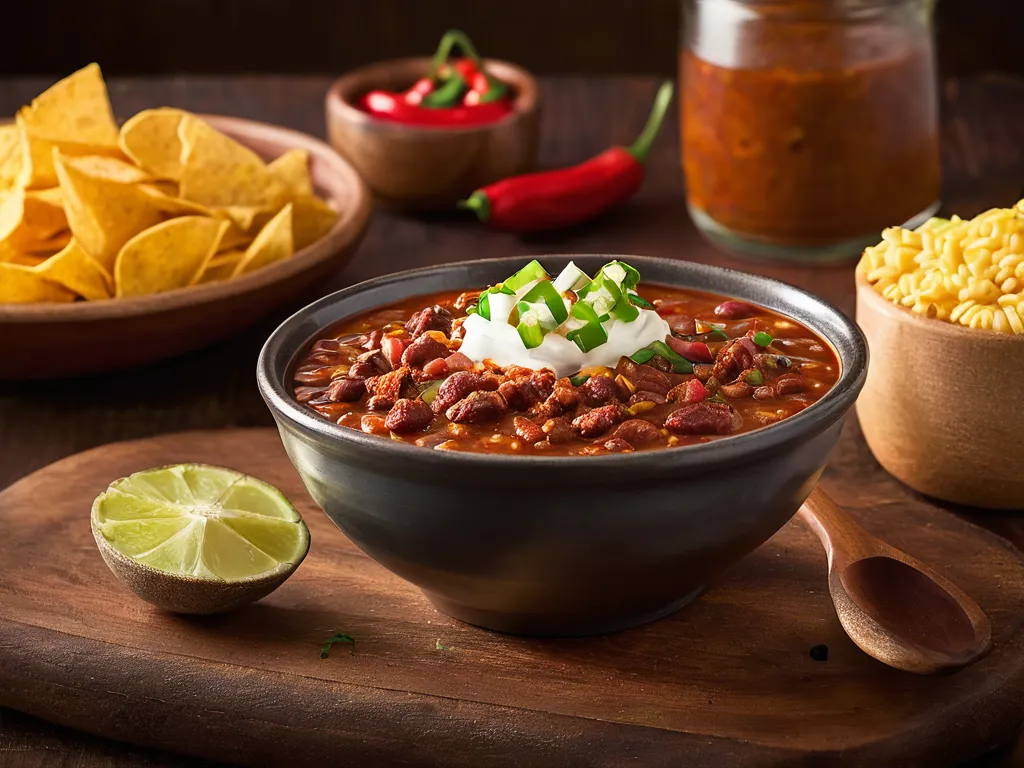



Texas Roadhouse Chili
Prep time: 15 minutes Cook time: 45 minutes Servings: 8 servings
Texas Roadhouse chili is the kind of bowl that makes you forget it’s a starter. It’s thick, meaty, and loaded with two kinds of beans in a rich, tomatoey base seasoned with a blend of chili powder, cumin, and smoked paprika. The smoked paprika is the ingredient that gives it that slightly campfire-like warmth that sets it apart from generic chili.
The technique of blooming the spices in the hot fat before adding liquid is what separates great chili from mediocre chili. Toasting the spices for even 60 seconds releases their essential oils and deepens their flavor dramatically.
Chili Wisdom
- Bloom your spices. Adding dry spices directly to liquid mutes their flavor. Cooking them in fat for a minute first makes them two or three times more aromatic and flavorful.
- Two beans are better than one. Kidney beans hold their shape and add substance. Pinto beans break down slightly, thickening the chili naturally. The combination gives you texture variety.
- Better the next day. Like most stews, this chili improves overnight as the flavors continue to develop. Make it on Sunday, eat it on Monday.
What Makes This Clone Accurate
The Texas Roadhouse version is a Texas-leaning chili built for the plate, not a brothy soup — thick enough to coat a spoon and hold its shape when you ladle it over fries or a baked potato. Getting the clone right comes down to four things:
- Chili-grind beef, well browned. Fine ground beef disappears into the sauce; a coarse chili grind (or hand-chopped chuck) keeps distinct, tender bits of meat through the whole simmer. Brown it hard until there are crusty, caramelized edges — that fond is where the beefy, steakhouse depth comes from.
- The smoked-paprika backbone. Most generic chili is chili powder and cumin and nothing else. The detail that separates this bowl is smoked paprika, which lays a low campfire warmth under the spice blend. Cumin gives the earthy base note, chili powder carries the color and body, and a measured pinch of cayenne brings heat without turning it into a fire bowl.
- Bloomed spices. Dry spices dropped straight into liquid taste flat and dusty. Toasting them in the rendered beef fat for a full 60 seconds before any tomato or broth hits the pot releases their oils and multiplies the aroma — this single step does more for the flavor than any extra ingredient.
- A reduced, not watered-down, consistency. Restaurant chili clings. The tomato paste plus a low, partially covered simmer drives off excess liquid until the chili thickens on its own. If you walk away and it over-reduces, loosen it with broth; if it stays loose, pull the lid and let it go another 10 minutes.
Common Mistakes
- Under-browning the beef. If you steam the meat in its own liquid instead of browning it, you lose the caramelized fond that gives the chili its savory backbone. Cook in a wide, hot pot and don’t crowd it — let it sit and crust before you stir.
- Dumping spices into liquid. Adding chili powder and cumin after the tomatoes have already gone in leaves them raw and muddy-tasting. Always bloom them in the fat first, off the back of the browned beef and softened onion.
- Boiling instead of simmering. A hard rolling boil can scorch the tomato paste on the bottom and break the beef into mush. Keep it at a lazy, lid-ajar simmer and stir the bottom every ten minutes so nothing catches.
- Seasoning only at the start. Salt and heat mellow over a long simmer. Taste in the last five minutes and adjust salt, pepper, and cayenne then — a bowl that was perfect at minute five can read flat by minute forty.
- Serving it too thin. If you want to top fries or a potato, a soupy chili will run everywhere. Reduce it until a spoon dragged across the bottom leaves a brief trail.
Storage, Make-Ahead & Substitutions
This is a make-ahead cook’s dream: the flavors meld and deepen overnight, so it’s often better on day two. Store it cooled in a sealed container in the fridge for up to four days, or freeze in individual portions for up to three months. Thaw frozen chili overnight in the fridge and reheat gently on the stove, stirring in a splash of broth or water to bring it back to a scoopable consistency — it always thickens as it sits.
Substitutions that hold up:
- Beef: 90/10 beef or ground turkey both work for a leaner bowl; add a tablespoon of oil so there’s enough fat to bloom the spices. Coarse chili-grind beef or hand-chopped chuck gives the most steakhouse-like texture.
- Beans: Leave them out entirely for a true Texas-style no-bean chili (add a half-pound more beef and extra broth to keep the volume). Black beans can stand in for pinto if that’s what you have.
- Heat: Scale the cayenne up or down freely, or swap in a chopped chipotle in adobo for a smokier burn that plays off the smoked paprika.
- Thickener: A tablespoon of masa harina whisked into cold broth tightens the chili fast and adds authentic toasted-corn flavor; cornstarch works in a pinch but stays flavor-neutral.