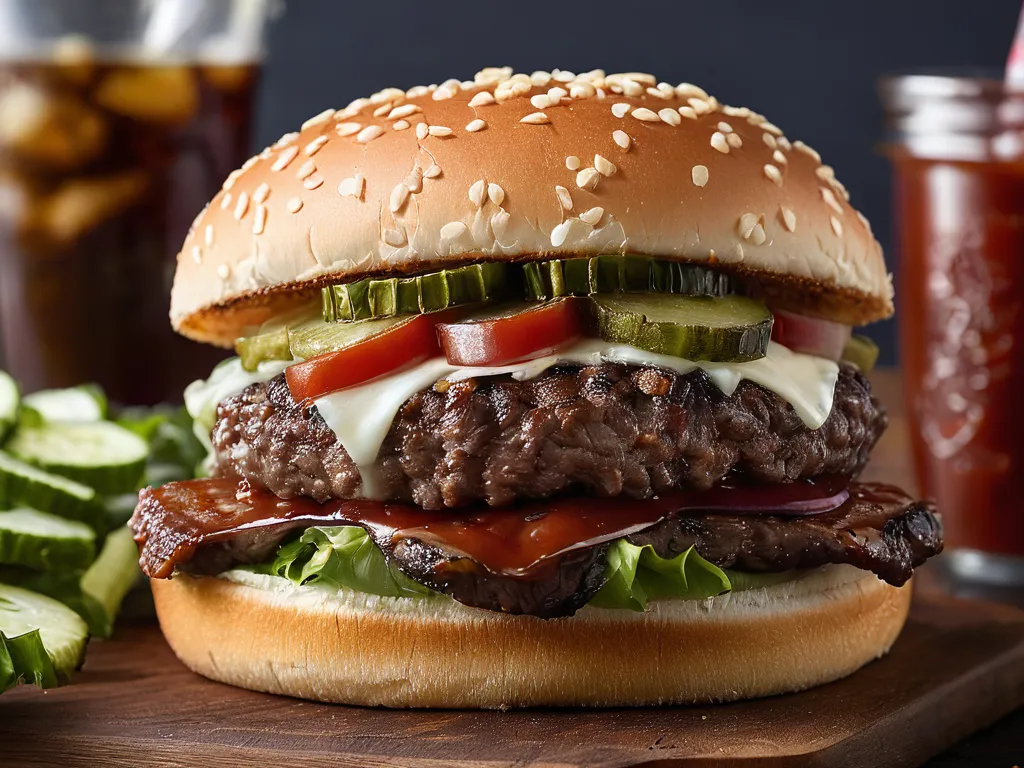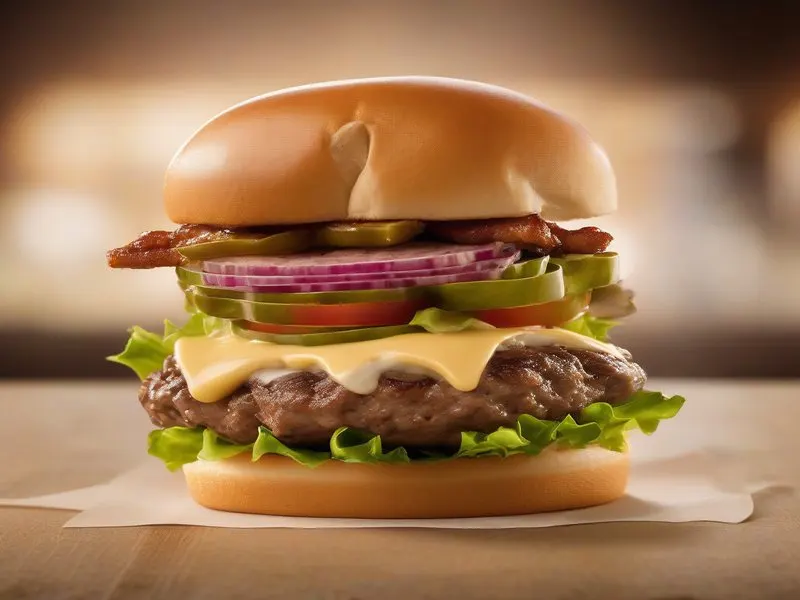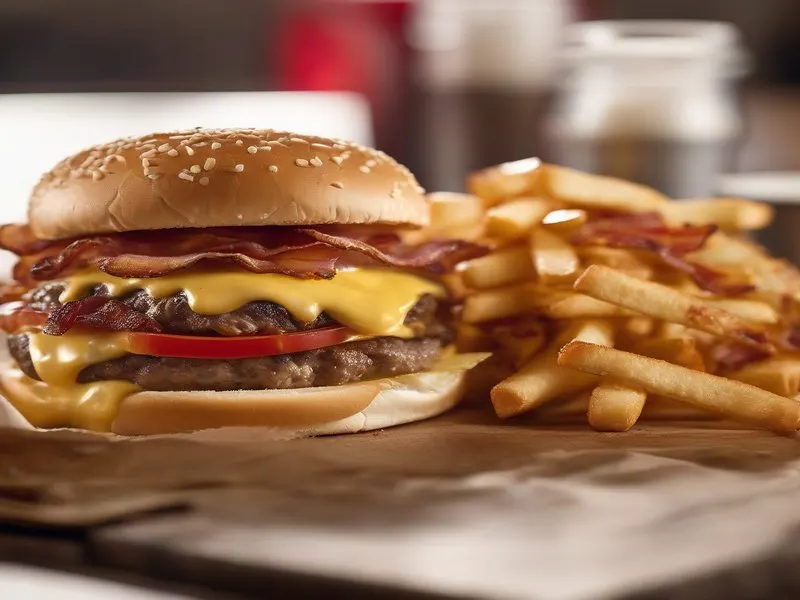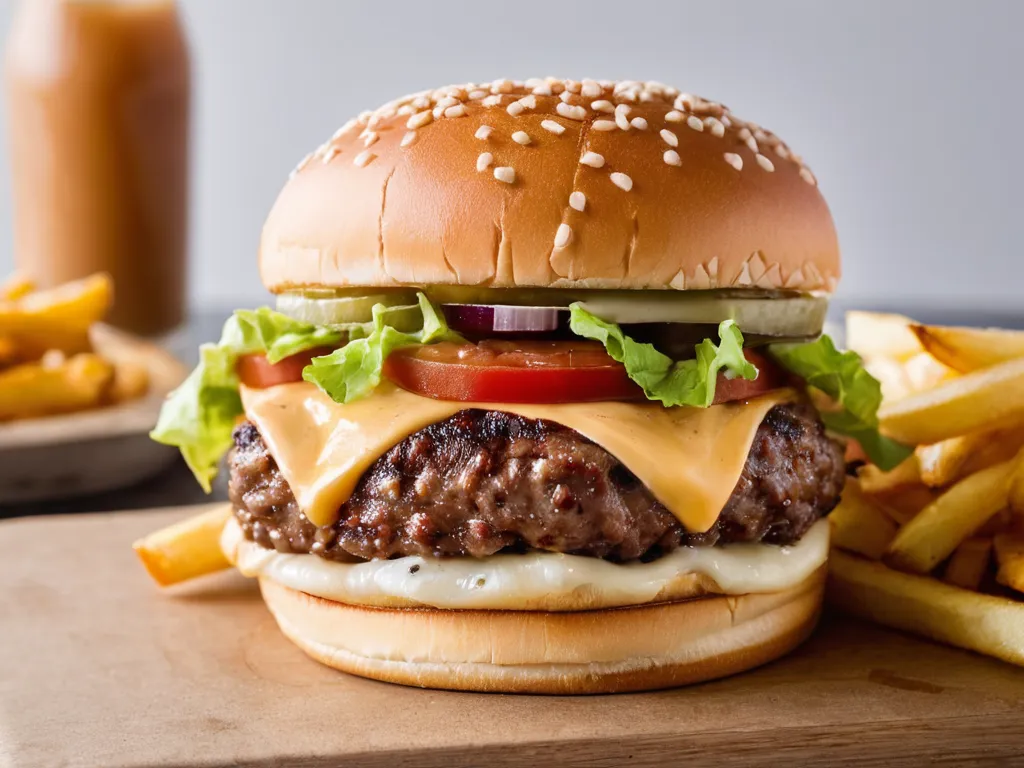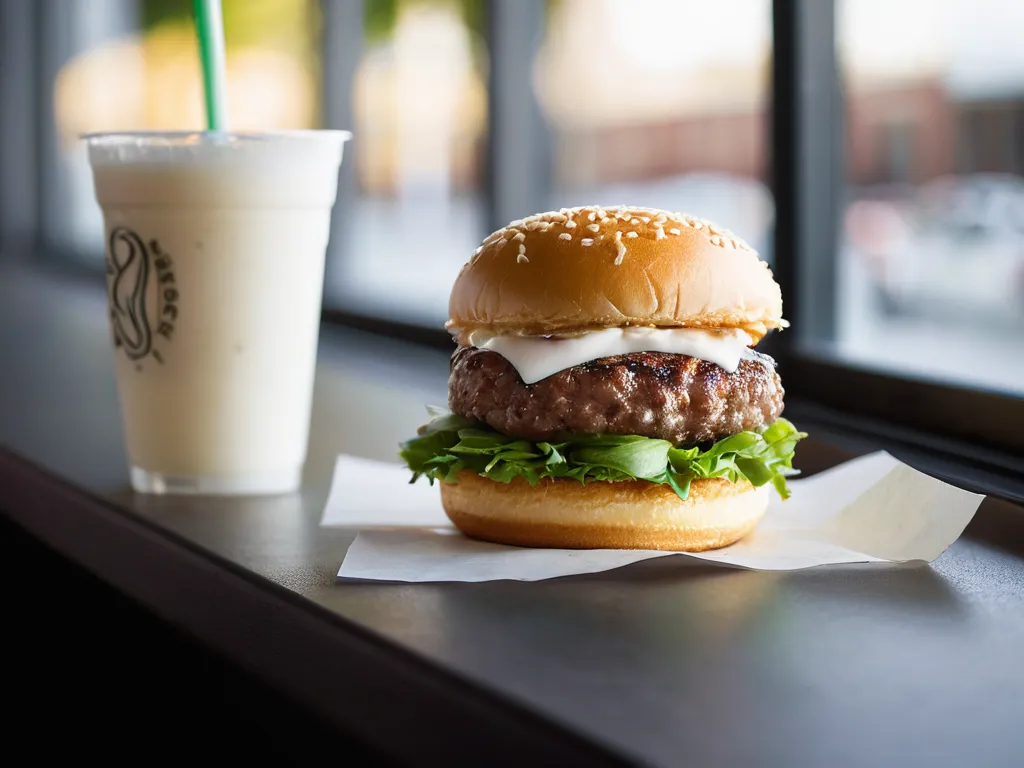
Shake Shack ShackBurger
Danny Meyer opened a hot dog cart in Madison Square Park in 2001, and by 2004 it became a permanent kiosk. The ShackBurger was on the menu from day one — beef smashed flat on a griddle, American cheese, ShackSauce, lettuce, tomato, on a Martin’s potato roll. Over 500 locations later, those five things are still what the burger is.
A single ShackBurger costs $7.49. This recipe makes four for about $11.
TL;DR
4-oz beef ball smashed paper-thin on a 450°F cast iron griddle. Sear undisturbed 2–3 minutes for a dark crust. Flip, add American cheese, 1 minute more. Sauce (mayo + yellow mustard + ketchup + pickle brine + paprika) on the top bun only. Lettuce on the sauce, two tomato slices. No pickles on the standard build. Martin’s potato roll, not brioche.
ShackSauce: What’s Actually In It
ShackSauce is proprietary, but every serious reverse-engineering effort converges on the same short list: mayonnaise, yellow mustard, ketchup, dill pickle brine, garlic powder, paprika, cayenne. The ratios matter more than the ingredients — the sauce is tangy with a very mild heat, not sharp or sharp-mustard forward.
Two common mistakes in copycat versions:
Dijon instead of yellow mustard. Dijon’s sharper, more acidic character pushes the sauce in the wrong direction — too intense, competes with the beef. Yellow mustard is milder and blends into the mayo background the way the original does.
Adding actual pickle slices to the sauce. The standard ShackSauce uses pickle brine — just the liquid from a jar of dill pickles. A teaspoon. The brine adds acidity and dill flavor without chunks. Minced pickles are an acceptable substitute but change the texture. Actual sliced pickles do not belong in the ShackSauce; they’re a custom add-on for the finished burger.
Refrigerate the sauce for at least 30 minutes before using. The flavors need time to meld — fresh ShackSauce tastes flat and slightly harsh. Made the night before is even better.
The Beef
The Shake Shack cookbook lists Pat LaFrieda as their meat supplier and describes the house blend as being designed for smash cooking. At home, two blends work:
80/20 ground chuck: The most widely available and perfectly adequate. The 20% fat renders out during the smash and fuels the Maillard crust.
Chuck/short rib (80/20): The short rib adds a slightly richer, beefier flavor than pure chuck — closer to what Shake Shack actually serves. Not required, but noticeable if you can get it from a butcher.
Freshly ground beef makes a real difference here because the smash technique depends on the proteins being loosely arranged so they compress and adhere to the griddle. Pre-packaged ground beef that has been compressed and refrigerated for days tends to smash into a slightly tighter, less craggy patty. If you’re making this for people, grind it same-day.
Do not season before smashing. Salt draws moisture out of the surface immediately. Season the top face of the patty after it’s been smashed onto the griddle, while it’s cooking.
Why the Smash Technique Works
Most home cooks are told to handle ground beef gently, form it loosely, and minimize contact to keep burgers tender. For a smash burger, you do the opposite — and for good reason.
A 4-oz ball of 80/20 ground beef smashed to 1/4-inch thickness has approximately three times the contact surface area of a 3/4-inch formed patty of the same weight. More surface area on a 450–500°F griddle means:
-
More Maillard reaction. The browning that happens when amino acids and sugars react at high heat (above ~300°F) produces hundreds of flavor compounds — savory, nutty, slightly sweet notes that are absent from gray, steamed beef. A smash patty is nearly all Maillard crust; a thick patty has a narrow ring of it.
-
Faster cooking through to the center. At 1/4-inch, the center of the patty reaches a safe serving temperature almost simultaneously with the crust. No need for the moderate heat and longer cooking time you’d use for a thick burger.
-
Fat renders into the crust, not the pan. The rendered fat from 80/20 beef largely stays trapped under the crust rather than dripping away — it bastes the patty from beneath while the top surface cooks.
The critical window: you have about 10–15 seconds after placing the beef ball on the griddle to smash it. Once the exterior proteins begin to set from the heat, you lose the ability to compress the patty into a thin sheet. Place it and press immediately.
Why Martin’s Potato Roll
Shake Shack has used Martin’s Famous Potato Rolls as their exclusive bun since the 2004 permanent opening. Martin’s confirmed this publicly and the partnership is in Shake Shack’s supply chain disclosures.
The potato roll differs from brioche and standard hamburger buns in a few ways:
- Potato starch in the dough produces a softer, slightly denser crumb that holds moisture without going soggy under the sauce and tomato.
- Lower fat content than brioche means the bun’s flavor is mild rather than buttery — it complements the beef without competing.
- Slight sweetness from potato and a small amount of sugar in the recipe pairs naturally with the tangy ShackSauce.
Toasting the cut side in butter on the same griddle (before the patties go on) is essential. The caramelized butter surface on the bun is part of the texture of every bite.
Assembly Order
This matters more than it sounds. The standard ShackBurger assembly:
Top bun: ShackSauce spread on the cut face. One lettuce leaf placed on the sauce (the sauce holds it flat and in place). Two thin tomato slices, pushed toward the outside edge of the bun.
Bottom bun: The patty, cheese side up.
Close the burger. Serve immediately.
There are no pickles on the standard build. Pickles are available as a custom add-on — if you want them, ask when ordering, or add a couple of bread-and-butter pickle slices after assembly at home. But they are not canonical.
The sauce going on the top bun (rather than both buns or just the bottom) means the sauce faces the inside of the burger, insulated by the lettuce, rather than sitting against the bottom bun and soaking through.
Variations
Double ShackBurger. Two 4-oz smashed patties, two slices of American cheese. Same assembly otherwise. The cheese melts between the two patties as well as on top. The double’s flavor profile is noticeably different — the beef-to-sauce ratio shifts toward beef, and the bite is more substantial.
SmokeShack. Shake Shack’s menu variant: add chopped cherry pepper (not jalapeño) and applewood-smoked bacon. The cherry pepper is mild and fruity, not hot — it adds sweetness and color more than heat. At home: two strips of thick-cut applewood-smoked bacon, rendered crispy and crumbled over the patty before closing the burger. Add three to four slices of pickled cherry peppers from a jar.
Mushroom Swiss style. Swap American for Swiss and top the patty (after flipping) with a tablespoon of sautéed cremini mushrooms per burger. Butter the mushrooms in the same pan after the patties come off; they take 3 minutes. The umami of the mushrooms and the nuttiness of Swiss complement each other without needing a special sauce.
Double-smash stack. Two thinner smashes (2 oz each ball) stacked before the cheese. The additional crust surface from two separate smash events amplifies the Maillard character. This is the direction the smash burger trend has taken — four-ounce doubles made from two 2-oz balls produce more crust per ounce of beef than a single 4-oz smash.
Cost Breakdown
| Item | Approximate Cost |
|---|---|
| 1¼ lbs 80/20 ground beef | $6.25 |
| 4 slices American cheese | $0.80 |
| 4 Martin’s potato rolls | $1.50 |
| 1 ripe tomato | $0.75 |
| Lettuce | $0.30 |
| Mayo, mustard, ketchup, spices | $0.60 |
| Total for 4 burgers | ~$10.20 |
At $7.49 per burger at Shake Shack, four ShackBurgers cost $29.96. This version costs $10.20 — about $2.55 per burger.
More Shake Shack Recipes to Try
- Shake Shack ShackSauce — the full standalone sauce recipe with a larger batch quantity for meal prep. Make it Sunday and use it all week.
- Shake Shack ‘Shroom Burger — portobello cap stuffed with muenster and cheddar, breaded in panko, fried golden. The original Shake Shack vegetarian option on the same buttered potato roll.
- Copycat Shake Shack Chicken Shack Sandwich — buttermilk-brined and fried chicken breast with herb mayo, same potato roll. A direct protein swap for the ShackBurger.
See all Shake Shack copycat recipes →