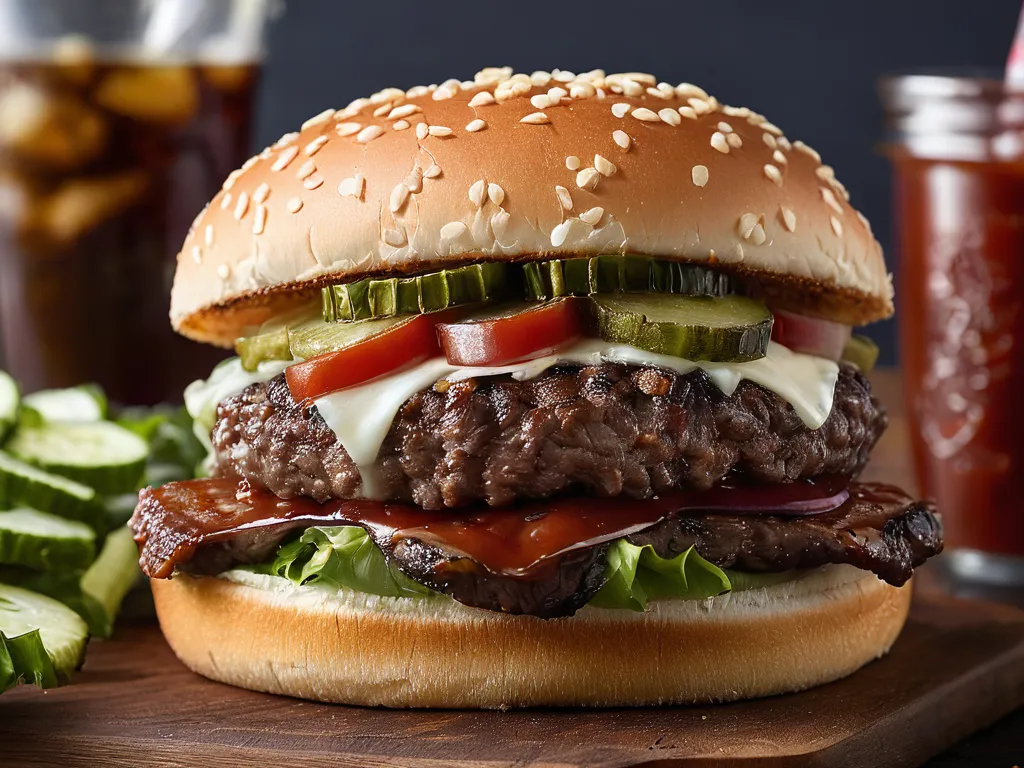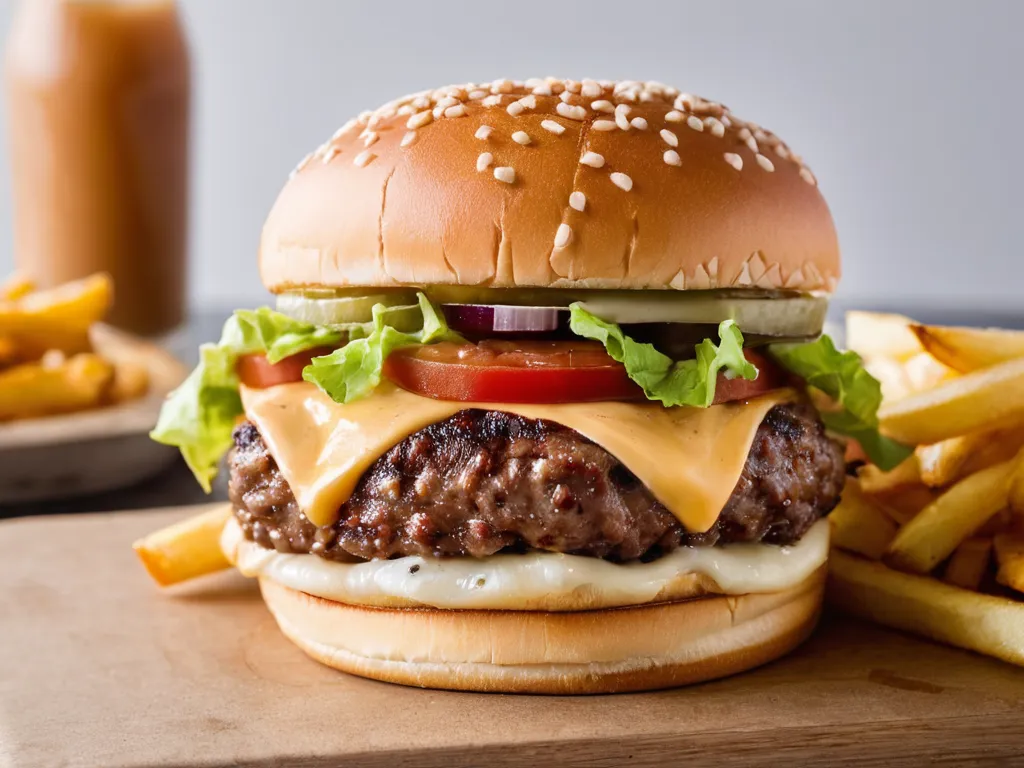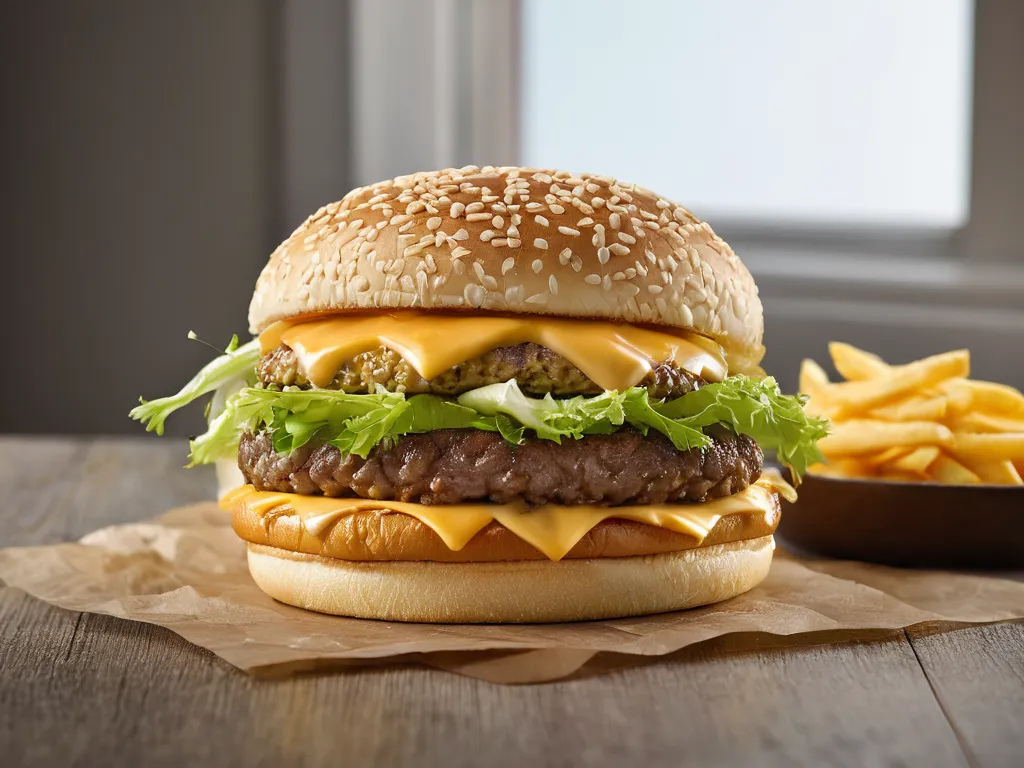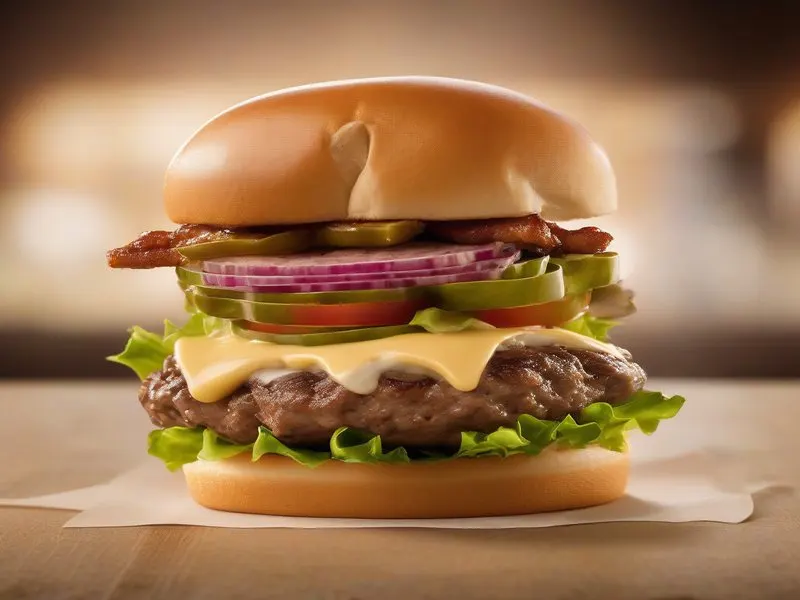
Copycat Culver’s ButterBurger
Prep time: 10 minutes Cook time: 12 minutes Servings: 4 burgers
Most copycat ButterBurger recipes focus on the beef and ignore the bun. That’s exactly backwards. The beef is straightforward: fresh ground beef, salt, pepper, cooked hot. The bun is the differentiator — buttered and toasted face-down on the same griddle until the surface caramelizes into a thin, golden, slightly sweet crust that no plain-toasted bun can replicate. Get the bun right and you have a ButterBurger. Get it wrong and you have a decent hamburger.
TL;DR
- Fresh beef only — buy it the day you cook it and do not freeze it beforehand
- No butter on the patty; butter goes on the crown of the bun, toasted face-down
- Cook patties on a dry, very hot cast-iron pan — no oil, no butter in the pan
- Cover for the last 60 seconds to melt the cheese via steam
- Toast the bun crowns in butter in the same pan for 90 seconds to 2 minutes — deep golden, not pale gold
- Toppings go under the patty (a Culver’s signature build): mayo, pickles, onion, lettuce, tomato on the bottom bun, then the cheese-topped patty, then the buttered crown — use ketchup and mustard in place of mayo for the plain Original
The Origin: Sauk City, Wisconsin, July 1984
Craig Culver and his wife Lea opened the first Culver’s on July 18, 1984, in Sauk City, Wisconsin — a small town on the Wisconsin River between Madison and the Dells. Craig’s parents George and Ruth Culver were partners in the opening. George had previously managed a McDonald’s franchise, which gave the family fast-food operational experience and, arguably, a clear picture of what they did not want to be.
The ButterBurger came from Ruth Culver’s method of buttering the crown of the bun and toasting it face-down on the flat-top — a home cook’s technique that produces a richer, more caramelized result than standard commercial bun-toasting. Craig Culver has described the original patty-forming method as using an ice cream scoop to portion the beef, then pressing it directly onto the griddle. The butter Culver’s uses comes from Alcam Creamery, a small family-owned Wisconsin creamery less than an hour outside Sauk City.
The name “ButterBurger” stuck to the burger even though the butter is on the bun, not in or on the beef. As of July 2026, Culver’s has 1,104 U.S. locations across 27 states, concentrated in the Midwest. Wisconsin has the most, with 156 locations, followed by Illinois (140), Michigan (107), and Indiana (90). It remains family-owned.
Why the Name Is Misleading (and What the Butter Actually Does)
“ButterBurger” reads as either a burger cooked in butter or a burger with butter melted on the patty. It is neither. The butter goes on the bun crown only — about 1 tablespoon per bun, applied to the cut side and pressed face-down onto the hot griddle for 90 seconds to 2 minutes.
What happens in that 90 seconds is the reason the name is worth the confusion.
Plain bread toasted on a griddle browns through the Maillard reaction — the interaction between the bread’s amino acids and reducing sugars at temperatures above 280°F. The result is familiar: golden, slightly nutty, lightly crisp.
Butter contains milk proteins (casein) and lactose (milk sugar) in addition to fat. When you press a buttered bun face-down onto a hot surface, those milk proteins and lactose participate in the Maillard reaction and caramelization at lower temperatures than plain bread requires — around 300–325°F. The result is:
- A deeper, more even brown color
- A flavor that includes caramelization (sweet, slightly complex) alongside the classic toast flavor
- A thin, almost cracker-like crust on the bun surface from the fat
- A bread interior that stays soft because the butter creates a barrier against drying out
Dry-toasted buns are drier and more uniformly colored. Butter-toasted buns have a richer, more complex crust and hold up better against the burger’s moisture without going soggy.
The technique: use softened (not melted) butter. Spread it evenly on the cut surface of the bun crown, press firmly onto the hot pan, and resist the urge to move it for at least 90 seconds. You want contact, not movement.
The Fresh Beef Difference
Culver’s “fresh, never-frozen” claim is marketing language, but it reflects something real about how fresh beef cooks differently from frozen.
When beef is frozen, water inside the muscle cells forms ice crystals. These crystals expand as they form and rupture the cell membranes surrounding individual muscle fibers. The damage is microscopic but consequential: when the beef thaws and heats, the ruptured cells release more water than intact ones. That water hits the hot griddle as steam.
Steam is the enemy of browning. The Maillard reaction happens at the meat’s surface only when the surface is dry and in direct contact with high heat. A surface covered in steaming moisture never reaches the temperature required for deep browning — it stalls at 212°F, the boiling point of water, until the moisture evaporates.
Fresh beef has intact cell structure. The water stays in the muscle tissue through cooking, releasing gradually as internal heat rises, rather than escaping immediately to the surface. The result: the patty’s exterior stays drier during cooking, browns more readily and more deeply, and the moisture stays inside the burger rather than on the pan.
At home: buy ground beef on the day you plan to cook it. If you have to buy the day before, refrigerate it — but do not freeze it. The difference is real and noticeable, especially for a thin patty cooked hot.
The Beef Blend
Standard ground beef at grocery stores is most often labeled 80/20 (80% lean, 20% fat), sourced primarily from chuck (shoulder). Culver’s describes their blend as a combination of sirloin, chuck, and plate cuts.
- Chuck (shoulder): the workhorse of ground beef — well-marbled at roughly 15–20% fat, it carries the juiciness and classic beefy depth that make a burger taste like a burger
- Sirloin (rear back): leaner and with a milder, slightly buttery flavor; adds definition to the blend without heaviness
- Plate (belly section, near the short ribs): high intramuscular fat with a rich, slightly fatty flavor; the same cut used in fajita meat; adds richness that melts into the patty during cooking
The combination produces more complexity than a single-cut blend. For home use, 80/20 ground chuck is the workable substitute — it provides the right fat content (the burger will be lean and dry below 75/25 in a thin patty cooked hot). If your butcher offers a custom blend, a sirloin-chuck mix at 75/25 is the closest analog.
Patty weight at Culver’s: approximately 3 oz for a single, formed thin and pressed to just wider than the bun. This home recipe forms four larger 6-oz patties for a heartier burger — or, for a truer copycat, divide the beef into eight 3-oz portions and serve them as singles or stacked doubles.
The Two-Stage Cooking Method
Stage 1: The Patties (Dry Pan, High Heat)
No oil in the pan. No butter. Cast-iron dry and very hot.
The beef contains enough fat (even at 80/20) to cook without added fat. Adding oil or butter to the pan under a beef patty reduces the temperature differential between the patty’s surface and the cooking fat, which slows browning. You want the patty’s own fat to render directly onto the pan surface.
Preheat the cast-iron skillet over medium-high heat for 2 full minutes. Add the seasoned patties. Do not touch them for 3 to 4 minutes. The crust forms from sustained, uninterrupted contact — breaking it by pressing or moving the patty disrupts the sear.
Flip once. Cook 2 to 3 minutes on the second side. Add cheese, cover the pan for 60 seconds, and let the trapped steam melt the cheese without over-cooking the patty.
Stage 2: The Bun (Same Pan, Butter Added)
Remove the patties. The pan still has beef fat on the surface and is still hot.
Add 1 tablespoon of softened butter for each bun crown. It will melt immediately and begin to sizzle. Place the bun crowns, butter-side-down, onto the pan. Press gently with the spatula for 10 seconds to maximize contact. Then leave them alone for 90 seconds to 2 minutes.
Check by lifting one edge: you want deep golden-brown with caramelized patches, not pale gold. Pale buns are under-toasted; dark brown edges are fine.
Toast the bottom halves cut-side-down for 30 seconds — just enough to warm them. No butter on the bottoms.
Menu Versions: Original, Cheese, Deluxe
ButterBurger “The Original” — single patty on a butter-toasted bun. No cheese, no sauce. Ketchup and mustard are available on request but not standard. Culver’s most minimal version — the beef and buttered bun only.
ButterBurger Cheese — adds a slice of Wisconsin cheddar melted over the patty. The most popular single option. Cheddar here is mild Wisconsin cheddar, not processed American — it has real dairy character but melts cleanly when covered with a lid for 60 seconds. At home, mild Wisconsin cheddar is the authentic choice; American cheese is a workable substitute that melts more smoothly but has less flavor.
The Culver’s Deluxe — the fully loaded version. Wisconsin cheddar plus crisp lettuce, ripe tomato, dill pickles, and sweet red onion, with Culver’s signature mayo on the bun. The toppings arrangement: mayo on the bottom bun, then pickles, red onion, lettuce, tomato, then the cheese-topped patty, then the butter-toasted crown. The cheese sits directly against the hot tomato, not against the cold lettuce, which keeps the cheese warm while the lettuce stays crisp below.
Doubles and Triples — same beef, same bun, same toppings — just two or three patties stacked. Each patty adds roughly 3 oz of beef, 250–280 calories, 20g of protein, and 17g of fat.
At home, build the version you want. The technique is identical across all three.
Toppings Order (It Matters)
Culver’s builds the Deluxe from the bottom up:
- Bottom bun — signature mayo spread across the face
- Dill pickle slices
- Sweet red onion (sliced or diced)
- Crisp lettuce leaf
- Thick ripe tomato slice
- Cheese-topped patty (melted cheddar side down, resting on the tomato)
- Butter-toasted crown
The toppings go under the patty, not on top. This matters: the hot patty and melted cheese sit directly on the tomato, warming it and melding the cheese against the tomato’s moisture. The pickles and onion sit at the bottom, furthest from the patty heat, and stay sharp and cool. Lettuce goes between the onion and tomato — insulated from the direct patty heat, so it stays crisp rather than wilting.
Most home builds put toppings on top of the patty, which places the cheese against cold vegetables and stacks the condiments away from the bun surface. Culver’s bottom-up construction gives you better structural stability and every element at its intended temperature.
How It Compares to Other Fresh-Beef Burgers
| Culver’s | Five Guys | Shake Shack | In-N-Out | |
|---|---|---|---|---|
| Patty style | Flat griddle, moderate thickness | Griddled, larger patty | Smash-style, thinner | Flat griddle, thin patty |
| Beef | Sirloin/chuck/plate blend | Fresh beef (no specifics) | Short rib/brisket/chuck | Fresh beef (USDA #1) |
| Key differentiator | Butter-toasted bun | Open toppings bar | The ShackSauce | Animal-style spread |
| Approx. price (single) | $5–6.50 | $9–12 | $8–10 | $4–5 |
| Regional reach | Midwest (26 states) | National | National | West Coast / Southwest |
The Culver’s ButterBurger is the most affordable and the only one where the bun is the central technique rather than the beef blend or sauce.
Cost Comparison
| Culver’s restaurant | Homemade | |
|---|---|---|
| ButterBurger Original | ~$4.49–5.49 | ~$2.00 |
| ButterBurger Cheese | ~$5.29–6.29 | ~$2.40 |
| ButterBurger Deluxe | ~$6.29–7.29 | ~$3.00 |
| Double Deluxe | ~$8.49–9.49 | ~$4.50 |
Home cost for four ButterBurger Cheese burgers: approximately $9–11 in ingredients. Savings of $11–16 versus the same order at a Culver’s, with the advantage of using full-size potato rolls and real unsalted or salted butter.
What to Serve With ButterBurgers
Culver’s signature sides are cheese curds and frozen custard, so if you’re building the full experience:
- Copycat Culver’s Cheese Curds — fresh Wisconsin cheddar, battered and fried; the crispy-squeaky texture depends on the curds being fresh-from-the-package cold before frying
- Copycat Culver’s Concrete Mixer — frozen custard (not ice cream; custard uses egg yolks which add richness) blended so thick it holds upside-down
- Copycat McDonald’s Fries — if you want a classic fast-food fry alongside
For another fresh-beef burger with a distinct regional following, see the Copycat Burger King Whopper or the Copycat In-N-Out Burger for a West Coast comparison.
See all Culver’s copycat recipes →
Storage
The assembled burger does not store well — the butter-toasted bun softens quickly and the lettuce and tomato release moisture. Make exactly as many as you plan to eat.
For component prep: the patties can be formed 2 to 4 hours ahead and refrigerated, uncovered, on a plate. Do not season them until you’re ready to cook — salt draws out surface moisture, which interferes with browning if the salted patties sit too long.
The bun-toasting step is always done right before serving. It takes 2 minutes and cannot be done ahead.