Copycat Waffle House Smothered Hashbrowns
Prep time: 10 min | Cook time: 25 min | Servings: 4
Waffle House hashbrowns have their own language. “Scattered” means the potatoes are spread thin on the flat-top. “Smothered” adds grilled onions. “Covered” melts American cheese. “Chunked” throws in diced grilled ham. Regulars order in code — “scattered, smothered, and covered” or “all the way” — and the cooks translate it in real time on a grill that never stops moving.
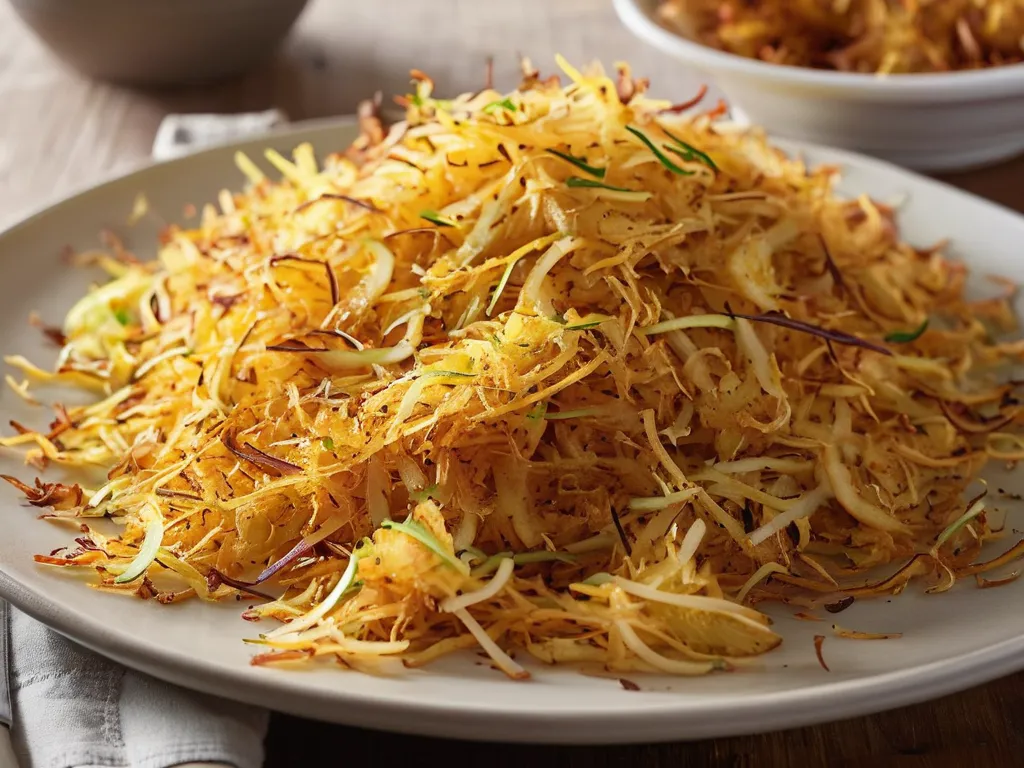
Smothered is the most ordered topping combination, and this recipe focuses on getting it right. The hash brown technique is the same as the plain version: dehydrated frozen potatoes, hot flat surface, zero stirring, 4–5 minutes per side. What’s specific to smothered is the onions — and the onions are where most copycat recipes fail.
The Onion Is the Whole Point — and Most Recipes Rush It
Waffle House onions are soft, sweet, and golden-edged. They are not lightly sautéed with some crunch remaining. They are not fully caramelized into a jammy paste. They are specifically 15–18 minutes at medium heat — long enough to drive off the moisture and concentrate the natural sugars, short enough to stop before they collapse.
Most copycat recipes cook the onions for 5–6 minutes alongside the hash browns and call it done. The result tastes sharp and slightly raw — recognizably onion but missing the mellowed sweetness that makes the Waffle House version work. At the restaurant, the cook starts the onions several minutes before the hash browns and uses a section of the flat-top they’ve already established steady heat on. The onions pick up some of the seasoned butter on the surface as they cook, which helps them develop that savory-sweet character.
At home: start the onions in a separate small pan before you do anything else. Let them go 15–18 minutes, stirring every 3–4 minutes, until they’re completely soft and the edges are golden. If they’re done before the hash browns, just keep them warm. They keep for 4 days in the refrigerator if you want to prep ahead.
Note on the potato: Dehydrated frozen hash browns (not fresh-shredded, not “southern style cubed potatoes”) are the correct call. Dehydrated hash browns have almost no free moisture, which means they hit the hot surface and immediately start building crust rather than steaming. The full Waffle House hash browns guide covers the potato choice, heat control, and all 9 topping combinations in detail — this article focuses on the smothered preparation specifically.
The Waffle House Hash Brown Language
The nine ordering words, in menu order — scattered is the cooking method, the other eight are the toppings:
- Scattered — spread thin on the grill (the baseline cooking method)
- Smothered — grilled yellow onions (this recipe)
- Covered — American cheese, melted
- Chunked — diced grilled ham
- Diced — tomatoes
- Peppered — jalapeños
- Capped — mushrooms
- Topped — chili
- Country — sausage gravy
The most common orders in practice: scattered-smothered, scattered-smothered-covered, and “all the way” (scattered browns with all eight topping modifiers). This recipe handles smothered alone and the smothered-covered combination — the two cases where the onion technique is the focus.
Smothered + Covered: The Most Popular Two-Topping Combo
Adding American cheese to smothered hash browns is a 60-second step during the final flip. Scatter 2–3 slices of American cheese over the top of the hash browns after the second-side flip, cover the pan with a lid or a foil tent, and let the heat melt the cheese for 60–90 seconds. American cheese is the correct choice here — not cheddar. American cheese uses sodium citrate as an emulsifier, which makes it melt completely flat and smooth. Cheddar (even mild) breaks its fat-protein bond under direct heat, producing a greasy, grainy melt rather than a uniform blanket.
What Makes the Crust Work
The crust forms from three things working together: a screaming-hot surface, a fat layer that conducts heat evenly, and zero movement while the crust is forming.
The butter-and-oil combination is intentional. Butter alone burns at high heat; neutral oil alone has no flavor. Together, the oil raises the smoke point while the butter’s milk solids contribute the savory-rich flavor that Waffle House’s grill accumulates over years of seasoning. Substitute 100% oil and you get a crust that tastes thinner.
Press the hash browns flat immediately after they hit the pan — the larger the contact area with the hot metal, the faster and more even the crust. Then walk away. Four to five minutes undisturbed is the rule. Peek at one corner at the 4-minute mark by lifting an edge with the spatula; it should be deep gold, not pale yellow. If it’s pale, give it another minute before the full flip.
Cost Comparison
| Waffle House | Homemade | |
|---|---|---|
| Smothered order | ~$3.75–5.00 | ~$1.40/serving |
| Smothered + covered | ~$4.50–5.50 | ~$1.65/serving |
| Yield | one plate | 4 plates per batch |
A 30-oz bag of frozen dehydrated hash browns costs about $3. One yellow onion is $0.75. Butter and oil are pantry costs. Four servings of smothered hash browns at home costs roughly $5.50 total — about what a single order costs at the restaurant before tip.
Tips and Variations
Use dehydrated hash browns, not fresh. Look for frozen bags labeled “shredded hash browns,” ideally with packaging that mentions dehydrated potatoes. If you can only find fresh-style frozen, spread them on a baking sheet, let them thaw for 20 minutes, and blot with paper towels before cooking — the drier they are, the better the crust.
Don’t crowd the pan. The potatoes should be no more than 3/4 inch thick after pressing. If your skillet is too small for the full batch, cook in two rounds — the second batch benefits from the already-seasoned pan surface.
Prep the onions ahead. Cooked onions keep in the refrigerator for 4 days. Make a big batch on Sunday and your weekday smothered hash browns take 12 minutes instead of 25.
Add the peppered topping. Dice 1–2 jalapeños and add them with the onions during the final flip for the smothered-and-peppered combination. They soften quickly from the residual heat and add a clean, green heat that works well with the sweet onions.
Storage and Reheating
Hash browns are best eaten immediately — they soften fast after they come off the heat. That said, leftovers keep in an airtight container in the refrigerator for 3 days.
To reheat: spread in a single layer in a skillet over medium-high heat with a thin film of oil or butter, press flat, and cook 3–4 minutes per side until crispy and hot through. A 400°F toaster oven for 5–7 minutes on a wire rack also works. Avoid the microwave — it produces a soft, steamy pile instead of a crust.
Make the full Waffle House Hash Browns (all 9 toppings) — the complete scattered, smothered, covered, chunked, and all-the-way guide. Or build out a full diner breakfast: Waffle House Waffles, Denny’s Grand Slam, McDonald’s Egg McMuffin. See all Waffle House copycat recipes.