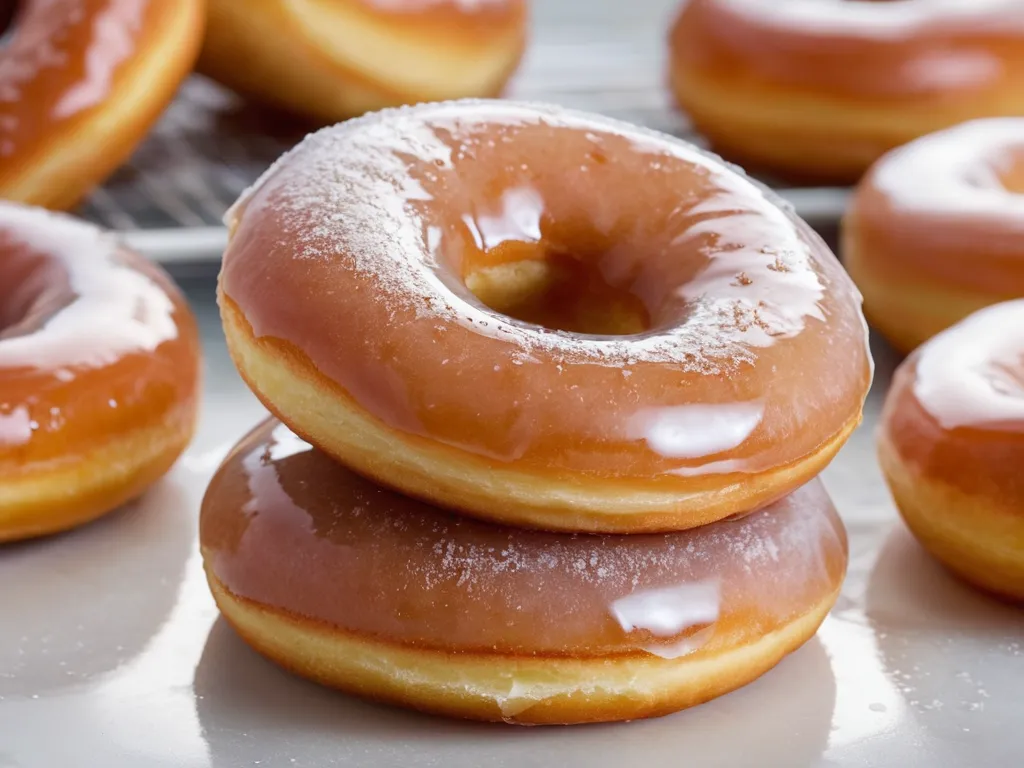
The Krispy Kreme Original Glazed has been made from the same recipe since July 13, 1937 — the day Vernon Rudolph opened the first Krispy Kreme in Winston-Salem, North Carolina. The recipe hadn’t even been Rudolph’s own idea: it traced back to a French chef in New Orleans named Joe LeBeau. Rudolph rented a building in the historic Old Salem district and started selling to grocery stores. Customers followed the smell of frying doughnuts to his door and he cut a hole in the wall to sell to them directly off the street — the original Hot Now experience.
The recipe is unchanged 88 years later. The same yeast-raised dough, the same thin, crackly glaze, the same light-as-air pillowy crumb. What Krispy Kreme industrialized in the 1940s and 50s (pressurized extruders, conveyor proofing, waterfall glazing curtains) is the production method, not the formula.
TL;DR: Proof yeast in warm milk, mix enriched dough with shortening (not butter), two-rise proof (1 hour + 45 minutes), cut, fry at 350°F for 2 minutes total, glaze IMMEDIATELY while hot in a thin warm glaze. The shortening in the dough and the hot-dip glazing technique are the two things most copycat recipes get wrong. Serves 12.
What Makes Krispy Kreme Different from Regular Doughnuts
The Original Glazed is a yeast doughnut, not a cake doughnut — and that distinction determines almost everything about the texture.
Yeast doughnuts are leavened by fermentation. Active yeast consumes the small amount of sugar in the dough and produces carbon dioxide, which inflates the gluten network into an open, honeycomb-like cell structure. When that proofed dough hits hot oil, the air bubbles expand rapidly, the exterior sets quickly, and you get a light, airy crumb that springs back when you press it. The result is what you feel when you squeeze a Krispy Kreme — that particular softness, the slight resistance, the way it deflates slightly and then re-inflates.
Cake doughnuts use baking powder or baking soda for lift, like a muffin. The texture is denser, more crumbly, and doesn’t have the same spring. Dunkin’ Original Glazed donuts are yeast doughnuts too; many bakery doughnuts are cake style.
The other factor is the enriched dough formula. Krispy Kreme’s dough contains fat (shortening), egg, and milk — ingredients that tenderize the crumb and slow gluten development. The fat coats gluten strands before they can form a tight network; the egg adds emulsifiers and richness. The result is a dough that’s almost impossibly soft and extensible — it won’t fight you when you roll it.
And critically: the sugar content is very low. The original stub for this recipe called for 1 cup of granulated sugar — which would make a very sweet, dense doughnut that’s nothing like a Krispy Kreme. The real dough contains about 3 tablespoons of sugar for 12 doughnuts. Krispy Kreme doughnuts are not sweet in the crumb. They’re almost neutral, bread-like, very lightly enriched. All the sweetness comes from the thin glaze.
The Shortening Secret
Nearly every great Krispy Kreme copycat uses shortening in the dough, and this is not nostalgic or incidental — it’s the reason the texture is right.
Vegetable shortening (like Crisco) is 100% fat. No water, no dairy solids, no flavor compounds. When you mix it into the dough, it coats gluten strands with pure fat, inhibiting gluten network formation and keeping the crumb tender and open. When you fry in it, the shortening leaves a clean, dry-tasting exterior without the faint oiliness of liquid vegetable oil.
Butter is approximately 80% fat and 20% water. During dough mixing, the water fraction competes with the flour for the fat’s gluten-inhibiting action — less effective. During frying, the water in butter (if you use it as the frying medium) lowers the smoke point and changes the flavor profile slightly. More practically, butter-substituted copycat doughnuts consistently come out with a slightly bread-like texture instead of the cloud-like pillow of the original.
If you truly cannot find shortening, refined coconut oil (not virgin) is the closest substitute — it’s a solid fat at room temperature with similar frying properties to shortening. Standard vegetable oil works but the texture difference is noticeable in a side-by-side.
The Hot Glaze Rule
The single biggest mistake in most Krispy Kreme copycat attempts: glazing cold doughnuts in cold glaze.
Watch the Krispy Kreme production line at any retail location and you’ll see how the glaze works commercially: a waterfall curtain of warm, thin glaze pours over hot doughnuts as they roll off the fryer conveyor. The heat from the doughnut keeps the glaze mobile; the glaze flows into a thin, even coat; as the doughnut cools, the glaze crystallizes into a hard, translucent shell with a slight snap when you bite through.
At home, you need to replicate both halves of that temperature equation:
-
The glaze must be thin — not frosting thick, but the consistency of heavy cream or condensed milk. This recipe uses 2 cups powdered sugar to 1/4 cup liquid. If you go thicker than that, you’ll end up with a bakery-style icing coat rather than the characteristic Krispy Kreme glaze.
-
The doughnut must be hot — immediately out of the fryer, within 60 seconds. Set up your glazing bowl next to the fryer. Pull a doughnut out, let it drain 15 seconds on the rack, then dip. Don’t let them cool. If you’re working in batches, the doughnuts glazed last will be slightly cooler and the glaze will be a little thicker — which is fine, just not as crackly as the first batch.
Keep the glaze warm by setting the bowl over a larger bowl of hot (not boiling) water while you work. If the glaze thickens between batches, whisk in a few drops of warm water.
How the Commercial Process Differs (and What You Can’t Replicate)
There are three things the Krispy Kreme factory does that you genuinely cannot do at home:
1. Pressurized ring extruder. Commercial Krispy Kreme doughnuts are formed by forcing proofed dough through a ring-shaped die under air pressure. This creates a perfectly uniform ring with a specific wall thickness, no seams, and a very consistent density distribution. Home-cut doughnuts have cut edges, slight seams from the cutter, and less precise wall uniformity. This is a texture and visual difference but not a fatal one — your cut doughnuts will still be excellent, just not geometrically perfect.
2. Controlled proofing line. The commercial proofer is a temperature-controlled conveyor that takes precisely 50 minutes from shaping to fryer — the doughnuts arrive at the oil at exactly the right proof state every time. At home, your second proof is an approximation. Use the poke test (see FAQ) to gauge readiness rather than relying on time alone.
3. Waterfall glaze curtain. The commercial glaze machine pours warm glaze continuously over a moving conveyor belt of hot doughnuts, ensuring complete, even coverage at exactly the right temperature. At home, you’re hand-dipping into a bowl — the coverage is slightly less even, but with practice you get close.
The Hot Now Light
Krispy Kreme introduced the neon Hot Now sign in 1992. The sign illuminates when Original Glazed doughnuts are actively moving off the fryer conveyor — typically during morning production runs and sometimes evening runs depending on location.
The sign became a cultural touchstone. Regulars time their routes around when the Hot Now light is on. It’s common to see people pull a U-turn on a highway when they spot it. The light is a genuine signal (not marketing theater — Krispy Kreme actually does only light it during production) that means the doughnuts you’re about to eat came off the line minutes ago, not hours ago. The difference between a Hot Now Krispy Kreme and one that’s been sitting in the rack for three hours is significant — the glaze is still slightly soft and the interior hasn’t had time to start firming up.
The closest home equivalent: eating your doughnuts in that 10–20 minute window after glazing, while the interior is still warm and the glaze has just set. That window is the whole point.
Doughnut Holes
The dough cut from the centers makes excellent doughnut holes. Proof them alongside the rings (they’ll proof faster — watch them), fry at 350°F for 45–60 seconds total (they need less time due to their size), and glaze the same way. They’re bite-sized Hot Now moments and consistently the favorite thing kids take off the cooling rack before you can stop them.
Flavor Variations
The Original Glazed recipe is the foundation for almost every Krispy Kreme variety. Variations from the base:
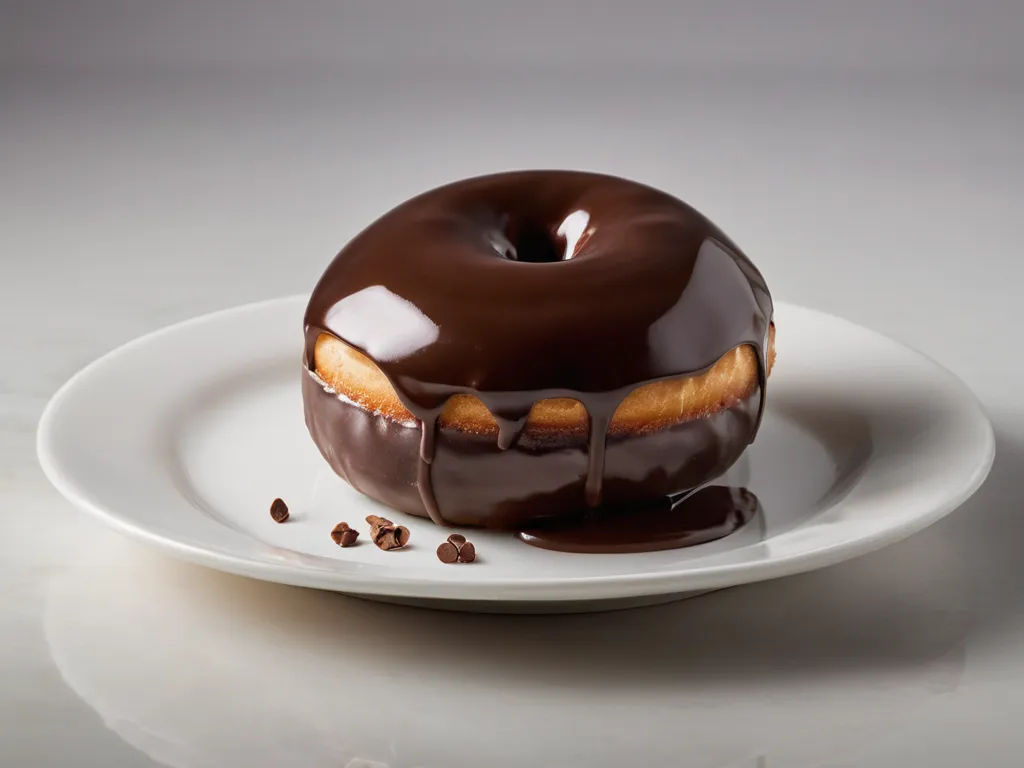
Chocolate iced: Make the glaze with 1 tablespoon unsweetened cocoa powder + slightly more liquid to compensate for the cocoa’s thickening effect. Apply the same way — hot doughnut, warm glaze.
Strawberry iced: Replace half the liquid in the glaze with reduced (thick) strawberry puree + powdered sugar. The natural pectin in strawberries helps the glaze set.
Cinnamon sugar: Skip the glaze entirely. While still hot, roll each doughnut in a 50/50 mix of cinnamon and sugar. The heat makes the sugar adhere perfectly without any sticking agent needed.
Lemon glazed: Add 2 teaspoons fresh lemon zest + 1 tablespoon fresh lemon juice to the glaze (reduce milk by 1 tablespoon to compensate). The acidity makes the powdered sugar glaze slightly translucent and sharper-tasting — summer-appropriate.
Storage
Krispy Kreme doughnuts are designed to be eaten fresh. That’s not a cop-out; it’s a function of the glaze chemistry. The thin sugar glaze on a yeast doughnut absorbs atmospheric moisture within hours, which is why a Krispy Kreme that sat in the box overnight is stickier, softer, and less satisfying than one that’s 30 minutes old.
At home: eat within 6–8 hours of glazing. Store at room temperature, loosely covered (not sealed in an airtight container, which accelerates moisture absorption into the glaze). Don’t refrigerate — cold accelerates staling in yeast dough and makes the glaze tacky.
If you need to prepare in advance: freeze the fried-but-unglazed doughnuts (cool completely first), then thaw at room temperature for 20–30 minutes and glaze while still slightly warm from resting. You’ll lose some of the crackly-glaze effect but the result is much better than refrigerating glazed doughnuts.
The unglazed dough, pre-cut and pre-proofed, can also be frozen: freeze cut-but-unproofed doughnuts on a sheet pan, then transfer to a zip-lock bag. Thaw overnight in the refrigerator, then bring to room temperature for 1 hour and proof until puffed (about 45 minutes) before frying.
More Krispy Kreme & Doughnut Copycat Recipes
- Copycat Krispy Kreme Chocolate Iced Donut — the same pillowy yeast dough finished with a rich chocolate glaze instead of the clear one.
- Copycat Dunkin’ Glazed Donuts — the other classic ring donut, with a shinier, sweeter vanilla glaze; a useful side-by-side for the yeast-dough technique.
- Copycat Dunkin’ Munchkins — donut holes done the same way, ideal for using the centers cut from this recipe.
See all Krispy Kreme copycat recipes →