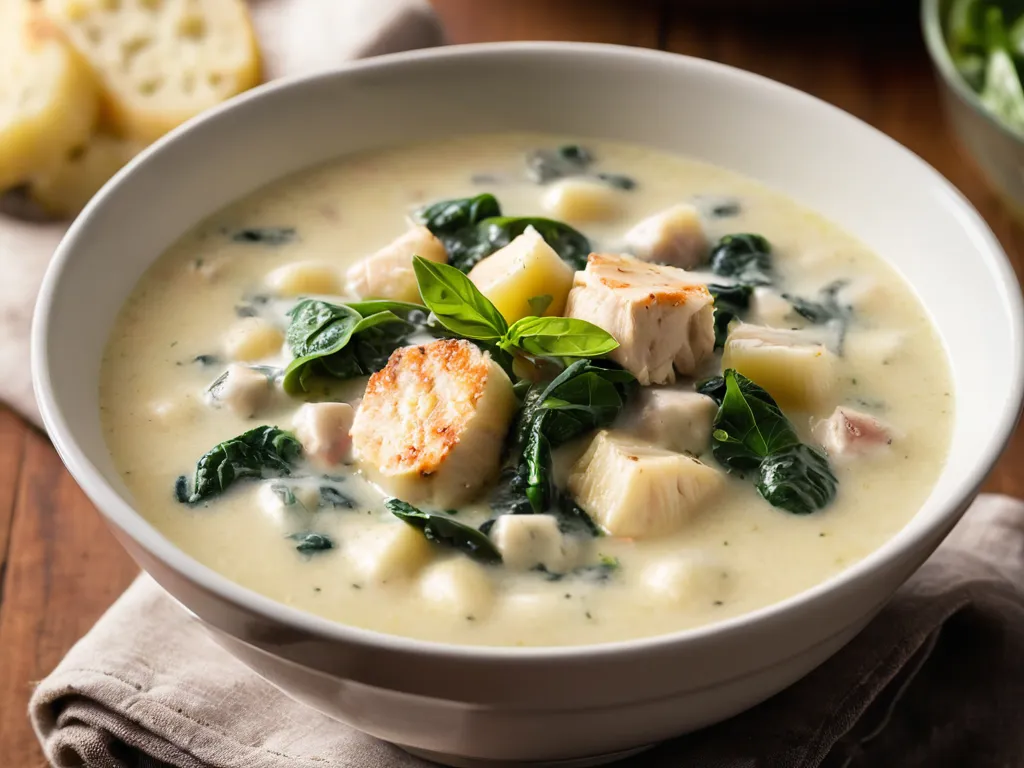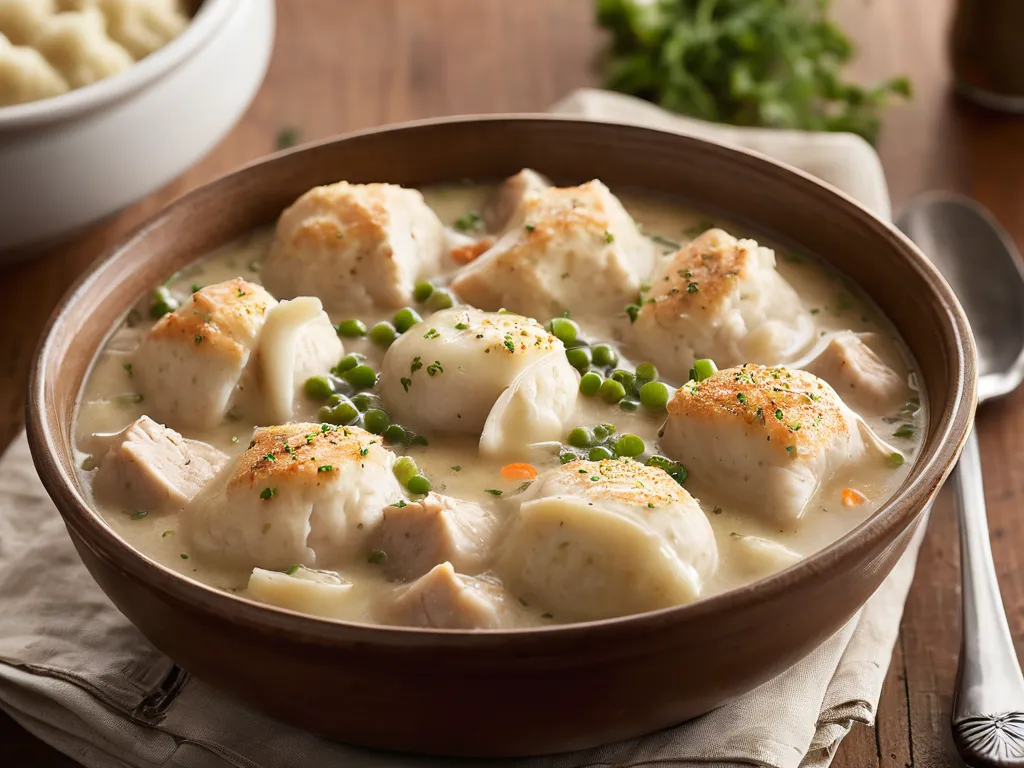
Cracker Barrel’s chicken and dumplings are the kind of dish that ends with an empty bowl and a slow lean back in the chair. The broth starts as chicken stock and ends as something closer to velvet gravy. The dumplings aren’t fluffy clouds — they’re flat, dense squares with a pasta-like chew that soak up the broth from the inside out.
That distinction matters. This recipe nails the actual Cracker Barrel version: flat-rolled dumplings, not drop dumplings.
The Flat Dumpling vs. Drop Dumpling Divide
If you search for chicken and dumplings online, most recipes produce soft, pillowy dumplings that float on top of a soup. Those are northern-style drop dumplings — thick biscuit batter dropped by the spoonful directly into boiling broth. They puff dramatically because they have a full tablespoon of baking powder and never touch a rolling pin.
Cracker Barrel makes the southern version: flat, rolled dumplings cut into squares. The differences that drive the texture:
- Much less leavening. One teaspoon of baking powder instead of a full tablespoon means the dough barely rises. It stays dense and firm when cooked.
- Rolled thin. Cut to 1/4-inch, the squares cook through quickly without staying gummy inside.
- Cooked submerged. Flat dumplings drop below the broth surface instead of floating on top, absorbing liquid evenly from all sides.
The result: dumplings that behave more like thick pasta — tender, slightly chewy, and saturated with chicken flavor — rather than bread-like dumplings that taste mostly of biscuit dough.
Why the Broth Transforms
When the flat dumplings cook in the broth, they release a significant amount of starch. Over 20-25 minutes, that starch gels the liquid — turning thin chicken stock into a thick, silky gravy that coats the back of a spoon. You don’t need to add flour or cornstarch; the dumplings do it for you, provided you give them enough time.
This is why the cooking time matters. Pull the dumplings at 15 minutes and the broth stays thin. Let them go 25 minutes and the broth becomes the creamy, unctuous gravy Cracker Barrel is known for.
The Chicken: Breast, Not Thigh
Cracker Barrel uses chicken breast, and the recipe here follows that. The goal is large, rough shreds — not fine-pulled chicken that disappears into the broth. Two forks dragged in opposite directions along the grain of the cooked breast creates the right texture: chunky, distinct pieces that hold their identity in each bite.
If you prefer thighs for their fat and flavor, they work well here too. The swap is covered in the FAQ.
Cost vs. the Restaurant
| Cracker Barrel | Homemade | |
|---|---|---|
| Dinner plate (with 2 sides + rolls) | ~$11.99 | — |
| Servings per order | 1 | 6 |
| Estimated home cost | — | ~$13–15 total |
| Per-serving cost | ~$12 | ~$2.25 |
The math is more dramatic here than most copycats because this is a soup-style dish where one pot yields six servings. The standard Cracker Barrel dinner plate runs about $12 (a weekday lunch special is a bit less, around $8); six plates would be roughly $72, while the home batch runs $13-15 total for the same six servings.
Pro Tips
Don’t let the broth boil when cooking the dumplings. A rolling boil breaks up the squares before the starch has a chance to set. Simmer at the temperature where you see lazy bubbles breaking the surface — not aggressive, churning movement. Reduce the heat after each adjustment; it’s easy to overshoot.
Add the dumplings one at a time. Dropping them all at once causes them to clump together before the surface starch gelatinizes. One at a time, with a stir after each, gives each square its own space in the broth.
Flour the surface generously. Dumpling dough sticks to everything — the rolling pin, the board, the cut squares. Liberal flour on the surface and on the rolling pin prevents tearing. Dust the cut squares on both sides too.
Leave the vegetables in the broth. The softened celery and onion are entirely edible and add texture and sweetness to the final dish. Straining them out is optional; most Cracker Barrel versions have bits of soft vegetables throughout.
Salt at the end, not the beginning. Chicken stock varies enormously in sodium content. Season the broth after the dumplings have cooked and the dish has reduced and concentrated — then taste and adjust.
Storage and Reheating
Store leftovers in a sealed container for up to 4 days in the refrigerator. As they sit, the dumplings continue absorbing broth; by day two, the consistency will be noticeably thicker and the broth level will be lower. This is normal and not a problem.
To reheat: Add 1/2 to 1 cup of chicken stock per serving, bring to a gentle simmer on the stove (not a boil), and stir occasionally until heated through. Microwave reheating works but can make the dumplings rubbery; stovetop with extra stock is better.
Freezing: The dish freezes acceptably but the dumplings soften and lose some texture on thaw. Freeze in individual portions, thaw overnight in the refrigerator, and reheat on the stovetop with added stock to restore consistency. For best texture, make the broth and chicken ahead but cook fresh dumplings on the day you serve.
More Cracker Barrel Copycat Recipes
The full Cracker Barrel experience starts at the table before the entree arrives:
- Copycat Cracker Barrel Biscuits — the tall, flaky buttermilk biscuits served with every meal, worth making as a first course alongside the chicken and dumplings
- Copycat Cracker Barrel Hashbrown Casserole — the signature cheesy potato side that pairs with almost everything on the CB menu
- Copycat Cracker Barrel Meatloaf — the other comfort-food centerpiece on their menu, good for the same slow-Sunday-dinner occasion as the dumplings
See all Cracker Barrel copycat recipes →