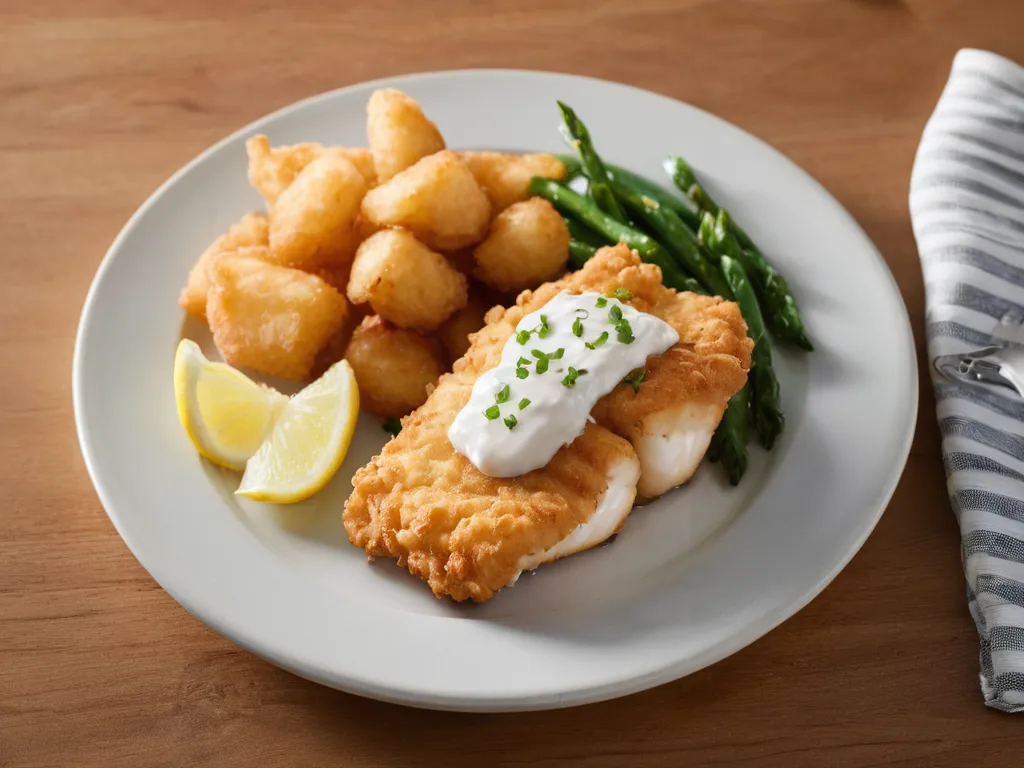
Copycat Culver’s Fried Cod
Prep time: 15 min Cook time: 12 min Servings: 4
Culver’s runs a Friday fish fry that makes people plan their week around it. Golden, beer-battered cod fillets with a shatteringly crispy coating, served with coleslaw, rye bread, and tartar sauce — it’s a Midwest institution that traces back to the Wisconsin tradition of the Friday fish fry. Every Friday, Culver’s locations across the upper Midwest see lines that rival their lunch rush, all for a plate of fried fish that manages to taste homemade despite coming from a fast-casual chain.
This recipe nails the Culver’s version: a cold beer batter that puffs up light and crispy in the fryer, wrapped around thick pieces of fresh cod that stay moist and flaky inside. The cornstarch in the batter is the difference between a heavy, doughy coating and the airy, crunchy shell that Culver’s is known for. Cold beer provides carbonation that creates tiny air pockets in the batter as it hits the hot oil.
A deep-fry thermometer is the only specialized tool you need. Everything else is straightforward home kitchen equipment. Four servings take about 25 minutes from start to finish.
Why Make It at Home?
Culver’s North Atlantic Cod Dinner costs between $11 and $13 depending on location. A pound and a half of fresh cod runs about $10 at the fish counter, and the batter ingredients cost roughly $2 total. Oil is a recurring cost, but since you can strain and reuse frying oil 3 to 4 times, the per-use cost is about $3. Total cost per batch comes to roughly $15, or $3.75 per serving — a savings of about 40% over the restaurant price.
You also get to control the freshness of the fish and the thickness of the batter. Restaurant fish fryers process hundreds of pieces through the same oil, which breaks down and affects flavor. Your home oil is fresh and clean.
What Makes Culver’s Fried Cod So Good
Culver’s uses North Atlantic cod, which has a mild, clean flavor and a dense, flaky texture that holds up to frying without falling apart. The fillets are thick-cut, which means the interior steams gently inside the batter while the outside crisps. Thin fillets overcook before the batter finishes browning. Thick fillets give you that contrast — audible crunch on the outside, tender fish that separates into clean flakes on the inside.
The batter is beer-based, which is the traditional approach for Wisconsin fish fry. Beer brings three things to the batter: carbonation creates bubbles that expand in hot oil and make the coating lighter, alcohol evaporates faster than water which helps the batter crisp up quickly, and the yeast and malt flavors add a subtle complexity that flour and water alone can’t provide. A standard American lager works best — you don’t want the hops or roast flavors of a craft beer competing with the fish.
Temperature control is the third critical factor. Culver’s commercial fryers maintain a precise temperature that home cooks sometimes struggle to replicate. Oil that’s too cool produces a greasy, soggy coating. Oil that’s too hot browns the batter before the fish cooks through. Keeping your oil at a steady 375 degrees is the single most important variable.
Tips & Variations
-
Keep everything cold. Use beer straight from the refrigerator and don’t let the batter sit at room temperature. Cold batter hitting hot oil creates the maximum temperature differential, which produces the crispiest coating.
-
Dry the fish thoroughly. Any moisture on the surface of the cod prevents the flour dredge from sticking, which prevents the batter from sticking. Pat each fillet with paper towels until the surface feels tacky, not wet.
-
Don’t skip the flour dredge. The thin layer of plain flour between the fish and the batter acts as glue. Without it, the batter slides off during frying and you end up with naked fish and floating batter shells.
-
Fry in small batches. Adding too much fish at once drops the oil temperature dramatically. Two to three pieces at a time keeps the temperature stable. Let the oil recover to 375 degrees between batches.
-
Try walleye or haddock. Both are traditional Wisconsin fish fry options that work with this batter. Walleye fillets are thinner, so reduce the frying time to 3 to 4 minutes.
Storage & Reheating
Fried fish is best eaten within 30 minutes of cooking. The coating loses crispness as it sits and absorbs moisture from the steam coming off the fish. If you must store leftovers, place them in a single layer in an airtight container in the refrigerator for up to 2 days.
Reheat in an oven preheated to 400 degrees. Place the fish on a wire rack over a baking sheet and bake for 8 to 10 minutes until heated through and the coating re-crisps. A toaster oven works even better for one or two pieces. Do not microwave fried fish — it turns the coating soft and rubbery. Freezing is not recommended because the batter loses its structure during the thaw and becomes dense and chewy rather than crispy and light.