Quick answer: For the summer sausage: combine 2 lbs 80/20 ground beef with 2 tablespoons Morton Tender Quick curing salt, 2 teaspoons hickory-flavored liquid smoke, 1 teaspoon each of black pepper, garlic powder, and whole mustard seeds, and 1 teaspoon dextrose (or white sugar). Mix thoroughly, divide into two tight logs wrapped in foil, and refrigerate for 24 to 48 hours — the cure period lets the salt and nitrite penetrate the meat evenly, set the cured pink color, and bind the proteins so the baked log slices firm and clean. After curing, bake the foil-wrapped logs at 225°F for 3 hours. Open the foil, pour off the rendered fat, and return to the oven unwrapped for 30 more minutes at 250°F to dry the exterior. The internal temperature must reach 160°F; the finished logs slice cleanly, have a firm snap, and are lightly smoky with a mild, savory cured-beef flavor. They keep refrigerated for 3 weeks or frozen for 3 months. For the Port Wine Cheese Ball: beat 16 oz softened cream cheese with 2 cups freshly shredded extra-sharp cheddar, 3 tablespoons port wine (or dry sherry), 1 tablespoon Worcestershire sauce, ½ teaspoon each of garlic powder and dry mustard, and ¼ teaspoon cayenne. Refrigerate the mixture 30 minutes until firm enough to shape, then form into a ball and roll it in 1 cup finely chopped smoked almonds and 1 teaspoon smoked paprika until fully coated. Refrigerate at least 2 hours before serving. A Hickory Farms gift set with sausage and cheese runs $35–80 at retail; this homemade version costs roughly $18 to $22 in ingredients.
Shop the tools
Gear matched to this recipe. These are Amazon affiliate links — we may
earn a small commission if you buy, at no extra cost to you.
As an Amazon Associate, Copycat Spices earns from qualifying purchases.
Product images are generic illustrations, not the exact item listed.
Hickory Farms Summer Sausage and Port Wine Cheese Ball
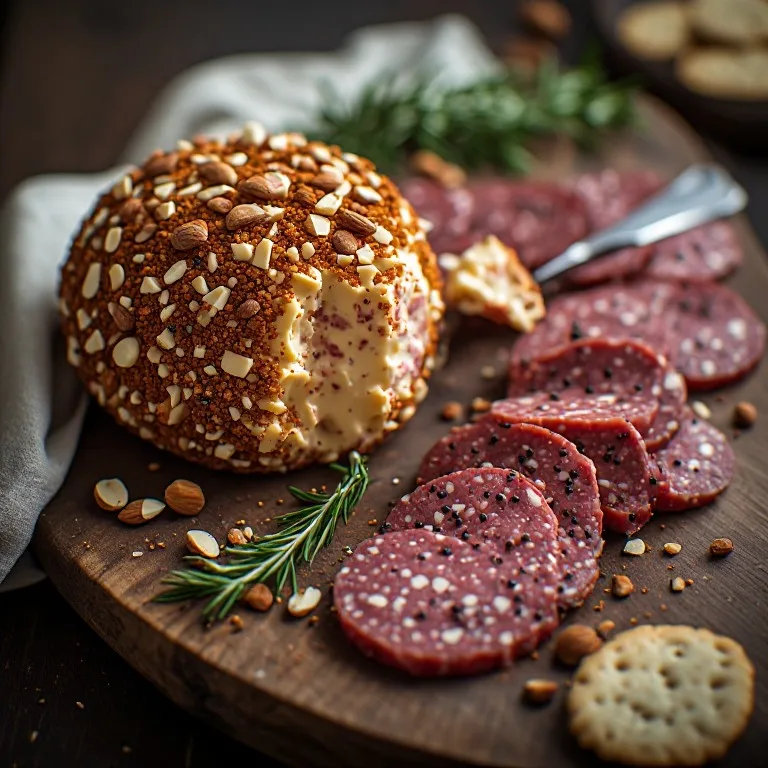
The Hickory Farms Summer Sausage copycat: ground beef, Morton Tender Quick, hickory liquid smoke, mustard seeds, and garlic — cured 24 hours, then baked low and slow until firm and snappy. Paired with the Port Wine Cheese Ball that rounds out every Hickory Farms gift basket. Both components cost under $20 to make at home versus $35–80 for the store version.
Medium
Prep: 30 min (+ 24 hr cure)
Cook: 3 hr 30 min
Total: 28h 0m12 servings
~$4.50/serving
Prep30 min (+ 24 hr cure)
Cook3 hr 30 min
Total28h 0m
Servings
12
At home~$4.50/serving
vs
Restaurant~$20.25/serving
You save ~78%
The Story Behind the Recipe
Hickory Farms has been shipping holiday gift baskets from Ohio since 1951, and the combination of beef summer sausage, a wedge of cheese, crackers, and mustard became so synonymous with the brand that Hickory Farms gift baskets eventually functioned as a shorthand for "the gift you send when you don't know what else to send." The summer sausage is the centerpiece of every basket: a thick, firm log of beef, hickory-smoked and lightly tangy, sliced thin against a cheese block and served on a cracker. By 2025, a 7 oz stick retails for about $7–10 at the grocery store; the full holiday gift sets run $35 to $80-plus depending on the tier. Two logs at home cost about $10 in beef and curing salt. Their Port Wine Cheddar spread — a sweet, tawny-streaked cream cheese-and-cheddar blend — is just as iconic as the sausage, and it's the base for this cheese ball.
The technique that home cooks most often skip is the 24-to-48-hour cure in the refrigerator after mixing. The Morton Tender Quick in the recipe isn't just a salt substitute — it's a complete curing mix (salt, sugar, sodium nitrite, and sodium nitrate) that, when mixed into raw ground beef and left refrigerated, cures the meat from the inside out: the salt and nitrite penetrate evenly, set the reddish-pink color, develop the savory cured flavor, and dissolve the muscle proteins so they bind into the firm, sliceable texture that's completely different from a plain meatloaf or hamburger. (One honest note the blogs gloss over: the sharp, sour tang of a factory summer sausage comes from true lactic-acid fermentation — a live starter culture held at 70–110°F — or from an added acidulant like encapsulated citric acid or Fermento. A cold fridge cure does neither, so this version lands milder and cleaner, more "cured deli beef" than sourdough-sharp. The FAQ below shows how to add that tang if you want it.) Without the cure period, you get a flavorless, soft-textured result. With it — and the low, slow 225°F bake — you get a sliceable log with a snappy bite, reddish-pink interior, and the mild smokiness the Hickory Farms product is known for. The cheese ball is the easier half of the project: no cooking, 30 minutes active, and it holds in the refrigerator for up to a week — making both components ideal make-ahead additions to any holiday table.
Nutrition Facts
Per serving (12 servings)
Calories265
Total Fat22g
Total Carbs4g
Dietary Fiber0g
Sugars2g
Protein14g
Sodium780mg
* Estimated values based on standard recipe preparation. Actual values may vary.
Ingredients
For the summer sausage (makes 2 logs, ~2 lbs)
For the Port Wine Cheese Ball
For the cheese ball coating
For serving
Instructions
💡
Pro tip: This recipe tastes even better the next day. The flavors need time to meld together in the fridge.
❄️
Storage: Keeps in an airtight container in the fridge for up to 2 weeks. Freezer-friendly for up to 3 months.
🎃 Free Halloween cookbook — download now
The Copycat Halloween Cookbook
A ready-made, photo-illustrated PDF of our best halloween copycat
recipes — free to download, no building required. Pay what you want to support if you love it.
Free PDF — instant download. We'll also send new seasonal copycat recipes now
and then; unsubscribe anytime.
Or just download it →
🎉 Your Halloween Cookbook is ready!
It's free — but if it's worth something to you, you can pay what you want.
It keeps the recipes coming.
$
✓ Downloading your free Halloween Cookbook — check your downloads folder. Happy cooking!
CopycatSpices
Hickory Farms Summer Sausage and Port Wine Cheese Ball
The Hickory Farms Summer Sausage copycat: ground beef, Morton Tender Quick, hickory liquid smoke, mustard seeds, and garlic — cured 24 hours, then baked low and slow until firm and snappy. Paired with the Port Wine Cheese Ball that rounds out every Hickory Farms gift basket. Both components cost under $20 to make at home versus $35–80 for the store version.
hickory-farms · christmas · holiday · american
🕑Prep30 min (+ 24 hr cure)
🍳Cook3 hr 30 min
⏱Total28h 0m
🍽Serves12
⭐DifficultyMedium
Ingredients
For the summer sausage (makes 2 logs, ~2 lbs)
2 lbs ground beef, 80/20 fat ratio
2 tablespoons Morton Tender Quick curing salt (see note below — do not substitute regular salt)
2 teaspoons hickory-flavored liquid smoke (such as Wright's or Colgin Hickory)
1 teaspoon whole black mustard seeds (or yellow mustard seeds)
1 teaspoon coarsely ground black pepper
1 teaspoon garlic powder
1 teaspoon dextrose (or regular white granulated sugar)
½ teaspoon onion powder
For the Port Wine Cheese Ball
16 oz (2 blocks) full-fat cream cheese, softened to room temperature
2 cups extra-sharp cheddar, freshly shredded from a block (NOT pre-shredded)
3 tablespoons Ruby Port wine (or dry sherry — see FAQ)
1 tablespoon Worcestershire sauce
½ teaspoon garlic powder
½ teaspoon dry mustard (Colman's or equivalent)
¼ teaspoon cayenne pepper
¼ teaspoon smoked paprika (plus 1 teaspoon more for the coating)
For the cheese ball coating
1 cup smoked almonds, finely chopped (or toasted pecans)
1 teaspoon smoked paprika
For serving
Butter crackers (Ritz, Club, or table water crackers)
Stone-ground or Dijon mustard, for dipping the sausage
Instructions
1.Mix and cure the summer sausage. In a large bowl, combine the ground beef, Morton Tender Quick, liquid smoke, mustard seeds, black pepper, garlic powder, dextrose, and onion powder. Mix thoroughly with your hands for 2 to 3 minutes — the mixture needs to be uniformly combined, with the curing salt distributed throughout. Do not undermix; the cure must reach every part of the meat. Divide the mixture into two equal portions.
2.Form the logs. Tear two sheets of aluminum foil, each about 18 inches long. Place one portion of meat in the center of a foil sheet and shape it into a log approximately 8 inches long and 2 inches in diameter. Roll the foil tightly around the log, twisting the ends firmly closed. Repeat with the second portion. Place both foil-wrapped logs on a plate or sheet pan.
3.Cure in the refrigerator. Refrigerate the logs for a minimum of 24 hours, or up to 48 hours. This cure period is the most important step: the Morton Tender Quick penetrates the meat evenly, sets the cured pink color and savory flavor, and dissolves the proteins so they bind — which produces the firm, sliceable texture. Do not skip or shorten this step. (The fridge cure gives a mild, clean cured flavor, not the sharp sour tang of a factory stick — for that, see the FAQ on adding Fermento or encapsulated citric acid with the cure.)
4.Bake the sausage. Preheat the oven to 225°F. Place the foil-wrapped logs directly on the oven rack (or on a rimmed baking sheet to catch any drips). Bake for 3 hours. After 3 hours, carefully open the foil (the logs will be hot and there will be rendered fat inside — drain it off). Return the logs to the oven, now with the foil open at the top to expose the surface. Raise the temperature to 250°F and bake for an additional 30 minutes to firm and dry the exterior.
5.Check the internal temperature. Insert a probe thermometer into the center of a log — it must read 160°F for safe consumption. If the logs haven't reached 160°F after 3.5 hours total, continue baking in 15-minute increments. At 225°F–250°F, the logs should reach temperature by the 3.5-hour mark.
6.Cool and refrigerate. Remove the logs from the oven and let them cool completely — at least 1 hour at room temperature — before refrigerating. The exterior will firm further as it cools. Once cooled, wrap the logs tightly in butcher paper or plastic wrap and refrigerate. The sausage can be eaten after 4 hours of refrigeration; flavor and texture improve further after an overnight rest. Slice to ¼-inch rounds when serving.
7.Make the cheese ball — soften the cream cheese. Leave both cream cheese blocks at room temperature for at least 2 hours until very soft and easily indented. Cold cream cheese will not mix smoothly with the other ingredients and produces a lumpy ball that doesn't hold its shape. If short on time, cut the blocks into quarters and microwave on 30% power in 15-second intervals until soft but not melted.
8.Mix the cheese ball. Beat the softened cream cheese, freshly shredded extra-sharp cheddar, port wine, Worcestershire, garlic powder, dry mustard, cayenne, and ¼ teaspoon smoked paprika together with a hand mixer or stiff spatula until thoroughly combined and uniform. The mixture will be soft. Cover the bowl and refrigerate for 30 minutes until the mixture is firm enough to shape into a ball without sticking to your hands.
9.Shape and coat the cheese ball. Stir together the chopped smoked almonds and 1 teaspoon smoked paprika on a flat plate. Scoop the chilled cheese mixture onto a large sheet of plastic wrap, gather the edges, and press the mixture into a rough ball shape; twist the plastic tight to compact it. Unwrap the ball and roll it across the almond-paprika coating, pressing firmly so the nuts adhere to every surface. Rewrap loosely in the plastic and refrigerate for at least 2 hours (or overnight) before serving. The ball needs this chill time to set firmly — a rushed ball that hasn't fully chilled will smear and flatten when guests spread it.
10.Assemble and serve. Slice the summer sausage into ¼-inch rounds. Arrange the cheese ball at the center of a large board or platter. Surround it with the sliced summer sausage, a bowl of stone-ground mustard, butter crackers, and any accompaniments (sliced pickles, cornichons, or fresh grapes pair well). The mustard is not optional — Hickory Farms always includes a stone-ground or spicy mustard because the fermented tang of the sausage and the creamy richness of the cheese ball both need the sharp, acidic counterpoint the mustard provides.
Notes
Hickory Farms has shipped the same core gift set — beef summer sausage, a wedge of cheddar, crackers, mustard — from Ohio since 1951, and it’s become one of the most recognizable holiday food combinations in the country. The store’s 7 oz sausage sticks sell for $7–10 each; a full gift set runs $35–80. Two full logs of summer sausage (about 1.5 lbs after baking) and a large cheese ball cost roughly $18–22 at home. The only thing the home version can’t replicate is the vacuum-sealed shelf stability — but on flavor, texture, and the experience of slicing a firm log onto a cracker board with good mustard, it’s the same thing.
The home version has two separate components and two separate timelines, which is why it’s worth reading through fully before starting. The summer sausage requires a 24-to-48-hour cure in the refrigerator after mixing, followed by a 3.5-hour low oven bake — most of that time is passive. The cheese ball requires 30 minutes of mixing and at least 2 hours of refrigeration to firm and set. The sensible approach is to mix the sausage and start curing it first (Friday night), then make the cheese ball the following morning, and serve everything Saturday evening — both components are better after a full overnight rest anyway.
🥗
Make It Healthier
Love Hickory Farms Summer Sausage and Port Wine Cheese Ball but want a lighter version? Try these simple swaps:
✓Use 93/7 lean ground beef for the sausage instead of 80/20 — the logs will be slightly firmer (less fat = less moisture retention) but still sliceable, and the saturated fat per serving drops by roughly a third. The cure and smoke flavor hold the same.
✓For the cheese ball, swap one of the 8 oz cream cheese blocks for Neufchâtel (⅓ less fat) — the texture stays spreadable and the port wine and sharp cheddar dominate the flavor profile, so the reduction in cream cheese fat is not noticeable.
✓Slice the summer sausage thin (⅛-inch) rather than thick. Thin slices read as satisfying with far less meat per bite — and on a cracker with cheese, the assembled bite is richer anyway.
✓Reduce the coating on the cheese ball from 1 cup almonds to ½ cup, pressing them into the surface rather than rolling the ball through them. The outside still reads as fully coated and the nut calories drop by half.
Frequently Asked Questions
What is Morton Tender Quick and can I substitute regular salt?
Morton Tender Quick is a curing mix — it contains salt, sugar, sodium nitrate, sodium nitrite, and propylene glycol (which keeps the mix uniform). The sodium nitrite is not optional for a safe summer sausage: it prevents botulinum toxin formation during the 24–48 hour cure, produces the characteristic pink interior color (the color is a chemical reaction between nitrite and the meat's myoglobin), and gives the meat its distinctive savory, cured flavor. Regular table salt cannot substitute for this — you'd lose the safety element, the pink color, and the distinct flavor. Morton Tender Quick is sold at most grocery stores in the canning/preserving section or the spice aisle. Online, it's sold by Morton directly. If you cannot find it, Prague Powder No. 1 (also called Cure No. 1 or pink curing salt) is the alternative: use ¼ teaspoon per pound of meat (½ teaspoon total for this recipe), then add 1 tablespoon regular kosher salt per pound to compensate.
Why does the recipe cure for 24–48 hours in the fridge before baking?
The cure period is what separates summer sausage from a flavored meatloaf. During refrigeration, the curing agents penetrate the meat evenly, the nitrite sets the cured pink color and savory flavor, and the salt dissolves the muscle proteins (myosin) so they bind — which produces the firm, sliceable texture after baking. A batch mixed and baked immediately, without curing, produces a soft, pale, underseasoned log that tastes nothing like the Hickory Farms product. The minimum is 24 hours; 48 hours gives a firmer, more fully cured result. One thing to be honest about: the sharp, sour tang of a factory summer sausage does NOT come from this fridge cure — real tang requires lactic-acid fermentation (a live starter culture held at 70–110°F) or an added acidulant. If you want that flavor at home, mix 2 to 3 tablespoons of Fermento or ½ teaspoon of encapsulated citric acid per pound of beef in with the cure; otherwise expect a cleaner, milder cured-beef flavor, which is still very close to the Hickory Farms stick.
Can I smoke the summer sausage instead of baking it in the oven?
Yes — and smoking gives the most authentic result. Set your smoker to 180°F with hickory wood. Place the unwrapped, cured logs directly on the smoker rack and smoke for 4 to 5 hours, gradually raising the temperature in two steps: 2 hours at 180°F, then 1.5 hours at 200°F, then finish at 225°F until the internal temperature reaches 160°F. The smoke ring will be more pronounced and the smoke flavor deeper than the oven version. If you prefer a lighter smoke (closer to what Hickory Farms achieves with added smoke flavoring), use apple or cherry wood instead of hickory — the flavor will be milder and slightly sweeter.
What port wine should I use for the cheese ball?
A basic Ruby Port (Tawny or Ruby, $12–20 a bottle) works well — you need only 3 tablespoons, and the rest of the bottle keeps for several weeks. Taylor Fladgate and Sandeman produce widely available entry-level Rubies that have the right sweetness without excessive complexity. You're not drinking it; you're using a small amount to add the slightly sweet, wine-forward flavor that defines the Hickory Farms Port Wine Cheddar character. If you want to skip the wine, dry sherry is a good substitute (similar profile, less sweet). A tablespoon of white wine vinegar + a tablespoon of grape juice can sub for port in a pinch, though the flavor is noticeably less nuanced. Red wine by itself is too dry and tannic for this application.
How long does the homemade summer sausage keep?
Properly made summer sausage (fully cooked to 160°F internal, properly cured) keeps refrigerated for 3 weeks once cooled and tightly wrapped in butcher paper or plastic wrap. It also freezes well — up to 3 months, wrapped tightly and placed in a zip-top bag. The Hickory Farms commercial product uses vacuum sealing and additional preservatives that extend shelf life further; the homemade version doesn't have that packaging advantage. Slice from the log as you need it rather than slicing the whole log at once. Sliced sausage dries out and loses its texture faster than an uncut log. The cheese ball keeps refrigerated (covered) for up to 1 week.
Do I need a meat grinder or casings for this recipe?
No. This recipe uses purchased ground beef — no grinder required. The logs are formed by hand inside foil, which acts as the casing during the low, slow oven bake. The foil holds the log shape, retains moisture during the first 3 hours, and is then opened for the final 30 minutes to allow the exterior to dry and firm up. You do NOT need fibrous or collagen casings, a sausage stuffer, or any specialized equipment. The foil-wrapped log method is the standard home-cook approach and produces a log visually similar to the Hickory Farms stick — though without the casing's snap, which is only present in stuffed products.
Can I make the cheese ball without port wine?
Yes. The most common substitutes are: (1) dry sherry — 3 tablespoons, closest in flavor character; (2) 1 tablespoon balsamic vinegar + 2 tablespoons cranberry juice — gives a tart-sweet note with a dark color similar to port; or (3) 2 teaspoons Worcestershire sauce + 1 tablespoon apple cider vinegar — tangier, less sweet, still adds depth. The plain cream cheese + sharp cheddar base is solid enough that the cheese ball is still good without the port; it just won't have the Hickory Farms Port Wine Cheddar character. If you're serving guests who don't drink alcohol, none of the substitutes contain meaningful alcohol — and the original recipe's 3 tablespoons of port spread across 12 servings contains less than half a gram of alcohol per serving after sitting for several hours.
What's the best cracker to serve with this?
A plain, butter cracker (Ritz or Club) is the traditional Hickory Farms pairing and the right call — the neutral, slightly sweet cracker doesn't compete with the smoky sausage and the tangy cheese ball. Triscuits work well for the sausage (their wheaty texture holds up under the firm slice). For the cheese ball specifically, table water crackers (like Carr's) are the refined choice — minimal flavor, clean snap, and they let the port wine and cheddar come through. Stone-ground wheat crackers add a pleasant nuttiness that pairs well with the smoked almond coating. Avoid anything heavily flavored (everything bagel, rosemary, pepper) — you're already building a lot of flavor between the sausage, cheese, and mustard.
Every recipe here is free, with no paywalls. If this one was a hit at your table, a small tip keeps new copycats coming.
$
💛 Support checkout is coming soon — the cookbook stays free either way.
Hickory Farms is a trademark of its owner, used here only to describe the dish this recipe recreates.
This is an independent copycat written in our own words — Copycat Spices is not affiliated with,
endorsed by or sponsored by Hickory Farms.
Researched + fact-checked. Every recipe on Copycat Spices is built from published sources — official ingredient lists, brand-published recipes, interviews and food-science references — and fact-checked before it goes live, then written as clear, step-by-step instructions for home cooks of all skill levels.
Before you go — grab The Copycat Halloween Cookbook 🎃
Our best Halloween copycat recipes in one photo-illustrated PDF. Free, instant download.
Free PDF — instant download. We'll also send new seasonal copycat recipes now
and then; unsubscribe anytime.
Or just download it →
✓ Downloading your free Halloween Cookbook — check your downloads folder. Happy cooking!
We use privacy-friendly analytics to understand what recipes people love. By continuing, you consent to our use of cookies. Learn more
🎃 Get The Copycat Halloween Cookbook — freeInstant PDF, no sign-in. Pay what you want only if you'd like to support us. One email a week, unsubscribe anytime.