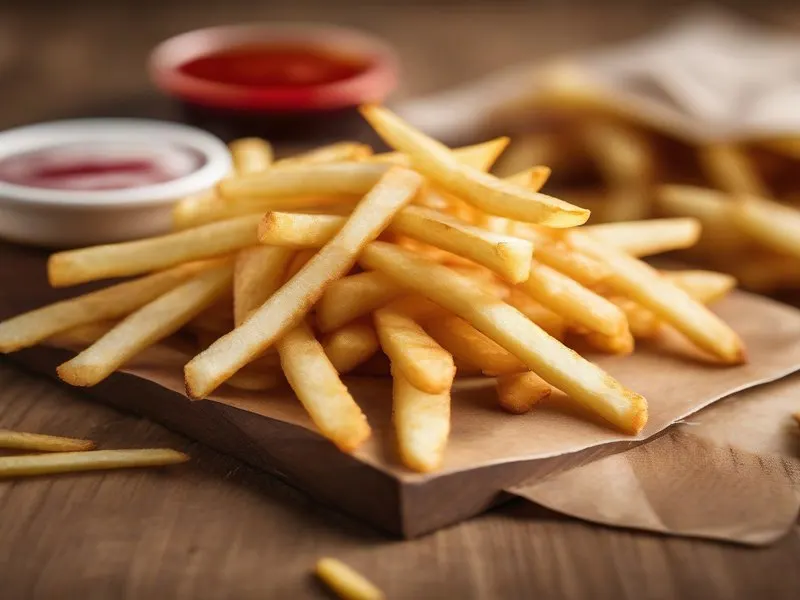
Copycat McDonald’s French Fries
Prep time: 30 min (including chill) | Cook time: 15 min | Makes: 4 servings | Cost: under $2 vs. $3–5 per medium order
McDonald’s french fries are the most-eaten fast food item on Earth — not the Big Mac, not the nuggets, the fries. They have outlasted decades of nutrition wars, corporate redesigns, and the rise of artisan fast-casual competitors. The reason is simple: the fries are genuinely, measurably different from anyone else’s, and they have been since the 1950s.
Understanding why requires a brief history lesson that most copycat recipes skip entirely.
TL;DR
The three things that make McDonald’s fries distinctive at home: (1) beef-flavored oil — beef bouillon dissolves into the frying oil to replicate the flavor of the original beef tallow; (2) sugar blanch — a quick boil in sugar water before frying creates even golden color; (3) double-fry — 300°F to cook through, then 375°F to crisp, separated by a rest. Salt immediately after the final fry while oil is still on the surface.
The Beef Tallow Era (1950s–1990)
Ray Kroc did not invent the french fry, but he industrialized it. Early McDonald’s fries were cut from fresh potatoes and fried in a blend of 7% cottonseed oil and 93% beef tallow — pure rendered beef fat. The beef tallow gave the fries a deep savory richness that pure vegetable oil cannot replicate. This was the flavor that made McDonald’s fries famous in the 1960s and 1970s.
It was also a source of serious cardiovascular concern. In the late 1980s, a Nebraska businessman named Phil Sokolof became a one-man public health campaign. Sokolof had suffered a heart attack at age 43 in 1966 and attributed it to the saturated fat in his diet. He founded the National Heart Savers Association, and beginning in 1988 he ran full-page ads in major US newspapers under the headline “The Poisoning of America” — naming McDonald’s, Burger King, and other fast food chains by name and attacking their use of beef tallow and tropical oils.
Sokolof’s campaigns ran for years. McDonald’s initially defended their frying oil as not harmful. But the pressure accumulated. On July 23, 1990, McDonald’s announced they would switch all US restaurant frying to a pure vegetable oil blend — canola, corn, and soybean oils — by the end of the year.
The fries became healthier. They also lost something.
The Natural Beef Flavor Controversy
McDonald’s food scientists knew the switch to vegetable oil would change the flavor profile, and they were right. To preserve the taste that customers expected, they added “natural beef flavor” to the frying oil — a commercially produced flavoring derived from hydrolyzed wheat and milk proteins that produces beef-like taste compounds.
This additive appears on the McDonald’s US ingredient disclosure to this day: the US fry ingredients include potatoes, vegetable oil (canola, corn, soybean, hydrogenated soybean), dextrose, sodium acid pyrophosphate (to maintain color), and “natural beef flavor” (wheat and milk derivatives).
The problem emerged in 2001 when Hindu Americans, vegetarians, and vegans discovered that the “natural beef flavor” — which sounds like it might come from beef — was not disclosed in marketing materials that implied the fries were vegetarian. A class-action lawsuit was filed on behalf of Hindu consumers whose religion prohibits beef consumption and who had been eating what they believed to be a meat-free food.
In 2002, McDonald’s settled the lawsuit, agreeing to donate approximately $10 million to Hindu, vegetarian, and other groups, and to clarify their ingredient disclosures prominently. McDonald’s also issued a public apology. As a direct result, McDonald’s now clearly states that US fries contain “natural beef flavor” derived from wheat and dairy — making them unsuitable for vegans, vegetarians, or those with wheat or dairy allergies.
The home equivalent: This recipe adds beef bouillon to the frying oil, which directly replicates the beef flavoring effect without the labeling complications. For a vegetarian version, skip the bouillon and add a pinch of MSG to the salt finish — you get the umami depth without the beef flavor.
The Potato McDonald’s Uses
McDonald’s primarily uses Russet Burbank potatoes — a long, starchy Idaho-grown variety that descends from the Burbank potato horticulturist Luther Burbank developed in the 1870s (the russet-skinned form arose later as a natural mutation) and has been their potato of choice for decades. Russet Burbank has high specific gravity (1.080+) and low reducing sugars, which means it fries to a fluffier interior and consistent golden exterior. McDonald’s also uses Ranger Russet, Umatilla Russet, and Shepody varieties to supplement supply based on seasonal and regional availability, but Russet Burbank is the gold standard that defines their flavor profile.
For home cooks: buy the largest russet potatoes available, labeled “Idaho” or “baking” potatoes. Avoid smaller russets or thin-skinned potato varieties — they have different starch compositions and will fry differently. A 2-pound bag of large russet baking potatoes is the right starting point.
How McDonald’s Actually Makes the Fry
McDonald’s fries go through a complex process before reaching the restaurant:
At processing plants (primarily run by J.R. Simplot Company, Lamb Weston, and McCain Foods in Idaho, Washington, and Canada), freshly harvested Russet Burbank potatoes are washed, peeled by steam-pressure, and cut at high speed by water-jet cutters for uniform dimensions. They are then blanched in hot water to stop enzymatic activity and remove some of the naturally occurring reducing sugars — this controls browning uniformity. After blanching, the strips go through an ingredient bath containing dextrose (which ensures consistent golden color during the restaurant fry) and sodium acid pyrophosphate (which prevents the grayish discoloration that can develop after cooking). They are then par-fried in oil at the plant to begin the cooking process, and then individually quick-frozen (IQF) at approximately -40°F so each strip freezes separately. The frozen fries ship to restaurants.
At restaurants, the fries are finished from frozen in the final fry — typically around 340–350°F for 2.5–3 minutes. This final fry completes the Maillard browning reaction and produces the crispy exterior.
This is the real “double-fry” that makes McDonald’s fries work: a factory par-fry plus a restaurant finish fry. The home recipe approximates this with a first fry at 300°F and a second fry at 375°F.
The Sugar Blanch: Why It Matters
Most home fry recipes skip the blanching step. McDonald’s doesn’t, and neither does this recipe.
Blanching the potato strips in sugar water does three things:
1. Par-cooks the interior. The hot water begins cooking the starch inside the potato strip, ensuring the center is fully tender after frying even with the relatively short fry time.
2. Creates even color. Dissolved sugar coats the exterior of each fry. During frying, this sugar caramelizes alongside the Maillard reaction in the potato, producing that specific deep-golden color. Without the sugar coat, home-fried russet potatoes tend to produce uneven color — pale patches on some sides, dark spots on others.
3. Controls caramelization timing. Corn syrup contains glucose, which caramelizes at a slightly lower temperature than sucrose (table sugar). This dual-sugar approach means the fries begin browning at a lower oil temperature, giving you more control over color development and reducing the chance of burning before the interior finishes cooking.
The Double-Fry: Temperature Physics
At 300°F, the first fry converts moisture inside the potato to steam and drives it out through the surface. The fry cooks through but doesn’t brown significantly because the water evaporating from the surface keeps the surface temperature below the Maillard threshold. After the first fry, the surface is dry and the interior is tender.
At 375°F, the second fry is rapid — 2–3 minutes. The dried surface has no remaining moisture to evaporate, so surface temperature immediately rises to the Maillard range (above 280°F). The exterior crisps and colors quickly. The interior doesn’t overcook because the second fry is short and the center is already done.
This is why the chilling step between fries is important: it further dries the surface and lets the par-cooked starches firm up, so the second fry develops a distinct crispy shell rather than just softening a warm surface.
The Salt Timing Secret
McDonald’s salts their fries while they’re still basket-hot — within 30 seconds of the final fry, per their training procedures. This is not arbitrary.
At peak frying temperature, the surface of each fry is coated in hot oil. Hot oil acts as a binding agent: salt adheres to oil, and at high temperature the salt bonds to the surface more permanently than if you salt a cool, dry fry. Fine-grain salt also adheres better than coarse kosher or sea salt — the small crystals contact more surface area on a hot, oily fry.
Salt after cooling and you’ll notice the salt falls off into the bottom of the container. The oil has changed texture and the surface has changed — salt no longer sticks.
Why Fries Go Soft
All french fries go soft eventually, but McDonald’s thin strips go soft faster than thicker-cut fries. Two mechanisms are at work.
Starch retrogradation: As fries cool from frying temperature toward room temperature, water that was driven to the edges of the starch network during cooking migrates back inward and is reabsorbed by starch molecules. The glassy, crispy shell that formed during frying breaks down as the starch network reorganizes. This process is irreversible — reheating does not fully restore the original texture.
Steam condensation: In a bag or pile, hot fries release steam that cannot escape. The steam condenses back onto fry surfaces, saturating the exterior with moisture and softening the crust rapidly. This is why “leaving the bag open” extends fry crispiness — trapped steam is the proximate culprit, not just time itself.
There is no good way to reheat McDonald’s-style fries. The only solution is to eat them immediately. At home, serve straight from the wire rack onto plates — never pile them in a bowl where trapped steam accelerates softening.
Air Fryer Version
For a lower-oil version, complete the sugar blanch and chilling steps exactly as written. Then:
Toss the dried strips in 1–2 teaspoons of vegetable oil (this is the minimum needed for Maillard browning in an air fryer). Add a few drops of dissolved beef bouillon to the oil before tossing. Air fry in a single layer at 380°F for 10 minutes, flip every strip, then air fry 5–7 more minutes until deep golden and crispy. Season immediately after removing from the air fryer.
The result is noticeably good — about 80% less oil than deep-frying — though the shell is less uniform than oil-fried. Do not skip the blanch step for the air fryer version; without the sugar coat, air-fried russet strips come out pale and unevenly textured.
More McDonald’s Copycat Recipes
- Big Mac Sauce — make the sauce at home with Dusseldorf mustard, not ketchup; stores 2 weeks in the fridge. The no-ketchup version is distinctly better.
- McDonald’s Big Mac — two thin smash patties with the special sauce; pairs with these fries for the full combo.
- McDonald’s Chicken Nuggets — the tempura-style light coating that replicates McDonald’s texture better than breadcrumbs.
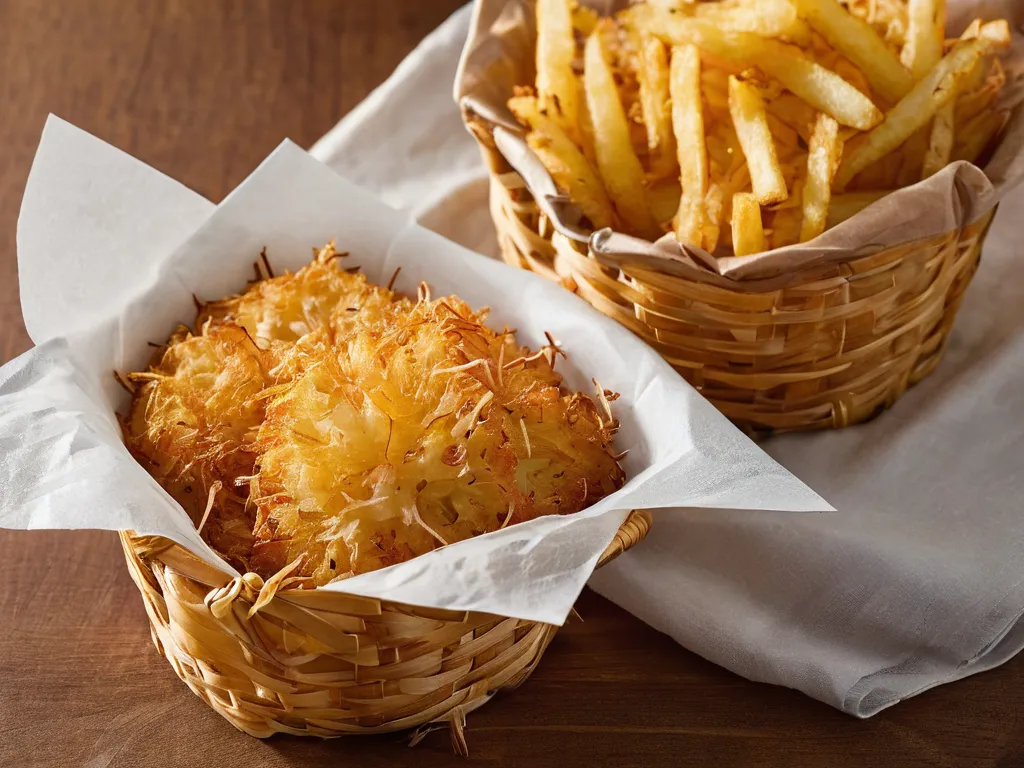
- McDonald’s Hash Browns — the same beef-flavored oil technique applied to shredded potatoes; if you’re already frying, make both at once.
See all McDonald’s copycat recipes →
Other Classic Fast Food Fries
McDonald’s created the template, but other chains developed their own signatures worth understanding:
- Five Guys Cajun Fries — skin-on, boardwalk-cut, fried in pure peanut oil with a Cajun spice finish
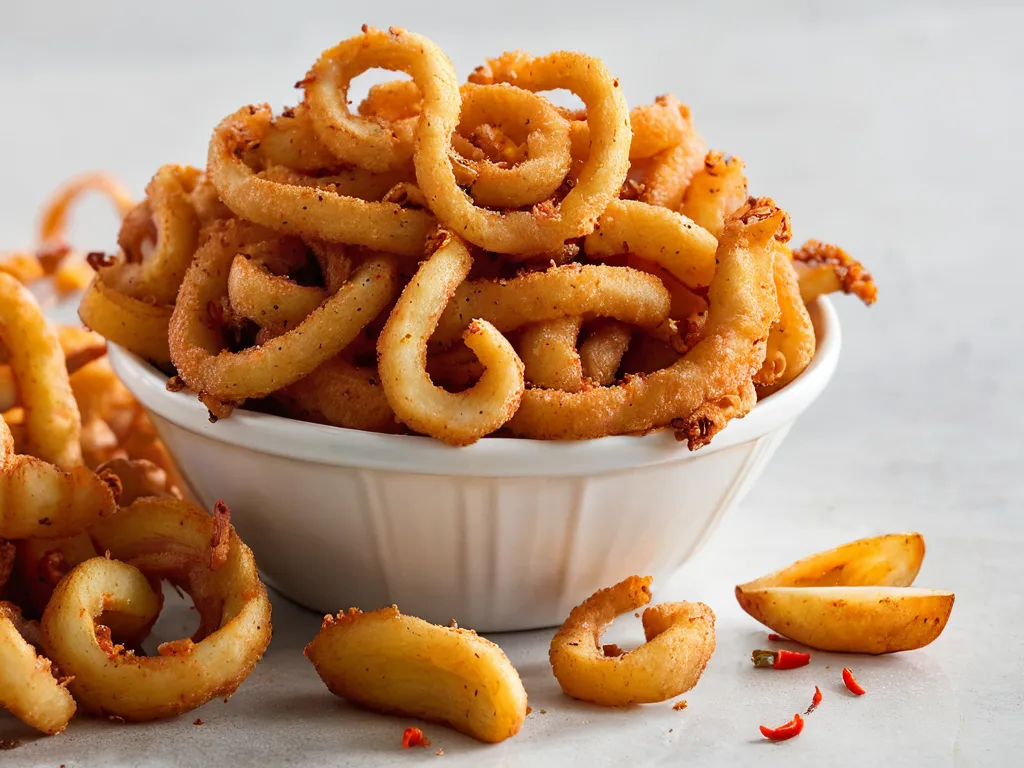
- Arby’s Curly Fries — spiral-cut with the seasoned batter coating that separates them from every other fast food fry
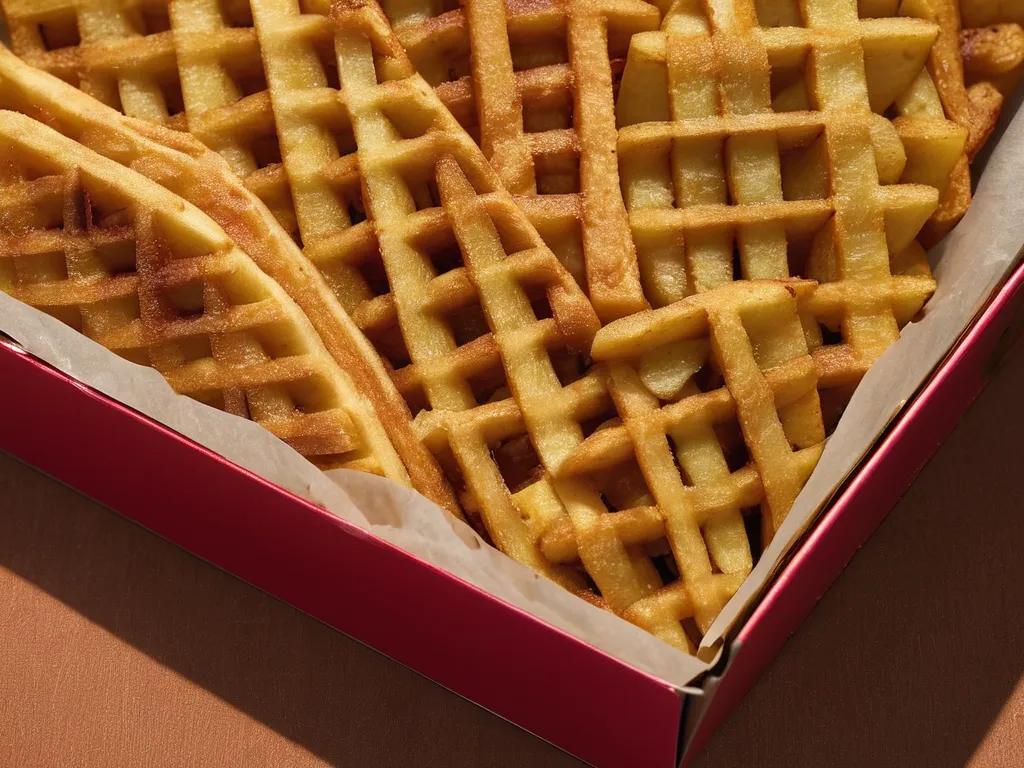
- Chick-fil-A Waffle Fries — the grid-pressed waffle cut with the thick, crispy lattice exterior