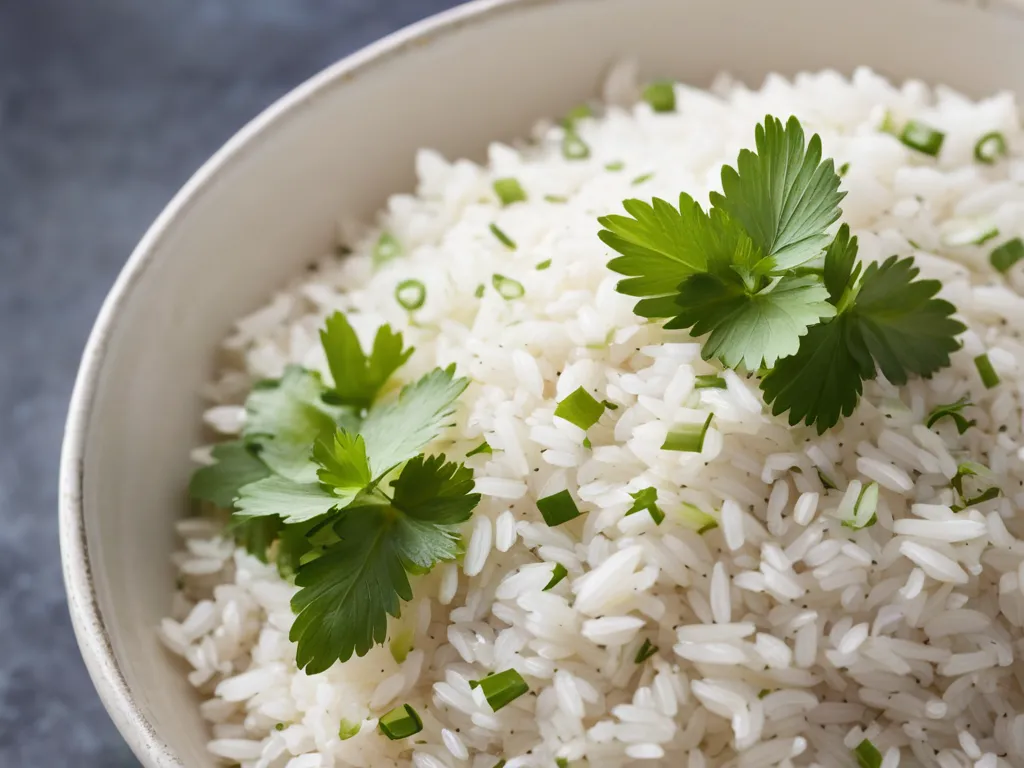
Chipotle Cilantro-Lime Rice
The name describes a simple dish — long-grain white rice, lime juice, cilantro — and that simplicity is exactly why most copycat versions fall a little short. The real recipe has two details that almost no one mentions: a bay leaf cooked into the water, and both lemon and lime juice (not just lime). Neither is difficult or expensive. Both matter.
TL;DR
Cook long-grain white rice with a bay leaf in the water. When it’s done, discard the bay leaf, fluff with a fork, and stir in rice bran oil, fresh lime juice, fresh lemon juice, cilantro, and salt — all while the rice is still hot. Ready in 25 minutes. Serves 6 for under $2.
The Two Details Most Copycat Recipes Miss
Chipotle has shared their rice recipe in various forms over the years, and the full ingredient list has been confirmed by multiple former employees and Chipotle’s own ingredient disclosures: long-grain white rice, water, rice bran oil, bay leaves, salt, lime juice, lemon juice, and fresh cilantro. That is the complete list.
Most copycat recipes use lime juice only and skip the bay leaf entirely. The result is recognizably similar but missing two things:
The bay leaf gives the rice a faint floral and herbal background — not identifiable as “bay leaf flavor,” but detectable as a complexity that plain rice lacks. It contributes the same way a bay leaf in a soup base or braising liquid does: quietly, in the background. Remove it before serving.
Lemon juice alongside lime juice was confirmed in the same Chipotle ingredient disclosures that revealed the dual-citrus in the corn salsa. The two citrus juices taste different: lime is bright and sharp; lemon is softer and more floral. Together they produce a more nuanced citrus note than either alone. The recipe is called “cilantro-lime rice” because lime is the prominent flavor — but the lemon is there, doing quiet supporting work in the background.
Long-Grain White Rice (Basmati Works, Skip Jasmine)
Long-grain white rice (varieties like American long-grain or Carolina) is what Chipotle uses. It has less surface starch than short-grain or medium-grain rice, and the cooked grains stay separate and fluffy rather than clumping. Basmati is the best substitute if that’s what you have — the grains are even longer and more separate with a slightly nuttier fragrance, and many copycat testers actually prefer it. Either one gives you the clean, fluffy texture you want.
Jasmine rice is the one to avoid. Its higher starch content makes it slightly sticky and fragrant in ways that don’t match Chipotle’s neutral, clean-textured rice. If you use jasmine, the dish still tastes good — just not right.
This is also not Mexican red rice, not Spanish rice, and not arroz con leche. Chipotle’s rice has no tomato, no garlic, no onion, no sautéing in oil before cooking, and no broth. It is intentionally clean and neutral — a platform for the proteins, beans, salsas, and guacamole stacked on top.
Rice Bran Oil: The Neutral-Oil Argument
Chipotle uses rice bran oil, which has a smoke point above 450°F and a flavor that is neutral with a very faint nuttiness — close to tasteless but not quite. The goal in a dish this simple is for the oil to be present but not distracting.
Vegetable oil and canola oil are fine substitutes and most people will not notice the difference. Avoid olive oil: its distinctive flavor competes with the lime, lemon, and cilantro rather than supporting them.
No garlic. This is a point of confusion: some copycat recipes add garlic powder to the rice. Garlic is not in Chipotle’s recipe. The official ingredient list has been independently confirmed through Chipotle’s allergen disclosures and former-employee sources, and garlic does not appear. Adding it changes the character of the rice from a neutral base to something with its own strong flavor — which is fine if that’s what you want, but it is not what Chipotle serves.
Cilantro: Use the Stems Too
Most home cooks throw away the stems and use only the leaves. Professional kitchens use both — and for a dish where cilantro is a featured flavor, so should you.
The tender upper stems of fresh cilantro carry the same flavor as the leaves. Discarding them wastes roughly 30–40% of the bunch. Chop the stems fine (they add texture and distribute evenly through the rice) and leave the leaves in slightly larger pieces. The only part to discard is the thick, woody lower portion of the stems at the very base of the bunch — those are tough and fibrous.
Chop the cilantro just before you need it. Cilantro’s volatile aromatic oils start oxidizing as soon as you cut the stems, and a bunch that sat pre-chopped in the fridge for two days will taste noticeably flat compared to freshly chopped. This is more noticeable in a dish like this — where cilantro is a featured flavoring — than in a cooked dish where it’s a garnish.
Fold the cilantro into hot rice, not cool rice. The warmth disperses the aromatic oils throughout the dish rather than leaving them concentrated in individual spots.
The Pasta Method vs. Absorption Method
Chipotle reportedly cooks rice using a pasta method: boiling rice uncovered in a large volume of water (approximately 4 cups of water per cup of rice), cooking uncovered for 12 minutes, then draining and rinsing with hot water. At restaurant scale, this is efficient — a large pot of boiling water, add rice, drain and season by the batch. The advantage is that rinsing eliminates the excess starch released during boiling, producing very separate grains with a light texture.
At home, the absorption method (the one in this recipe) produces essentially the same result if you rinse the rice well before cooking and use a 1.5:1 water-to-rice ratio. The rinse step before cooking removes most of the surface starch; the tighter water ratio prevents the grains from steaming in excess liquid and going soft.
If you want to try the pasta method: bring a large pot of salted water to a boil, add the rinsed rice, cook uncovered for 12 minutes, drain into a fine-mesh strainer, and rinse briefly with hot water. Then proceed with the oil, citrus, and cilantro finish.
The Hot-Rice Rule
The lemon juice, lime juice, and cilantro must go in while the rice is still hot and freshly fluffed. Hot rice cells are open and absorbent; citrus juice added at this stage is drawn into the grains rather than sitting on the surface.
If you let the rice cool to room temperature first, the citrus sits on top and distributes unevenly, and the flavor is flatter. This is a meaningful difference — not a subtle one.
The same principle applies to the second tablespoon of oil: add it while the rice is hot. It coats the individual grains while they are porous and warm, giving the final dish that slightly glossy, restaurant-rice sheen that home versions often lack.
Common Mistakes and Troubleshooting
Rice is clumping. The most common cause is skipping the pre-rinse. Surface starch is what makes grains stick together — rinsing for 30–45 seconds removes most of it. The second cause is too much water: use 1.5:1 (3 cups water per 2 cups rice), not the package’s 2:1.
Can’t taste the citrus. Almost always means the citrus was added to cool rice. Add it immediately after fluffing while the rice is still steaming hot.
Rice tastes flat. Check that you added salt to the cooking water (not just at the end), and that you used fresh citrus — bottled lime juice in particular loses its brightness quickly and will produce a muted, slightly sour flavor instead of the fresh brightness you want.
Rice is crunchy in the middle. The water absorbed too fast before the rice finished cooking — either the heat was too high or the lid didn’t seal properly. Add 1/4 cup more water, cover, and cook on the lowest heat for 5 more minutes.
Rice turned out mushy. Too much water, or the heat was too high early on and caused the outside of the grains to overcook before the inside was done. Start with a tighter ratio next time (try 2 3/4 cups water per 2 cups rice) and keep the heat as low as your burner allows.
Scaling for Meal Prep
The recipe scales cleanly. For a week of burrito bowls (about 9 servings at 1 cup cooked rice each):
- 3 cups dry rice → 4.5 cups water → 1.5 teaspoons salt total
- 3 tablespoons oil total (1 in water, 2 as finish)
- 1.5 tablespoons lime juice + 1.5 tablespoons lemon juice
- 6 tablespoons (roughly 1/3 cup) chopped cilantro
Use the largest saucepan you have with a tight-fitting lid. Cooking time stays the same (15–18 minutes) regardless of volume, because rice cooks by steam absorption, not by heat penetrating a solid. The rest time matters more at larger volumes — give it 8–10 minutes off heat.
Brown Rice Variation
Chipotle’s brown rice uses the same finish: rice bran oil, lemon juice, lime juice, cilantro, salt, bay leaf during cooking. The cooking method is identical, but whole-grain brown rice takes 40–45 minutes at low heat rather than 15–18 minutes. Use a 2:1 water-to-brown-rice ratio and give it a full 10-minute covered rest off heat.
Brown rice has slightly less sodium per serving (approximately 150mg vs. 345mg at Chipotle, likely because the bran layer absorbs salt differently), more fiber (2g vs. 1g), and a chewier texture with a slightly nuttier flavor. The cilantro-lime finish works just as well — the earthier base of the brown rice pairs naturally with the citrus.
Cost Comparison
| White Rice | Brown Rice | |
|---|---|---|
| Chipotle (extra scoop) | ~$1.50–2.00 | ~$1.50–2.00 |
| Homemade (per serving) | ~$0.20–0.30 | ~$0.25–0.35 |
| Yield (2 cups dry) | 6 servings | 6 servings |
| Total ingredient cost | ~$1.20–1.80 | ~$1.50–2.10 |
Two cups of dry long-grain white rice costs roughly $0.50–0.80. One lime is $0.25–0.50. One lemon is $0.25–0.50. A bunch of cilantro is $0.99–1.50. Add rice bran oil and the bay leaf and the total comes to under $2 for 6 servings — compared to roughly $1.50–2.00 for a single restaurant scoop, or $10–12 for the bowl it’s part of.
Make-Ahead and Storage
This rice keeps well and reheats reliably:
- Refrigerator: Up to 5 days in an airtight container. The lemon-lime flavor mellows slightly by day 3 but remains clear.
- Reheating: Sprinkle 1–2 tablespoons of water per cup of refrigerated rice, cover, and microwave for 60–90 seconds. Fluff with a fork. The added moisture restores the fluffy texture.
- Freezer: Up to 2 months. Portion into serving-size containers while still slightly warm. Let cool fully before sealing. Reheat from frozen covered in the microwave for 2–3 minutes.
Do not add extra cilantro or citrus when reheating — the original amounts are sufficient and the flavor reopens as the rice warms.
Build a Complete Chipotle Bowl
This rice is the foundation. Everything else layers on top:
- Chipotle Chicken Burrito Bowl — achiote-marinated grilled chicken that goes directly over this rice in the classic bowl
- Chipotle Corn Salsa (Roasted Chili-Corn Salsa) — charred white corn, fire-roasted poblano, jalapeño, and dual lemon-lime citrus; the natural topper for this rice
- Copycat Chipotle Guacamole — the fresh guacamole that balances the citrus in both the rice and the salsa
- Copycat Chipotle Queso Blanco — the creamy white queso that pairs with the rice in a loaded bowl
- Copycat Chipotle Steak — the chile-marinated steak option, seared at high heat
- Copycat Chipotle Carnitas — the slow-braised pork shoulder, shredded over this rice
See all Chipotle copycat recipes →