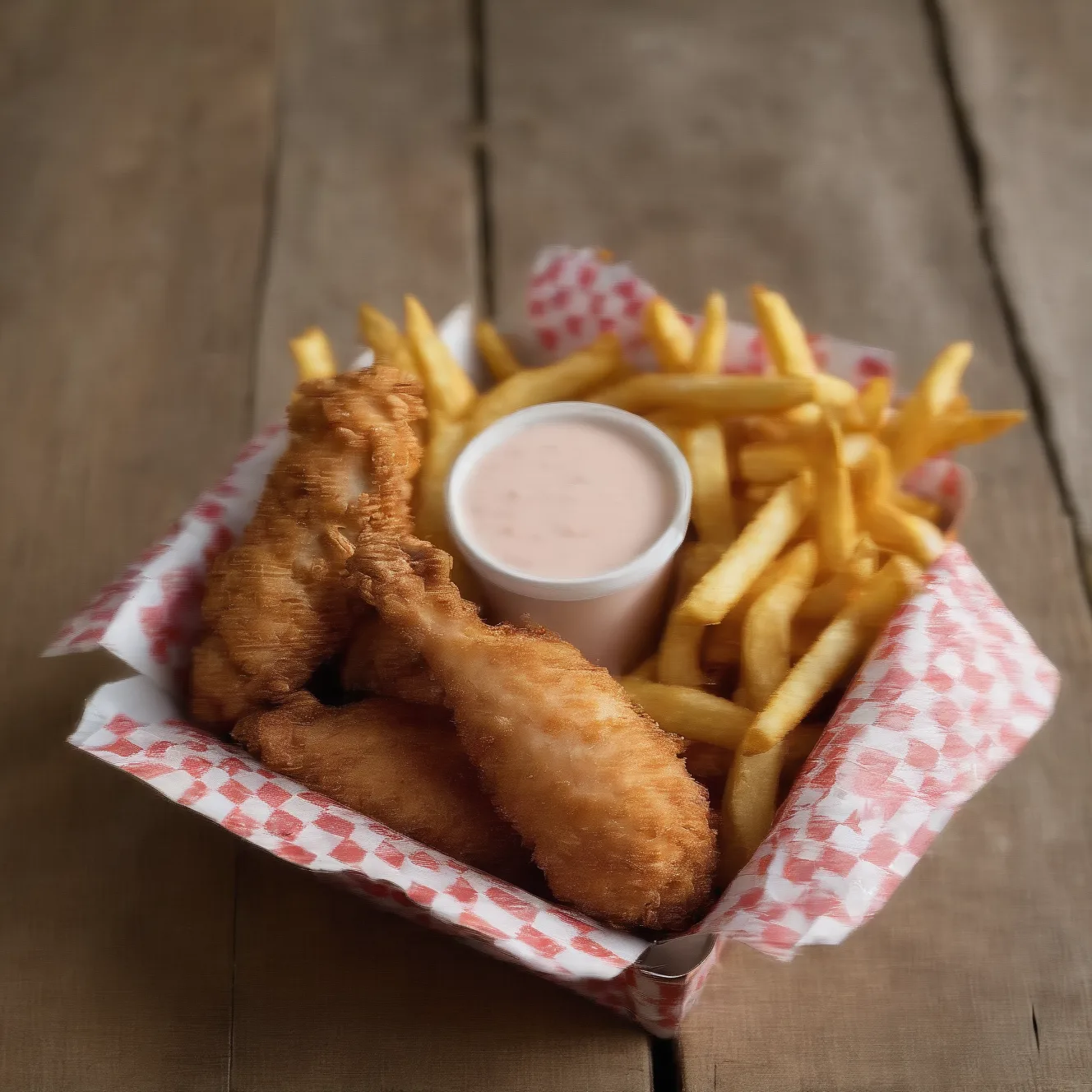
Raising Cane’s Chicken Fingers (Crispy, Juicy, No Drive-Thru Required)
Raising Cane’s built its entire restaurant chain on a single item: the chicken finger. No burgers. No salads. Just tenders, crinkle fries, Texas toast, coleslaw, and the sauce. It sounds like a gamble. It turned into a multi-billion dollar company with lines around the block. Why? Because when you do one thing and do it obsessively well, people notice.
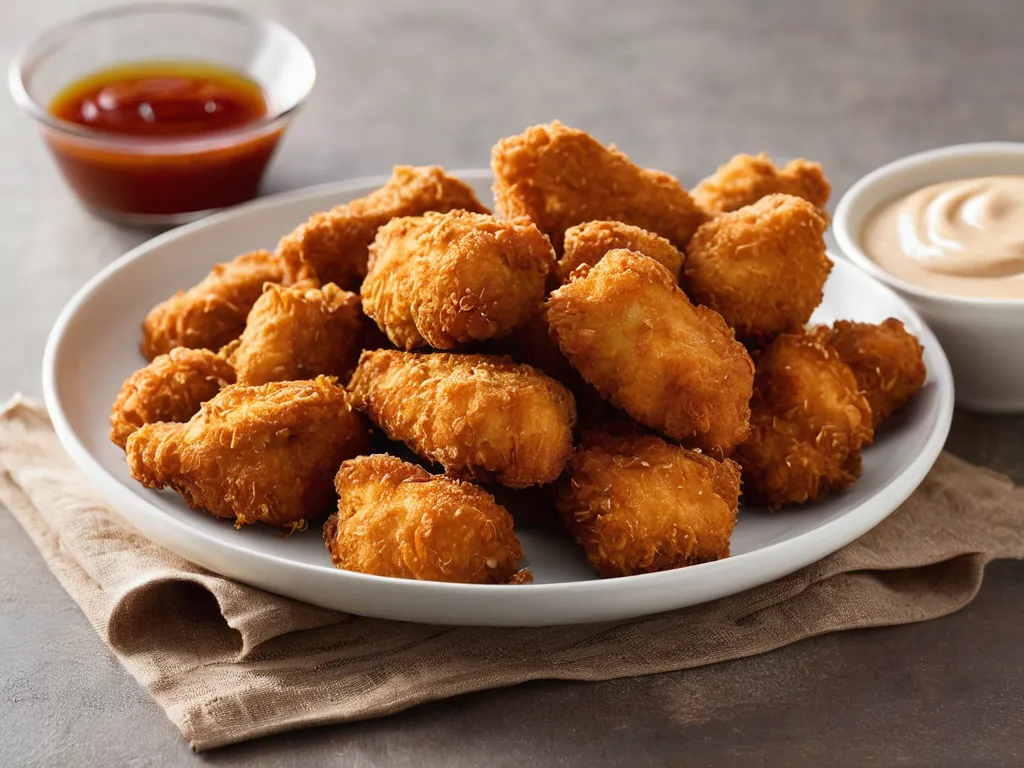
The genius of a Cane’s tender is what it is not. It is not coated in panko. It is not double-dredged into a thick, shaggy shell. It is not aggressively spiced. It is a clean, lightly seasoned, shatteringly thin crust around an absurdly juicy piece of white meat chicken — a tenderloin, specifically, which is inherently more tender than a breast strip. The coating exists to add crunch and capture the sauce. Everything else is the chicken’s job.
A 4-finger combo at Raising Cane’s runs about $12-14. This recipe makes 12 tenders for the price of a pound and a half of chicken tenderloins. Serve them alongside Cane’s Sauce and Texas Toast and you have the full box at home for under $8.
What Makes Cane’s Tenders Different
Three things separate Cane’s from generic fast food chicken:
1. Tenderloins, not breast strips. The pectoralis minor — the tenderloin — is a long, thin muscle that doesn’t work as hard as the breast, so it stays tender even when overcooked by a degree or two. Breast strips can get dry. Tenderloins almost can’t. This matters when you’re cooking in batches and timing isn’t perfect.
2. Pickle brine. The chicken is brined in pickle juice before the buttermilk soak. Pickle brine is acidic (acetic acid from vinegar, lactic acid from fermentation), and acid denatures surface proteins, which breaks down some of the tougher connective tissue in the outer layers of the meat. The result is chicken that tastes seasoned all the way through, not just on the surface. It also adds an almost undetectable tang in the background — the thing you can’t identify but would miss.
3. Thin single coat. Most homemade fried chicken recipes double dredge for maximum crust. Cane’s doesn’t. Their coating is intentionally light — enough to crisp and carry the sauce, not enough to dominate. The cornstarch in this recipe is the key to that texture: it absorbs less moisture than flour and crisps at a lower temperature, giving you a thin, almost glass-like shell.
Pro Tips
-
Buy tenderloins, not breast strips you cut yourself. The tenderloin has a slightly different grain and connective tissue structure than the breast. The difference in tenderness is real. You can buy a 1.5 lb bag of tenderloins at any grocery store — they’re usually cheaper than whole breasts anyway.
-
The 10-minute rack rest before frying is not optional. When raw chicken hits flour-coated-in-buttermilk, the moisture migrates outward. If you fry immediately, the crust slides off. Let the coating dry out and bond to the surface before the oil hits.
-
Use a thermometer, not a timer. Tenderloin thickness varies. The only reliable done-signal is 165°F internal temperature. At 350°F oil, most tenderloins hit this in 3-4 minutes per side, but check the first batch.
-
Keep finished tenders warm in a 200°F oven on a rack while you fry remaining batches. They’ll hold crispy for up to 15 minutes.
The Michelin Twist
-
Nashville Hot version: After frying, brush the tenders with a mixture of 3 tablespoons of the hot fry oil, 1 tablespoon cayenne, 1 teaspoon brown sugar, 1/2 teaspoon garlic powder, and 1/2 teaspoon smoked paprika. The hot oil blooms the spices instantly and gives you a lacquered, fiery coating.
-
Add MSG to the dredge. 1/2 teaspoon of MSG added to the flour mixture intensifies the savory, almost umami quality of the chicken in a way that extra salt can’t replicate. This is what separates “tastes like fast food” from “this is better than the restaurant.”
-
Peanut oil instead of vegetable oil. Peanut oil has a higher smoke point (450°F vs. 400°F for vegetable) and a faint nutty flavor that lends a barely-perceptible richness. Chick-fil-A fries in peanut oil. There’s a reason for that.
The Full Cane’s Box at Home
Serve these tenders with:
- Cane’s Sauce — the dipping sauce that makes everything better
- Texas Toast — thick-cut buttered toast grilled in a pan
- Crinkle fries from the freezer section (McCain or Ore-Ida)
Cost Breakdown
| Ingredient | Amount | Cost |
|---|---|---|
| Chicken tenderloins | 1.5 lbs | $6.50 |
| Buttermilk | 1 cup | $0.40 |
| Pickle juice | 1 cup | $0.00 (from the jar) |
| Flour, cornstarch, spices | 1.5 cups + misc | $0.60 |
| Vegetable oil | ~4 cups (reusable) | $0.80 |
| Total | ~$8.30 |
Compare to $12-14 for a 4-finger combo at Raising Cane’s — this makes 12 tenders for $8.30
Nutrition (Per Serving, 3 Tenders)
- Calories: 420
- Protein: 38g
- Fat: 16g
- Carbs: 28g
- Sodium: 680mg
Air Fryer Option
Spray the dredged tenders heavily with neutral cooking oil on both sides. Air fry at 400°F for 10 minutes, flip, spray again, and cook for another 4-5 minutes until golden and 165°F internal. The crust won’t be quite as shattery as the fried version, but it’s surprisingly close — and you can do the whole batch at once.