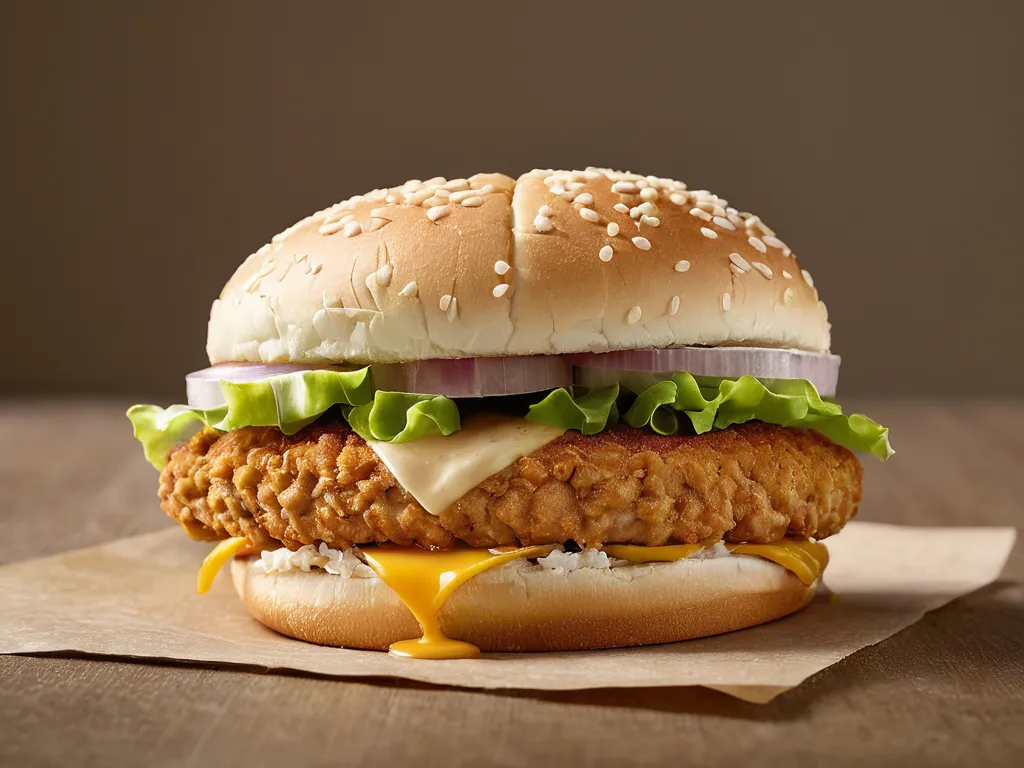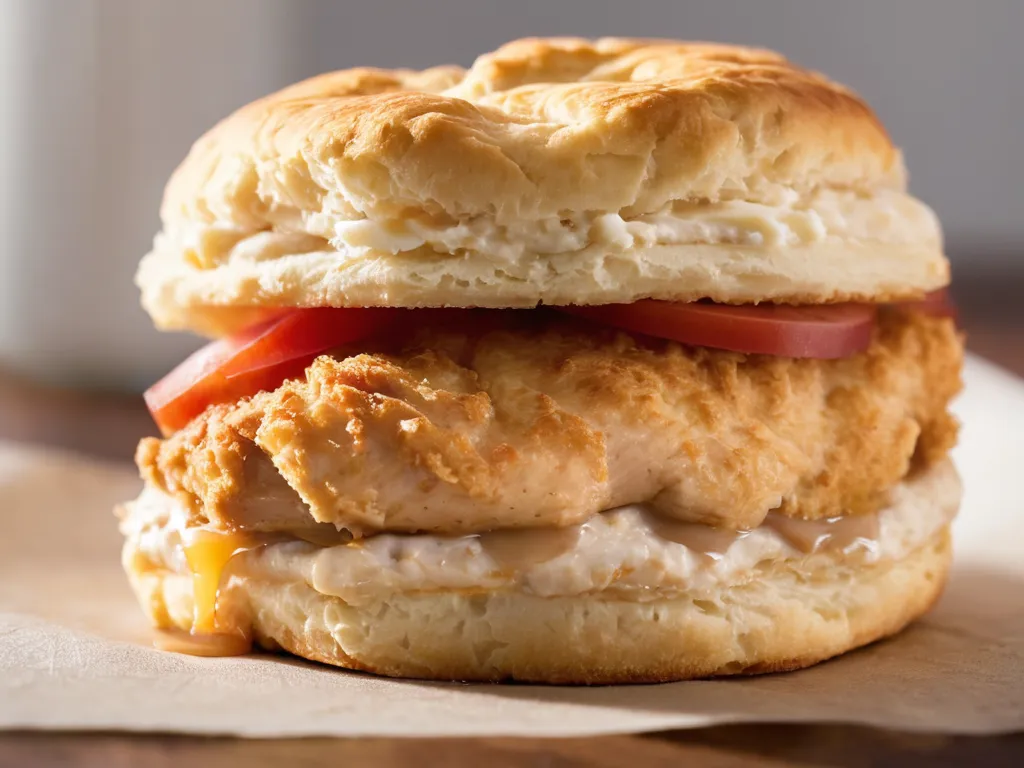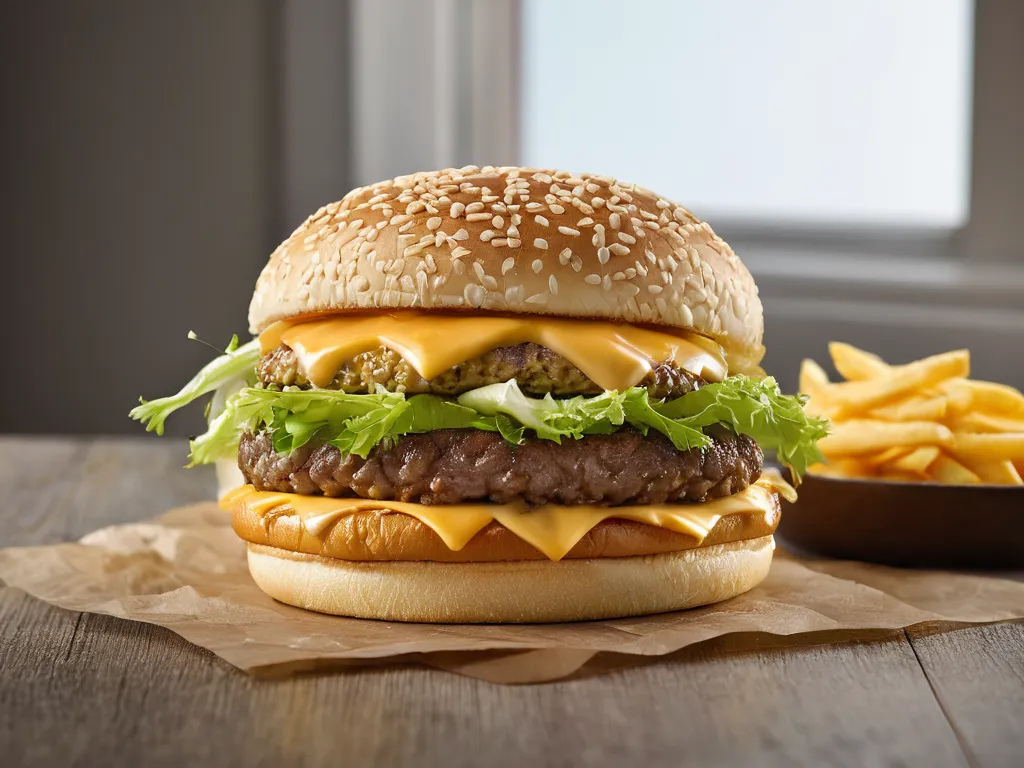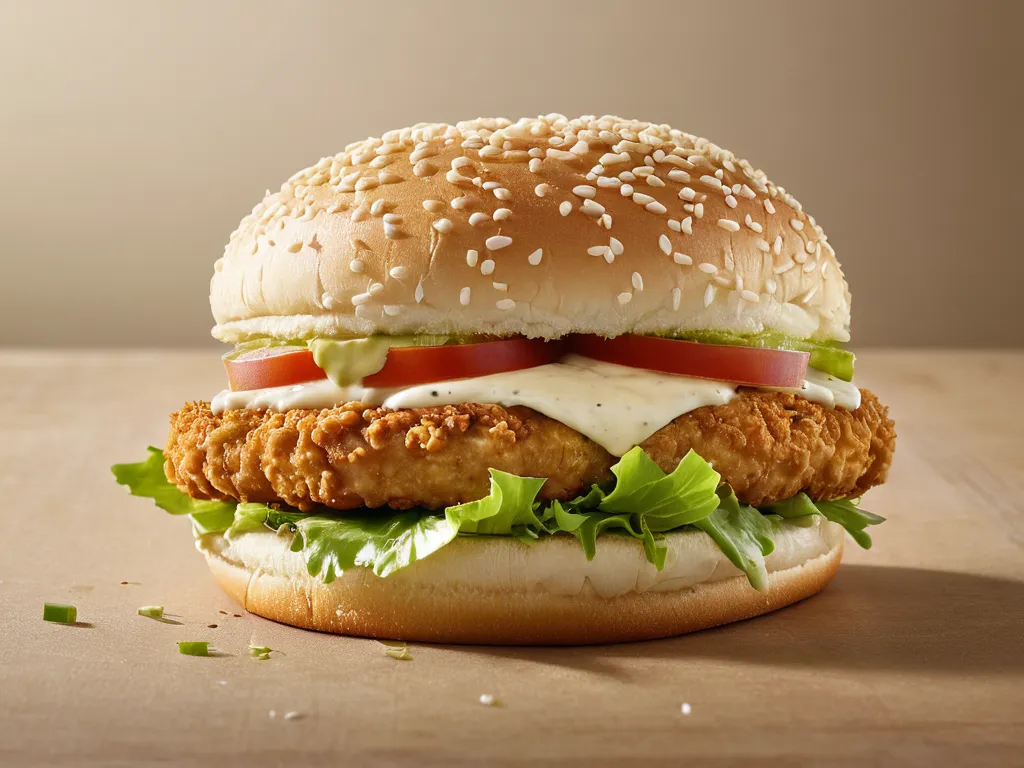
McDonald’s McChicken has been on the value menu for nearly 40 years for good reason: the combination of a crispy thin patty, cold mayo, and iceberg crunch hits a specific satisfaction that’s hard to explain until you’re three bites in. The home version gets you there in 35 minutes for roughly half the per-sandwich cost.
Why This Recipe Works
The McChicken patty is a ground-chicken patty, not a whole breast fillet — and that distinction matters for how you replicate it. Ground chicken with panko gives the same uniform, soft-interior texture you get at McDonald’s. A whole breast fillet gets you a different sandwich (closer to the McCrispy).
Panko over regular breadcrumbs in the mix. Panko is coarser and lighter, which prevents the interior from becoming dense while still binding the patty. Regular breadcrumbs absorb too much moisture and make the patty heavy and bread-forward.
Flour dredge is the crust. Unlike the nugget recipes that use a thick double-dredge, the McChicken gets its thin, crackly crust from a single flour coat applied to the exterior of the formed patty. Press the flour on firmly — you want full, even coverage without clumps.
Oil temperature, not fry time, controls crunch. At 350°F, the flour coat fries up crisp in about 4 minutes per side without absorbing excess grease. Below 325°F, the patty soaks up oil before the exterior sets. Above 375°F, the outside darkens before the interior cooks through. A thermometer is worth the 30 seconds it takes.
Cost Breakdown vs. McDonald’s
| Home batch (4 sandwiches) | McDonald’s (per sandwich) | |
|---|---|---|
| Ground chicken (1 lb) | ~$4.00 | — |
| Buns, mayo, lettuce | ~$2.50 | — |
| Oil + flour | ~$0.50 | — |
| Total | ~$7.00 / 4 sandwiches | ~$2.86–$3.69 each |
| Per sandwich | ~$1.75 | $2.86–$3.69 |
The savings matter most when feeding multiple people — a family of four at McDonald’s runs $11–15 for McChickens alone; the home version costs $7 total including all sides.
Pro Tips
Shape patties thin and wide. The raw patty should be noticeably larger than the bun — aim for about 20% wider in diameter. The patty contracts as the proteins cook and will end up roughly bun-sized. A patty that starts bun-sized ends up too small.
Rest on a wire rack, not paper towels. Paper towels trap steam under the patty and soften the bottom crust. A wire rack lets air circulate underneath and preserves the crunch on both sides. Use the 2-minute resting time to toast the buns in the residual oil — it adds flavor and prevents the bun from going soggy.
Use 85/15 ground chicken, not 99% lean. Extra-lean ground chicken has almost no fat, which makes the patty dry and prone to cracking. The small amount of fat in 85/15 keeps the interior moist and helps the patty hold its shape during frying.
Iceberg is non-negotiable. Romaine or spring mix will taste wrong here. Iceberg’s high water content and crunch is a structural part of the sandwich — it provides textural contrast and coolness against the hot, greasy patty. Shred it finely (closer to a slaw cut) so it holds in place under the top bun.
Storage and Reheating
Cooked patties keep in the refrigerator for up to 3 days in an airtight container. Reheat in a 375°F oven or air fryer for 8–10 minutes to restore crunch. Avoid the microwave — it makes the breading soggy and the patty rubbery.
Uncooked formed patties (before dredging) can be frozen on a parchment-lined tray, then transferred to a zip bag. Cook from frozen at 350°F oil for 6–7 minutes per side.
For the full McDonald’s value meal experience at home, pair with copycat McDonald’s fries — they require the same oil temperature, so you can fry both in the same session. The McChicken also pairs well with Big Mac sauce if you want to dress it up. For another fast-food chicken comparison, see Chick-fil-A nuggets — a completely different technique (brine + double-dredge + peanut oil) that gets at a different result.