Pin It

Olive Garden Minestrone Soup

Olive Garden Minestrone Soup
Jump to Recipe
Prep 15 min Cook 30 min Serves 8
Quick answer: Olive Garden minestrone is fully vegan (since 2016) and has three ingredients most home copycats skip: Italian green beans, tomato paste, and a bay leaf. Those three close most of the gap between the restaurant bowl and a home pot. The soup is just 110 calories per bowl at the restaurant β€” far lighter than it tastes. Key technique: add the pasta for the last 8 minutes of simmering so it finishes al dente; if you're making it ahead, cook the pasta separately and stir it in at serving so it doesn't turn to mush overnight. Ready in 45 minutes; serves 8.

Olive Garden Minestrone Soup

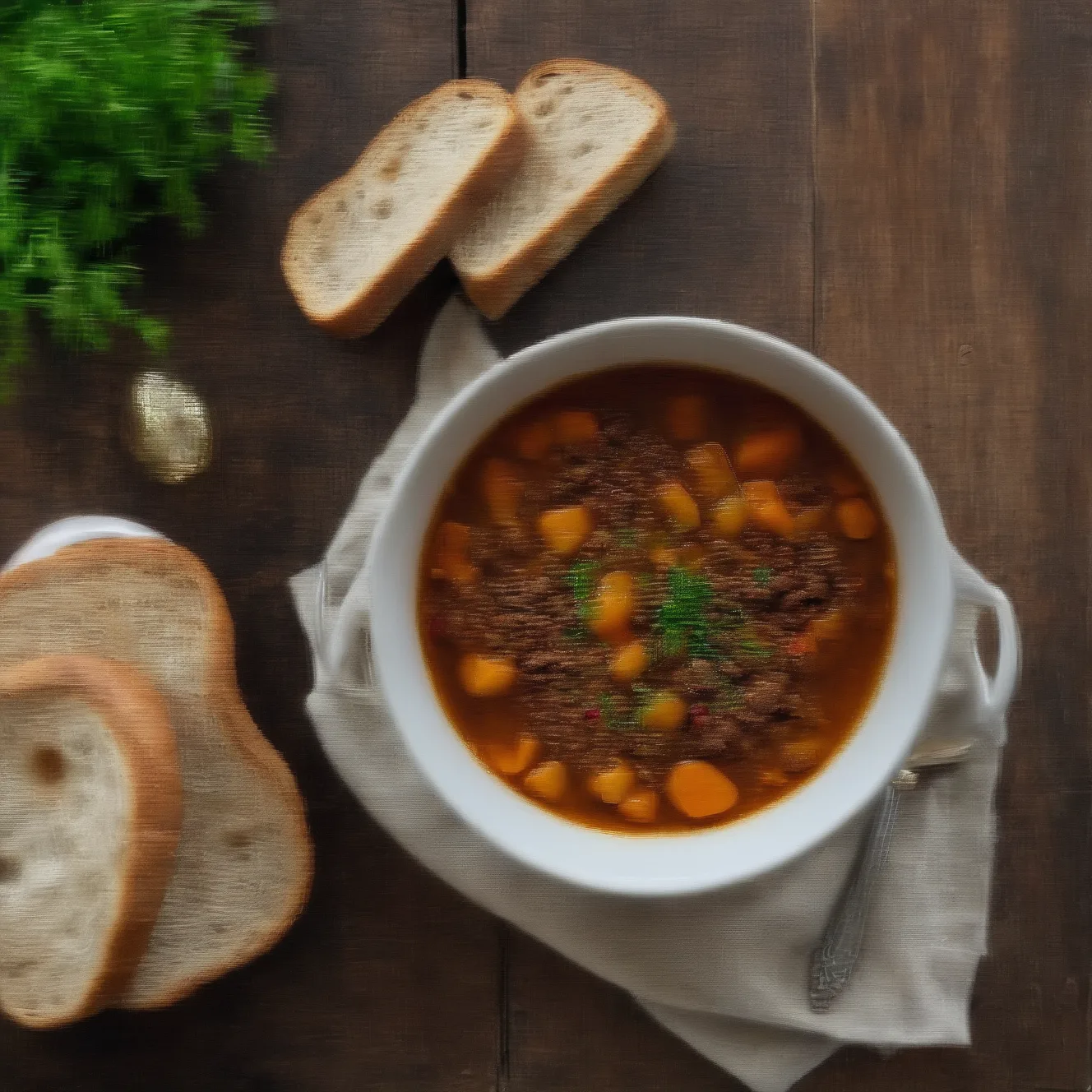
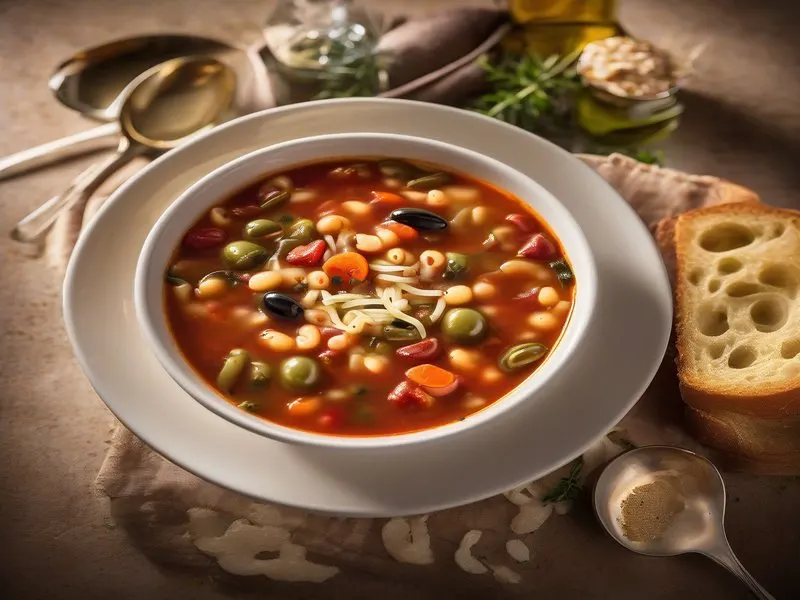
The accurate Olive Garden minestrone copycat: tomato paste for body, Italian green beans (frequently omitted), two kinds of beans, shell pasta, and baby spinach in an herb-tomato broth. Vegan, 110 calories a bowl, ready in 45 minutes.

Easy Prep: 15 min Cook: 30 min Total: 45 min8 servings ~$4.50/serving
Prep15 min
Cook30 min
Total45 min
Servings
8
At home~$4.50/serving
vs
Restaurant~$20.25/serving
You save ~78%

Ingredients

Instructions

💡
Pro tip: This recipe tastes even better the next day. The flavors need time to meld together in the fridge.
❄️
Storage: Keeps in an airtight container in the fridge for up to 2 weeks. Freezer-friendly for up to 3 months.
~250-450 cal/serving Β· Lighter OptionπŸ₯—

The Story Behind the Recipe

Olive Garden Minestrone Soup

Olive Garden’s minestrone is one of the rare restaurant soups that genuinely earns its reputation. At 110 calories a bowl, it’s lighter than it tastes β€” vegetable-forward, fully vegan, and built on a tomato-herb broth that’s more substantive than the thin Italian β€œhealth” soups that inspired it. It’s on the Unlimited Soup, Salad and Breadsticks menu alongside Zuppa Toscana and Pasta e Fagioli, and for dine-in diners it’s one of the best values at any chain restaurant.

Most copycat versions miss two things: tomato paste (which gives the broth its deep rust color and concentrated flavor) and Italian green beans (which add texture and a mild sweetness that plain diced tomatoes and bean-only soups lack). Both are confirmed in Todd Wilbur’s published reverse-engineered recipe and in the visual of the restaurant’s actual bowl. Add those two, plus a bay leaf, and this is the soup.

Is This Soup Actually Vegan?

Yes β€” and officially so. Olive Garden confirmed that their minestrone soup contains no animal products around 2016. The broth is 100% vegetable-based, the pasta contains no eggs, and both bean varieties are plant proteins. The only potentially non-vegan element is the Parmesan garnish, which is optional and served on the side at the restaurant. Vegan diners can skip it entirely; the soup is complete without it.

What Makes the Broth Taste Like the Restaurant Version?

Three things, in order of impact:

Tomato paste cooked into the aromatics. Two tablespoons of tomato paste, added after the garlic and cooked for two minutes before the broth goes in, concentrates the tomato flavor and turns the broth from orange to a deep rust-red. Restaurants that skip this step and rely on canned tomatoes alone produce a lighter, thinner broth that reads β€œhomemade” rather than β€œOlive Garden.”

A bay leaf during simmering. Bay leaf is a background note β€” you can’t taste it directly, but the broth flattens without it. It adds a faint herbal complexity that rounds out the tomato-oregano-basil base.

Red pepper flakes. Just a quarter teaspoon. The restaurant version has a very subtle warmth that’s easy to miss but noticeable once you’re looking for it. This is where it comes from.

Which Pasta Shape and Why It Matters

Olive Garden uses small shells (conchiglie or conchigliette). The shells matter because they trap a small amount of broth, a piece of vegetable, or part of a bean inside each one β€” so every bite delivers a concentrated hit of flavor rather than just pasta with a thin coating of soup. Ditalini is the traditional Italian substitute and works equally well.

Avoid large pasta shapes. The minestrone is supposed to be scoopable with a spoon, not a fork-and-knife situation.

The pasta timing rule: Add the pasta to the soup with 8–10 minutes left in cooking. Al dente is the target β€” the pasta will continue softening in the hot broth even after you pull the pot off the heat. If you’re making the soup ahead, cook pasta separately and stir in per-bowl at serving, otherwise you’ll have a thick, starchy porridge by day two.

How Minestrone Compares to All Four Olive Garden Soups

Olive Garden rotates four soups year-round. All figures are from OG’s official nutrition data.

SoupBaseProtein sourceCaloriesSodiumBest for
MinestroneVegetableNone (vegan)110810mgLowest calories; only vegetarian option
Pasta e FagioliTomato-beefGround beef150710mgLowest sodium of the four
Zuppa ToscanaCreamSpicy Italian sausage220790mgRichest flavor; the signature OG soup
Chicken GnocchiCreamChicken2301,290mgMost comforting; highest sodium by far

The two takeaways: Minestrone wins on calories (110 vs. 230 for Chicken Gnocchi) but Pasta e Fagioli actually wins on sodium (710mg vs. 810mg for Minestrone). If you are managing sodium carefully, Pasta e Fagioli is the stronger choice. If you want the fewest calories and a vegan bowl, Minestrone is the only option.

What’s the Difference Between Minestrone and Pasta e Fagioli?

Both are Italian bean-and-pasta soups on the Olive Garden menu, and guests frequently confuse them. The differences are significant:

  • Minestrone: Vegan, vegetable-heavy, light tomato-herb broth, 110 calories and 810mg sodium per bowl.
  • Pasta e Fagioli: Has ground beef, tomato-meat broth, thicker and more filling, 150 calories and 710mg sodium per bowl.

If you’re ordering the combo, minestrone is the lighter lunch choice by calories; Pasta e Fagioli eats more like a full meal and is actually slightly lower in sodium. See the full Olive Garden Pasta e Fagioli copycat recipe if you want to compare.

Minestrone vs. Zuppa Toscana and Chicken Gnocchi

The cream-based soups on the rotation β€” Zuppa Toscana and Chicken Gnocchi β€” are in a different category entirely. Zuppa Toscana is Italian sausage, potato, kale, and cream at 220 calories and 790mg sodium. Chicken Gnocchi is rotisserie chicken, soft gnocchi, carrots, and celery in a cream-thickened broth at 230 calories and 1,290mg sodium. Both are heavier and richer than minestrone.

Minestrone is the right call if you want to save room for an entree or stay under 200 calories for the soup course. Either cream soup is the call if you want the soup to carry the meal.

What It Costs at the Restaurant vs. at Home

An individual bowl of minestrone at Olive Garden runs about $8.79. The Unlimited Soup, Salad and Breadsticks combo β€” the classic lunch order β€” is approximately $13.49 at lunch and $16.49 at dinner, covering unlimited refills of any soup plus the salad and breadsticks. This recipe makes 8 generous bowls for about $10 total in ingredients, or roughly $1.25 per serving.

More Olive Garden Copycat Recipes

See all Olive Garden copycat recipes β†’

Nutrition Facts

Per serving (8 servings)
Calories110
Total Fat1g
Total Carbs17g
Dietary Fiber4g
Sugars4g
Protein5g
Sodium810mg

* Estimated values based on standard recipe preparation. Actual values may vary.

πŸ₯—

Make It Healthier

Love Olive Garden Minestrone Soup but want a lighter version? Try these simple swaps:

  • βœ“Skip the Parmesan garnish β€” the soup is fully vegan and complete without it.
  • βœ“Use low-sodium vegetable broth to reduce sodium from 810mg to around 550mg per bowl.
  • βœ“Add more green beans or a cup of diced potato for extra bulk without extra calories.

Equipment You'll Need

Large Dutch oven (5–6 qt) or stock pot

Big enough to hold all the vegetables, beans, and pasta with room to stir

Wooden spoon

For stirring without breaking the beans apart

Ladle

For serving and for controlled portions when ladling over pasta

Frequently Asked Questions

Is Olive Garden minestrone soup vegan?

Yes β€” Olive Garden confirmed its minestrone is fully vegan (no meat, no dairy, no animal products in the soup itself). They made this official around 2016. The only non-vegan element is the optional Parmesan garnish on top, which you control at home. The broth is vegetable-based, the pasta is eggless, and both beans (kidney and cannellini) are plant proteins. If you're cooking for vegans, skip the Parmesan β€” the soup stands on its own without it.

What is the secret ingredient in Olive Garden's minestrone?

Two things most copycats miss: tomato paste and Italian green beans. The tomato paste goes in with the aromatics early β€” a couple tablespoons cooked into the vegetables before the broth is added. This concentrates the tomato flavor and darkens the broth from thin orange to a deep rust-red. The Italian green beans add a slight sweetness and textural variation that's absent when you only use cannellini and kidney beans. Todd Wilbur's reverse-engineered recipe in Top Secret Restaurant Recipes 2 confirms both. A bay leaf during simmering rounds out the background flavor.

How many calories are in Olive Garden's minestrone soup?

110 calories per bowl (245g serving) according to Olive Garden's official nutrition guide. That breaks down to approximately 5g protein, 17g carbohydrates, 1g fat, and 810mg sodium. It's the lightest of Olive Garden's four rotation soups by both calories and fat: Pasta e Fagioli is 150 calories (710mg sodium), Zuppa Toscana is 220 calories (790mg sodium), and Chicken Gnocchi is 230 calories (1,290mg sodium). Minestrone's low calorie count reflects its vegetable-forward base β€” no cream, no sausage, no animal fat.

Which Olive Garden soup has the least sodium?

Pasta e Fagioli has the lowest sodium of the four rotation soups at 710mg per bowl β€” slightly less than Minestrone's 810mg. Zuppa Toscana is next at 790mg. Chicken Gnocchi is the highest by a wide margin at 1,290mg per bowl β€” nearly twice the sodium of Pasta e Fagioli. So if sodium is your main concern, Pasta e Fagioli edges out Minestrone by 100mg. If you want the fewest calories and a vegetarian option, Minestrone at 110 calories is the clear winner. The full four-soup comparison: Minestrone (110 cal / 810mg), Pasta e Fagioli (150 cal / 710mg), Zuppa Toscana (220 cal / 790mg), Chicken Gnocchi (230 cal / 1,290mg).

What pasta shape does Olive Garden use in their minestrone?

Small shell pasta (also called conchiglie or conchigliette). The shells are important β€” they trap small amounts of broth and a bean or two inside each one, so every spoonful is self-contained. Ditalini is the classic Italian substitute and works equally well. Avoid spaghetti broken into pieces or elbow macaroni β€” both are too smooth to catch the broth. Add the pasta for the last 8 minutes of simmering. If you're making a large batch to eat over multiple days, cook the pasta separately and add it per-bowl when reheating β€” pasta left in soup overnight gets mushy.

What beans are in Olive Garden minestrone soup?

Two kinds: red kidney beans and white cannellini beans (also called white kidney beans). Each brings something different β€” the kidney beans have a denser, mealier texture and a more assertive flavor; the cannellini are softer and creamier and help thicken the broth as they break down slightly. Both are canned and drained before adding. There are also Italian green beans in the restaurant version β€” they are not a third type of bean protein but a vegetable that gets tender in the broth without turning to mush.

How is Olive Garden minestrone different from Pasta e Fagioli?

Both are Italian bean-and-pasta soups, but the similarity ends there. Minestrone is vegetable-heavy, vegan, and built on a light tomato-herb broth β€” it's more like a garden stew than a thick soup. Pasta e Fagioli has ground beef, is built on a tomato-beef broth, and is thicker and more filling. Minestrone at 110 calories is the lighter lunch; Pasta e Fagioli at around 150 calories per bowl is closer to a full meal. Both are on the Unlimited Soup, Salad and Breadsticks menu β€” if you order the combo, you can get refills of whichever one you want.

Love this recipe? Share it!

Shop the tools

Gear matched to this recipe's equipment list. We may earn a small commission if you buy through these links β€” at no extra cost to you.

As an Amazon Associate, Copycat Spices earns from qualifying purchases.

Free PDF: our 12 most-wanted copycat recipes β€” instant download.

Ratings & Reviews

β€”
No ratings yet

Rate this recipe

Click a star to rate

Leave a Review

0/500

CS

Copycat Spices Test Kitchen

Every recipe on Copycat Spices is developed and tested in our home test kitchen. We reverse-engineer beloved restaurant dishes and refine each one until the flavors and the instructions work reliably for home cooks of all skill levels.

Learn more about our mission →