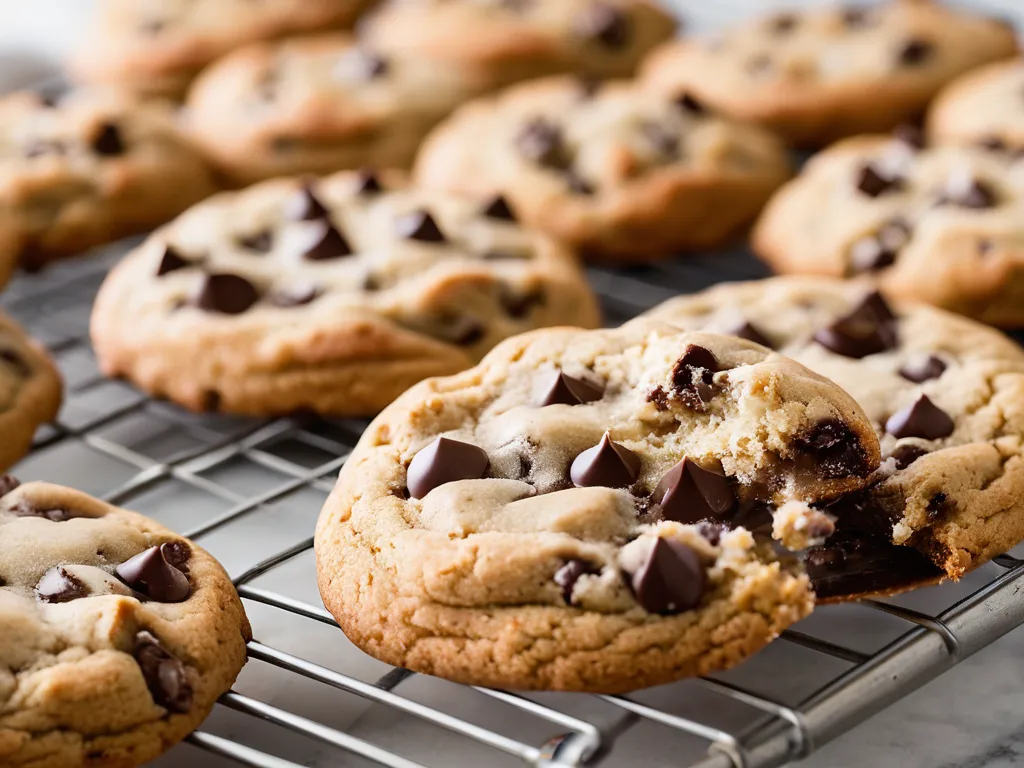
Crumbl Chocolate Chip Cookie
TL;DR: Crumbl’s Better Bake Chocolate Chip Cookie is a 5–6 oz oversized cookie built on milk chocolate chips, a 2.5:1 brown-to-granulated sugar ratio, and intentional underbaking. Crumbl uses creamed butter in production; this copycat replaces it with brown butter — a proven upgrade that makes the home version better than the original. Chill the dough at least 1 hour. Pull from the oven when the center looks underdone — carry-over heat on the hot pan finishes the center. Costs about $1 per cookie vs. $4.79–$5.49 at Crumbl.
Crumbl opened its first location in Logan, Utah in 2017. Founders Sawyer Hemsley and Jason McGowan (cousins) built the brand around a weekly rotating menu — new flavors revealed every Sunday evening, generating social-media anticipation before Monday’s opening. As of 2026, Crumbl operates more than 1,000 locations across the US and Canada.
The rotating model creates constant novelty, but six flavors are always available: the Pink Sugar Cookie, the Snickerdoodle, the Chocolate Crumb (Oreo), the Brownie Batter, the Celebration Cake, and the Milk Chocolate Chip (now formally called the “Better Bake Chocolate Chip Cookie”). The chocolate chip is the one people order as a baseline — something to measure every other cookie against, and something to fall back on when the week’s rotation doesn’t appeal.
What separates it from standard chocolate chip cookies is the combination of size (5–6 oz vs. the 1–1.5 oz of a standard home cookie), milk chocolate chips, chilled dough, and restraint in baking time. This copycat makes one further upgrade: swapping Crumbl’s production creamed butter for browned butter, which adds a layer of nutty, toffee complexity that makes the home version arguably better.
Brown Butter: This Copycat’s Key Upgrade
Crumbl’s production kitchen uses creamed butter — standard for high-volume baking. At home, you have one advantage Crumbl’s bakeries don’t: you can take five extra minutes to brown the butter first, which produces a version that most tested tasters prefer to the original.
Standard chocolate chip cookies call for creamed, softened butter. Many call for melted butter. This copycat starts with browned butter.
When butter heats past its melting point, the water evaporates and the remaining components (milk fat, casein proteins, and lactose) undergo the Maillard reaction together. Casein amino acids react with lactose to produce a cascade of aromatic compounds: diacetyl (buttery, toffee), γ-butyrolactone (creamy, caramel-adjacent), 2-furanone derivatives (sweet, roasted), and pyrazines (nutty, roasted grain). The result smells and tastes like toasted nuts and toffee rather than plain butter.
This is why brown butter cookies taste like they came from a bakery rather than a home kitchen. None of the flavor compounds above exist in uncooled butter; they only form when the milk solids hit browning temperatures above roughly 300°F.
The technique: Use a light-colored pan so you can see the milk solid color change. The stages are: melted → foaming (water evaporating) → foam subsides → milk solids turn golden → amber with nutty aroma (pull now) → black/burnt (discard and start over). The window between amber and burnt is about 30 seconds at medium heat. Once you smell the nuttiness and see amber color, pour immediately into the mixing bowl — residual pan heat keeps cooking after you remove it from the burner.
Let the brown butter cool 10–15 minutes before adding the sugars. Hot butter dissolves sugar too quickly and can partially cook the eggs.
The Sugar Ratio: Why This Formula Is 2.5:1 Brown to Granulated
This recipe uses 1¼ cups dark brown sugar to ½ cup granulated — a 2.5:1 ratio that’s considerably more weighted toward brown than a standard Toll House (which runs 1:1).
Brown sugar is granulated white sugar with molasses added back (about 3.5% in light, 6.5% in dark). Molasses is hygroscopic — it draws moisture from the eggs, the air, and the flour, keeping the cookie moist and chewy over days rather than hours. The acids in molasses (acetic, lactic) also slightly slow gluten development, which contributes to tenderness. Higher brown-to-granulated ratios produce chewier, more caramel-forward cookies that stay soft longer.
Granulated sugar caramelizes readily at high heat, contributing to crispy edges and helping the cookie spread. The balance between the two sugars controls the texture: a cookie made entirely with brown sugar stays thick and barely spreads; one made entirely with granulated spreads thin and crispy. The 2.5:1 ratio here produces a cookie that spreads just enough to be flat-bottomed but stays tall and thick in the center.
Dark vs. light brown sugar makes a real difference here. Dark brown has nearly double the molasses content of light brown — more chew, more caramel depth. Use it over light brown if you have the option.
Chilling the Dough: Why It Works and How Long to Go
The single most common mistake in thick-cookie recipes is skipping or shortening the chill time. An uncooled dough at room temperature spreads into a thin, flat disc before the structure sets; chilled dough stays compact long enough for the structure to solidify.
What chilling does:
Fat temperature: Solid or semi-solid fat spreads at a much slower rate than liquid fat. Cold fat from the fridge needs to warm up and melt before it can flow — that extra time in the oven is what keeps the cookie from spreading flat before the exterior has set.
Flour hydration: All-purpose flour’s starch granules absorb liquid (eggs, water from the brown butter) over time. Fully hydrated flour produces a more cohesive dough that handles the baking process more predictably. This hydration is mostly complete in 30–60 minutes but continues improving over 4–8 hours.
Gluten relaxation: Mixing dough activates gluten networks in the flour. Fresh dough has tight, elastic gluten that resists spreading — which sounds good for thick cookies, but actually creates a slightly tougher bite. After resting 1–2 hours, the gluten relaxes into a more pliable structure, producing a more tender chew.
Flavor development: Amylase enzymes in flour convert some starch to additional sugars over 8–24 hours, deepening browning and flavor. This is the same principle behind long-fermented bread dough: time in the cold builds complexity.
Minimum: 1 hour. Better: 4–8 hours. Best: 12–24 hours. Beyond 72 hours, the dough begins to oxidize and the flavor turns sour. Store covered tightly in the fridge.
Underbaking: The Hardest Part to Trust
Thick cookies require you to pull them from the oven before they look done. This is counterintuitive — and it’s where most home bakers overbake their Crumbl-style cookies into something ordinary.
A 5–6 oz cookie bakes from the outside in. The edges, which are thinner and in direct contact with the hot pan, set and brown first. The center, insulated by the surrounding dough mass, lags well behind. At 10–12 minutes at 375°F, the center of a properly-sized cookie is still at about 155–160°F — below the point where egg proteins fully set (roughly 165°F). When you pull it and leave it on the hot pan for 10 minutes, the cookie continues cooking from carry-over heat, bringing the center to the target temperature.
What “done” looks like at pull time:
- Edges: golden brown, firm to the touch
- Center top surface: dull or semi-matte, not wet-glossy (wet-glossy = underbaked) but not fully matte-dry (fully matte = overbaked)
- The cookie should not wobble when you shift the pan
What “done” looks like after the 10-minute rest:
- Center has firmed up from fully gooey to set-but-soft
- The cookie holds its shape when you lift it but bends slightly at the center
- Internal temperature at this point: approximately 165–170°F
If the center looks fully cooked and matte when it comes out of the oven, the cookie will be overdone and dry by the time it cools. Trust the process.
Portioning: Bigger Than You Think
Crumbl’s chocolate chip cookie is approximately 5–6 oz per cookie (140–170g), about 4.25 inches in diameter — roughly four times the weight of a standard home-baked cookie. At that size, they’re near the scale of a hockey puck.
The easiest way to portion them accurately is with a kitchen scale. Eyeballing 5–6 oz by scoop size is harder than it sounds — a single misestimate produces cookies that bake unevenly, with smaller ones overbaked while larger ones are raw in the center.
After portioning, shape the dough balls by pressing them into thick cylinders (not perfectly round balls). Balls of dough bake up domed; slightly flattened cylinders produce more even thickness across the cookie. Aim for about 1.5–2 inches tall before baking.
Space them at least 3 inches apart on the baking sheet — at 5–6 oz, these spread considerably even from cold. Plan for 3–4 per standard half-sheet pan.
Chocolate Chip Selection
Crumbl’s production recipe uses milk chocolate chips — this is confirmed by multiple tested recreations, with Guittard milk chocolate chips commonly cited as the closest match. The recipe is written with milk chocolate as the primary recommendation; semi-sweet is offered as an alternative for those who prefer more chocolate complexity.
Milk chocolate chips (25–35% cacao): Crumbl’s standard. Sweeter, creamier, with a mild chocolate flavor that lets the brown sugar caramel notes of the dough take the lead. Guittard’s milk chocolate chips are higher-quality than Nestlé Toll House’s milk chocolate and worth the small price premium.
Semi-sweet chips (45–60% cacao): The more-common copycat choice. Slightly bitter contrast against the sweet dough. Nestlé Toll House or Guittard semi-sweet both work well.
Chocolate chunks (any type): Irregular shapes create melt pools — patches of chocolate that flow into the surrounding dough rather than holding chip shape. More varied texture per bite. Worth using for one batch to compare; harder to find in smaller grocery stores.
For the closest match to Crumbl, use milk chocolate chips. The brown butter and sugar ratio dominate the flavor profile either way.
Crumbl vs. Levain vs. Standard Toll House: What’s Different
| Crumbl-Style | Levain-Style | Standard Toll House | |
|---|---|---|---|
| Weight per cookie | ~5–6 oz | ~6 oz | ~1–1.5 oz |
| Butter prep | Brown butter | Cold butter chunks | Creamed butter |
| Dough temperature | Chilled (1–24h) | Very cold (45°F+) | Room temp |
| Bake temp | 375°F | 400°F | 375°F |
| Texture | Gooey center, crisp edges | Cakey, dense throughout | Flat, tender |
| Chocolate | Chips, milk or semi-sweet | Chips + walnuts | Semi-sweet chips |
| Key flavor | Brown butter, caramel | Vanilla, brown sugar, nuts | Vanilla, butter |
Levain Bakery in New York City produces a dramatically different cookie — thick and cakey throughout rather than gooey-centered, with a denser crumb that holds together when broken. Crumbl’s version has a more distinct textural contrast (crispy shell, gooey interior). Both are worth making; they’re targeting different eating experiences.
Variations Worth Making
Double chocolate: Replace ½ cup of the flour with ½ cup Dutch-process cocoa powder and use milk chocolate chips. The cocoa batter base produces a deeply chocolatey cookie with a fudge-like center.
Brown butter peanut butter chip: Substitute peanut butter chips for the chocolate chips. The brown butter’s toffee notes pair naturally with peanut butter’s roasted profile. Optional: swirl 2 tablespoons of peanut butter into the finished dough before chilling.
Salted caramel chip: Use caramel-filled chocolate chips or substitute 1 cup of chocolate chips with 1 cup of caramel bits. Double the flaky sea salt on top.
Walnut: Add 1 cup of roughly chopped walnuts along with the chocolate chips. The classic Levain combo, applied to the brown butter base — toasted walnuts add a second layer of nuttiness alongside the brown butter.
Nutella swirl: After filling the baking sheet, press a small well into the top of each ball and fill with ½ teaspoon of Nutella. Cover slightly with dough. The Nutella pool sinks into the center and creates a hazelnut-chocolate core.
Make-Ahead and Storage
Dough: Make and chill up to 72 hours ahead. Do not freeze unportioned dough — it’s difficult to scoop frozen. Portion first, then freeze individual balls for up to 3 months. Bake from frozen at 350°F for 14–16 minutes.
Baked cookies: Room temperature in an airtight container, up to 4 days. They’re chewiest on day 1–2; a brief 10-second microwave warm-up on day 3–4 restores the gooey center. Do not refrigerate baked cookies — cold sets the fat and produces a harder, less enjoyable texture.
Reheating: 10 seconds in a microwave restores the gooey interior. For multiple cookies, 5 minutes in a 300°F oven on parchment works well.
Cost at Home vs. Crumbl
| Crumbl | Homemade (8 cookies) | Per cookie | |
|---|---|---|---|
| Per cookie | ~$4.79–$5.49 | ~$8–9 total | ~$1.00–1.15 |
| 6-pack | ~$24–$27 | ~$6 | — |
| 8-pack | not sold | ~$8–9 | — |
The most expensive ingredient in the homemade version is the butter ($3.50 for 2 sticks of quality butter like Kerrygold) and the milk chocolate chips ($3–4 for 2 cups of Guittard). The rest — flour, sugar, eggs, vanilla, salt — is pantry staples.
More Crumbl and Bakery Cookie Recipes
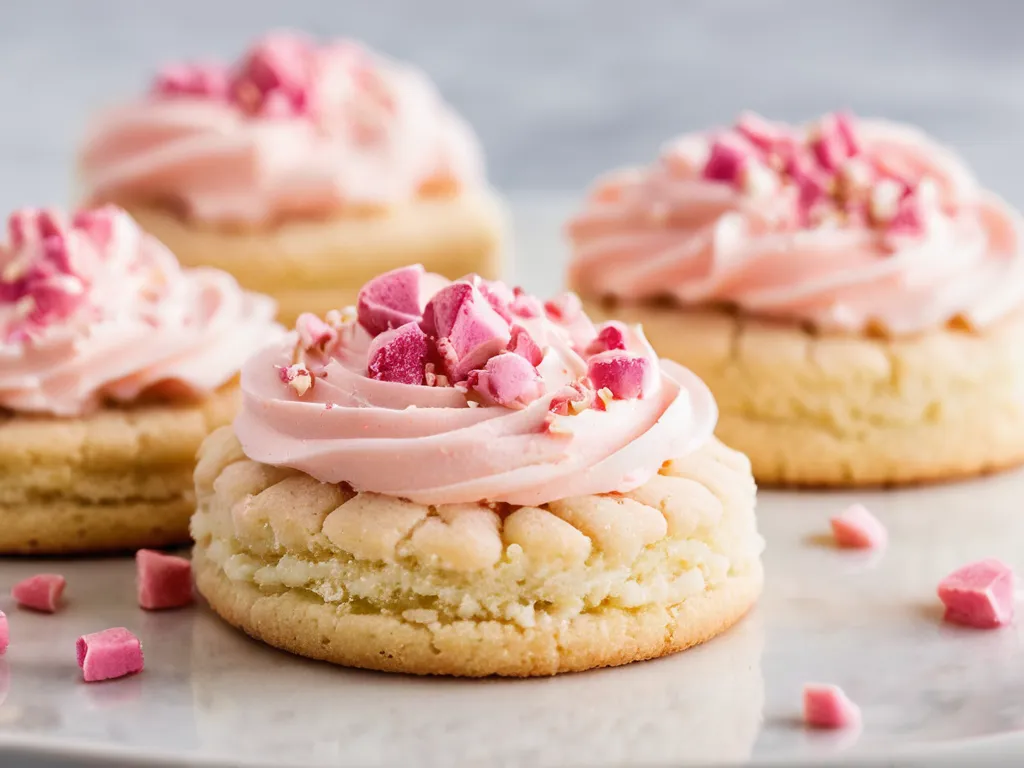
If you want to cover the two Crumbl classics at home, the Crumbl Pink Sugar Cookie uses almond extract in both dough and frosting, and is served cold (the only Crumbl classic served chilled rather than warm). For bakery-style chocolate chip cookies with a different approach, the Levain Bakery chocolate chip walnut cookie uses cold butter chunks instead of brown butter and produces a denser, cakey result. For more brown butter technique, viral TikTok brown butter chocolate chip cookie covers the same browning method applied to a thinner, crispier format. If you want a complete Crumbl-style bakery box at home, Subway cookies fill out the soft, oversized cookie category with a more accessible ingredient list.