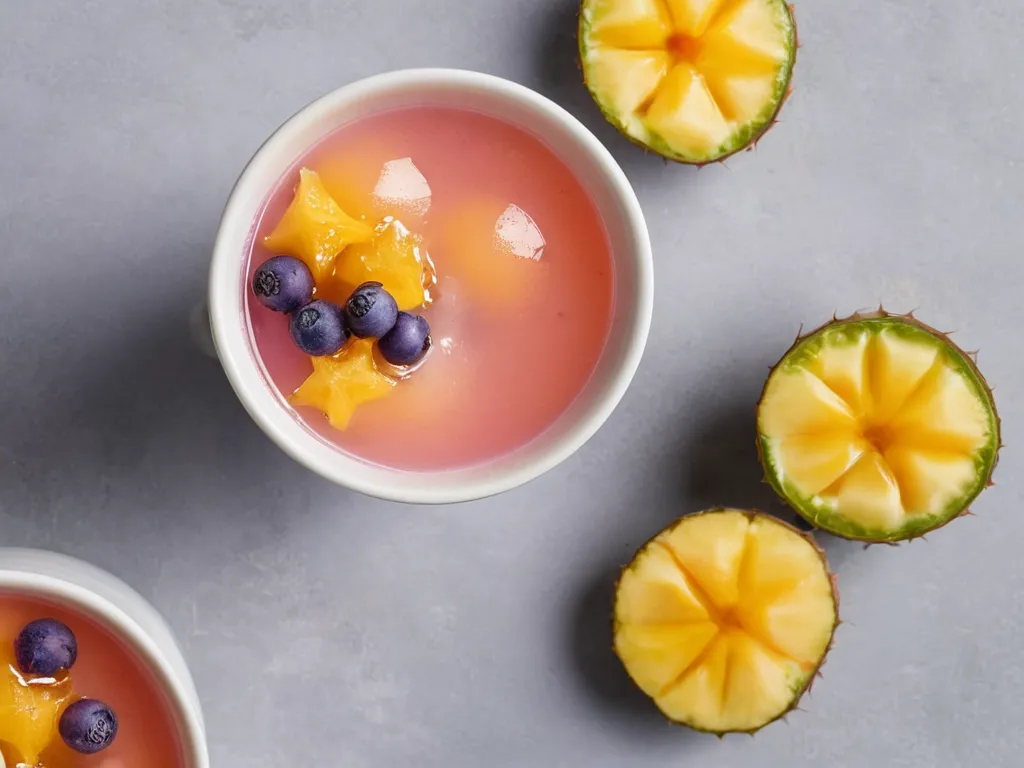
Starbucks Tropical Butterfly Refresher (Copycat)
Prep time: 15 minutes (plus 20 minutes chilling) Servings: 2 grandes (16 oz each) Cost at home: ~$1.50 per serving vs. about $6 at Starbucks (and up to ~$7 in higher-cost markets)
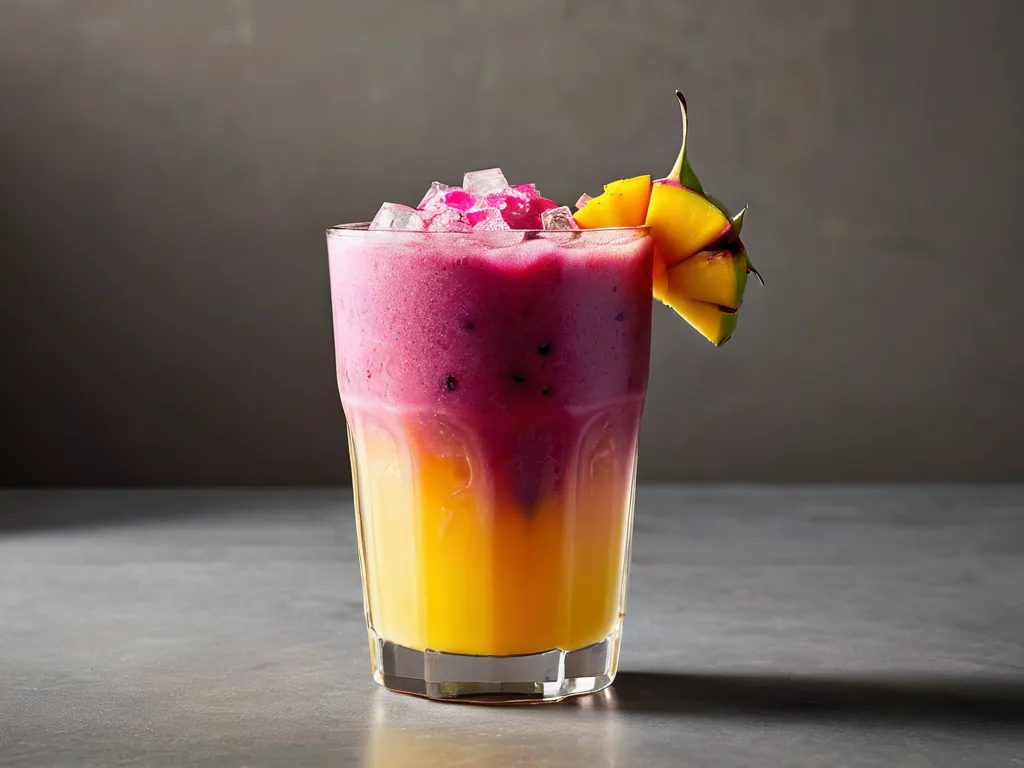
Starbucks launched the Tropical Butterfly Refresher on May 12, 2026, and it immediately became the most visually dramatic item on their summer menu. The drink does something that most beverages can’t: it changes color in your glass. Pour the passionfruit-guava base over the butterfly pea flower tea and watch it shift from deep indigo blue to magenta in real time — not a filter, not food dye swirled in, but actual chemistry triggered by the contact between a pH-sensitive pigment and an acidic fruit juice.
At home, you can reproduce the effect exactly. The ingredients are simple: dried butterfly pea flowers (easy to find online or at tea shops), passion fruit and guava juice (Latin grocery stores or most supermarkets), and mango-pineapple popping pearls (Asian grocery stores or Amazon). The color shift happens every single time because it’s driven by physics, not technique.
The Color-Shift Science (Why This Drink Changes Color)
Butterfly pea flowers contain a class of plant pigments called anthocyanins — the same pigments that make blueberries blue, red cabbage purple, and certain roses change color with pH. Anthocyanins are vivid blue at neutral or slightly alkaline pH and shift dramatically toward red and pink as acidity increases.
Starbucks brews the butterfly pea flowers into an indigo tea, then layers it with a passionfruit-guava base that contains citric acid. The moment the acidic base contacts the tea, the pH drops and the anthocyanins shift toward red — producing that blue-to-pink gradient in the glass.
The practical implication for home cooks: the citric acid in the recipe is not optional. It’s what makes the color shift happen. Without it, you’d need a much stronger acid (lemon juice in large quantities), and the drink would taste too sour. A small amount of citric acid gives you the pH drop with minimal flavor impact.
Breaking Down the Ingredients
Butterfly Pea Flower Tea
The blue layer. Dried butterfly pea flowers brew into a deep, almost neon indigo tea in about five minutes. The flavor is very mild — slightly earthy, like a light herbal tea — but it essentially disappears when combined with the strongly flavored fruit base. You’re using it entirely for color.
Find it at: Asian grocery stores (it’s used widely in Thai desserts and drinks), specialty tea shops, Whole Foods, or Amazon. One ounce of dried flowers (about $8–12) makes more servings than you’ll reasonably want to count. Store it sealed away from light and it stays vivid for months.
Steeping temperature matters. Use water at about 175°F (let boiling water cool for 2 minutes) rather than a full boil. High temperatures can dull and brown the pigments slightly. Five to seven minutes gives you a dark, vibrant color.
Passionfruit-Guava Base
This is the flavor core. Starbucks’ formula uses water, grape juice concentrate, passion fruit juice concentrate, guava puree, citric acid, xanthan gum, stevia, and vegetable juice for color. The home version hits the same flavor profile with simpler sourcing:
- White grape juice provides the sweet, neutral base and mild sweetness (the same role it plays in the Dragon Drink and Pink Drink)
- Passion fruit juice or nectar is the dominant tropical flavor — look for Jumex Mango Passion Fruit, Goya Passion Fruit Nectar, or Kern’s brands; all work and are widely available in the Latin foods aisle
- Guava nectar adds floral depth and body; Goya and Jumex both carry it
The exact ratio matters less than the flavor test. Taste the base before chilling — it should be noticeably sweet, strongly tropical (passion fruit forward), and have a mild tartness. Adjust sugar and citric acid based on how sweet or tart your juices are.
Mango-Pineapple Popping Pearls
These are the texture element that makes the drink feel like a boba experience without the full tapioca boba commitment. Popping pearls (also called “bursting boba”) are small juice-filled spheres with a thin gel membrane — when you chew them, they pop and release a burst of juice.
Where to find them: Asian grocery stores (H-Mart, 99 Ranch, Mitsuwa) usually carry several brands. On Amazon, search “mango popping pearls boba” — Lollicup, Bossen, and Exotic Pop are reliable brands. Some Whole Foods carry them in the bulk/specialty section.
If you can’t find them: the drink works without them. Regular cooked tapioca boba pearls (the chewy kind) are a reasonable substitute, though they don’t pop. Or skip the pearls entirely — the color shift is still the visual centerpiece.
How to Get the Gradient Right
The layering technique is what produces the blue-to-pink gradient rather than just a mixed purple-grey drink.
Key steps:
-
Start with fully chilled butterfly pea tea. Warm tea melts the ice faster and doesn’t sit as a distinct layer.
-
Pour the tea over ice first — about 3 tablespoons per grande — before adding the base. The ice slows mixing.
-
Pour the base over the back of a long spoon held just above the ice. This breaks the force of the pour and lets the base settle gently over the tea layer rather than crashing through it.
-
Don’t stir immediately. Let the gradient sit for 5–10 seconds. You’ll see blue at the top (near the ice), shifting through purple to pink or coral at the bottom where the base has settled.
-
Then stir once or twice — just enough to swirl, not blend. For the fully mixed version, stir completely; it becomes a translucent magenta-purple.
The Four Variants
Butterfly Drink (Coconut Milk Version)
Replace ¼ cup of the passionfruit-guava base with ¼ cup of coconut milk beverage (carton style — not canned). Pour the coconut milk separately at the end over the back of a spoon for a white-over-pink layered look. Adds creaminess, about 30 extra calories, and a tropical richness similar to the Dragon Drink or Pink Drink.
Butterfly Lemonade
Add 3–4 tablespoons of fresh lemonade (or store-bought lemonade) and reduce the guava nectar by the same amount. The extra lemon tartness makes the flavor brighter and sharpens the color shift (more acid = more vivid pink). This variant runs slightly more tart.
Butterfly Energy
Add more green coffee extract — target about ¼–½ teaspoon total, depending on your product’s caffeine concentration. The flavor stays clean (no coffee taste), just a higher caffeine dose. Check the label on your green coffee extract for the caffeine-per-gram amount to dial in the dose.
Cost Comparison
| Starbucks Grande | Homemade | |
|---|---|---|
| Tropical Butterfly Refresher | $6.00–6.95 | ~$1.50 |
| Butterfly Drink (coconut milk) | $6.50–7.25 | ~$1.75 |
| 2-pack for two people | $12–14 | ~$3.00 |
The popping pearls are the most expensive home ingredient — a tub runs $6–8 and makes 30+ servings — but the per-drink cost is still well under $2 once you have them.
Storage
- Butterfly pea tea: 5 days in the refrigerator, sealed. The color stays vivid.
- Passionfruit-guava base: 5 days in the refrigerator. Shake before using.
- Assembled drinks: make to order; ice dilution and color mixing happen immediately.
- Batch prep: brew the tea and mix the base on Sunday; assemble individual drinks in under 2 minutes throughout the week.
For more Starbucks refresher copycats, see Starbucks Dragon Drink (mango-dragonfruit with coconut milk), Starbucks Pink Drink (acai-berry with coconut milk), and Starbucks Strawberry Acai Refresher (the one that started the refresher obsession). See all Starbucks copycat recipes →