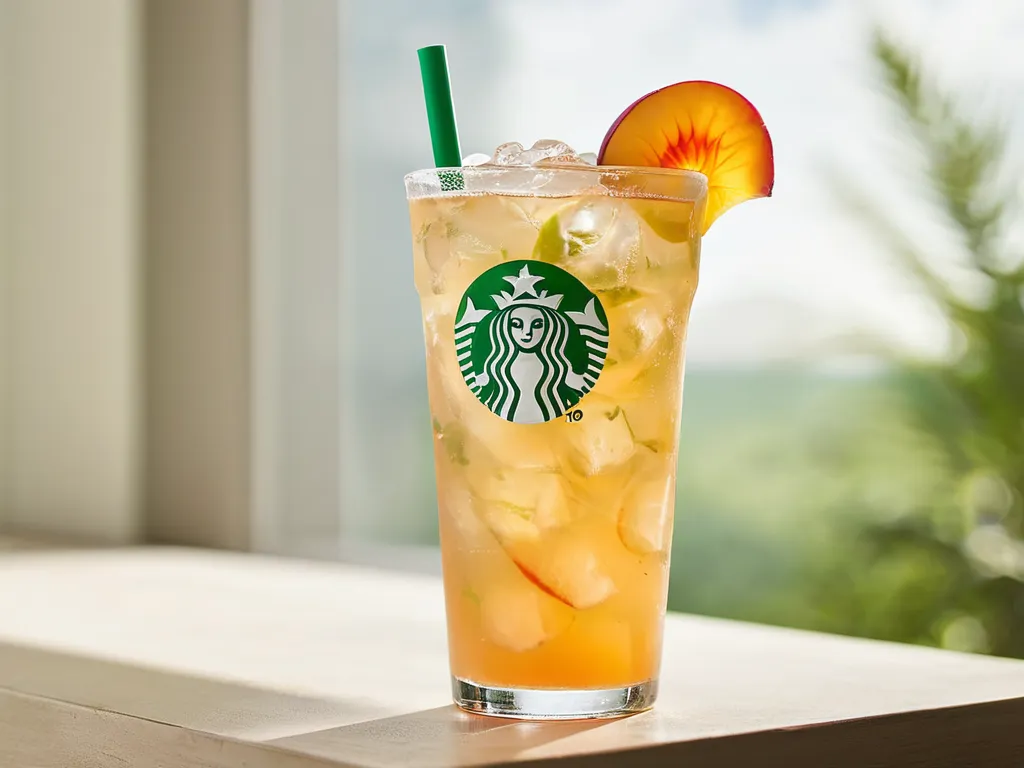
Copycat Starbucks Iced Peach Green Tea Lemonade
Prep time: 10 min (plus 30 min to chill tea) Servings: 2 grandes (16 oz each) Cost at home: under $1 per serving vs. about $5.25 at Starbucks
Here is the thing most people don’t know about Starbucks Iced Peach Green Tea Lemonade: there are no peaches in it. The “peach” component is a stevia-sweetened white grape juice blend with natural peach flavoring, fruit and vegetable juice for color, and citric acid. No peach puree, no peach slices, no fresh fruit of any kind.
That revelation is actually useful. It means the peachy sweetness you taste at Starbucks is mild, clean, and not overpowering — and the home recipe works best when you match that profile with peach nectar rather than thick peach jam or syrup.
The second thing worth knowing: the shaking matters. Starbucks shakes every iced tea order in a cocktail shaker. The 15 seconds of vigorous shaking chills the drink faster than stirring, dilutes it to the right strength as ice melts slightly, and creates a light frothiness at the top that you don’t get from pouring over ice. This is easy to replicate at home with a mason jar.
The third thing — and this is where most home versions fall short — is the tea itself. Starbucks uses a Teavana green tea blend that contains spearmint, lemon verbena, and lemongrass alongside the green tea. Plain Lipton green tea makes a flatter drink. Tazo Zen (available at most supermarkets) matches the Teavana profile closely and makes a noticeably better copycat than generic green tea.
Breaking Down the Ingredients
The Green Tea Base
Starbucks’ Teavana blend contains four components: green tea leaves, spearmint, lemon verbena, and lemongrass. The spearmint adds a cooling, herbal quality; the lemon verbena and lemongrass add citrusy lift that plain green tea doesn’t have. Together, they produce a tea that tastes more complex and aromatic than a single-ingredient green tea.
The nearest widely available substitute: Tazo Zen Green Tea (green tea + spearmint + lemongrass + lemon verbena — a near-identical formulation). You can find it at Starbucks stores, Whole Foods, Target, and most supermarkets. If you can’t find Tazo Zen, Celestial Seasonings Authentic Green Tea with Mint is a reasonable fallback.
Brewing temperature is critical. Green tea goes bitter and grassy if brewed too hot or too long. The target temperature is 175°F — about 2 minutes off boiling. Steep for 2–3 minutes maximum and remove the bags without squeezing (squeezing releases more tannins). If the tea tastes bitter, your water was too hot or you steeped too long. Brew a new batch.
The Peach Component
The Starbucks peach juice blend is a stevia-sweetened concentrate — not as intensely sugary as a classic syrup would be, and not as rich or thick as peach preserves. The flavor is clearly peachy but mild and slightly watered-down by design.
The best home match: Kern’s Peach Nectar (12 oz cans, available in the Latin American foods section of most supermarkets, or the juice aisle). Jumex Peach Nectar is equally good. These nectars are sweet but not syrupy, and the white grape juice base in the Starbucks version shares the same clean, mellow sweetness profile.
One alternative: homemade peach simple syrup. Simmer 1 cup water + 1 cup sugar + 2 ripe peaches (sliced, pits removed) for 20 minutes, then strain and cool. Use 2 tablespoons per drink. This gives you more concentrated, genuine peach flavor than the nectar — it tastes more like peaches than Starbucks’ version, which is either a feature or a bug depending on what you’re after.
The Lemonade
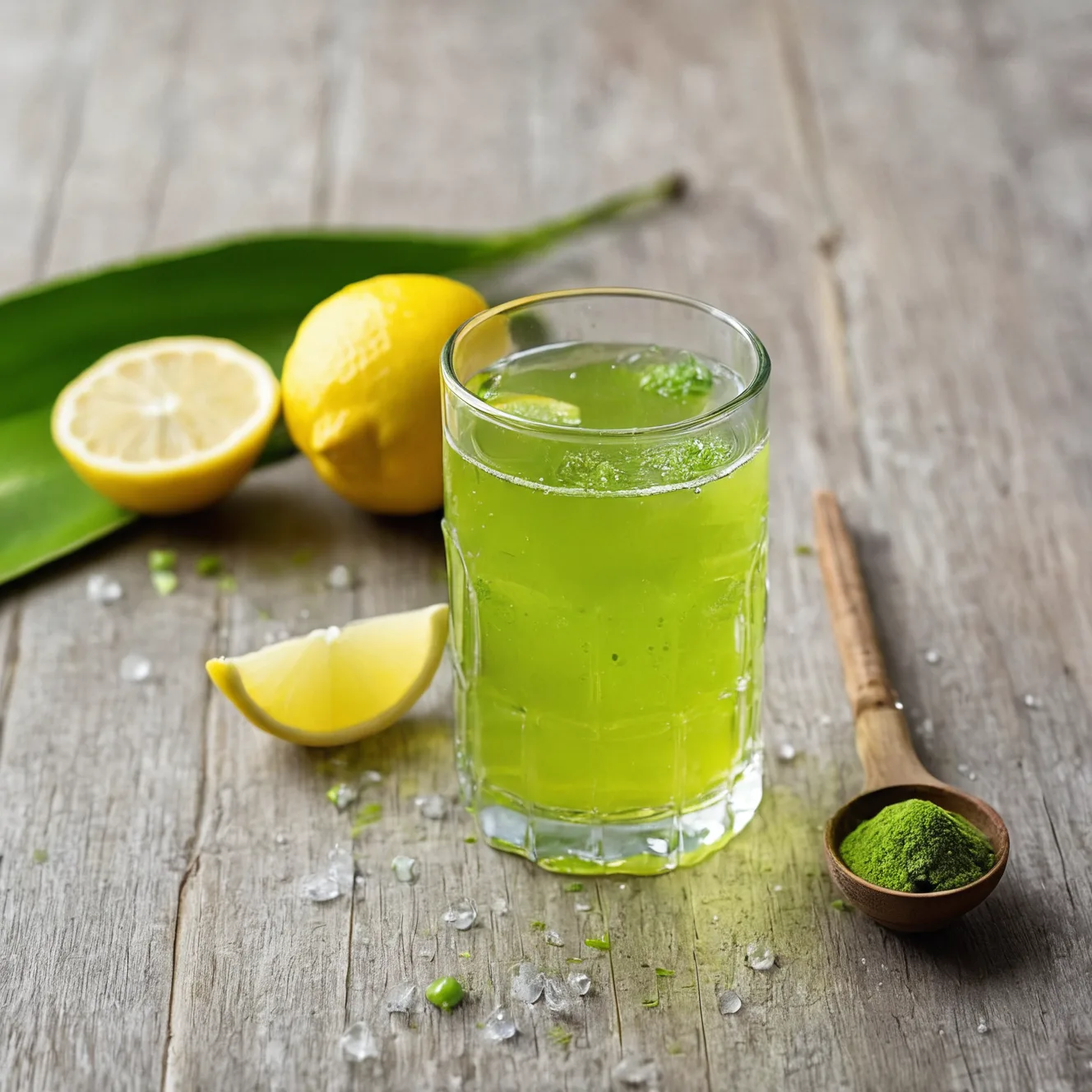
Starbucks’ lemonade is water, lemon juice, sugar, and lemon oil — a standard lemonade. Simply Lemonade (refrigerator section) is the closest store-bought match in terms of flavor balance. Minute Maid works. Fresh-squeezed is better but brings about 15–20 minutes of work for a marginal improvement in a drink where the peach and tea are the primary flavors.
Ratio: the Starbucks Grande is roughly half green tea, a quarter peach juice blend, and a quarter lemonade. The recipe above uses that ratio. Adjust to taste — if you want more lemon brightness, bump the lemonade. If you want the peach to stand out more, bump the nectar and reduce the lemonade slightly.
Iced Peach Green Tea vs. Iced Peach Green Tea Lemonade
The menu has both, and the difference is one ingredient: the Lemonade version replaces the water portion with lemonade.
- Iced Peach Green Tea: green tea + peach juice blend + water; about 80 calories and 18g sugar for a Grande; lighter, sweeter, less tart
- Iced Peach Green Tea Lemonade: green tea + peach juice blend + lemonade; about 130 calories and 29g sugar; more assertive, brighter, with a clean citric tartness
Both are shaken. The Lemonade version is more refreshing in hot weather because the lemon tartness cuts through the sweetness. The plain Peach Green Tea is what you want if you want a lighter, more delicate drink.
At home, the difference is just swapping water for lemonade in the shaker — so the recipe above doubles as a base for both versions.
The Shaking Technique
Starbucks baristas shake every iced tea order. If you’ve never watched the process: they fill a cocktail shaker with ice, add the tea, juice blend, and lemonade, then shake for about 10–15 seconds before straining into the cup.
Three things happen in those 15 seconds:
- Temperature drop. The ice rapidly chills the liquid to just above 32°F — much faster than stirring or pouring over ice.
- Controlled dilution. The ice melts slightly during shaking, adding the right amount of water to bring the drink to Starbucks’ standard concentration. If you shake for too long (more than 20 seconds), you over-dilute it.
- Aeration. Vigorous shaking incorporates tiny air bubbles, giving the top of the drink a faint frothiness and a slightly rounded mouthfeel.
At home, a 16-oz cocktail shaker or a quart mason jar with a tight lid both work. Shake firmly — not gently — for 10–15 seconds. Strain immediately over a glass full of fresh ice.
Customizations Worth Knowing
Less sweet: Reduce the peach nectar to 3 tablespoons instead of ¼ cup, and use unsweetened lemonade. The drink still has plenty of flavor from the tea and lemon.
Stronger peach: Add 1–2 pumps of Torani or Monin Peach Syrup on top of (or instead of some of) the nectar. Torani is available at most grocery stores in the coffee/tea aisle.
Raspberry-peach (TikTok hack): Add 1 tablespoon of Torani Raspberry Syrup to the shaker. The raspberry adds a floral tartness that plays well with peach and lemon — widely popular on Starbucks TikTok.
Sparkling version: Replace the lemonade with sparkling water + a squeeze of fresh lemon. The carbonation makes it feel lighter and more effervescent — good for people who find lemonade too sweet.
Limeade instead of lemonade: Use store-bought limeade (Minute Maid Limeade) instead of lemonade. The lime reads as more tropical and a bit sharper than lemon, which changes the character of the drink noticeably.
Plain Peach Green Tea (no lemonade): Replace the lemonade with an equal amount of cold water. Shake the same way. This is the simpler, lighter version — about 10 fewer calories and less tang.
Batch-Making and Storage
The green tea can be brewed in a large batch and refrigerated for up to 3 days. Brew 4 bags per 2 cups of water, chill, and keep in a sealed pitcher.
Pre-mix the peach nectar and lemonade in a 1:1 ratio and refrigerate in a separate container. When you want a drink, shake 1 cup tea + ½ cup peach-lemonade mix over ice.
Do not pre-make the fully assembled drink — once shaken and poured, the ice starts diluting it and the tea loses its bright, fresh quality. Build each drink just before serving.
Cost Comparison
A Grande Iced Peach Green Tea Lemonade at Starbucks runs about $4.95–$5.25 (varies by location and market). At home:
- Tazo Zen tea bags: ~$0.15 per 2 bags
- Kern’s peach nectar: ~$0.35 for ¼ cup
- Simply Lemonade: ~$0.25 for ¼ cup
Total: under $0.80 per Grande equivalent — saving roughly $4.50 per drink. If you’re making these regularly through summer, that adds up fast.
For more iced Starbucks drinks you can replicate at home, the Starbucks Dragon Drink and Copycat Starbucks Strawberry Acai Refresher use the same white-grape-juice-concentrate base that underlies most Starbucks refreshers. For a tea-based option on the other end of the sweetness spectrum, the Starbucks Medicine Ball (Honey Citrus Mint Tea) is a warming counterpart built on the same Teavana Jade Citrus Mint tea that Starbucks uses in its green tea blend. And if you want the summer visual-spectacle drink — the one that actually changes color — the Starbucks Tropical Butterfly Refresher launched in May 2026 and is a striking contrast to the understated simplicity of this peach tea.