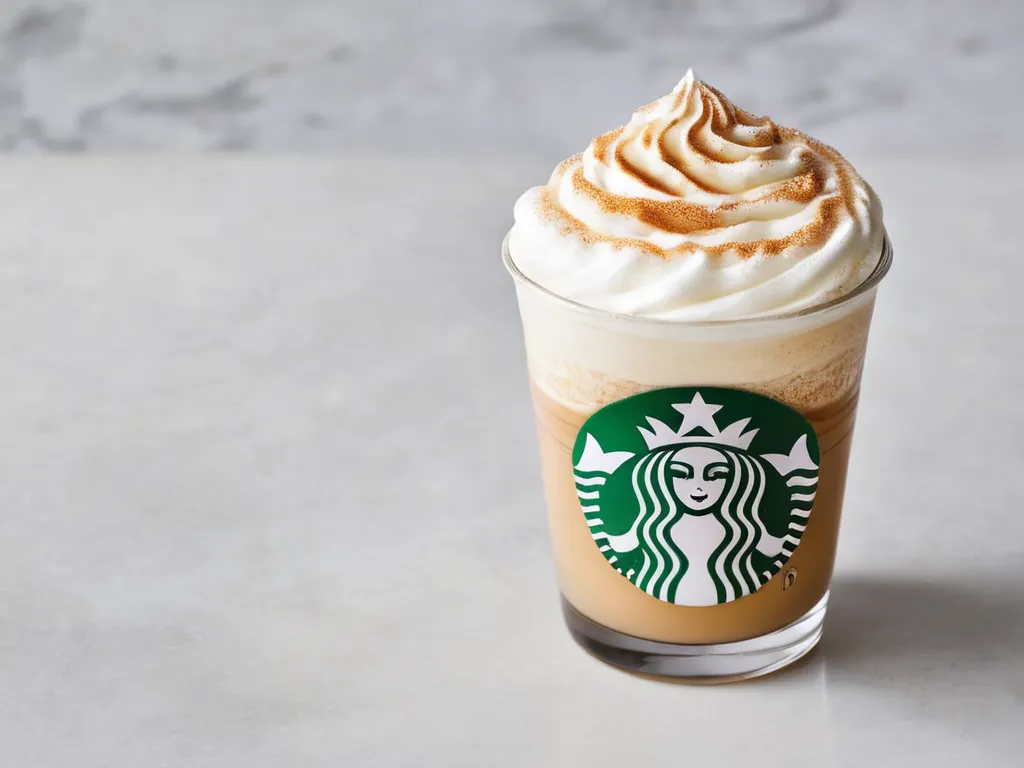
In March 2019, Starbucks launched the Cloud Macchiato with Ariana Grande as its brand ambassador — a natural fit, since Grande’s known obsession with clouds extends to a cloud tattoo, a cloud-themed perfume called Cloud she released the same month, and the cloud emoji she uses prolifically. The drink was inspired by Spanish leche merengada, a traditional cold drink made with milk, meringue, lemon, and cinnamon that has been sold in Barcelona’s granjas and horchaterías since the 19th century.
The Cloud Macchiato has been on the Starbucks menu ever since — currently in four iced variants (Caramel, Cinnamon, Cocoa, and Blonde Cocoa) — and it became a TikTok staple for home coffee creators because the foam looks dramatic and the technique is approachable.
There’s just one problem with most copycat recipes you’ll find: they use heavy cream or sweet cream to make the “cloud.” That’s wrong. The defining feature of the Cloud Macchiato is egg white powder foam — a meringue-style topping that behaves completely differently from sweet cream cold foam. Getting this right is the difference between a Cloud Macchiato and a slightly fancier Iced Coffee.
TL;DR
- The Cloud Macchiato launched March 2019 at Starbucks; Ariana Grande was the brand ambassador; inspired by Spanish leche merengada
- The cloud foam uses egg white powder — not sweet cream — for a meringue-like, fat-free foam that holds its shape 10–15 minutes
- Starbucks’ cloud powder contains: sugar, Arabic gum, egg white powder, rice protein, citric acid, sea salt, natural flavor, xanthan gum
- Home method: 1 tbsp egg white powder + 3 tbsp powdered sugar + 1/8 tsp vanilla + 3 tbsp cold water, beaten to stiff peaks with a hand mixer (4–5 min)
- Assembly order matters: syrup → ice → milk → espresso poured over a spoon → cloud foam → drizzle
- Vegan option: use aquafaba (3 tbsp) instead of egg white powder
- Four recipes covered here: Caramel, Cinnamon, Cocoa, and a custom Brown Sugar variant
- Cost: ~$0.85 home vs $6+ Starbucks
The Cloud Foam: Not Sweet Cream
Most copycat recipes for Cloud Macchiato call for heavy cream, vanilla syrup, and milk — shaken or frothed until thick. What you get is vanilla sweet cream cold foam, which is a delicious topping but a different product altogether.
Sweet cream cold foam is made from fat — the fat globules in heavy cream hold bubbles, creating thick, stable, cream-textured foam that slowly cascades into the drink over several minutes. It is rich, dense, and calorie-forward (~100–130 cal per serving).
Cloud foam is made from protein — specifically, egg white proteins that unfold and trap air when agitated, forming a meringue-like foam. Egg white foam is essentially fat-free, lighter in texture, holds its shape more rigidly (it stands up above the rim of the glass rather than pooling), and has a slightly neutral-sweet flavor that lets the caramel or cinnamon drizzle read more clearly.
The functional difference: pour sweet cream cold foam over espresso and it begins integrating within 2–3 minutes. Spoon egg white cloud foam over espresso and it sits as a distinct cap for 10–15 minutes — which is what you see in every Starbucks and TikTok Cloud Macchiato photo.
What Starbucks Actually Puts in the Foam
Starbucks uses a proprietary cloud powder rather than pure egg white powder — their blend contains: sugar, Arabic gum, egg white powder, rice protein, citric acid, sea salt, natural flavor, and xanthan gum.
What each ingredient does:
- Egg white powder — the structural foundation; the proteins unfold and trap air when agitated, forming meringue-like foam
- Arabic gum and xanthan gum — commercial stabilizers that extend the foam’s shelf life so baristas can prepare batches in advance and the foam survives the walk from the counter to your table
- Rice protein — additional protein for foam stability (similar function to egg whites)
- Citric acid — helps stabilize egg white foam at a slightly lower pH; same principle as adding cream of tartar in home baking
- Powdered sugar and natural flavor — sweetness and vanilla character
The home version — egg white powder + powdered sugar + vanilla — hits all the functional notes without the industrial stabilizers. Your foam will hold for 10–15 minutes, which is plenty of time to drink a single serving.
How to Make Cloud Foam at Home
Method 1: Egg White Powder (Best)
Egg white powder (sold as “meringue powder” at most grocery stores — Wilton Meringue Powder is the most widely available) is the most reliable method. The powder reconstitutes cleanly and produces consistent, stable foam.
Ratio: 1 tbsp egg white powder + 3 tbsp powdered sugar + 1/8 tsp vanilla extract + 3 tbsp cold water
Beat with a hand mixer on medium-high for 3–5 minutes until stiff peaks form. Stiff peaks means the tip of a lifted beater holds its shape without drooping — this is the same endpoint as whipping meringue for baking. The foam should be glossy, bright white, and thick enough to hold a spoon upright briefly.
Common failure: stopping at soft peaks. Soft peaks produce foam that collapses within 2 minutes. Push to stiff peaks.
Method 2: Fresh Egg Whites
Use 1 fresh large egg white (about 30g) + 2 tbsp powdered sugar + 1/4 tsp vanilla. Optional: 1/8 tsp cream of tartar (accelerates foaming and improves stability).
Beat on medium-high for 4–6 minutes until stiff peaks. This method works but is slightly less stable than egg white powder and requires handling raw eggs. Make sure the bowl is completely dry and grease-free — even a trace of fat prevents egg whites from foaming properly.
Method 3: Aquafaba (Vegan)
Use 3 tbsp aquafaba (the liquid from a can of chickpeas) + 2 tbsp powdered sugar + 1/4 tsp vanilla + optional pinch of cream of tartar.
Beat for 5–7 minutes — aquafaba takes longer than egg whites to reach stiff peaks. The foam is slightly less stable but produces a cloud cap that lasts 8–10 minutes. Flavor is neutral once vanilla is added. This is the best vegan option; oat milk froth does not replicate the structural character of egg white foam.
The Assembly Order and Why It Matters
The “macchiato” in Cloud Macchiato refers to the Italian word for “marked” or “stained” — espresso poured over milk “marks” the surface. Starbucks’ construction follows the Caramel Macchiato order it established in 1996:
1. Vanilla syrup first. Pour syrup into the bottom of the glass before anything else. This distributes sweetness evenly throughout the drink as the milk and ice surround it. Syrup added on top sits in a concentrated layer at the bottom.
2. Ice, then milk. Fill with ice halfway, then pour cold milk over the ice. The milk cushions the espresso pour in the next step.
3. Espresso poured over a spoon. Hold a long spoon just above the milk surface, convex side up, and pour espresso slowly over the spoon. The spoon disperses the espresso gently so it layers on top of the milk instead of mixing in. This creates the two-tone look and means the first few sips through the foam will taste different (more milk, more sweet) than the sips after you stir or drink deeper.
4. Spoon on the cloud foam. Work from the center outward in one smooth motion. The foam should rest as a thick cap, not a thin layer — aim for 1/2 to 1 inch of foam depth above the espresso surface.
5. Drizzle immediately. Caramel sauce in a spiral or crosshatch pattern over the foam reads visually and adds sweetness to every foam-first sip. For Cinnamon Cloud Macchiato, dust lightly with ground cinnamon — too much cinnamon overwhelms the subtle foam flavor.
Do not stir immediately. The first few sips — foam + espresso, without the sweet milk below — are the best part of the drink. Let the layers exist for at least 30 seconds.
Four Flavor Variations
Iced Caramel Cloud Macchiato (the original) Vanilla syrup, 2% milk, espresso, cloud foam, caramel drizzle. The caramel drizzle hits the foam first and then melts down into the drink as you sip. Use a good caramel sauce (Torani, Ghirardelli, or homemade) — the low-end caramel syrups read as artificial against the clean foam.
Iced Cinnamon Cloud Macchiato Cinnamon Dolce syrup instead of vanilla syrup, plus a pinch of cinnamon over the foam instead of caramel. If you don’t have Cinnamon Dolce syrup, use 1 tbsp vanilla syrup + 1/4 tsp cinnamon extract, or homemade: simmer 1:1 sugar:water with 1 cinnamon stick for 10 minutes.
Iced Cocoa Cloud Macchiato Use 1 tbsp mocha sauce (or 1 tbsp unsweetened cocoa powder whisked with 2 tbsp hot water + 1 tbsp sugar) instead of vanilla syrup. Add 1 tsp mocha sauce drizzle on top of the foam instead of caramel. This is the most dessert-forward variant — closer to a chocolate espresso drink than a coffee drink.
Brown Sugar Cloud Macchiato (custom) Swap vanilla syrup for brown sugar syrup (1:1 brown sugar:water + 1/2 tsp cinnamon, simmered 5 min). Add a cinnamon dusting to the foam. This version is richer and more caramel-forward without the actual caramel drizzle — closer to a Brown Sugar Shaken Espresso with cloud foam.
Hand Mixer vs Frother vs Shaker Jar
| Tool | Time | Peak quality | Verdict |
|---|---|---|---|
| Hand mixer (electric) | 3–5 min | Stiff peaks, very stable | Best — consistent and reliable |
| Handheld frother | 60–90 sec | Soft to medium peaks | Good — works well, slightly less stable |
| Shaker jar | 2–3 min | Soft foam only | Not recommended — can’t build meringue structure |
| Stand mixer | 2–4 min | Stiff peaks | Excellent — overkill for one drink |
A $10–15 handheld electric hand mixer is the best tool for this foam. It replicates the machine Starbucks baristas use and reliably reaches stiff peaks in under 5 minutes.
A handheld frother (the type used for matcha lattes) can work if you use a tall narrow cup and froth for 60–90 seconds rather than 20 seconds. You’ll get soft-to-medium peaks that hold for 5–8 minutes — slightly shorter than hand mixer foam but fine for a single drink you’re drinking immediately.
A shaker jar (the cold foam method that works for sweet cream cold foam) does not work for egg white foam. Shaking generates large bubbles, not the fine protein network that egg whites form under sustained high-speed agitation. Don’t try it.
Starbucks vs. Homemade
| Starbucks Grande (Iced Caramel, 2% milk) | Home Version (this recipe) | |
|---|---|---|
| Cost | ~$6.25–$7.00 | ~$0.85 |
| Calories | ~180 cal | ~260 cal |
| Total fat | ~5g | ~5g |
| Caffeine | ~150 mg (2 shots) | ~150 mg (2 shots) |
| Foam type | Cloud powder (stabilized) | Egg white powder |
| Foam stability | 15–20 min (stabilizers help) | 10–15 min |
| Customization | Limited by menu | Unlimited |
| Wait time | 5–10 min in line | 8 min at home |
The main thing Starbucks’ version has over the home version: their cloud powder contains stabilizers (Arabic gum, xanthan gum, rice protein) that extend foam life by a few extra minutes. For a drink you make and drink yourself in 10 minutes, this doesn’t matter. If you were making drinks for a party and needed them to hold for 30 minutes, the home foam would need a small amount of cream of tartar or gelatin to approximate that stability.
The home version wins on cost, on customization, and on freshness — the foam you make immediately before serving is always going to be in better condition than foam that baristas prepared in a batch earlier in a high-volume setting.
More Starbucks-Style Drinks to Make at Home
If the Cloud Macchiato got you into making coffee shop drinks at home, these are the next best ones to try:
- Starbucks Caramel Macchiato — the original macchiato this drink evolved from; covers the vanilla syrup + espresso + caramel structure in full
- Starbucks Vanilla Sweet Cream Cold Brew — sweet cream cold foam (the heavy cream version) is right for this drink; now you know the difference
- Starbucks Iced Brown Sugar Oat Milk Shaken Espresso — the other top-ranking TikTok Starbucks drink; different technique (shaking instead of layering), equally worth knowing
- Viral TikTok Dalgona Coffee — the 1.8-billion-view coffee trend that also uses a whipped foam technique, but instant coffee instead of egg whites