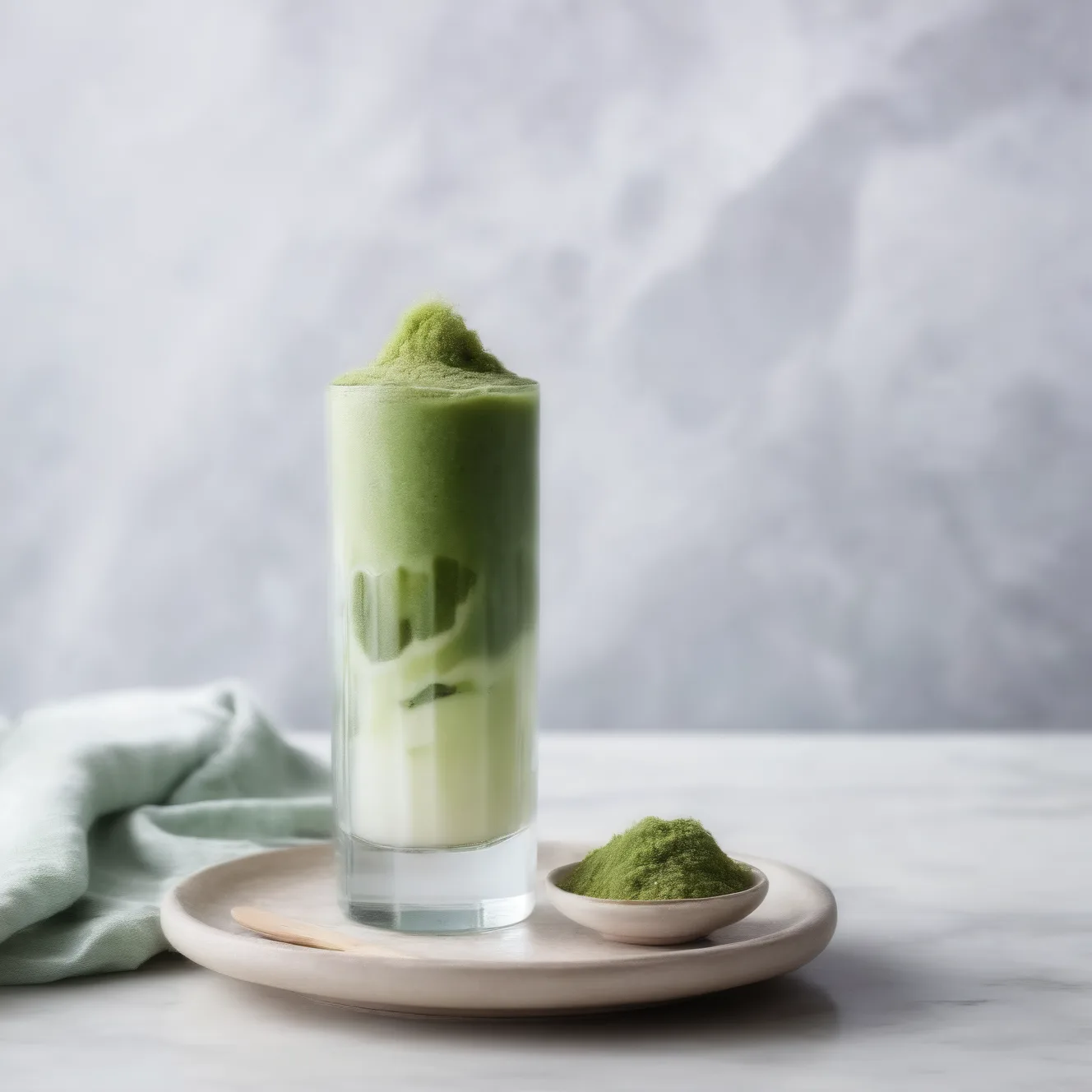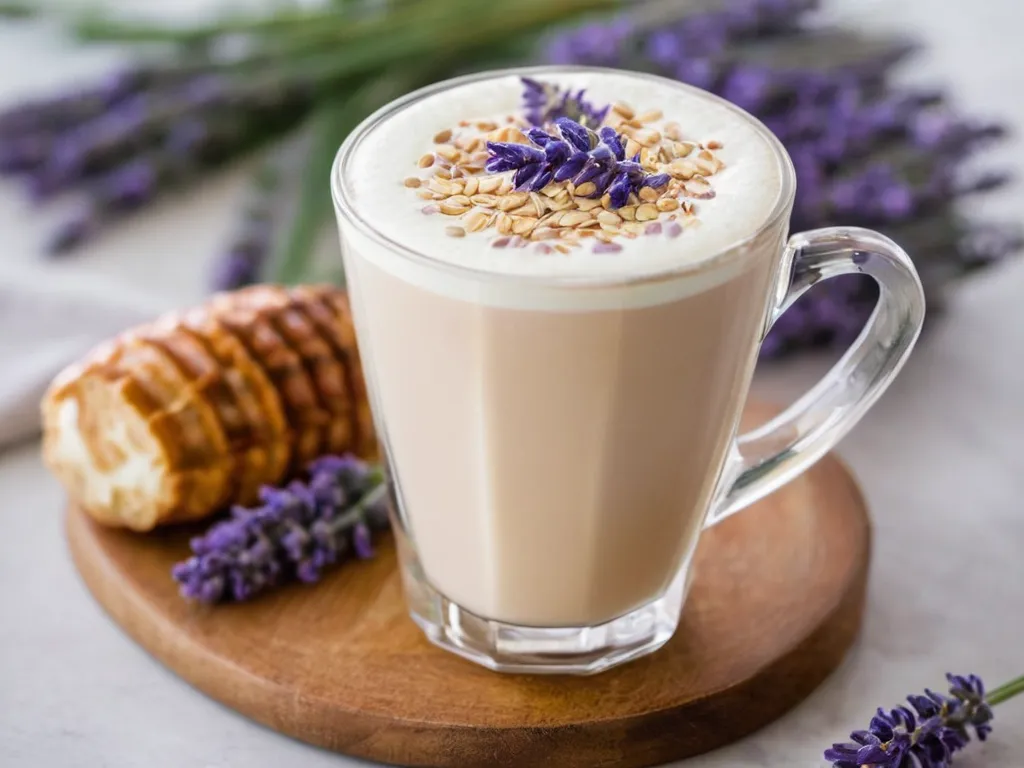
The lavender latte became TikTok’s defining “aesthetic coffee” moment — pale purple milk against white foam, impossibly pretty in a clear glass, and genuinely floral in a way that most flavored lattes are not. What made it travel so far: it also tastes as good as it looks.
The home version is meaningfully better than the coffee shop version. Starbucks’ seasonal lavender drink uses a flavoring powder to produce its pale purple color and lavender taste. Real culinary lavender steeped in homemade syrup produces a more complex, genuinely floral flavor that no powder replicates.
The technique has one non-negotiable rule, and everything else is adjustable.
TL;DR
Steep 2 tablespoons of culinary lavender in 1 cup each of sugar and water for exactly 10 minutes, then strain immediately. Use 1–1.5 tablespoons of syrup per drink in your frothed oat milk. The steep time controls everything — too short is weak, too long is soapy.
Home Version vs Starbucks: Quick Comparison
| Homemade lavender latte | Starbucks Lavender Oatmilk Latte | |
|---|---|---|
| Lavender source | Real culinary lavender steeped into syrup | Lavender flavoring powder (sugar, salt, natural lavender flavor) |
| Purple color from | Lavender-tinted milk | Carrot and black currant juice concentrate |
| Flavor | Complex, genuinely floral | Uniform, sweeter, single-note |
| Cost per drink | ~$1.20 (after one syrup batch) | $5.45–$6.25 (grande) |
| Availability | Year-round | Seasonal, typically March–May |
| Customization | Steep time, sweetener, milk all adjustable | Fixed recipe |
Why Lavender Goes Soapy — and How to Prevent It
Lavender contains two key aromatic compounds: linalool and linalyl acetate. At low concentrations, these register as pleasant, floral, and slightly sweet. At high concentrations — from over-steeping, using too much lavender, or boiling rather than simmering — they trigger taste receptors in a way that is chemically similar to soap. This is why a lavender latte that smells beautiful can taste like you accidentally swallowed dish soap.
The steep time is the single most important variable:
- 5 minutes: faint, delicate floral note — noticeable if you’re looking for it, disappears under strong espresso
- 10 minutes: assertive lavender flavor that stands up to oat milk and 2 shots of espresso
- 15+ minutes: medicinal, soapy bitterness that cannot be fixed after the fact
Steep at a low simmer, not a rolling boil. High heat accelerates the extraction of bitter compounds. If your syrup ever tastes soapy, make a new batch — there is no rescue for over-steeped lavender syrup.
Culinary Lavender: What It Is and Why It Matters
Culinary lavender means two things: the right variety, and the right growing practice.
Variety: English lavender (Lavandula angustifolia) has a sweeter, cleaner flavor profile than French (Lavandula stoechas) or Spanish lavender. French and Spanish varieties have more camphor and eucalyptus notes that read as medicinal, especially in a sweet drink. Most lavender sold as “culinary lavender” in the US is English lavender or a hybrid bred for the same sweet character.
Growing practice: Decorative lavender — the kind sold at craft stores and florists — is often sprayed with pesticide residues, floral preservatives, or fragrance compounds that are safe for display but not consumption. “Culinary grade” or “food grade” labeling means it was grown without these treatments and is safe to eat.
Where to find it: Anthony’s Organic Culinary Lavender, Frontier Co-op, and Starwest Botanicals are consistently reliable and widely available on Amazon. Whole Foods carries bulk culinary lavender in the spice section. If you grow your own English lavender, harvest the buds just before they fully open — that’s when the aromatic oil concentration peaks.
The Syrup: Step by Step
The syrup batch makes enough for 8–10 drinks, which brings the per-drink cost to about $1.20 — compared to $5.45–$6.25 for a Starbucks grande when it’s on the seasonal menu.
- Combine 1 cup granulated sugar, 1 cup water, and 2 tablespoons dried culinary lavender in a small saucepan.
- Stir over medium heat until the sugar fully dissolves.
- Reduce to a low simmer — not a boil — and steep for exactly 10 minutes. Set a timer.
- Strain immediately through a fine mesh sieve into a glass jar. Press lightly on the lavender buds to squeeze out the last syrup, but do not force it — the bitter material at the bottom of the buds stays there if you don’t press aggressively.
- Cool completely before sealing. Refrigerate for up to 2 weeks.
The syrup will be a light amber color with a mild lavender tint. The pale purple color in the finished drink comes from the lavender-tinted milk, not the syrup itself.
Milk Choice: Why Oat Milk Specifically
Most lavender latte recipes say “use your favorite milk,” which undersells how much this choice matters.
Barista-style oat milk is the right choice for this drink. Brands like Oatly Barista, Califia Farms Barista Blend, and Minor Figures contain added emulsifiers (rapeseed oil or sunflower lecithin) that stabilize microfoam — the dense, creamy foam that makes a latte feel like a latte rather than hot milk with bubbles. Regular oat milk frothed on a handheld frother produces thin, large-bubbled foam that collapses within minutes. Barista-style oat milk produces foam that holds long enough to drink.
Beyond texture: oat milk is naturally lightly sweet, which complements the lavender syrup without competing with it. The gentle grain flavor is neutral enough that the lavender reads clearly. Almond milk is thinner and produces a less vivid color contrast. Coconut milk has its own distinct flavor that competes with the lavender rather than supporting it. Full-fat dairy milk works well if you prefer it.
Building the Drink
Hot lavender latte:
- Froth 8 oz of barista-style oat milk until warm and creamy (150–155°F, or until steam appears and the volume roughly doubles).
- Stir 1–1.5 tablespoons of lavender syrup into the frothed milk — not into the espresso. This distributes the syrup evenly.
- Pour the lavender milk into a clear glass mug.
- Pull 2 shots of espresso and pour in last for a layered look, or stir to combine.
Iced lavender latte: Fill a tall glass with ice. Stir lavender syrup into 8 oz of cold oat milk. Add 2 shots of espresso over the top. For the TikTok layered look, pour the espresso slowly over the back of a spoon so it floats briefly before settling. Stir to combine before drinking.
No espresso machine: Brew a moka pot at full strength, use a Nespresso or pod machine, or make cold brew concentrate. A French press brewed double-strength (2 tablespoons of finely ground coffee per 4 oz of water, 4-minute steep) also works reasonably well. The lavender syrup pairs well with any strong coffee base.
Five Variations Worth Making
Honey lavender latte: Replace the granulated sugar in the syrup with honey — same 1:1 ratio (1 cup honey, 1 cup water, 2 tablespoons lavender), same 10-minute steep. The honey adds a light floral sweetness that doubles down on the lavender’s character. Use a mild honey (clover or acacia) rather than buckwheat, which would overpower the lavender.
Earl Grey lavender latte: Add 1 Earl Grey tea bag to the syrup while it steeps. The bergamot in Earl Grey and the linalool in lavender are both citrus-floral compounds that reinforce each other — the combined aroma is more complex than either alone. This is the variation most likely to prompt the “what IS this” reaction from people you serve it to.
Brown sugar lavender latte: Use brown sugar in place of granulated for the syrup. The molasses in brown sugar adds a mild caramel undertone that deepens the drink without competing with the lavender. Pairs especially well as an iced version — see also the brown sugar oat milk shaken espresso for the espresso base technique.
Lavender honey matcha: Skip the espresso entirely and use matcha as the base. Prepare matcha paste per the iced matcha latte technique (1.5 tsp matcha + 2 oz 175°F water + whisk until smooth). Stir 1 tablespoon of honey lavender syrup into 8 oz cold oat milk, add ice, and layer the matcha over the top. Starbucks sells an Iced Lavender Cream Oatmilk Matcha Latte seasonally — this is a better version of that. See also our copycat Starbucks iced matcha latte for the full technique.
Lavender vanilla sweet cream latte: Pull 2 shots of espresso over ice. In a small jar, combine 3 tablespoons of barista-style oat milk, 1 tablespoon of lavender syrup, and 1/4 teaspoon of vanilla extract. Froth until thick and creamy. Float the lavender vanilla foam over the iced espresso — same technique as the copycat Starbucks vanilla sweet cream. The lavender and vanilla are a natural pairing: both are soft, floral-adjacent, and sweeter than their strength suggests.
Common Mistakes
Using decorative lavender. The lavender in craft stores and florist buckets is often treated with pesticide residues or fragrance compounds that make it unsafe to eat. Always verify “culinary grade” or “food grade” on the label before buying.
Steeping too long. Ten minutes is the ceiling for good lavender syrup. Set a timer. The difference between 10 and 15 minutes is the difference between floral and soapy — it happens faster than you’d expect.
Adding the syrup to the espresso instead of the milk. Syrup added to espresso sinks and pools at the bottom of the cup, producing an inconsistent drink where the first sips taste too sweet and the last taste unsweetened. Stir the syrup into the milk first.
Using too much syrup on the first try. Lavender syrup potency varies significantly between lavender batches, steep time, and personal taste calibration. Start with 1 tablespoon, taste, and adjust to 1.5 if you want it stronger. More than 2 tablespoons per drink almost always reads as too much.
Frothing with regular oat milk. Regular oat milk does not have the added emulsifiers in barista-style versions and produces watery, quick-collapsing foam. The texture difference in the finished drink is significant.
Storing the Syrup
Refrigerate the lavender syrup in a sealed glass jar. It keeps for 2 weeks without issue — the high sugar concentration prevents spoilage. Signs it has turned: visible mold, cloudiness that develops over time (cloudiness right after straining is fine), or an off smell.
A double batch (2 cups sugar, 2 cups water, 4 tablespoons lavender) fills a standard 16-oz mason jar and gives you 16–20 drinks’ worth of syrup — roughly three weeks of daily lavender lattes for the cost of one coffee shop visit.