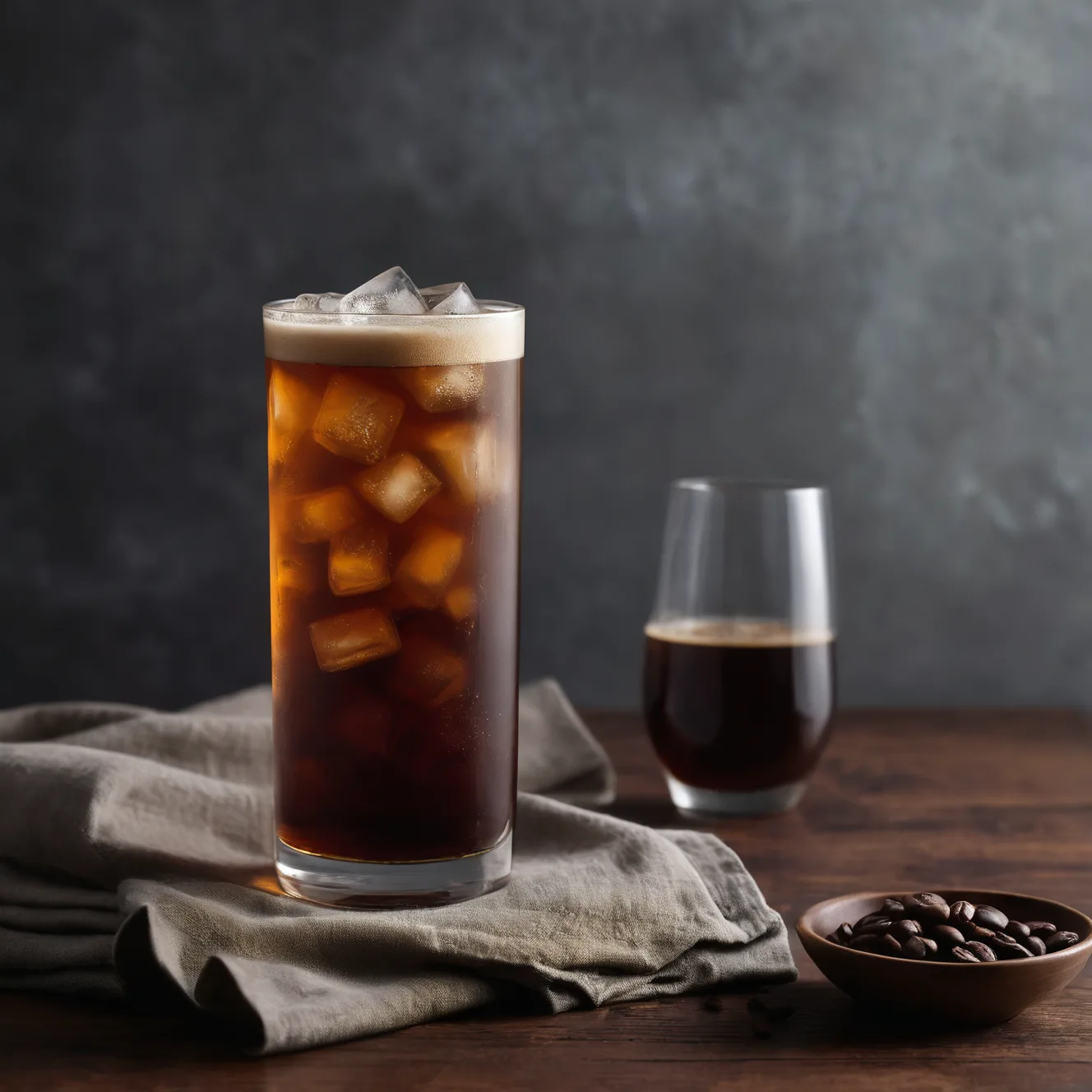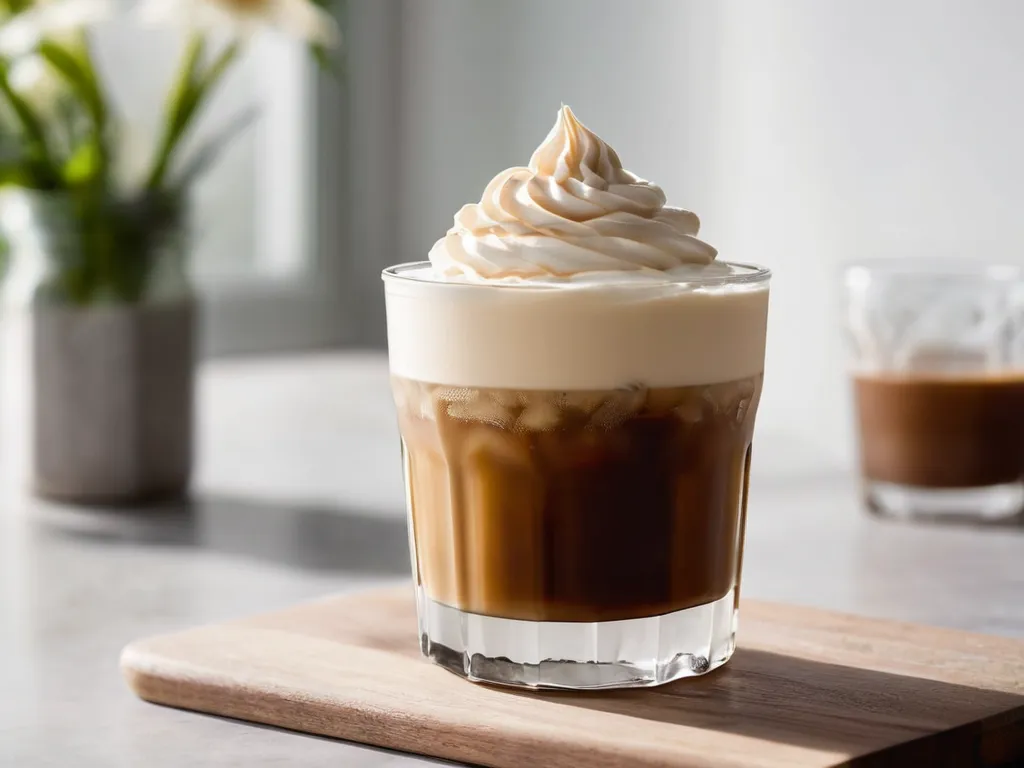
Copycat Starbucks Vanilla Sweet Cream Cold Brew
The short version: Fill a glass with ice, pour in cold brew, float a slow ribbon of vanilla sweet cream over the back of a spoon. That’s it. The whole recipe is three components — cold brew coffee, a simple cream blend, and ice — and the only technique is the float, which takes about 30 seconds to learn.
At Starbucks, a grande runs $6–7 (2026 prices). At home, once you’ve made a batch of cold brew and a jar of vanilla sweet cream, each drink costs under $1 in ingredients and takes 3 minutes to assemble.
What’s Actually in the Drink
A Starbucks Vanilla Sweet Cream Cold Brew has three components:
1. Cold brew coffee — Starbucks uses their Nariño 70 blend steeped for approximately 20 hours. It’s markedly smoother and less acidic than hot-brewed iced coffee, which is why cold brew works as a base for this drink where an acidic iced coffee would clash with the cream layer.
2. Vanilla sweet cream — heavy cream + 2% milk + vanilla syrup, pourable not whipped. This is the single most misunderstood element in every copycat recipe: the sweet cream is not whipped, has no stiff peaks, and should flow in a ribbon, not plop. Starbucks’ “cold foam” drinks use a whipped version of this same cream; the VSCCB uses it unwhipped.
3. Ice — a full cup, to the rim. Cold brew is served very cold; a half-filled glass means a warm, diluted drink within a few minutes.
By Size: Approximate Starbucks Build
| Size | Cold Brew | Sweet Cream | Vanilla Syrup in Cream |
|---|---|---|---|
| Tall (12 oz) | 5 oz | 2 oz | ~2 pumps |
| Grande (16 oz) | 7 oz | 2.5 oz | ~4 pumps |
| Venti (24 oz) | 11 oz | 3 oz | ~5 pumps |
All sweetness in this drink comes from the cream — there is no syrup added directly to the cold brew. If you find the standard ratio too sweet, the fix is reducing vanilla syrup in your cream batch rather than adding more cold brew.
A note on calories. Starbucks’ published grande is 110 calories (6g fat, 14g sugar). The homemade version here lands closer to 220 because a hand pour of sweet cream is more generous than Starbucks’ measured 2.5 oz. To match the official number, pour 2 tablespoons of sweet cream per drink instead of 3–4 — everything else stays the same.
Making Cold Brew at Home
Cold brew is not complicated, but it needs time. The ground coffee steeps in cold water for 12–24 hours; the process is passive.
Grind: Coarse — similar to what you’d use for a French press, roughly the size of raw sugar granules. Too fine a grind produces bitter, muddy cold brew. Pre-ground coffee sold for standard drip makers (medium grind) will work but produces a slightly sharper result.
Ratio: 1 cup ground coffee to 4 cups cold water makes ready-to-drink cold brew with similar strength to what Starbucks pours. If you want a concentrate to dilute at serving time, go 1:3 (then add equal parts water when you pour it).
Time: 12 hours produces a mild, smooth cold brew. 16–18 hours is the sweet spot for most tastes — enough extraction for rich coffee flavor without bitterness. Past 24 hours, bitterness compounds start building.
Strain carefully: A coarse-mesh strainer alone leaves fine coffee particles that make the brew taste gritty and turbid. Line it with a paper coffee filter (not cloth, which absorbs flavor) and let it drip slowly. The result should be clear dark brown, not opaque.
Storage: Cold brew keeps 7–14 days in the fridge in a sealed container. After two weeks, subtle bitterness develops from continued cold extraction.
Why Cold Brew Works Better Than Iced Hot Coffee
Cold brew has measurably lower titratable acidity than hot-brewed coffee cooled over ice. Hot water extraction triggers chemical reactions in the grounds that cold water does not — particularly the thermal breakdown of chlorogenic acids into sharper quinic and caffeic acids, which contribute to the edge in regular iced coffee. Cold extraction skips those thermal reactions. The result is a smoother, mellower base that doesn’t fight the vanilla cream flavor. (The “70% less acid” figure that circulates widely is from one study measuring specific acid types — actual acidity reduction varies by bean and brew ratio, but the smoother character is real and consistently observed.)
For this drink specifically, that smoothness matters: acidic iced coffee and a cream float creates a slightly curdled-tasting combination. Cold brew and cream coexist cleanly.
The Float: Why It Works
The float is mostly about the pour, with a small assist from density. Heavy cream is slightly less dense than water thanks to its fat content — roughly 0.99 g/mL against cold brew’s ~1.00–1.01 g/mL — but that gap is small, and the 2% milk and vanilla syrup in the blend narrow it further. The bigger factor is technique: pouring gently over the back of a spoon spreads the cream across the surface in a thin sheet instead of letting it punch through in one spot and sink.
Pour slowly and the cream holds as a visible layer for 30–60 seconds before it begins to blend in at the edges. That’s the intended experience — you drink it through the layers, which means the first sips are cold brew with a cream finish and the later sips blend together.
If your cream sinks rather than floats: it’s likely too thin (not enough heavy cream) or you’re pouring too fast. The ratio of heavy cream to 2% milk matters — go heavier on the cream and the float holds better.
Getting the Sweet Cream Texture Right
The cream should be pourable but slightly thicker than plain milk — not whipped, not stiff, not foamy. It should flow off a spoon in a thin ribbon.
Common mistakes:
- Over-mixing: Whisking too vigorously introduces air and starts to whip the cream. A 10-second gentle stir or shake is enough.
- Wrong ratio: Too much 2% milk makes it too thin and it sinks. Too little makes it grip the glass and not float cleanly. The 2:1 cream-to-milk ratio is the right balance.
- Adding ingredients cold from the fridge: Vanilla syrup straight from the fridge is viscous; let it come to room temperature before mixing so it blends evenly.
- Waiting too long after mixing: Sweet cream starts to separate after a few minutes at room temperature. Mix it just before serving, or refrigerate it and stir again right before pouring.
Customizations
Cold foam version: Blend the vanilla sweet cream in a French press or frother until it holds soft peaks. Spoon it on top rather than pouring — this is Starbucks’ “cold foam” product, which some people prefer for the thicker texture and longer float. It doesn’t blend in the way the pourable sweet cream does; you spoon it through as you drink.
Salted caramel sweet cream: Replace vanilla syrup with caramel syrup + ¼ teaspoon of fine sea salt per cup of cream. Float it on cold brew or iced espresso.
Vanilla sweet cream iced latte: Pull 2 shots of espresso over ice instead of using cold brew. Top with vanilla sweet cream the same way. Similar sweetness, slightly more bitter coffee note.
Lighter sweet cream: Use half-and-half (10.5% fat) instead of heavy cream + 2% milk. It floats less reliably but still produces a recognizable result with roughly half the fat per serving.
Extra strong: Use cold brew concentrate (1:3 ratio) instead of ready-to-drink, without diluting it. The coffee flavor is more prominent relative to the sweet cream — better for people who find the standard drink too sweet.
Storage
- Cold brew: 7–14 days refrigerated in a sealed container
- Vanilla sweet cream: 3–5 days refrigerated, stir before each use; doesn’t hold much longer because the cream starts to lose its pourable texture and develop off notes after 5 days
- Vanilla syrup: 4 weeks refrigerated in a sealed jar
Cold brew is ideal to make in a weekly batch (1 cup grounds to 4 cups water = about 4 generous drinks). Sweet cream is better made in 3-day batches since it doesn’t hold as long.
More Starbucks Drinks to Make at Home
- Starbucks Cold Brew — the concentrated cold brew base for this drink; detailed steep ratio, strain guide, and storage
- Starbucks Iced Brown Sugar Oat Milk Shaken Espresso — the espresso version of this sweet-cream-forward format; uses the shaking technique instead of a float
- Brown Sugar Oatmilk Shaken Espresso vs. Vanilla Sweet Cream Cold Brew — full side-by-side comparison: caffeine, calories, dairy, and flavor differences
- Copycat Starbucks Caramel Macchiato — layered vanilla syrup, espresso, and caramel drizzle; the drink most often confused with this one
- Copycat Starbucks Iced Latte — simpler espresso + milk over ice; a good base to add vanilla sweet cream as a float
- Copycat Starbucks Chai Latte — the spiced tea latte version; add vanilla sweet cream on top for an iced dirty chai variant
See all Starbucks copycat recipes →