Pin It

Viral TikTok Frozen Honey Jelly

Viral TikTok Frozen Honey Jelly
Jump to Recipe
Prep 5 min Cook 0 min Serves 8
Quick answer: Fill a clean plastic squeeze bottle with 1 cup of honey. Add 2 tablespoons of corn syrup for a chewier texture (optional). Freeze upright for at least 3–4 hours β€” honey never goes fully solid in a standard freezer (it would need to reach -42Β°C, far colder than any home freezer). Squeeze a tube directly into your mouth or onto a plate, bite off a chunk. Limit to 2–3 tablespoons per sitting β€” the fructose load from large amounts causes real stomach distress. Do not give to children under 12 months due to botulism risk.
Viral TikTok Frozen Honey Jelly

Viral TikTok Frozen Honey Jelly

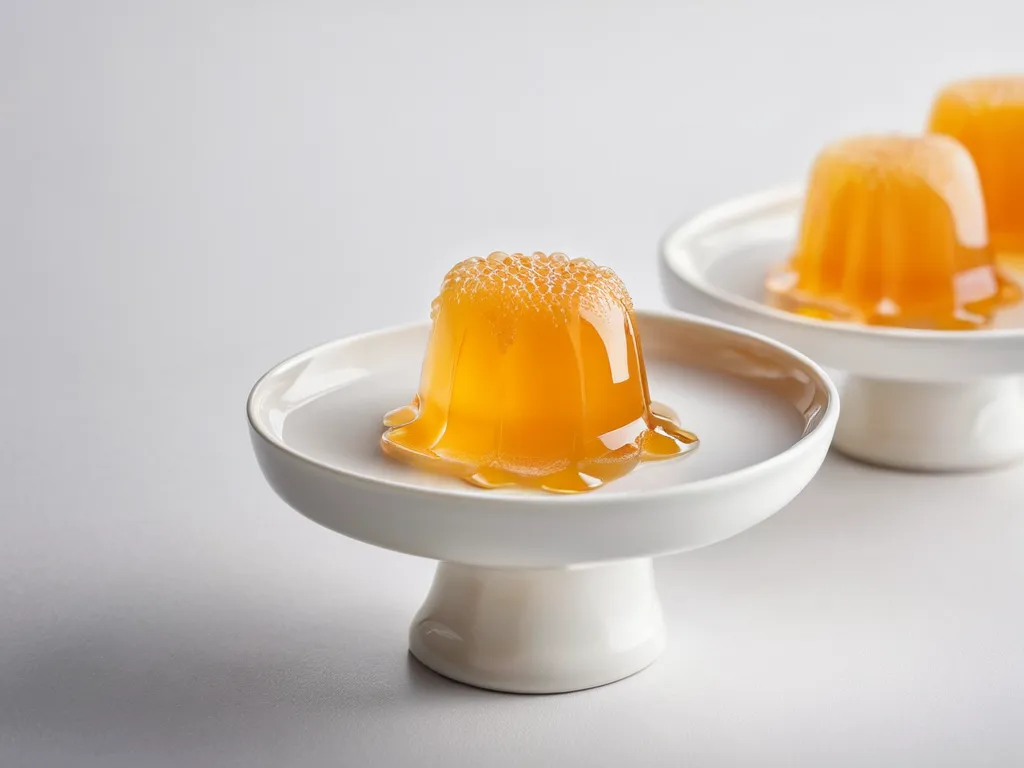
Honey frozen in a squeeze bottle until it turns into a chewy, jelly-like candy. What the science actually is, how long to freeze it, the corn syrup upgrade, and the safety facts most videos skip.

Easy Prep: 5 min Cook: 0 min Total: 5 min8 servings ~$1.40/serving
Prep5 min
Cook0 min
Total5 min
Servings
8
At home~$1.40/serving
vs
Restaurant~$6.30/serving
You save ~78%

Ingredients

Instructions

💡
Pro tip: This recipe tastes even better the next day. The flavors need time to meld together in the fridge.
❄️
Storage: Keeps in an airtight container in the fridge for up to 2 weeks. Freezer-friendly for up to 3 months.
~200-400 cal/serving

The Story Behind the Recipe

In the summer of 2021, TikTok discovered that if you put honey in a squeeze bottle and freeze it, it doesn’t become a solid block β€” it becomes a thick, chewy, jelly-like tube that you can bite through like candy. The video of the squeeze was mesmerizing. The texture was genuinely surprising. And within weeks, hundreds of millions of people had watched someone do it.

The concept is so simple it barely qualifies as a recipe. But there’s actual science behind why it works, a real technique difference between the good and the mediocre version, and a safety fact that most of the trend videos completely skipped over.

TL;DR: Pour honey into a plastic squeeze bottle. Add 2 tablespoons of corn syrup if you want a chewier, taffy-like texture (worth doing). Freeze at least 3–4 hours β€” the 2-hour check many videos suggest is too early. Squeeze directly into your mouth. Limit yourself to 2–3 tablespoons per sitting β€” the fructose load from more than that causes genuine stomach distress. Do not give honey of any kind to children under 12 months.

Why Honey Turns Into Jelly Instead of Ice

This is the part that surprises everyone.

Honey is approximately 80% sugar β€” primarily fructose and glucose β€” with only about 17% water. In most foods, the water is what freezes. Ice cream freezes because it contains milk and cream, which are mostly water. A smoothie freezes solid because it’s mostly fruit juice and water.

Honey has almost none of that. With only 17% water, there are very few water molecules available to form ice crystals. The enormous amount of dissolved sugar in the remaining 83% acts as a natural antifreeze, lowering the effective freezing point well below what a home freezer can reach. At standard home freezer temperature (-18Β°C / 0Β°F), honey becomes a supercooled supersaturated sugar solution β€” hundreds of times thicker than room-temperature honey, but not frozen solid.

For honey to reach a true brittle, glassy solid state, it would need to reach approximately -42Β°C to -44Β°C (-44Β°F to -47Β°F) β€” far colder than any home freezer can produce. What you’re squeezing out of that bottle is not defrosted honey. It is honey that never actually froze β€” just chilled down into a dramatically thicker, slower-moving version of itself. The texture resembles a soft gummy candy or taffy not because the honey has been transformed, but because this is just what an extremely cold, extremely viscous liquid feels like when you bite it.

The Corn Syrup Upgrade (Worth Doing)

Plain frozen honey works, but it can feel one-note β€” very sweet, a bit dense, without much interesting chew.

Adding 2 tablespoons of light corn syrup per cup of honey changes the texture noticeably. Corn syrup is primarily composed of longer-chain glucose polymers (maltose, maltotriose, and even longer chains) rather than the simple sugars in honey. These long molecules don’t pack as tightly when cold, giving the mixture a stretchier, more elastic quality β€” closer to a frozen gummy bear than chilled honey. The difference is real and most people prefer it.

The ratio: 2 tablespoons corn syrup per cup of honey. You can go up to 4 tablespoons for even more stretch; beyond that, the corn syrup flavor starts to come through. Light corn syrup works better than dark corn syrup, which has a strong molasses flavor that competes with the honey.

What Honey to Use

Lighter honeys (clover, wildflower, acacia) produce a clean, mild sweetness when frozen and show food coloring vividly. These are the most popular choice for the trend.

Darker honeys (buckwheat, raw local wildflower, orange blossom) have more complex flavor β€” slightly tangy, more floral, with a depth that the lighter varieties lack. The intensity that can feel overpowering at room temperature becomes more interesting when cold. If you want a frozen honey that actually tastes like something beyond just β€œsweet,” go darker.

Raw honey freezes to a slightly different texture because it contains natural pollen, enzymes, and trace beeswax particles. The result is a bit more opaque and slightly grittier than processed honey β€” some people prefer this, some don’t. Raw honey is fine either way.

Avoid crystallized or very thick honey β€” it’s difficult to pour into the bottle and the finished texture can be grainy.

The Freeze Time Guide
Time in FreezerTextureVerdict
1–2 hoursStill flows quickly, close to room tempNot yet β€” too loose
3 hoursThick, jelly-like, squeezes in a slow ropeMinimum viable
4–6 hoursFirmer, more resistance, satisfying chewThe sweet spot
8 hoursNoticeably firm, strong squeeze neededStill good; try warming the bottle 30 sec
24 hoursVery firm β€” warm the bottle firstRun under warm water 30 sec
1 week+Hard, needs 3–5 min at room tempStill edible, but more planning
Flavoring and Color Options

Flavor additions (add before freezing):

  • Vanilla extract β€” 1/4 tsp per cup; adds a warm, rounded sweetness
  • Strawberry extract β€” 1/4 tsp; pairs well with pink food coloring
  • Peppermint extract β€” 1/8 tsp only; very potent and easy to overdo
  • Lemon or orange zest β€” 1/2 tsp of finely grated zest; adds citrus brightness without competing with the honey
  • Cinnamon β€” 1/8 tsp; makes it taste like a chewy cinnamon candy

Food coloring technique: Fill the bottle one-third full, add 2–3 drops of one color, and gently squeeze the bottle a few times. Add more honey with a different color. The layers won’t blend completely β€” they’ll stay as distinct bands in the bottle and create a swirled effect when squeezed. Red/orange layers with plain honey look like hot lava. Blue/purple layers with pink make a sunset effect.

The layered color method:

  1. Mix food coloring into small portions of honey in separate cups
  2. Pour the first color into the bottle β€” freeze 30 minutes until slightly set
  3. Add second color carefully β€” it will sit on top
  4. Freeze the remaining 1.5–2 hours until fully set
The Safety Facts Most TikToks Skip

Adults: portion size matters. Multiple TikTokers reported stomach aches and diarrhea after eating large amounts of frozen honey β€” a quarter cup or more at one sitting. This is real and predictable. Fructose is absorbed in the small intestine through a separate, slower pathway than glucose. Consume too much fructose too quickly and the intestine can’t absorb it fast enough β€” the unabsorbed fructose draws water into the intestine through osmosis and is fermented by gut bacteria, causing gas, bloating, cramping, and sometimes diarrhea. Two to three tablespoons per sitting is fine for most healthy adults. More than that is pushing the limit.

Children under 12 months: do not use any honey at all. Honey can contain Clostridium botulinum spores. In adults and children over 1 year, stomach acid destroys these spores harmlessly. In infants under 12 months, the digestive system is not yet developed enough to neutralize the spores β€” they can germinate and produce botulinum toxin, causing infant botulism, a rare but serious illness. This applies to all honey regardless of processing: raw honey, pasteurized commercial honey, honey in cooked recipes. No honey of any kind for babies under one year.

Children ages 1 and older: small amounts of honey are fine. Treat it as you would any high-sugar candy β€” a small amount for a novelty experience, not a snack.

Variations Worth Trying

Rainbow layers: Fill the bottle in thirds with three different colors of honey, with 30-minute freezes between layers. The result is a striped tube when squeezed.

Hot honey: Warm regular honey gently with 1–2 teaspoons of red pepper flakes until fragrant (about 5 minutes), then strain and cool completely before pouring into the bottle. The heat hits after the sweetness β€” works best with plain honey without corn syrup.

Lemon honey: Stir in 1/2 teaspoon finely grated lemon zest and 1 drop of yellow food coloring. The citrus oils from the zest add a floral-bitter note that cuts the sweetness significantly.

Cinnamon honey: Add 1/8 teaspoon ground cinnamon before freezing. At freezer temperature, the cinnamon flavor concentrates into something that tastes like a soft chewy cinnamon candy.

The TikTok Context

The frozen honey trend originated with TikToker Dave Ramirez in early July 2021. His video of biting into a large, semi-solid mass of honey squeezed from a water bottle β€” calling it β€œpretty refreshing” β€” set off one of the summer’s fastest-spreading food trends. Within weeks, hundreds of creators made their own versions, and the combination of summer heat and novelty-hungry home cooking made it spread rapidly.

The #FrozenHoney hashtag accumulated over 826 million views by late 2021. The trend evolved in phases: plain honey first, then corn syrup additions, then layered colors, then flavored versions using Kool-Aid powder, Jell-O mix, drink powders, and extracts. A parallel β€œfrozen corn syrup” trend emerged around the same time β€” corn syrup alone is clear and flavor-neutral, easier to dye, and some creators preferred its texture.

By August and September 2021, food and health media began covering the stomach ache reports (Vice, Newsweek, TODAY, Fox News all ran pieces about GI distress from overconsumption), which generated a second wave of content about why eating too much frozen honey makes you sick.

The core appeal β€” an unexpectedly satisfying texture from the simplest possible process β€” is what made it work. You explain it in one sentence. Anyone can try it immediately. The result is genuinely surprising if you’ve never done it.

Cost Breakdown
VersionCost
1 cup clover honey (store brand)$3–5
1 cup raw local honey$8–15
Corn syrup addition (2 tbsp)~$0.20
Food coloring + extract~$0.50 if buying new bottles
Per serving (2 tbsp, 8 servings)~$0.40–$1.50

The economics are part of the trend’s appeal β€” this is effectively the cheapest possible candy you can make at home, using something most people already have in the pantry.

If frozen honey sparked your interest in TikTok novelty treats, frozen yogurt bark is a direct sibling β€” another no-cook frozen treat with more nutrition flexibility. Crockpot candy and gummy bear candy cover the sweet-treat end of the viral recipe catalog; Oreo truffles are a reliable crowd-pleaser that require no freezer and minimal skill.

Nutrition Facts

Per serving (8 servings)
Calories128
Total Fat0g
Total Carbs35g
Dietary Fiber0g
Sugars34g
Protein0g
Sodium2mg

* Estimated values based on standard recipe preparation. Actual values may vary.

πŸ₯—

Make It Healthier

Love Viral TikTok Frozen Honey Jelly but want a lighter version? Try these simple swaps:

  • βœ“Limit servings to 2–3 tablespoons maximum β€” this is a novelty treat, not a snack food. The sugar load from a quarter cup or more causes real GI distress.
  • βœ“Use raw local honey if available β€” it retains more pollen, enzymes, and trace minerals than processed commercial honey, and the more complex flavor (floral, slightly tangy) actually tastes better frozen.
  • βœ“Add lemon zest or a small pinch of flaky salt before freezing β€” both enhance the honey's natural flavor without adding sugar.
  • βœ“Serve a small portion alongside fruit rather than eating straight from the bottle β€” the fruit adds fiber and water, which slows the sugar absorption slightly.

Equipment You'll Need

Plastic squeeze bottle

Must be freezer-safe β€” standard squeezable honey bear bottles or clean condiment bottles work perfectly. Glass will crack in the freezer.

Freezer space

Stand the bottle upright so the honey settles evenly before freezing

Frequently Asked Questions

Why does frozen honey have a jelly-like texture instead of turning solid?

Honey is roughly 80% sugar (mostly fructose and glucose) with only about 17% water. That extremely low water content is the key: water is what freezes. With so little water available, there are very few molecules to form ice crystals. The dissolved sugars also disrupt ice crystal lattice formation β€” a colligative property that lowers the effective freezing point of the whole mixture. In a standard home freezer (-18Β°C / 0Β°F), honey becomes extremely viscous β€” hundreds of times thicker than room-temperature honey β€” but it does not solidify. For honey to reach a true brittle, glass-like solid state requires approximately -42Β°C to -44Β°C (-44Β°F to -47Β°F), far colder than any home freezer can achieve. What you're experiencing is a supercooled supersaturated sugar solution, not a frozen solid. The result: that chewy, slow-moving, thick-rope texture.

Is it safe to eat frozen honey? Can you eat too much?

In small portions (1–3 tablespoons), frozen honey is safe for most healthy adults and older children. The problem is the fructose load in larger amounts. Fructose is absorbed in the small intestine via a separate, slower pathway than glucose. When you consume large amounts quickly β€” as many people did during this trend, eating a quarter cup or more at once β€” the intestine can't absorb fructose fast enough. The unabsorbed fructose draws water into the intestine through osmosis and is fermented by gut bacteria, causing gas, bloating, cramping, and sometimes diarrhea. Numerous TikTokers reported stomach aches after eating large amounts. The fix: treat it as a candy, not a food β€” 2–3 tablespoons maximum per sitting.

Can children eat frozen honey?

Do not give honey in any form β€” fresh, frozen, or cooked β€” to children under 12 months. Honey can contain Clostridium botulinum spores. In adults and older children, stomach acid destroys these spores harmlessly. In infants under one year, the digestive system is not yet fully developed and the spores can germinate, producing botulinum toxin and causing infant botulism, a serious illness. For children ages 1 and older, plain honey is safe and frozen honey is fine in very small amounts (a lick off a finger rather than a full serving).

What type of honey works best for frozen honey?

Lighter honeys (clover, wildflower, acacia) produce a cleaner, milder sweetness when frozen and show food coloring more vibrantly. Darker honeys (buckwheat, manuka, raw local) have a more complex, slightly tangy flavor that is actually more interesting once frozen β€” the intensity that can feel overpowering at room temperature becomes more nuanced at cold temperature. Raw honey also freezes to a slightly different texture than processed honey because it contains natural pollen, enzymes, and occasional beeswax traces that affect viscosity. Either works; the main practical consideration is avoiding crystallized or very thick honey, which is hard to pour into the bottle.

How does the corn syrup variation change the texture?

Light corn syrup is primarily long-chain glucose polymers (maltose, maltotriose, longer chains) rather than the simple fructose/glucose of honey. These longer molecules don't pack together as tightly when cold, giving the frozen mixture a more elastic, stretchy, taffy-like quality β€” closer to chewing on a frozen gummy bear than eating dense chilled honey. The ratio of 2 tablespoons corn syrup per cup of honey is the most common and adds noticeable chew without making the flavor noticeably different. You can go up to 4 tablespoons for an even stretchier result; more than that and the mixture starts to taste more syrup than honey.

How long does frozen honey stay at the right texture?

Three to four hours in the freezer is the minimum for the satisfying chewy texture most people are after. At 3 hours, honey is thick and jelly-like; at 6–8 hours, it has more resistance β€” a firmer, more taffy-like chew that many people prefer. After 24 hours it becomes quite hard and may require warming; after a week, it needs 3–5 minutes at room temperature. None of this makes it inedible β€” it's just a harder squeeze. The bottle keeps indefinitely in the freezer; honey's extremely low moisture content means it doesn't grow mold or spoil. If it gets too hard, run warm tap water over the outside of the bottle for 30 seconds and it softens quickly.

Why did frozen honey go viral on TikTok?

TikToker Dave Ramirez sparked the trend in early July 2021 by posting a video of himself biting into frozen honey from a water bottle. Three elements drove mass spread: the texture surprise (everyone expects frozen honey to be a solid block, so the jelly-like rope that squeezes out produces a genuine reaction), the visual (thick glistening honey slowly extruding from a squeeze bottle is hypnotically satisfying β€” partly ASMR-quality video), and the simplicity (honey plus a freezer, nothing else required, barrier to entry near zero). The #FrozenHoney hashtag accumulated over 826 million views by the end of 2021.

Love this recipe? Share it!

Shop the tools

The right tools make all the difference. We earn a small commission if you buy through these links β€” at no extra cost to you.

Free PDF: our 12 most-wanted copycat recipes β€” instant download.

Ratings & Reviews

β€”
No ratings yet

Rate this recipe

Click a star to rate

Leave a Review

0/500

CS

Copycat Spices Test Kitchen

Every recipe on Copycat Spices is developed and tested in our home test kitchen. We reverse-engineer beloved restaurant dishes and refine each one until the flavors and the instructions work reliably for home cooks of all skill levels.

Learn more about our mission →