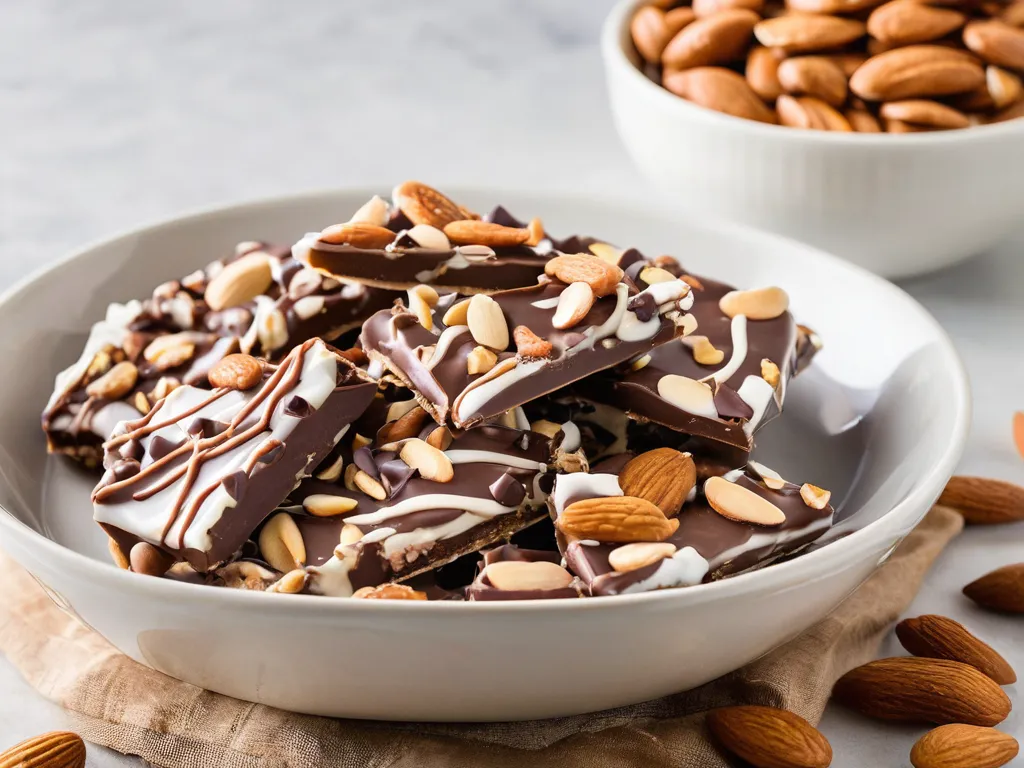
Crockpot Candy
TL;DR: Layer white almond bark, semisweet chips, and milk chocolate chips in a slow cooker, cook on low for 2 hours without touching it, stir in peanuts and pretzels, and drop into clusters on parchment paper. One batch makes about 48 clusters — roughly 3 pounds of chocolate candy for approximately $12 to $15 in ingredients. The technique is foolproof because almond bark (a compound coating that uses vegetable fat instead of cocoa butter) melts reliably in a slow cooker without tempering or seizing.
The recipe’s roots trace back to Trisha Yearwood, who published a version in her 2010 cookbook Home Cooking with Trisha Yearwood — a recipe she got from a cousin. It went annual-viral on social media from around 2019 onward, particularly on TikTok during the holiday season, where the visual payoff of chocolate-coated nuts dropping into cupcake liners is excellent content and the big-batch yield makes it feel like a special achievement for minimal work.
The reason it keeps going viral is the same reason it works: it democratizes candy-making. Professional chocolate candy requires tempering, precise temperature control, and skill. This recipe deliberately sidesteps all of that.
TL;DR
- Almond bark on the bottom, then chocolate chips, then peanuts last
- Low heat, 1.5 to 2 hours, do not stir or lift the lid
- Add vanilla extract and peanuts only after the chocolate is fully melted
- Pretzels go in last, just before dropping — preserves their crunch
- Set at room temperature (1–2 hours) or refrigerator (30 min) on parchment
- Yield: ~48 pieces from one batch; stores 1 week at room temp, 1 month refrigerated
Why Almond Bark and Not More Chocolate
The central question in crockpot candy: why does every recipe call for white almond bark? Why not just use all chocolate chips?
The answer is food science. Almond bark is a compound coating, not chocolate. The primary difference is the fat source:
- Real chocolate (dark, milk, white): uses cocoa butter as its fat. Cocoa butter is a crystalline fat that requires careful temperature management (tempering) to set into a stable, glossy, snapping form. Without tempering, real chocolate can bloom (whitish film), remain soft, or have an uneven texture.
- Almond bark / compound coating: uses hydrogenated vegetable oil (usually palm kernel oil, coconut oil, or a blend) as its fat instead of cocoa butter. Vegetable-fat coatings melt smoothly at low, consistent temperatures without requiring precise crystal formation. They set at room temperature reliably and don’t need tempering.
| Property | Real chocolate (cocoa butter) | Almond bark / compound coating |
|---|---|---|
| Fat source | Cocoa butter | Palm kernel, palm, or coconut oil |
| Needs tempering for a clean snap? | Yes | No |
| Melts cleanly in a slow cooker? | Risky — can bloom or set unevenly | Yes — forgiving across a wide temperature range |
| Seizes when moisture hits it? | Yes, easily | Largely moisture-tolerant |
| Sets firm at room temperature? | Only if tempered | Yes, reliably |
This difference matters critically in a slow cooker. A slow cooker environment has three properties that are problematic for tempering real chocolate: (1) low heat that fluctuates slightly, (2) a humid, enclosed environment where condensation can form on the lid and drip back into the chocolate, and (3) no way to control the cooling rate. For a compound coating like almond bark, none of these things matter — vegetable fats are forgiving across a wide temperature range and don’t seize from small amounts of moisture.
The semisweet and milk chocolate chips in the recipe supply flavor. The almond bark supplies the structural foundation that makes the candy work without a candy thermometer.
CANDIQUIK vs. standard store-brand almond bark: CANDIQUIK (one of the most common name brands, sold as a vanilla coating) and generic white almond bark are built the same way — sugar, palm kernel and palm oil, milk powder, soy lecithin, and vanilla, with no cocoa butter. In practice both melt and set identically in a slow cooker, so buy on price. The one thing to check on the label is that the fat is a vegetable oil (palm kernel, palm, or coconut), which confirms it is a true compound coating and not real white chocolate.
White chocolate is not a substitute for white almond bark. Real white chocolate (20%+ cocoa butter per FDA definition) can seize in the slow cooker’s humid environment and may not set as firmly at room temperature. If you can’t find almond bark, use Wilton Candy Melts or another candy coating product — these are also compound coatings.
The No-Stir Rule Explained
Every crockpot candy recipe says not to stir for the first 1.5 to 2 hours. The instruction feels counterintuitive — you’d normally stir melting chocolate to prevent burning. Here, you don’t, and here’s why:
The layering creates a heat shield. The almond bark on the bottom of the slow cooker melts first because it’s in direct contact with the heated walls. As it melts, it forms a liquid pool around the base that insulates the chocolate chips sitting above it from direct contact with the hot sides. If you stir the mixture before it’s fully melted, you break this insulating layer and drag raw chocolate chips into contact with the hot walls, which is when scorching can happen.
The lid manages humidity and temperature. Slow cookers trap steam. The consistent enclosed environment lets the heat distribute gradually to all the chocolate without cold spots or overheating. Every time you lift the lid, you let steam out and cool air in — both of which cause temperature swings that can affect how the chocolate melts.
When is it safe to stir? After 1.5 to 2 hours on low, when you can see that the mixture is fully melted and fluid at the edges. At this point, the risk of scorching from stirring is gone because the fat is fully liquid and coats the slow cooker walls uniformly.
The Trisha Yearwood Version (and How This Recipe Differs)
Trisha Yearwood’s original version — published in her 2010 cookbook Home Cooking with Trisha Yearwood and the most widely cited recipe — uses:
- 2 pounds salted dry-roasted peanuts
- 4 oz German’s sweet chocolate (a sweet dark baking bar — Baker’s German’s Sweet Chocolate)
- 12 oz semisweet chocolate chips
- 2 1/2 pounds white almond bark
Her layering order: peanuts first in the bottom of a 4-quart slow cooker, then the German’s sweet chocolate, then the semisweet chips, then the almond bark on top. Cook on low for 3 hours without stirring, then stir smooth and drop about 2 tablespoons per cupcake liner. It makes 30 to 40 pieces — roughly 5 pounds of candy, which is why the recipe is often nicknamed “5-pound crockpot candy.”
The version in this guide is a slightly smaller, updated batch: it uses both semisweet and milk chocolate chips in place of the harder-to-find German’s sweet chocolate, adds pretzel pieces for salt and crunch, and shortens the cook time to 1.5 to 2 hours. Most slow cookers made today run hotter than the ones from 2010, so the shorter time prevents scorching; 3 hours still works if your cooker runs cool. The compound-coating technique is identical.
The Gifting Math
One batch (as written) costs approximately $12 to $16 in ingredients:
- 16 oz almond bark: ~$3 to $4
- 12 oz semisweet chips: ~$2.50 to $3
- 12 oz milk chocolate chips: ~$2.50 to $3
- 2 cups peanuts: ~$2 to $3
- 1 cup pretzels: ~$1
Yield: approximately 48 one-tablespoon clusters (or 30 to 36 larger clusters if you prefer two-tablespoon portions).
Comparable retail chocolate peanut clusters: $12 to $18 per pound, or roughly $40 to $60 for the equivalent volume of what one crockpot batch produces.
For gifting, drop clusters into 1-ounce candy cups (sold in packs of 100) instead of parchment. Arrange 12 to 15 in a small gift box with a sheet of wax paper. Two batches fills roughly 6 medium gift boxes — enough for coworker gifts, neighbor gifts, and holiday party host gifts.
Variations
Pecan Clusters (Southern Praline-Style)
Swap the 2 cups peanuts for 2 cups pecan halves — do not chop them, keep them whole or in large halves. Pecans are buttery, sweet, and low-moisture, which makes them one of the best nuts for this application. The result is closer to a Southern praline or a turtle candy. Omit the pretzels. The chocolate-to-nut flavor ratio is richer and sweeter than peanut clusters.
Cashew Clusters (Milder, Creamier)
Use 2 cups roasted, lightly salted cashews in place of peanuts. Cashews have a milder, creamier flavor that blends seamlessly into the chocolate without the assertive roasted-peanut note. Good for people who don’t love peanuts. Keep the pretzel pieces for crunch — cashews are soft and the clusters can feel too uniform in texture without something crunchy.
Almond and Cranberry (Holiday Bark Style)
Use 1.5 cups roasted slivered almonds + 1/2 cup dried cranberries. Add the cranberries with the almonds at the stir-in stage. The tart cranberries cut through the sweetness and add a holiday red-and-brown color. Omit the pretzels. Drop into flat bark pieces rather than rounded clusters — spread the mixture in a thin layer on parchment and break after setting.
Peppermint Crunch
Fold in 1/2 cup finely crushed candy canes at the stir-in stage (with the peanuts or instead of them). Optionally: add 1/2 teaspoon peppermint extract instead of vanilla. Drop as clusters and immediately top each cluster with 2 to 3 crushed candy cane pieces before it sets. The peppermint and chocolate combination is the most popular holiday candy flavor, and the crunch of the candy pieces adds texture.
Dark Chocolate and Sea Salt
Swap the milk chocolate chips for dark chocolate chips (60 to 72% cocoa). Increase the vanilla to 1.5 teaspoons, or use 1 teaspoon vanilla plus 1/4 teaspoon espresso powder (espresso powder deepens the bitterness of the dark chocolate). Immediately after dropping clusters, finish with a pinch of flaky sea salt (Maldon or similar) on each piece. This produces a more sophisticated, adult-leaning version — good for hostess gifts or for people who find the standard recipe too sweet.
Common Mistakes
The chocolate is grainy or seized: The mixture was stirred too early (before the fat was fully melted), the slow cooker ran too hot (some newer models run hotter on “low”), or the lid was lifted and water condensed back into the mixture. To fix seized chocolate, add 1 tablespoon of vegetable shortening or neutral oil per 6 oz of seized chocolate and stir constantly over low heat until smooth. A seized batch is recoverable.
The candy is too thick to drop: This happens when the chocolate cools too long after stirring before you start dropping. Work quickly. If it thickens before you finish, place the slow cooker back on warm or low for 5 minutes (without the lid) and stir again. Do not add water — add a tablespoon of vegetable shortening if needed to loosen it.
The candy won’t fully set: Most likely a ratio issue (too much fat from peanut oils soaking into the chocolate) or a room temperature problem (if your kitchen is above 74°F, the compound coating won’t fully firm). Refrigerate for 30 to 45 minutes and they will set.
White bloom on the surface after setting: Fat bloom from a too-rapid temperature change during setting. Let clusters set at room temperature before refrigerating. Once bloomed, it’s still safe to eat and will look fine once eaten — just not aesthetically ideal for gifting.
Storage and Gifting
Immediate gifting: Drop clusters directly into candy cups (1-ounce foil or paper cups) while still warm, then let them set in the cups — this is the classic presentation. Set into a lined gift box, fitting pieces snugly so they don’t slide around in transit.
Room temperature storage: 1 week in an airtight container in a cool spot (away from direct sun, away from heating vents). Use parchment or wax paper between layers to prevent sticking.
Refrigerator storage: Up to 1 month. Let clusters come to room temperature for 20 minutes before serving — cold chocolate is more brittle and the full flavor is muted at refrigerator temperature.
Freezer: Up to 5 months. Freeze in a zip-lock bag with parchment between layers. Thaw at room temperature for 1 hour before serving. Almond bark handles freezer storage better than tempered real chocolate because the vegetable fat doesn’t form the same unstable crystal patterns during temperature transitions.
For holiday shipping: Include a small food-safe silica gel packet in the box to control humidity. Pack clusters snugly in candy cups inside a rigid gift box — movement during transit is the main hazard. Clusters are generally safe to ship overnight to 2-day destinations, but avoid shipping in summer heat if possible.
What to Make Next
If you enjoyed this, the other TikTok viral no-skill chocolate project is the hot chocolate bomb — chocolate spheres filled with cocoa mix that crack open in hot milk. Same beginner-accessible spirit, more involved technique (two-layer shell, tempering or candy melt choice). The chocolate-covered strawberries guide covers melting and dipping technique for fresh fruit. For a different bark-style frozen dessert that uses no slow cooker, see frozen yogurt bark — the technique is simpler and the result is a freezer rather than a pantry item.