


Pin It

Hot Honey Roasted Vegetables

Hot Honey Roasted Vegetables
Jump to Recipe
Prep 10 min Cook 30 min Serves 4
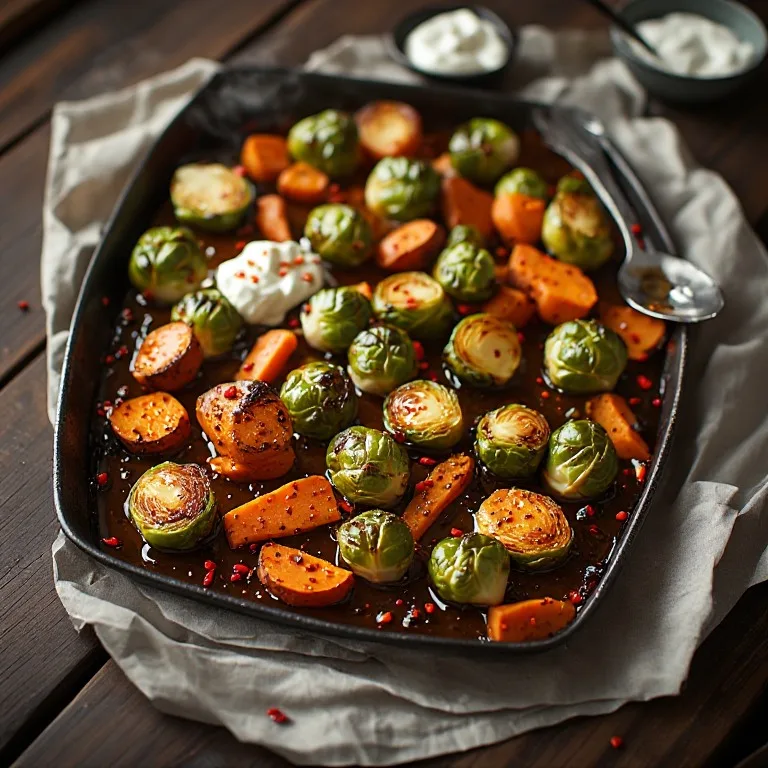
Quick answer: Preheat your oven to 425°F with a large sheet pan inside while you prep. Cut 1 lb Brussels sprouts in half, 1 large sweet potato into 1-inch cubes, and 3 medium carrots into 1-inch diagonal coins. Toss the vegetables with 3 tablespoons of olive oil, 1 teaspoon kosher salt, ½ teaspoon black pepper, and ½ teaspoon garlic powder. Remove the hot sheet pan from the oven and immediately spread the vegetables in a single layer, cut-side down — the hot pan sears the underside from the moment they land. Roast for 22 to 25 minutes without moving them, until the undersides are deeply caramelized and the vegetables are nearly fork-tender. While they roast, warm 3 tablespoons of honey with 1 teaspoon of red pepper flakes and 1 tablespoon of apple cider vinegar in a small saucepan over low heat for 3 minutes, just until the honey loosens and the chili infuses. Pull the pan from the oven, drizzle the hot honey over everything, toss gently to coat, and return to the oven for 5 minutes until the honey sets into a sticky, lacquered glaze. The vegetables should look deeply caramelized — the honey burns if added earlier, which is why this two-stage method works. Serve immediately, ideally with a spoonful of garlic yogurt (plain Greek yogurt + garlic + lemon + salt) for contrast.

Shop the tools

Gear matched to this recipe. These are Amazon affiliate links — we may earn a small commission if you buy, at no extra cost to you.

As an Amazon Associate, Copycat Spices earns from qualifying purchases. Product images are generic illustrations, not the exact item listed.

Hot Honey Roasted Vegetables

The viral TikTok hot honey roasted vegetables recipe: Brussels sprouts, sweet potatoes, and carrots roasted at 425°F until charred and tender, then finished with a spiced honey glaze that caramelizes into a sticky, lacquered coating. One sheet pan, under 40 minutes.

Easy Prep: 10 min Cook: 30 min Total: 40 min4 servings ~$4.50/serving
Prep10 min
Cook30 min
Total40 min
Servings
4
At home~$4.50/serving
vs
Restaurant~$20.25/serving
You save ~78%

The Story Behind the Recipe

Hot honey became one of the defining condiments of the 2020s — Mike's Hot Honey, the Brooklyn brand that put the concept on the map, went from a local specialty to a supermarket staple in under a decade. But TikTok's food creators took it from a pizza drizzle and a wing sauce to a transformative roasting technique for vegetables. The viral moment is always the same shot: the oven opens, the sheet pan emerges with vegetables that are charred and glistening, and someone pours a slow ribbon of amber-red honey over the top. It looks expensive. It takes under 40 minutes and costs about $4 for four servings.

The technique that makes this work — and that separates properly done hot honey roasted vegetables from a soggy, sticky mess — is timing and heat. Vegetables need to roast at 425°F with space and a hot pan underneath to develop real caramelization before the honey arrives. Add honey too early and it burns against the pan surface before the vegetables have time to cook through. Add it in the last 5 minutes and it caramelizes just enough to set into a glossy lacquer rather than a blackened char. The apple cider vinegar in the honey glaze is the part most recipes skip: it cuts the sweetness so the finished dish has complexity — sweet, spicy, slightly acidic, and deeply savory from the caramelized vegetable sugars — rather than just tasting like glazed candy vegetables.

Nutrition Facts

Per serving (4 servings)
Calories215
Total Fat8g
Total Carbs34g
Dietary Fiber6g
Sugars16g
Protein4g
Sodium310mg

* Estimated values based on standard recipe preparation. Actual values may vary.

Ingredients

  • Vegetables
  • Hot honey glaze
  • Garlic yogurt (optional but highly recommended)
  • To finish

Instructions

💡
Pro tip: This recipe tastes even better the next day. The flavors need time to meld together in the fridge.
❄️
Storage: Keeps in an airtight container in the fridge for up to 2 weeks. Freezer-friendly for up to 3 months.
🎃 Free Halloween cookbook — download now The Copycat Halloween Cookbook A ready-made, photo-illustrated PDF of our best halloween copycat recipes — free to download, no building required. Pay what you want to support if you love it.

Free PDF — instant download. We'll also send new seasonal copycat recipes now and then; unsubscribe anytime. Or just download it →

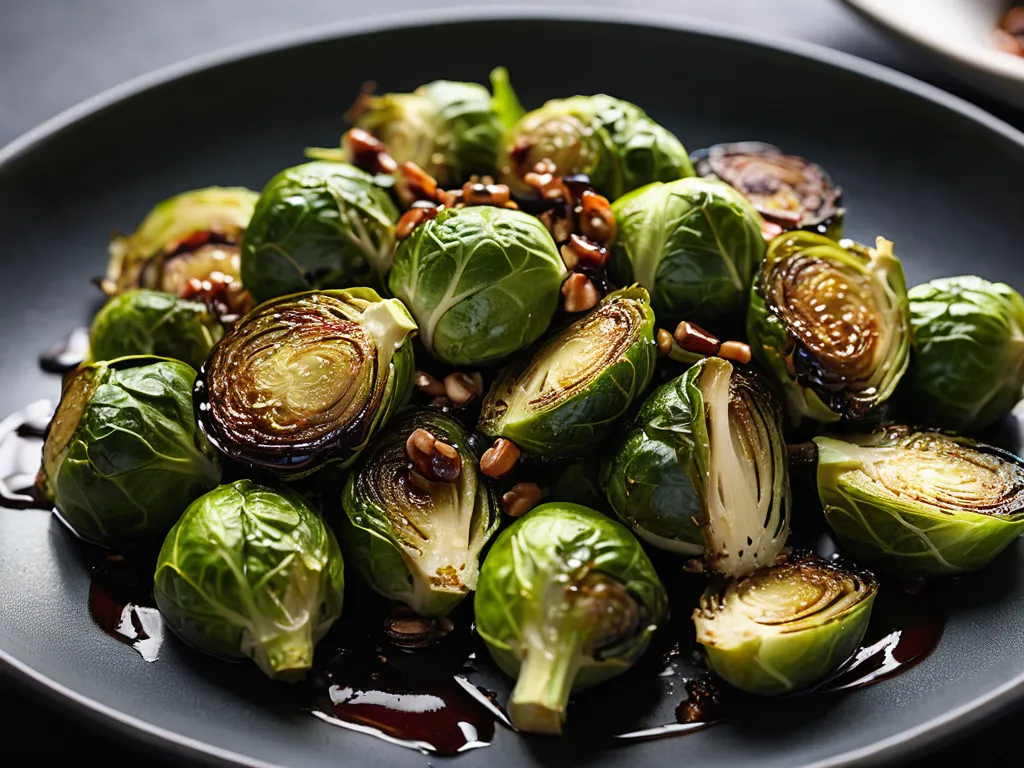
Hot honey roasted vegetables became one of the defining fall TikTok food trends for a simple reason: the visual is irresistible. A sheet pan of charred Brussels sprouts and caramelized sweet potatoes emerging from the oven, amber honey ribboned over the top, steam rising — it’s a 15-second video that makes viewers immediately want to make it themselves.

The technique is specific, and the specific parts matter.

Hot honey goes on at the end — not before

This is the rule most recipes skip explaining. Honey burns. At 425°F, honey applied before or during the main roast will char against the pan surface in under 10 minutes, taking the vegetables with it. The caramelized, lacquered look you’re going for — glossy, sticky, deeply golden — requires two stages: roast the vegetables until they’re nearly done and caramelized on their own, then drizzle the honey for the final 5 minutes.

Those 5 minutes are enough for the honey to heat, glaze, and set. They are not enough for it to burn. The apple cider vinegar in the glaze helps too — it lowers the overall sugar concentration slightly and adds brightness that keeps the finished dish from tasting like dessert.

The sheet pan needs to be hot before the vegetables land

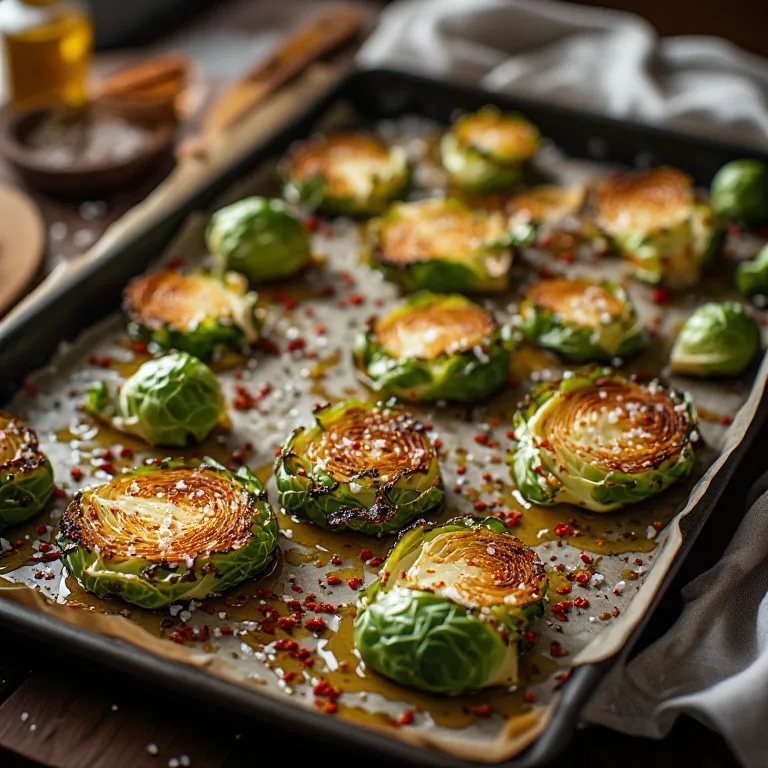
Place your empty sheet pan in the oven while it preheats. Wait the full 15 minutes. When you pull the pan out and spread the oiled vegetables onto it, you should hear a sizzle — the cut face of each Brussels sprout is already beginning to caramelize from the contact heat.

A cold sheet pan goes into a hot oven and takes several minutes to heat while the vegetables sit on it releasing steam. Cold pan → steamed bottom → no crust, no caramelization, pale soft vegetables that look nothing like the TikTok videos. Hot pan → immediate searing contact → deeply caramelized flat faces.

Space is non-negotiable

Crowded vegetables steam. If the Brussels sprouts are touching each other, the water they release has nowhere to go and the area between them stays wet rather than getting hot enough to brown. Use two sheet pans if your oven and vegetable quantity require it — one crowded pan produces worse results than two uncrowded pans.

The target spacing: each piece should have a visible gap around it, roughly half an inch minimum. It looks like too much space before roasting. It is exactly right.

The garlic yogurt is not optional

Technically it is optional. Functionally, it’s what makes this a dish rather than a side of roasted vegetables. The contrast of cold, creamy, slightly acidic garlic yogurt against the hot, sticky, spicy vegetables gives every bite a dynamic range — sweet-spicy from the honey, savory from the caramelized vegetables, cool and tangy from the yogurt. Without it, the dish is good. With it, it’s something people ask you to make again.

Spread the yogurt on the plate first, then pile the vegetables on top. Every forkful picks up some yogurt from beneath.
🥗

Make It Healthier

Love Hot Honey Roasted Vegetables but want a lighter version? Try these simple swaps:

  • ✓Reduce the honey to 2 tablespoons instead of 3 and cut the olive oil to 2 tablespoons — this drops the recipe by about 60 calories per serving while keeping the essential character of the dish: the glaze still coats the vegetables and the oil is still enough to get real caramelization at 425°F.
  • ✓Add 1 cup of drained, rinsed canned chickpeas to the sheet pan alongside the vegetables for a complete vegetarian main — they crisp beautifully at this temperature, add 6g of protein per serving, and absorb the hot honey glaze just as well as the vegetables.
  • ✓Swap the full-fat Greek yogurt in the dipping sauce for 2% Greek yogurt — the texture is nearly identical and you save about 15 calories per serving. Avoid nonfat yogurt, which is too thin and watery to provide the creamy contrast the dish needs.
  • ✓To make this fully vegan, replace the honey with pure maple syrup — same quantity, same technique. The maple brings a slightly deeper, more molasses-like sweetness compared to honey, which works especially well with the sweet potatoes and carrots. Use coconut yogurt or omit the yogurt entirely.

Frequently Asked Questions

What vegetables work best for viral TikTok hot honey roasted vegetables?

The best vegetables for hot honey roasting are ones that can handle 425°F without falling apart AND that have natural sugars to caramelize: Brussels sprouts (cut-side down is the money shot), sweet potatoes, carrots, broccoli florets, cauliflower, butternut squash cubes, and beets. Avoid delicate vegetables — zucchini, asparagus, and cherry tomatoes release too much water at this temperature and steam rather than roast. If you want to add them, put them on a separate pan for the last 10 minutes only. For the TikTok visual, Brussels sprouts flat-side down produce the most dramatic caramelization — the cut face darkens to a near-black border with a golden center, which photographs beautifully and tastes even better than it looks.

Why drizzle the hot honey at the end instead of tossing the vegetables in it before roasting?

Honey has a high sugar content and burns at oven temperatures over about 350°F. At 425°F, honey applied before roasting will blacken and turn bitter in under 10 minutes, leaving you with acrid, scorched vegetables rather than a lacquered glaze. The two-stage method — roast first, glaze for the final 5 minutes — gives you caramelized vegetables with a proper glaze. The 5-minute secondary roast is just enough time for the honey to heat up, set, and develop a thin glaze shell without burning. Watch it closely during those 5 minutes; the difference between perfect and scorched is about 90 seconds.

Can I use store-bought hot honey instead of making it?

Yes. Mike's Hot Honey, Truff Hot Honey, and similar commercial brands can be drizzled directly over the roasted vegetables without the warming step — they're already the right consistency. Use 2 to 3 tablespoons, same as the recipe. The difference is that homemade hot honey lets you control the heat level precisely (up to 1½ tsp red pepper flakes for a serious kick) and the apple cider vinegar adds brightness that commercial hot honey typically lacks. If you use store-bought hot honey, add a splash (about ½ tablespoon) of apple cider vinegar or lemon juice to your drizzle before pouring to replicate that balance.

Why use a preheated sheet pan instead of a cold one?

A cold sheet pan goes into a hot oven and slowly heats up while the vegetables sit on it. During those first few minutes, the vegetables release steam before the pan is hot enough to sear the contact surface — the result is pale, soft-bottomed vegetables that never develop the caramelized crust the recipe depends on. A pan preheated for 15 minutes at 425°F is essentially a radiant heat source from below from the moment the vegetables land. The sizzle you hear when the oiled vegetables hit the hot pan is the cut surface immediately beginning to caramelize — the same physics as searing a steak in a hot pan. The entire flavor difference between restaurant-quality roasted vegetables and home-kitchen steamed-vegetable disappointment often comes down to this one step.

How do I prevent the vegetables from steaming instead of roasting?

Three things cause steaming: crowded vegetables, a cold pan, and wet vegetables. Space is the biggest factor — if Brussels sprouts are touching each other, the moisture they release has nowhere to escape and the space between them becomes a steam trap. Use two sheet pans if needed and leave at least ½ inch between pieces. The pan preheating (see above) handles the cold-pan problem. For wet vegetables, dry them thoroughly after washing — a salad spinner for Brussels sprouts, a kitchen towel press for cut root vegetables. Water on the vegetable surface turns to steam at oven temperatures and prevents caramelization. These three fixes — dry vegetables, hot pan, space — will transform your roasted vegetables from pale and limp to deeply caramelized and tender.

What can I serve with hot honey roasted vegetables?

The garlic yogurt in this recipe is the ideal pairing — the cool, tangy, creamy dip against the hot, sticky, spicy vegetables is the contrast that makes the dish feel complete. For a full meal, serve over a grain (farro, couscous, or quinoa absorb the honey glaze runoff beautifully), alongside roast chicken or seared salmon, or on top of toasted flatbread with an extra dollop of yogurt. As a standalone side dish, it pairs with anything fall- or winter-roasted: a spatchcocked chicken, braised short ribs, or a simple pasta. The vegetables also make excellent grain bowl additions the next day at room temperature — toss them with arugula, crumbled feta, and a lemon-olive oil dressing and the leftover honey glaze becomes part of the bowl dressing.

How spicy is the hot honey — can I adjust the heat level?

The baseline recipe (1 teaspoon red pepper flakes) produces a mild background heat — you notice the spice after the sweetness hits, but it won't make most people sweat. For a medium heat that most adults enjoy, use 1 teaspoon; for a spicy kick that competes with the sweetness, use 1½ teaspoons. For a mild version that kids and heat-sensitive guests can eat comfortably, cut to ½ teaspoon. You can also use different chili varieties for different flavor profiles: dried Calabrian chili gives a fruity, jammy heat; gochugaru gives a Korean-style deep red heat without sharpness; a pinch of cayenne gives pure clean heat with no additional flavor. All work in the same 1-teaspoon baseline amount.

Love this recipe? Share it!

Free PDF: our 12 most-wanted copycat recipes — instant download.

Made it? Buy us a coffee

Every recipe here is free, with no paywalls. If this one was a hit at your table, a small tip keeps new copycats coming.

$

Ratings & Reviews

—
No ratings yet

Rate this recipe

Click a star to rate

Leave a Review

0/500

CS

Copycat Spices Editorial

Researched + fact-checked. Every recipe on Copycat Spices is built from published sources — official ingredient lists, brand-published recipes, interviews and food-science references — and fact-checked before it goes live, then written as clear, step-by-step instructions for home cooks of all skill levels.

Learn more about our mission →