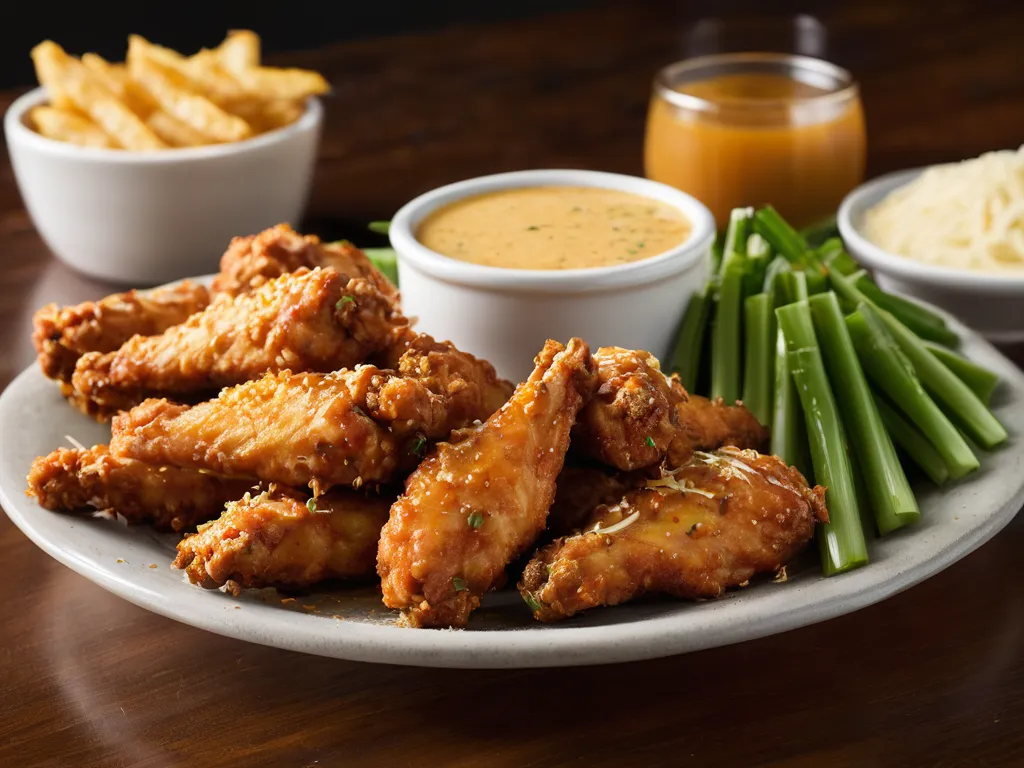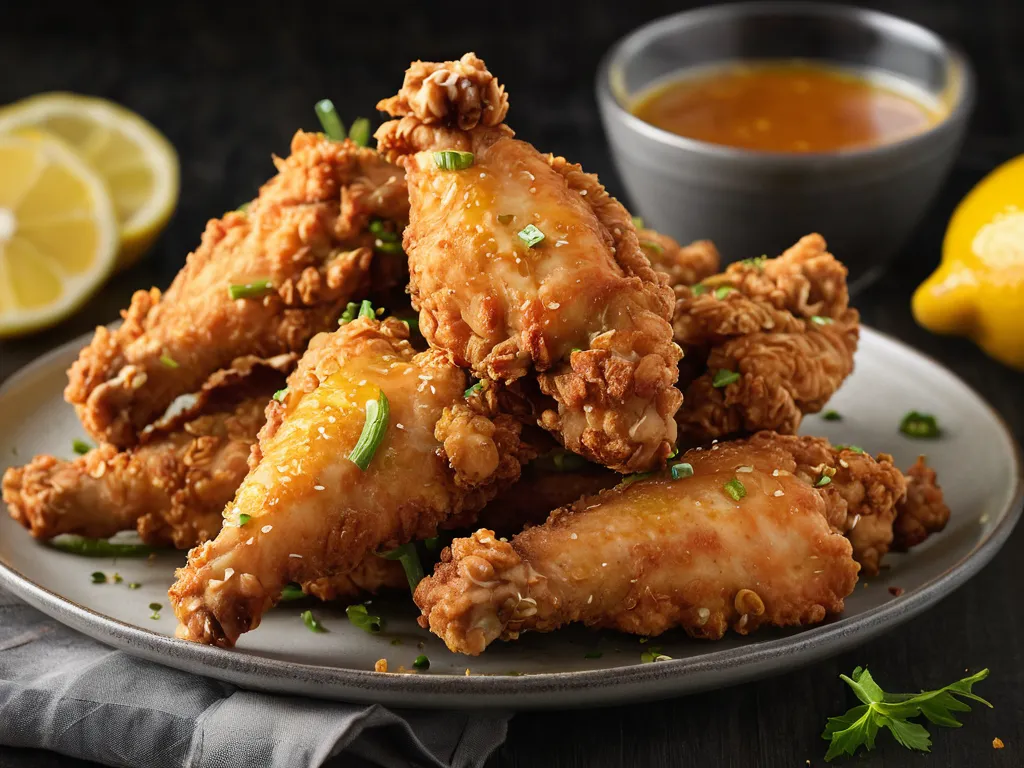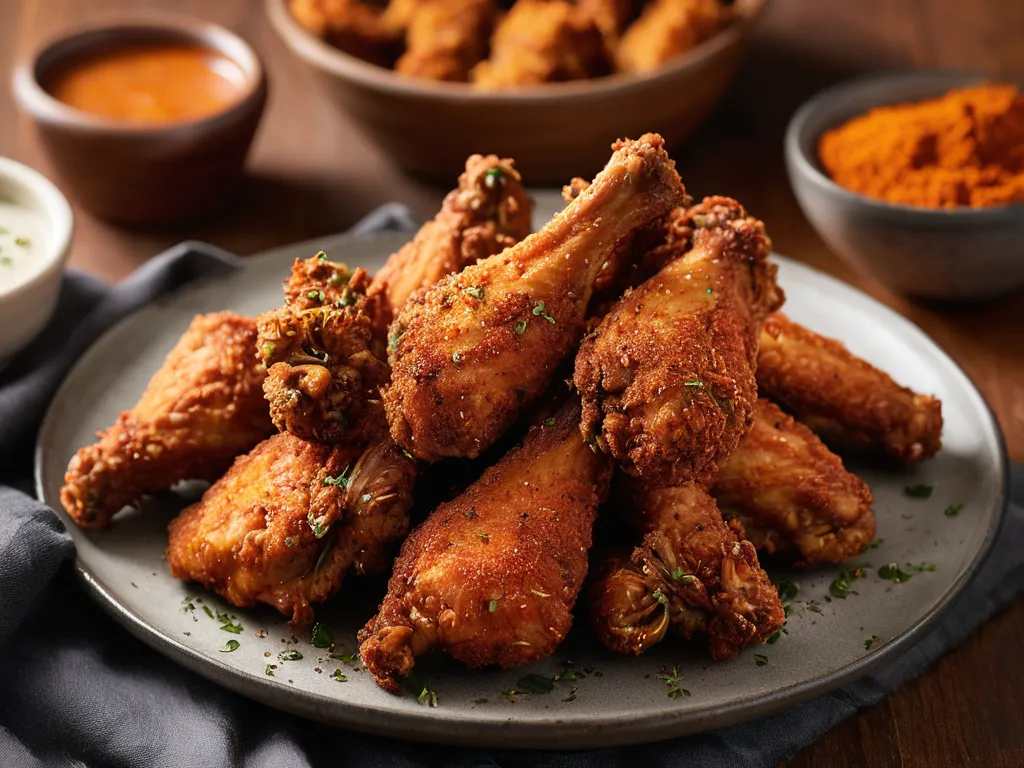
Wingstop’s Louisiana Rub is the chain’s sleeper hit: a dry-rub wing the company describes as having “a distinctly Cajun drawl.” No wet sauce, no glaze — just a smoky, herb-forward seasoning on a crackly crust. It’s mild enough for people who don’t want Cajun-level heat, but specific enough to have a genuine flavor identity — smoky, herby, with just enough cayenne to build as you eat.
The home version is straightforward. The seasoning blend is 9 ingredients you likely already have. The baking powder trick gives you honest crispiness without a fryer. And because this version skips the butter toss entirely, the technique is easier than lemon pepper — no hot butter to manage, no 30-second tossing window. (Wingstop does tumble its wings in a little melted butter before the rub; if you want that exact restaurant feel, there’s an optional step for it below.)
Louisiana Rub vs. Cajun: The Actual Difference
Wingstop runs both Louisiana Rub and Cajun as separate flavors, and customers frequently mix them up. They’re related but not the same:
Louisiana Rub: Herb-forward, smoky, moderate heat. Smoked paprika is the base. Oregano and thyme give it a Southern-spice-rack quality. Brown sugar rounds the edges. The cayenne is present but not dominant. Wingstop describes it as having “a distinctly Cajun drawl” — meaning Cajun-inspired, not full Cajun.
Cajun: Hotter, more aggressively spiced. More cayenne and chili powder, less herb complexity. Closer to a traditional Louisiana Cajun seasoning where the heat is the point.
If you’ve had Cajun wings and found them too sharp, Louisiana Rub is the version to try. If you found Louisiana Rub mild, lean into Cajun.
Why Smoked Paprika — Not Regular
Regular sweet paprika adds color and mild fruitiness. Smoked paprika (pimentón) adds color plus an actual smoky character that makes the wing taste like it came off something other than a fryer or oven. Wingstop’s Louisiana Rub has that faint smokiness that regular paprika can’t replicate. Don’t substitute.
The Brown Sugar Question
One teaspoon of brown sugar in the rub sounds like it would make the wings sweet. It doesn’t. At these quantities, the sugar’s role is purely chemical: it accelerates the Maillard reaction (the surface-browning that creates roasted, savory flavor), and it rounds the sharp edges of the cayenne and salt without adding perceptible sweetness. Skip it and the wings taste flat at the finish. Include it and the seasoning coheres.
The Double-Application Technique
Apply 2/3 of the seasoning before cooking, reserve 1/3 for after. The pre-cook application seasons the skin as it crisps; the post-cook application blooms on the hot, fat-slicked surface of the finished wing. If you apply all the seasoning before cooking, some of it chars, some of it steams off with evaporating moisture, and you lose that sharp front-of-tongue hit that defines the flavor. The double-application fixes this.
Optional: The Restaurant Butter Toss
Wingstop’s in-store dry-rub flavors — Louisiana Rub included — aren’t truly dry. The kitchen tumbles the cooked wings in a small amount of melted butter, then dusts them with the seasoning so it clings and tastes richer. The home recipe above skips this on purpose: a true dry rub keeps the skin crisper and the calories lower. But if you want the exact restaurant mouthfeel, melt 1 tablespoon of unsalted butter, toss the just-cooked wings in it for a few seconds, then apply the reserved seasoning. Do it fast and serve immediately — butter-tossed wings soften within minutes, which is the trade-off for that richer finish.
Cost at Home vs. Wingstop
| Wingstop | Homemade | |
|---|---|---|
| 10 classic wings | ~$11.49–$13.99 | — |
| 16–18 wings | ~$18–$22 | ~$7 in ingredients |
| Per wing | ~$1.30–$1.40 | ~$0.39–$0.44 |
| Seasoning per batch | Proprietary | $0.50 in spices |
Wingstop pricing varies by location; figures above reflect typical 2026 ranges. The bigger home advantage isn’t just cost — it’s that you can adjust the cayenne in 1/4-teaspoon increments to hit exactly your preferred heat level.
Air Fryer Method
The air fryer produces genuinely excellent Louisiana Rub wings. The rub stays dry (no butter to manage), and the circulating heat crisps the skin efficiently without the two-stage setup needed in a conventional oven.
Apply the baking powder and seasoning as written above. Air fry at 380°F for 20–22 minutes, shaking the basket once at 10 minutes. Raise to 400°F for the final 3 minutes. Apply the reserved 1/3 of the seasoning immediately when done. Wings come out deeply golden with the seasoning fused into the skin.
Critical: Don’t stack the wings. Single layer only. Stacked wings steam each other and you lose the crispiness the whole method depends on. Cook in two batches if needed.
Adjusting Heat Level
The recipe as written hits a mild-to-moderate heat — roughly the same heat level as Wingstop’s version.
- Milder: Reduce cayenne to 1/4 teaspoon, increase paprika slightly to maintain color.
- Wingstop-accurate: Use the recipe as written.
- Cajun-level heat: Increase cayenne to 1 teaspoon and add 1/2 teaspoon of chili powder. At that level, the heat builds significantly over a batch.
- Extra smoky: Add 1/4 teaspoon of chipotle powder alongside the smoked paprika.
Storage and Reheating
Wings: Store leftovers in an airtight container for up to 3 days. To reheat: air fry at 400°F for 4–5 minutes or bake on a wire rack at 425°F for 8–10 minutes. Both methods restore meaningful crunch. Microwave turns the skin leathery.
Seasoning blend: Any leftover rub keeps in a sealed jar for 3 months. Use it on grilled shrimp, pork chops, roasted potatoes, or corn on the cob. Three tablespoons of the blend coats about 2 pounds of any protein.
More Wingstop Copycat Recipes
- Wingstop Garlic Parmesan Wings — the wet-style garlic parm that coats every crevice
- Wingstop Lemon Pepper Wings — the chain’s best-seller: butter-tossed, bright, addictive
- Copycat Wingstop Ranch — the house-made dipping sauce that pairs with every dry rub flavor
- Copycat Wingstop Lemon Pepper Seasoning — make the dry blend itself, the same way you can batch this Louisiana Rub