


Beans and Rice Bowl — The Ancient Budget Meal That Actually Slaps
Beans and rice is not a new idea. It is one of the oldest food combinations in human history, eaten across Latin America, the Caribbean, West Africa, South Asia, and beyond — each culture with its own version, its own spice profile, its own way of making the humble pairing feel like home. TikTok’s broke-meal community rediscovered it around 2022 and hasn’t stopped making it since.
The reason it keeps resurging on TikTok is the same reason it’s survived for millennia: it works. It’s filling, it’s cheap, it’s nutritionally solid, and when you do it with any care at all, it tastes good.
What Breaks the Bad Versions
The beans-and-rice failures are all the same: unseasoned beans dumped over unseasoned white rice. It’s food, technically. It’s not a meal. The distance between bad beans and rice and good beans and rice is entirely about seasoning depth.
Good beans and rice requires:
- Rice cooked with the right ratio and allowed to steam properly (fluffy, separated grains)
- An aromatic base — onion, garlic — that gets sautéed before the beans
- Spices bloomed in oil before liquids are added
- A liquid reduction to concentrate flavor
- Acid and heat at the table (lime, hot sauce)
None of these steps are difficult. Together they transform $3.50 of ingredients into something you’d eat by choice.
The Cultural Context That Makes This Work
Every culture that has made beans and rice a staple has developed techniques to maximize flavor from minimal expense. Cuban black beans and rice (moros y cristianos) use a sofrito — onion, garlic, bell pepper — as the flavor base. Puerto Rican rice and beans feature sofrito plus tomato sauce and olives. Indian rajma (kidney beans with rice) uses a tomato-onion masala with garam masala. West African red beans and rice (close cousin of Louisiana red beans and rice) use the Cajun trinity with bay leaf and long simmering.
The version here draws from the Latin American tradition, which uses cumin, smoked paprika, and oregano as the spice foundation. It’s simple, it’s approachable, and it works with pantry ingredients available anywhere.
The Partial Mash Technique
One trick worth adopting from professional cooks: when your beans are nearly done, mash about one-quarter of them against the side of the pot with a wooden spoon. The starch from the broken beans thickens the surrounding liquid into a sauce that coats the remaining whole beans. The result looks intentional — glossy, thick, restaurant-style — rather than beans swimming in thin broth. This takes 30 seconds and makes a visible difference.
Toppings: The Part That Makes It Feel Abundant
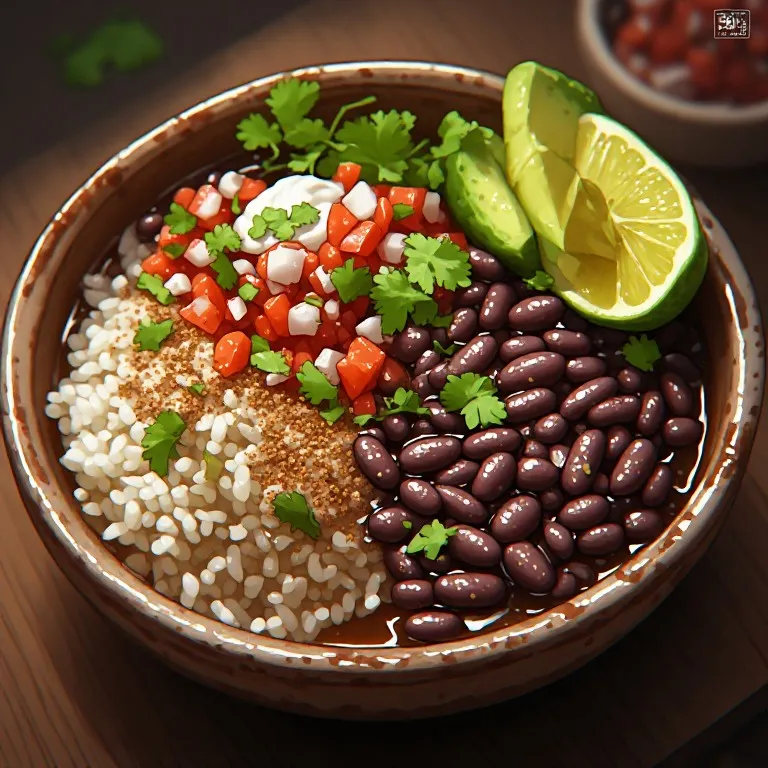
The base meal costs under $1 per serving. The toppings are where you add personality and make it feel like you’re eating something chosen rather than resigned to. Some of the best:
- Fried egg: Runny yolk breaks over the beans and creates an instant sauce
- Avocado: Expensive per fruit but split four ways it’s $0.40 each
- Pickled onions: Slice red onion, cover with lime juice and salt, wait 15 minutes. Bright pink, punchy, almost free
- Cotija or feta: Salty crumbled cheese over the top
- Fresh cilantro and lime: Non-negotiable finishing move
- Sautéed plantains: If you can find ripe plantains, 5 minutes in butter changes everything
Beans and rice is the honest truth about budget cooking: you don’t need expensive ingredients or elaborate technique to eat well. You need to understand what you’re working with and treat it with intention.