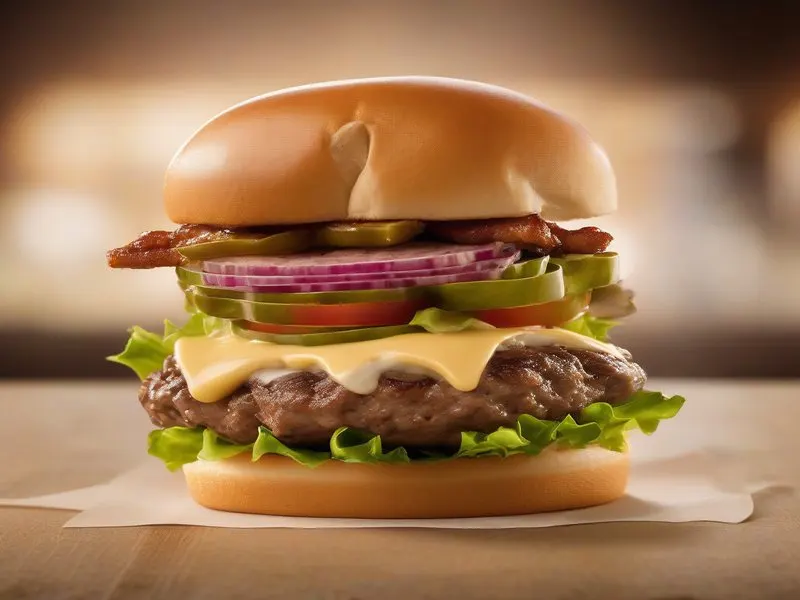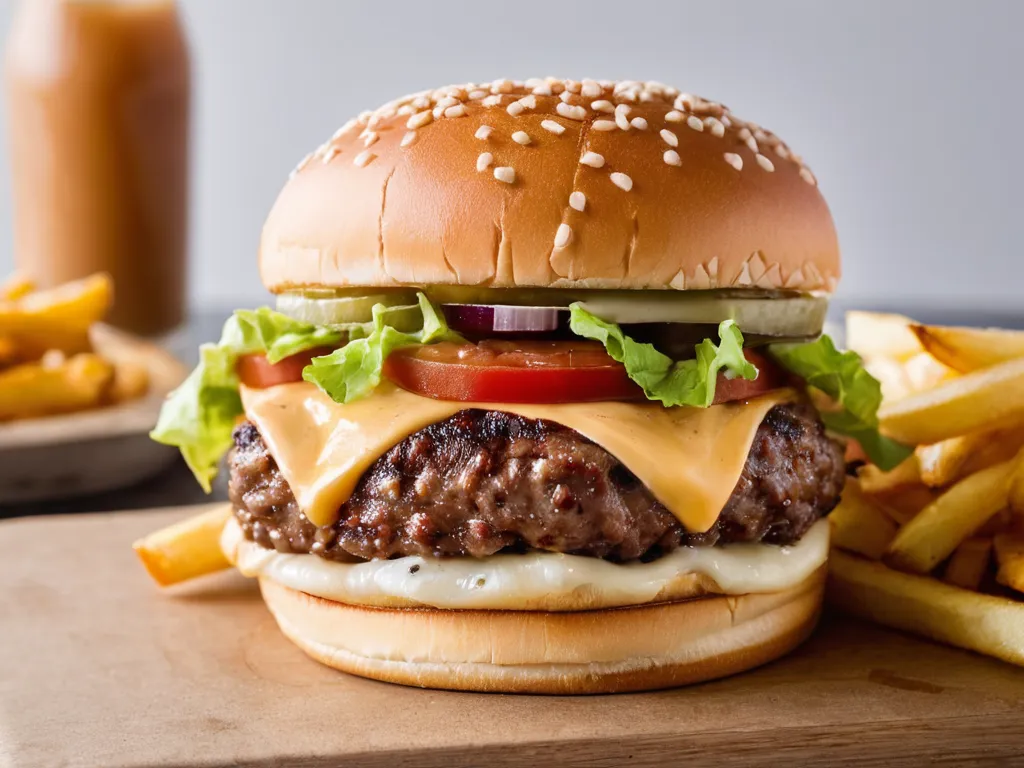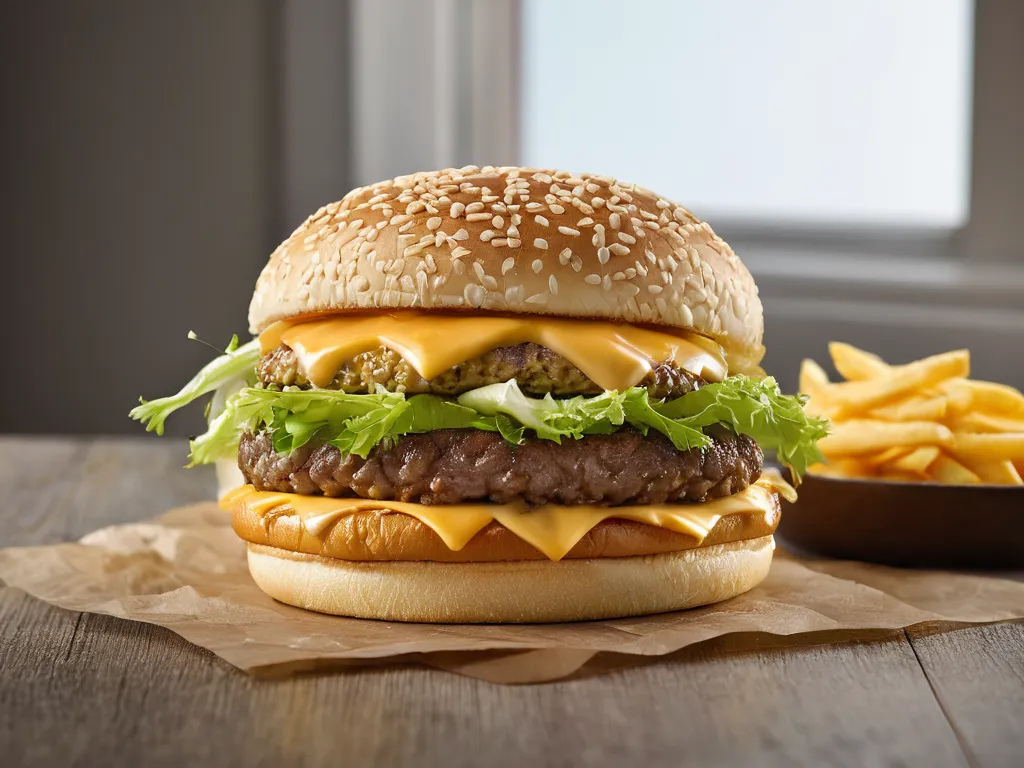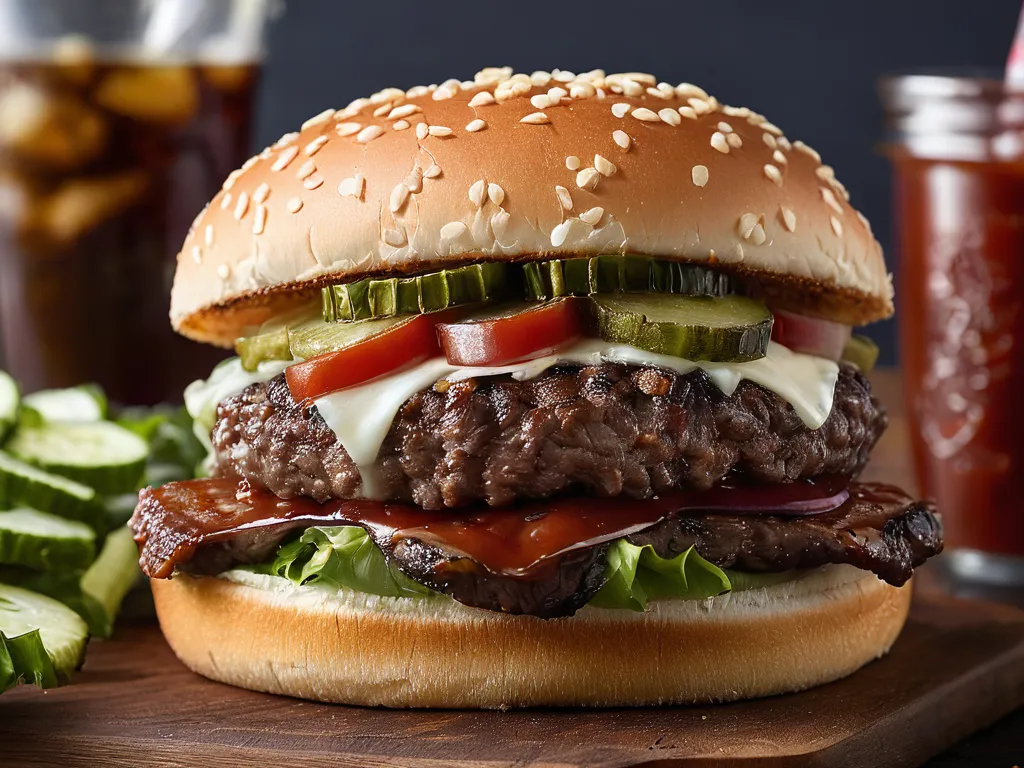
Copycat Burger King Whopper
Burger King introduced the Whopper on July 24, 1957, at 37 cents. The pitch was simple: a quarter-pound beef burger bigger than anything else on the fast-food market, cooked over a flame rather than a griddle. The flame-grilling wasn’t marketing — it was the actual cooking method, and it’s still what separates a Whopper from a Big Mac or a Quarter Pounder nearly 70 years later.
This recipe replicates the Whopper as closely as possible at home: a 4-oz beef patty charred over direct high heat, a toasted sesame seed bun, and seven straightforward toppings in Burger King’s specific assembly order. No special sauce. No tricks. Just the technique that makes the Whopper taste the way it does.
Why the Flame-Grilled Flavor Is Real
The Whopper’s smokiness isn’t from added flavoring — it comes from what happens when beef fat drips onto open flames. The fat vaporizes, rises, and coats the patty with a layer of pyrolized aromatic compounds. That’s the actual mechanism behind the char-smoke flavor that’s impossible to replicate on a flat griddle.
At 1,000+ degrees, the grill grates also create the Maillard reaction — the same browning reaction responsible for the crust on a properly seared steak — on contact points where the meat touches hot iron. The char marks on a Whopper aren’t decorative; they’re where the most flavor is.
At home, a gas grill on high is the best replication. A cast iron grill pan can produce the char marks and, with a small amount of liquid smoke applied to the patty surface, something close to the aromatic quality of the real thing.
The Patty
The Whopper uses a single 4-oz (quarter-pound) patty of pure ground beef. Burger King’s specification calls for 80/20 beef — the 20% fat content is what keeps the patty juicy and provides the drippings that feed the flare-ups. A leaner grind cooks faster and dries out before it can develop the same crust.
Form the patty loosely. Overworked ground beef develops a dense, sausage-like texture. You want it just barely cohesive — the crumblier the internal structure, the more the finished patty breaks apart in satisfying bites rather than sliding out as a rubber disk.
Make each patty slightly wider than the bun (about 4.5 inches across). Ground beef shrinks 10–15% in diameter as it cooks; a patty that starts the same diameter as the bun ends up smaller.
The Assembly Order
Burger King’s actual assembly line runs the Whopper in a specific sequence that most copycat recipes get wrong. They build the burger in two halves simultaneously:
Bottom half: grilled patty → pickle chips → ketchup → onion
Top half (separately): mayo → tomato → lettuce
The two halves are then combined. This means the lettuce and tomato sit at the crown of the finished burger — at the top when you eat it — not between the patty and the bun like most burger joints do it. The mayo on the top bun acts as a moisture barrier so the bun doesn’t go soggy from the tomato.
Follow this order and the bite-to-bite flavor balance matches what you get at the drive-thru.
Cost vs. the Drive-Thru
| Burger King | Homemade | |
|---|---|---|
| Single Whopper | ~$6.29–7.99 | ~$3–4/burger |
| Whopper Meal | ~$9.59–11.99 | ~$6–8 (with fries/drink) |
| Servings per batch | 1 | 4 |
Prices above are 2026 U.S. averages; costs are higher in airports and urban cores. A homemade batch of four burgers runs $12–16 in ingredients — roughly half the cost per burger, with a fresh bun, full-size toppings, and beef you bought yourself.
Variations
- Double Whopper — Use two 4-oz patties per bun, stacked. The standard Double has no cheese (order it “with cheese” to add a slice between the patties). It runs about 920 calories at the restaurant; at home you control the patty size.
- Whopper Jr. — Form 2-oz patties and cook for 2 minutes per side. Same toppings, proportionally smaller.
- Bacon Whopper — Lay two strips of crispy bacon across the patty before adding pickles and ketchup. BK adds it between the patty and the pickles.
- Impossible Whopper — Substitute 4-oz Impossible Burger ground meat. Season with a pinch of smoked paprika. Cook on the same grill or grill pan — plant-based patties need the same high heat to develop crust.
- Steakhouse Whopper — Top with caramelized onions, sautéed mushrooms, and a slice of Swiss cheese. BK ran a “Steakhouse Whopper” LTO in early 2026.
Storage and Reheating
The Whopper is best eaten the moment it’s off the grill. The bun and toppings do not hold.
Patty only: Store cooked patties in an airtight container for up to 3 days. Reheat in a 350°F oven for 8 minutes or in a skillet over medium-high for 90 seconds per side. Do not microwave — it steams instead of crisps.
Meal prep: Make a double batch of patties, freeze raw between parchment paper, and cook directly from frozen on a high grill — add 2 minutes per side. Refrigerate your toppings separately; assemble fresh each time.
If you’re building a full fast-food spread, pair the Whopper with Five Guys-style Cajun fries, McDonald’s sweet ‘n sour sauce for dipping, or a Dairy Queen-style Blizzard to close it out. For more beef recipes, browse the Burger King recipe hub.