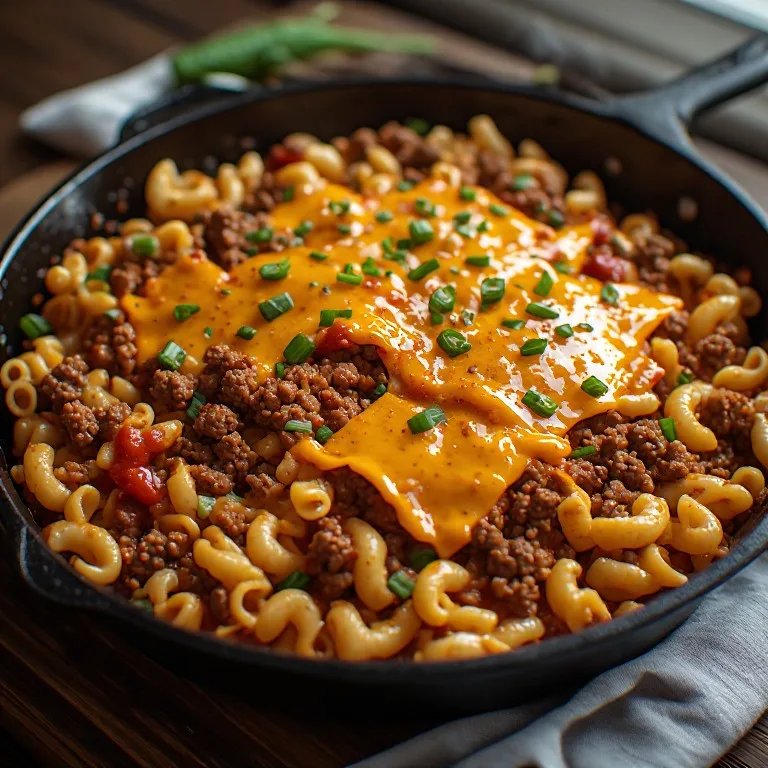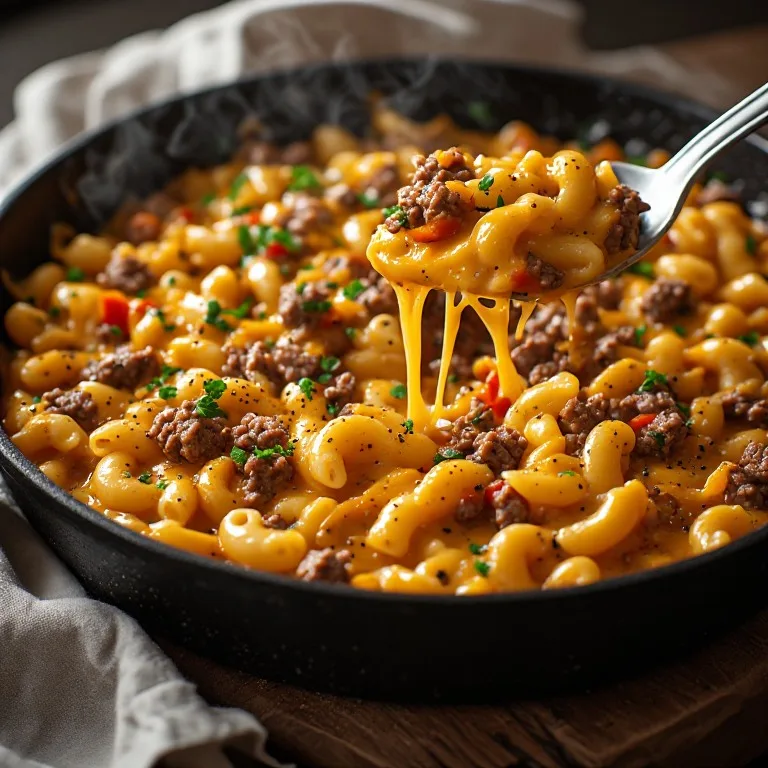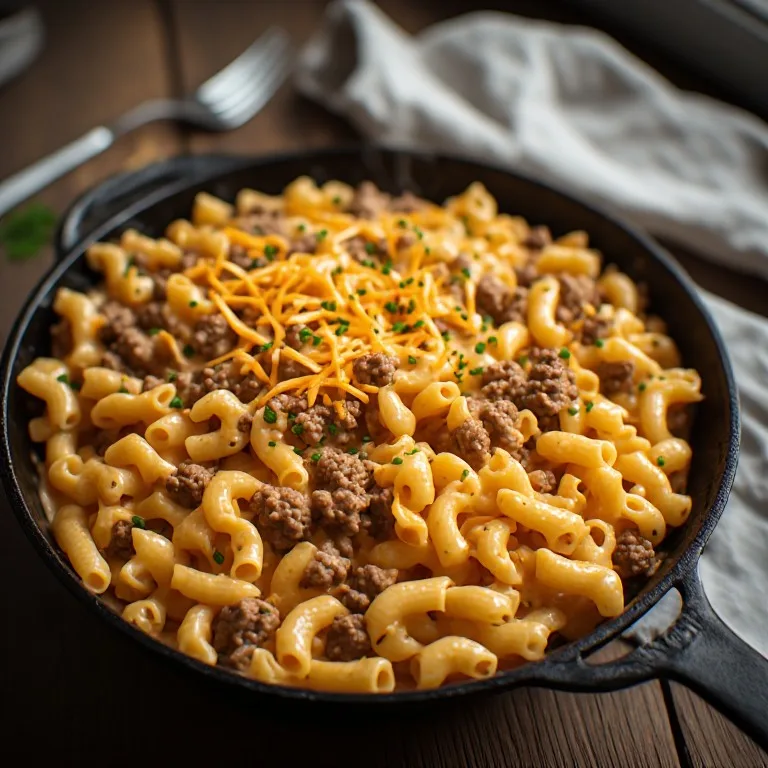


Homemade Hamburger Helper (Copycat Cheeseburger Macaroni, Better Than the Box)
Prep time: 5 min Cook time: 25 min Servings: 4
Hamburger Helper launched in August 1971 as a direct response to rising beef prices and tight household budgets. The pitch was simple: one pound of ground beef, one pan, 30 minutes, dinner for four. It worked. Cheeseburger Macaroni eventually became the line’s bestselling flavor — ground beef, elbow pasta, and a cheesy sauce so recognizable that it became its own comfort-food category.
The box gets there in 30 minutes by having you add a powder packet that includes whey protein concentrate, modified food starch, sodium caseinate, and enough sodium to account for nearly half your daily intake before you’ve added anything else. This version gets there in the same 30 minutes with the same single pan, and gets the sauce from real sharp cheddar.
The One Technique That Separates Good Homemade From Bad
Every “homemade Hamburger Helper” recipe uses roughly the same ingredients. The one that makes a smooth, creamy sauce instead of a grainy, broken one is the cheese step: the pan comes off the heat completely before the cheese goes in.
Cheddar cheese is a fat-and-protein emulsion. When you add it to a pan still at simmering temperature (around 200°F), the proteins seize and the fat separates — and you get a grainy, oily texture no amount of stirring fixes. Off the heat, the residual warmth of the pasta melts the cheese gently, and the sauce stays smooth.
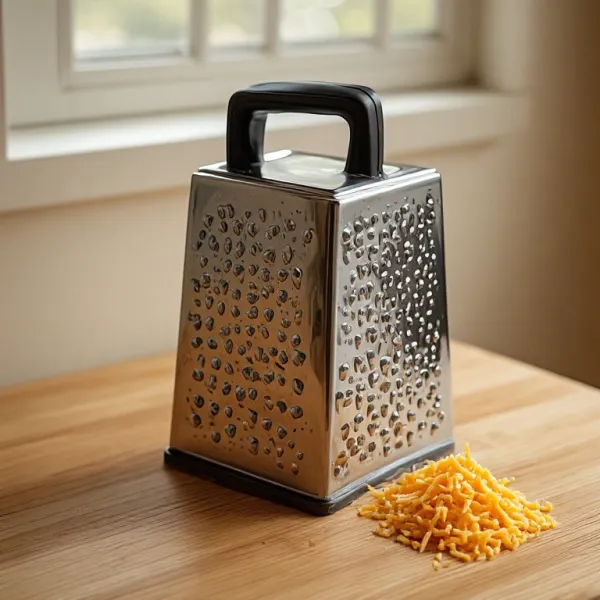
The second cheese rule: freshly shredded from a block, not pre-shredded from a bag. Pre-shredded cheddar is coated in cellulose and potato starch to keep the shreds separate. Those coatings interfere with melting and produce the same grainy, slightly chalky texture you were trying to avoid.
Why Cook the Pasta in the Broth
The box recipe has you add water to a sachet of powder. This version has you add beef broth directly to the pan, with the pasta going in dry. This matters for two reasons: first, the pasta absorbs the broth as it cooks and takes on actual beef flavor rather than plain water. Second, the starch released by the pasta as it cooks thickens the broth-and-milk liquid naturally, which is why the sauce has body without needing cornstarch or flour.
Cost Comparison: Box vs. Homemade
| Box version | Homemade | |
|---|---|---|
| Ground beef (1 lb) | ~$5–6 | ~$5–6 |
| Box kit | ~$3.50 | — |
| Cheddar, broth, milk, pantry spices | — | ~$4–5 |
| Total cost for 4 servings | ~$8.50–9.50 | ~$9–11 |
| Sodium per serving | ~1,000mg | ~810mg |
The cost is roughly similar — the box saves a few dollars but you pay for it in sodium and sauce quality. If you keep a block of cheddar in the refrigerator, this recipe is as close to “pantry dinner” as the box version.
Variations
Spicy version: Add 1/2 teaspoon cayenne with the other spices, and swap 1/2 cup of the cheddar for pepper jack.
Beef Stroganoff style: Swap the cheddar sauce for 1 cup sour cream and 1 tablespoon Dijon, skip the tomato paste, and add sliced mushrooms with the onion. This matches the original 1971 “Potato Stroganoff” flavor more closely.
Add diced jalapeños: 1 to 2 canned jalapeños, diced, stirred in with the spices — the vinegar brine brightens the whole dish.