Pin It

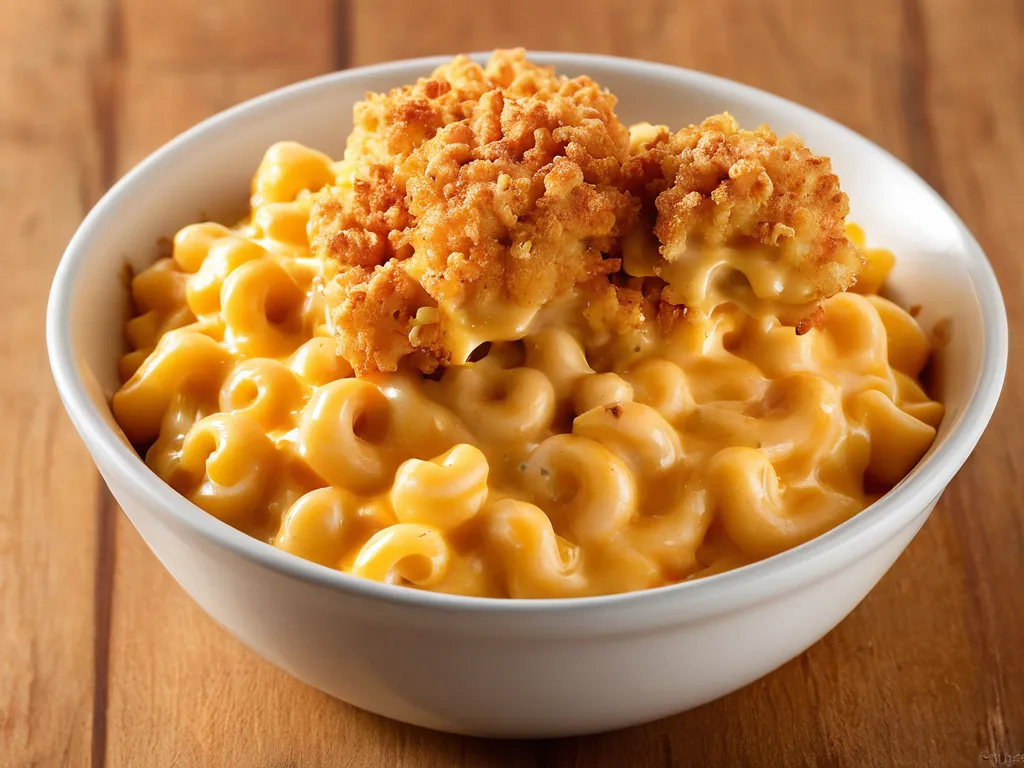
KFC Mac and Cheese

KFC Mac and Cheese
Jump to Recipe
Prep 10 min Cook 15 min Serves 6
Quick answer: KFC mac and cheese is American-cheese-forward, ultra-smooth, and intentionally simple. It is not a bΓ©chamel or sodium-citrate sauce β€” KFC uses processed cheese (Velveeta-style American) as the base, which provides built-in emulsification with no risk of graining. The copycat uses 8 oz Velveeta + 1 cup mild cheddar, a butter-flour roux for body, and elbow macaroni. Total time is 25 minutes. Official KFC individual side: 140 calories, 590mg sodium.
KFC Mac and Cheese

KFC Mac and Cheese

KFC's mac and cheese stays ultra-smooth because it's built on processed American cheese, not natural cheddar. This copycat nails it with Velveeta, cheddar, and a quick roux in 25 minutes.

Easy Prep: 10 min Cook: 15 min Total: 25 min6 servings ~$3.85/serving
Prep10 min
Cook15 min
Total25 min
Servings
6
At home~$3.85/serving
vs
Restaurant~$17.32/serving
You save ~78%

Ingredients

Instructions

💡
Pro tip: This recipe tastes even better the next day. The flavors need time to meld together in the fridge.
❄️
Storage: Keeps in an airtight container in the fridge for up to 2 weeks. Freezer-friendly for up to 3 months.
~250-450 cal/serving Β· Rich & IndulgentπŸ”₯

The Story Behind the Recipe

KFC Mac and Cheese

Prep: 10 min | Cook: 15 min | Servings: 6

KFC mac and cheese is intentionally simple β€” and that’s the point. It is not a sharp-cheddar bΓ©chamel or a sodium-citrate construction. It is American-cheese-forward, soft, and mild in a way that pairs perfectly with fried chicken and its aggressive seasoning β€” a plain, dependable side rather than a showpiece.

The obstacle most home cooks run into is using natural cheddar alone and ending up with a grainy, greasy sauce. KFC’s smooth result comes from processed cheese. Understanding why processed cheese works β€” and natural cheddar alone often doesn’t β€” is the most useful thing you can know before starting.

What KFC Mac Actually Tastes Like

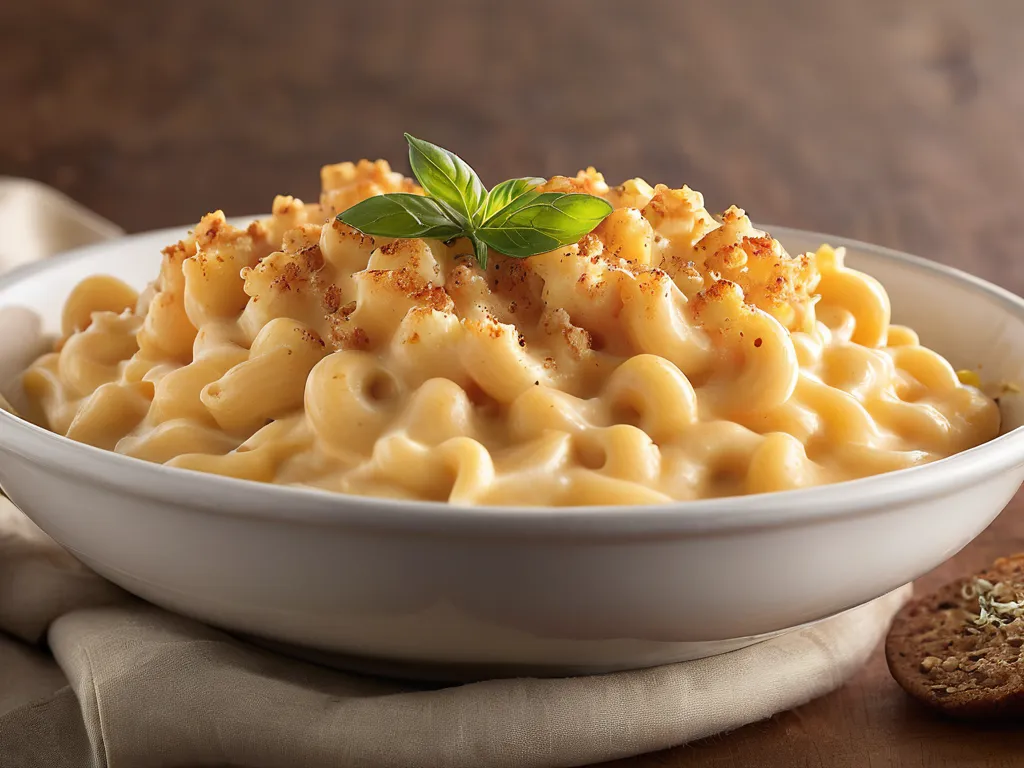
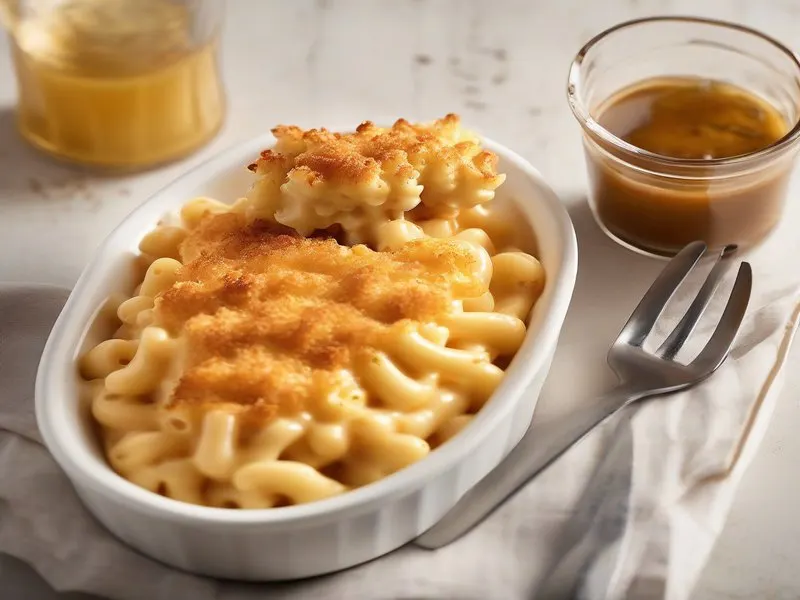
KFC mac is creamy, mild, and uniformly smooth with a subdued American-cheese flavor. It is not tangy, not sharp, not particularly complex. The paprika and garlic powder are present but subtle. The pasta is soft and coated in sauce throughout, not sitting in a pool of it.

Compared to the other fast food macs, KFC is the most understated. It is lighter in both flavor and calories than Boston Market or Panera β€” the individual side is 140 calories vs. roughly 480 for a Panera cup β€” which makes it the most realistic everyday side rather than a standalone mac-and-cheese experience.

Why Processed Cheese Produces Restaurant Smoothness

Natural cheddar is made from milk proteins that coagulate and form a network. When cheddar melts, the protein network breaks down β€” but above roughly 160Β°F, the proteins can tighten further and squeeze out fat, producing a greasy, grainy, broken sauce. Natural cheddar has no tolerance for error. A brief moment of overheating or slightly too much heat produces the result everyone has experienced: strings of cheese separated from a pool of orange grease.

Processed cheese β€” Velveeta, American slices, deli American β€” is a different product. Manufacturers blend natural cheese with emulsifying salts (sodium citrate or sodium phosphate), water, and other dairy solids, then heat the mixture to uniformity. The emulsifying salts keep the protein and fat bonded even under high heat. Processed cheese essentially cannot break in the same way natural cheese does. It melts into a smooth, uniform liquid every time.

This is why KFC’s mac is so reliably smooth β€” and why the copycat uses mostly Velveeta. The 1 cup of mild cheddar adds flavor depth that Velveeta alone lacks, but the Velveeta carries the structural work.

For a Velveeta-free version: dissolve 1/4 teaspoon sodium citrate per 2 oz of natural cheese directly into the warmed milk before adding cheese. The sodium citrate replicates the emulsifying function, letting you use 100% real cheese with the same smooth result. See the Copycat Panera Mac and Cheese guide for the sodium citrate technique in depth.

The Off-Heat Rule

The most common mistake in any cheese sauce is adding cheese while the pot is still on an active burner. Move the pot entirely off the heat before you start adding cheese. The residual heat is more than sufficient to melt Velveeta β€” it just does so slowly and gently, which is exactly what you want. If you add cheese over even low direct heat, you risk the sauce thickening too fast or the cheddar component breaking.

The order matters: add Velveeta first (it melts fastest and uniformly), then add cheddar once the Velveeta is smooth. The fully-melted Velveeta base helps the shredded cheddar incorporate without sticking to the bottom.

Fast Food Mac and Cheese Comparison
RestaurantCalories (ind.)SodiumCheese styleFlavor
KFC140590mgProcessed American + cheddarMild, smooth, American-forward
Chick-fil-A (small)270710mgCheddar/Montamore/Parmesan/AsiagoSharp, multi-cheese, caramelized top
Boston Market (side)2801,050mgProcessed American + half-and-halfRich, golden, savory
Panera (cup)4801,150mgSodium citrate + aged white cheddarTangy, complex, pipette rigate pasta
Homemade (this recipe)460880mgVelveeta + cheddarRestaurant-smooth, richer than KFC

KFC’s individual serving is small (120g) β€” about half the volume of a Panera cup, which is why the calorie difference is so stark. Scaled to the same portion, the calorie gap between KFC and Panera narrows considerably.

Make-Ahead and Storage

Mac and cheese storage has a few nuances worth knowing:

  • Refrigerator: 3–4 days in an airtight container. The sauce stiffens and the pasta absorbs most of the liquid.
  • Reheating: Low heat on the stovetop with 2–3 tablespoons of milk per serving. Stir constantly β€” the sauce needs liquid re-added to loosen it. Avoid the microwave unless you stir in milk first and reheat at 50% power in 30-second intervals.
  • Do not freeze: The sauce separates on freezing and the pasta texture degrades. Freezing works for a plain bΓ©chamel but not once combined with pasta.
  • Meal prep: Store sauce and pasta separately if you plan to eat over multiple days. Combine each portion when reheating. The sauce keeps 4–5 days refrigerated; once combined, 3 days max.
Variations

Extra-creamy: Replace 1 cup of milk with 1 cup of heavy cream. The result is noticeably richer and closer to Boston Market’s creaminess. Adds about 100 calories per serving.

Loaded KFC mac: Stir in 1/2 cup crumbled cooked bacon and a handful of sliced green onions. Finish with a pinch of cayenne. This is the at-home version of the KFC Famous Bowl concept applied to the mac.

Broccoli mac: Steam 2 cups broccoli florets until just tender (3 minutes in the microwave with a splash of water). Chop into small pieces and stir in after combining pasta and sauce. Adds fiber, volume, and color without competing with the cheese flavor.

Velveeta-free (sodium citrate method): Use 1/4 teaspoon sodium citrate (available at specialty grocery stores and online) dissolved in the warm milk before adding 12 oz of freshly grated sharp cheddar. No roux needed β€” the sodium citrate emulsifies the cheddar directly. Stronger flavor, same smooth texture, no processed cheese.

Spicy: Add 1/4 teaspoon cayenne pepper and 1 tablespoon hot sauce (Frank’s RedHot works well) to the finished sauce. Mild enough that children can eat it; noticeable but not aggressive.

Troubleshooting
ProblemLikely causeFix
Sauce is grainy or lumpyNatural cheddar overheated; cheese added while pot was hotUse more Velveeta; always add cheese off-heat
Sauce is too thickReduced too long; not enough milkStir in milk 1 tbsp at a time over low heat
Sauce is too thinToo much milk; not enough reductionContinue cooking gently while stirring; add a small handful of cheese
Pasta is mushyOvercooked initially; or left too long in sauceCook pasta 1–2 min less than package says next time
Sauce tastes flatUnder-seasoned; mustard powder missingAdd salt in small pinches; mustard powder amplifies cheese flavor significantly
Sauce becomes dry after refrigeratingPasta absorbed liquid while storedReheat with 2–3 tbsp milk per serving; stir over low heat
Sauce broke (greasy layer floating)Boiled the sauce after cheese was addedStart over; keep heat low and never boil once cheese is in
Cost Comparison
SourcePortionCostPer-serving
KFC individual side~120g~$3.49–$3.99$3.49
KFC family size~4–6 servings~$8.99–$10.99~$1.80–$2.75
Homemade (this recipe)6 servings~$4.50 total~$0.75

The homemade recipe produces roughly 3–4x more food than a KFC individual side at lower per-serving cost, and the portion size is 2–3x larger.


More mac and cheese guides: Copycat Panera Mac and Cheese (sodium citrate white cheddar, the Panera frozen-bag story), Copycat Boston Market Mac and Cheese (processed American + half-and-half, the chain-closing nostalgia version), and Copycat Chick-fil-A Mac and Cheese (the caramelized-top four-cheese version). For the other KFC sides: KFC Mashed Potatoes and Gravy, KFC Coleslaw, and KFC Original Recipe Fried Chicken. See all KFC copycat recipes β†’

Nutrition Facts

Per serving (6 servings)
Calories460
Total Fat26g
Total Carbs40g
Dietary Fiber2g
Sugars6g
Protein20g
Sodium880mg

* Estimated values based on standard recipe preparation. Actual values may vary.

πŸ₯—

Make It Healthier

Love KFC Mac and Cheese but want a lighter version? Try these simple swaps:

  • βœ“Use 2% milk instead of whole milk β€” saves about 20 calories per serving with minimal texture difference.
  • βœ“Swap half the Velveeta for low-fat American cheese slices (like Kraft Singles 2% Milk) β€” still smooth, fewer calories.
  • βœ“Reduce butter to 2 tablespoons. The sauce will be slightly less rich but still cohesive.
  • βœ“Add 1 cup of fresh broccoli florets, steamed and chopped, to increase fiber and volume while reducing the per-serving calorie density.

Equipment You'll Need

Large pot (at least 4 qt)

Used for both boiling pasta and making the sauce β€” a one-pot recipe.

Whisk

Essential for a lump-free roux and smooth bΓ©chamel. A fork works but a whisk is faster.

Wooden spoon or silicone spatula

For folding the pasta into the finished cheese sauce without breaking the noodles.

Frequently Asked Questions

How many calories in a KFC mac and cheese?

The official KFC individual side (120g) contains 140 calories, 6g fat, 17g carbs, 5g protein, and 590mg sodium, according to KFC's nutrition data. The family size contains about 540 calories and 23g fat total for the whole container. A homemade copycat serving (about 1.5 cups, recipe makes 6) runs approximately 450–480 calories due to the larger portion size and richer recipe.

Does KFC mac and cheese use Velveeta or real cheddar?

KFC uses a processed cheese blend β€” not natural cheddar. The smooth, never-grainy texture of KFC's mac comes from processed American cheese, which contains emulsifying salts that keep the fat and water bonded even at high heat. Trying to replicate it with natural cheddar alone produces a grainier, greasier sauce. The copycat recipe combines Velveeta (8 oz) with mild shredded cheddar (1 cup) β€” Velveeta handles the smoothness, real cheddar adds flavor depth.

What pasta does KFC use in their mac and cheese?

Elbow macaroni. KFC uses standard elbow macaroni cooked to al dente. Al dente (slightly underdone) is important because the pasta continues to absorb sauce as you serve and eat β€” pasta cooked all the way through becomes mushy after sitting in the sauce even briefly.

Why did my mac and cheese turn grainy or greasy?

Two causes. (1) The cheese overheated β€” proteins in natural cheese tighten and squeeze out fat above about 160Β°F, producing a greasy, broken sauce. The fix is to add cheese off the heat or over very low heat and stir constantly. Velveeta resists this entirely because its emulsifying salts keep the protein structure stable. (2) Natural cheddar was used as the only cheese β€” cheddar alone breaks easily. The recipe uses mostly Velveeta specifically to prevent this.

Can I make KFC mac and cheese ahead of time?

Yes, up to 3 days refrigerated. The sauce thickens significantly when cold. To reheat, place the mac over medium-low heat with 2–3 tablespoons of milk per serving, stirring constantly until loosened. Do not microwave without milk β€” it heats unevenly and the pasta absorbs remaining liquid, producing a dry result. For meal prep, store the sauce and pasta separately and combine when reheating.

How does KFC mac compare to Panera and Boston Market?

KFC mac is the mildest and most processed-cheese-forward of the three. It is simpler, lighter (140 cal vs. ~480 cal for a Panera cup), and less aggressively seasoned. Panera uses sodium citrate with aged white cheddar β€” sharper flavor, creamier texture from emulsion chemistry. Boston Market uses pasteurized American cheese plus half-and-half β€” richer and more savory than KFC, with a golden color from turmeric. KFC is the most familiar, kid-friendly result; Panera is the most grown-up flavor.

What is the family size KFC mac and cheese?

The KFC mac and cheese family side is a single large container serving roughly 4–6 people as a side. Official nutrition per the full family container: approximately 540 calories, 23g fat, 18g protein. KFC lists the side in two sizes β€” individual (120g) and family size.

Love this recipe? Share it!

Shop the tools

The right tools make all the difference. We earn a small commission if you buy through these links β€” at no extra cost to you.

Free PDF: our 12 most-wanted copycat recipes β€” instant download.

Ratings & Reviews

β€”
No ratings yet

Rate this recipe

Click a star to rate

Leave a Review

0/500

CS

Copycat Spices Test Kitchen

Every recipe on Copycat Spices is developed and tested in our home test kitchen. We reverse-engineer beloved restaurant dishes and refine each one until the flavors and the instructions work reliably for home cooks of all skill levels.

Learn more about our mission →