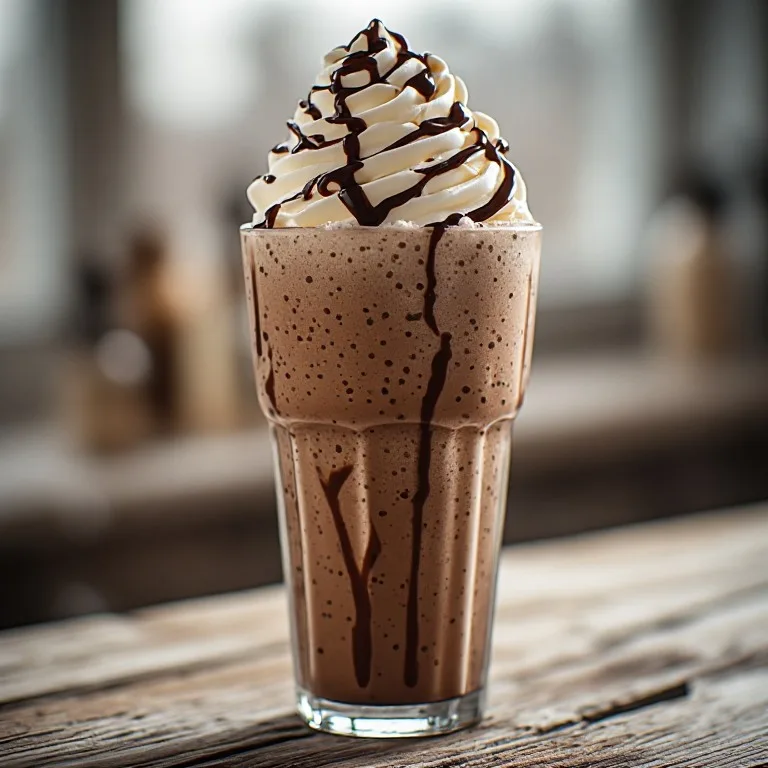


The McDonald’s Mocha Frappé is exactly what it sounds like — a chocolate-coffee blended drink — but what makes it interesting is the construction underneath. The chocolate doesn’t come from espresso or brewed coffee mixed with chocolate. It comes from Dutch-process-style cocoa incorporated directly into McDonald’s Mocha Frappé base — a chocolate-specific version of the proprietary frappe base used across their McCafé blended drinks. That base contains cream, skim milk, HFCS, coffee extract, cocoa (processed with alkali), food dyes, and stabilizers, all shipped pre-mixed to locations and blended with ice to order.
The result is thick and sweet in a way that’s unlike most coffee shop mocha drinks. Starbucks Mocha Frappuccino is built on actual brewed coffee and mocha sauce — real ingredients blended together. McDonald’s starts from a premixed base and adds chocolate. The flavor is more confection-like, less coffee-forward, and more consistent across locations because the base removes most of the variables.
Making it at home fixes what’s worth fixing: real cold brew replaces coffee extract, real cocoa or chocolate sauce replaces the HFCS-heavy commercial syrup. Cold brew and Dutch-process cocoa are natural flavor partners — the cocoa’s mild bitterness and the cold brew’s coffee depth reinforce each other in a way that coffee extract and chocolate syrup never quite achieve. The texture stays the same: thick, cold, ice-blended.
Why Dutch-Process Cocoa Is the Right Call Here
Natural cocoa and Dutch-process cocoa taste different in cold blended drinks, and Dutch-process wins for this application. Natural cocoa is acidic — it has a sharper, fruitier bitterness that reads well in baked goods where baking soda neutralizes the acid. In a cold liquid with no heat treatment, that acidity stays raw and can taste slightly harsh.
Dutch-process cocoa has been alkalized, which neutralizes the acidity and produces a smoother, darker, more rounded chocolate flavor. It also dissolves more easily in cold milk and cold brew because the alkaline treatment changes the particle structure. Brands like Ghirardelli Premium Baking Cocoa, Droste, or King Arthur’s Double-Dutch Dark are all easy to find and work well here.
If you want the sweeter, more dessert-like flavor of the commercial version, use chocolate sauce (Ghirardelli Chocolate Sauce or Smucker’s Classic, thinned slightly if needed) in place of cocoa powder. The sauce version tastes closer to McDonald’s; the cocoa version tastes closer to a real mocha.
The Caramel vs. Mocha Frappé Difference
The drinks are built from the same base — you could make a half-batch of each from one blender if you wanted to compare them. The only differences:
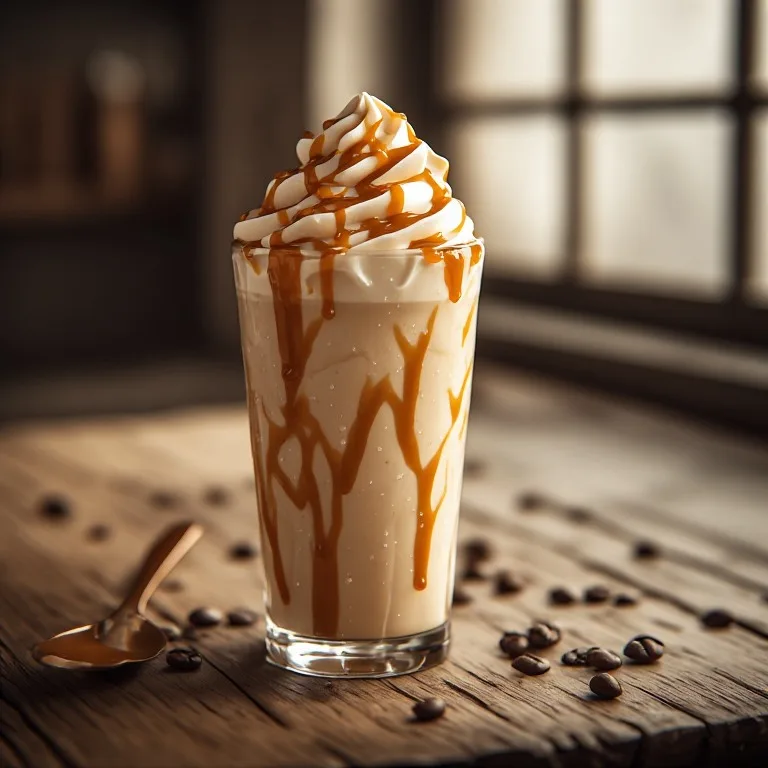
- Caramel Frappé: neutral frappe base + caramel sauce blended in + caramel drizzle on the whipped cream
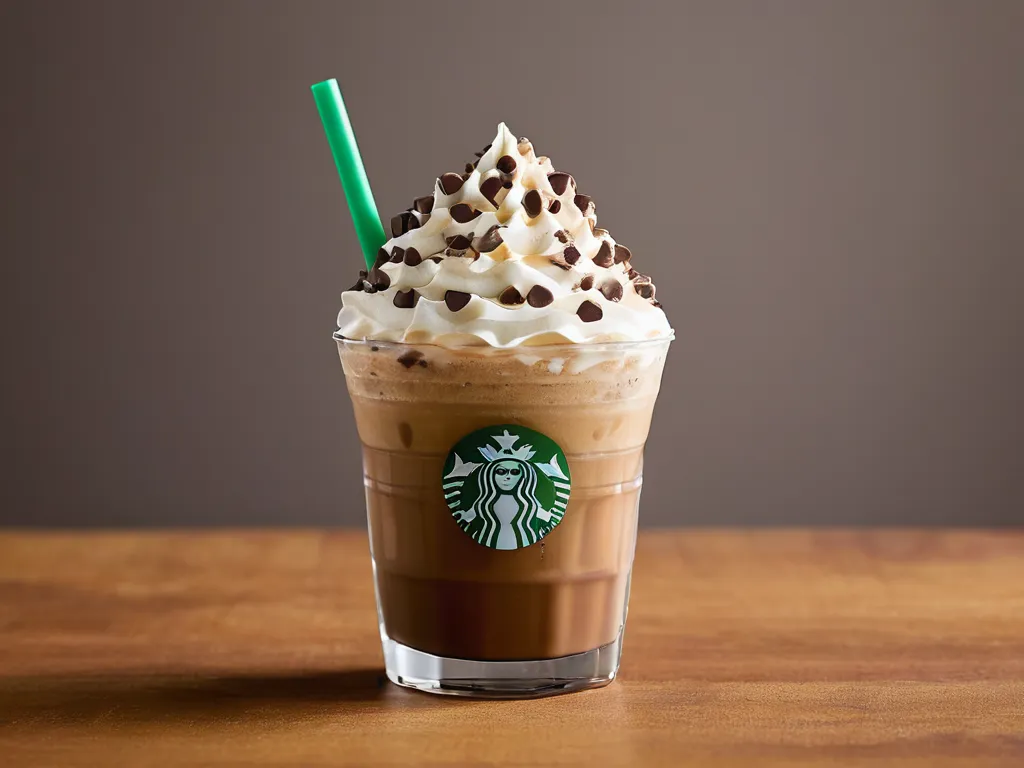
- Mocha Frappé: chocolate-specific frappe base (cocoa baked in) + chocolate drizzle on the whipped cream
- Calorie count is close — Mocha medium is roughly 490–500 calories vs. Caramel’s ~510; sugar is slightly lower on Mocha (~60g vs. ~64g) because the cocoa-in-base approach is less sweet than separate caramel sauce addition
Chocolate-coffee tends to be the more intuitive pairing of the two for people who don’t drink caramel-coffee regularly, which is part of why the Mocha is a McCafé staple.
McDonald’s Mocha Frappé vs. Starbucks Mocha Frappuccino
| McDonald’s Mocha Frappé (medium) | Starbucks Mocha Frappuccino (Grande) | |
|---|---|---|
| Coffee base | Coffee extract (frappe base) | Brewed coffee |
| Chocolate | Cocoa in base + chocolate drizzle | Mocha sauce |
| Calories (approx.) | ~490–500 | ~370–420 |
| Sugar (approx.) | ~60g | ~54g |
| Caffeine (approx.) | ~85–125mg (unpublished) | ~100mg |
| Price (approx.) | ~$3.79–4.39 | ~$6.25–6.75 |
| Texture | Very thick, shake-like | Thick, slightly lighter |
| Flavor | Sweeter, confection-forward | More coffee-forward |
Both have roughly the same caffeine. McDonald’s is cheaper and thicker. Starbucks is more coffee-forward and lower in sugar. The home version in this recipe takes the Starbucks flavor approach — real coffee, real cocoa — but delivers the thick shake-like texture of the McDonald’s version.
Verify current nutrition at mcdonalds.com; prices vary by location.
How to Make It Even Thicker
The frappe consistency depends on the cold brew-to-milk ratio and the amount of ice. If your blender is powerful enough to fully crush ice, use the recipe as written. If you find the drink thinner than you want:
- Freeze the cold brew concentrate into ice cubes the night before — use coffee ice instead of water ice. This concentrates the coffee flavor as it melts instead of diluting the drink.
- Use 2 cups of ice instead of 1.5 cups.
- Add a tablespoon of cream cheese (sounds odd, works extremely well — adds body and a slight tang that reads as dairy richness without sweetness).
The commercial McDonald’s version gets its thickness from the stabilizers in the frappe base (carrageenan, guar gum, locust bean gum) — these create a gel-like structure that keeps the drink thick as it warms. At home, the extra ice and cold brew ice cubes achieve a similar result through a different mechanism.
Making Both Frappes at Once
If you want to serve the Caramel and Mocha versions side by side:
- Make a double batch of the base: 1 cup cold brew, 1.5 cups whole milk, 3 tablespoons sugar, and 3 cups ice
- Blend until fully smooth
- Divide into two glasses
- Stir 1.5 tablespoons chocolate sauce into one, 1.5 tablespoons caramel sauce into the other
- Top each with whipped cream and the matching drizzle
This works because the frappe base is flavor-neutral — cold brew + milk + sugar — and takes on the caramel or chocolate character cleanly from what you add after blending.