

Pin It

McDonald's Tartar Sauce

McDonald's Tartar Sauce
Jump to Recipe
Prep 5 min Cook 0 min Serves 8
Quick answer: McDonald's tartar sauce is a four-ingredient creamy spread: real mayonnaise, dill pickle relish (drained), a small amount of granulated sugar, onion powder, and salt — mixed and refrigerated at least 30 minutes before serving. The dill relish (not sweet) plus a pinch of sugar is what gives it the mild, tangy-sweet balance that differs from a standard tartar. It takes under 5 minutes and keeps for 2 weeks in the fridge.

Shop the tools

Gear matched to this recipe. These are Amazon affiliate links — we may earn a small commission if you buy, at no extra cost to you.

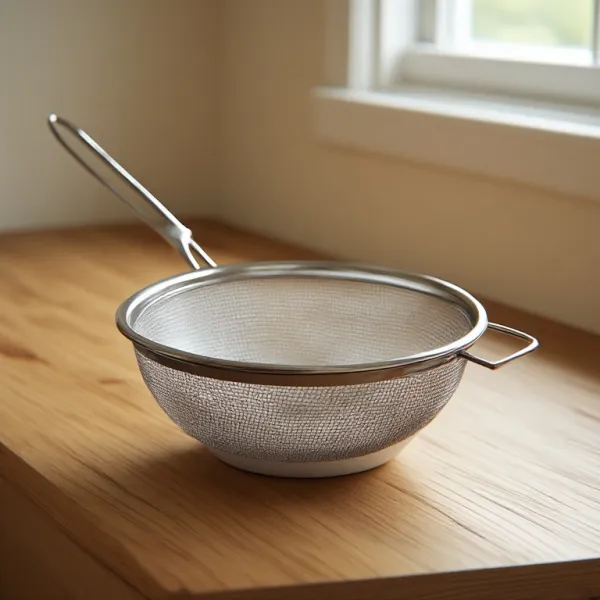
As an Amazon Associate, Copycat Spices earns from qualifying purchases. Product images are generic illustrations, not the exact item listed.

McDonald's Tartar Sauce

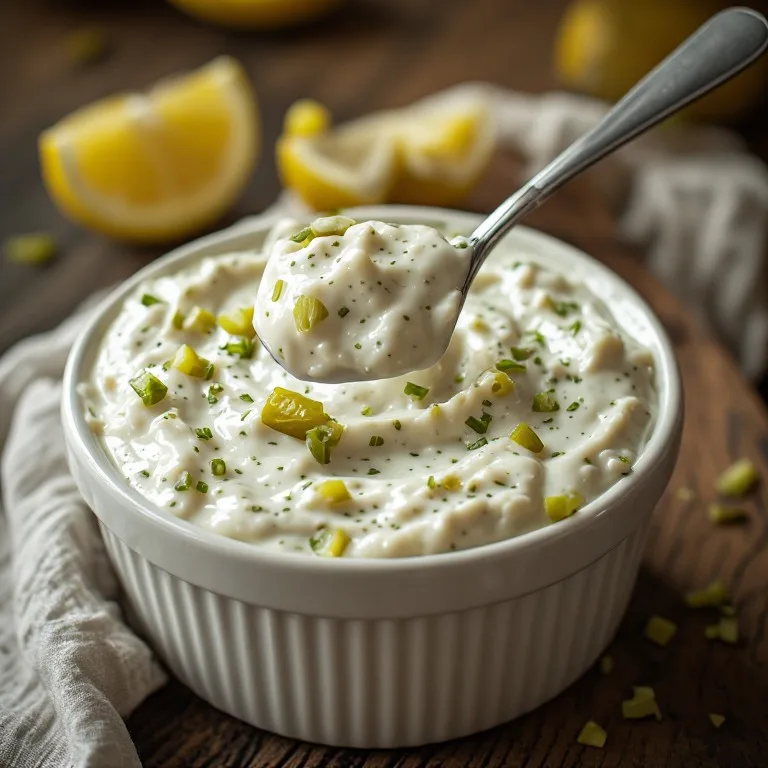
Copycat McDonald's tartar sauce — the creamy, tangy condiment served on every Filet-O-Fish since 1962. Four ingredients, five minutes, and one rule: drain the relish before you mix.

Easy Prep: 5 min Cook: 0 min Total: 5 min8 servings ~$1.75/serving
Prep5 min
Cook0 min
Total5 min
Servings
8
At home~$1.75/serving
vs
Restaurant~$7.88/serving
You save ~78%

The Story Behind the Recipe

The Filet-O-Fish — and therefore its tartar sauce — was invented in 1962 by Lou Groen, a McDonald's franchisee in a predominantly Catholic Cincinnati neighborhood. His customers stopped buying hamburgers every Friday during Lent, and he needed something. Ray Kroc proposed his own alternative: the Hula Burger, a grilled pineapple slice on a bun with cheese. On the Friday they ran a head-to-head test, the Filet-O-Fish outsold the Hula Burger 350 to 6. The tartar sauce has been part of the formula ever since, unchanged in character: a simple, creamy, mildly sweet spread designed to balance fried fish on a soft steamed bun.

At McDonald's today, the Filet-O-Fish runs around $5.49 and roughly 25% of all Filet-O-Fish sold worldwide are purchased during Lent — about 75 million sandwiches in six weeks. The tartar sauce is not available separately at the counter, which is why so many people end up making it at home. The recipe is simpler than most expect: four main ingredients, the most important debate being dill relish versus sweet relish. The answer is dill — with a small amount of added sugar to create the sweetness rather than getting it from a sweet relish's brine. That's the version most food-lab researchers and copycat specialists converge on, and it's the one below.

Nutrition Facts

Per serving (8 servings)
Calories95
Total Fat10g
Total Carbs2g
Dietary Fiber0g
Sugars1g
Protein0g
Sodium170mg

* Estimated values based on standard recipe preparation. Actual values may vary.

Ingredients

Instructions

💡
Pro tip: This recipe tastes even better the next day. The flavors need time to meld together in the fridge.
❄️
Storage: Keeps in an airtight container in the fridge for up to 2 weeks. Freezer-friendly for up to 3 months.
🎃 Free Halloween cookbook — download now The Copycat Halloween Cookbook A ready-made, photo-illustrated PDF of our best halloween copycat recipes — free to download, no building required. Pay what you want to support if you love it.

Free PDF — instant download. We'll also send new seasonal copycat recipes now and then; unsubscribe anytime. Or just download it →

Four ingredients and thirty minutes in the fridge. That is the entire McDonald’s tartar sauce recipe — and the thirty minutes is non-negotiable.

The sauce goes on every Filet-O-Fish McDonald’s has sold since 1962: a thin, even spread on the bottom bun that you can’t really buy at the counter and can’t replicate with a generic jarred tartar — but can reliably recreate at home with a bowl and a spoon.

The One Thing Most Copycat Recipes Get Wrong

Most McDonald’s tartar sauce recipes call for sweet pickle relish. The McDonald’s version uses dill pickle relish, with a small amount of added sugar to create the characteristic mild sweetness.

The difference matters because it changes the flavor profile:

  • Sweet relish version: candied, jammy sweetness, noticeably sweet on first bite
  • Dill relish + sugar version: tangy front with restrained sweetness behind it; the dill flavor comes through clearly

McDonald’s tartar sauce tastes tangy-first, sweet-second. That balance only comes from the dill version. Use sweet relish and you get a sauce that’s sweet-first and loses the pickled sharpness that makes the Filet-O-Fish work.

One honest caveat: McDonald’s commercial relish is itself lightly sweetened (the ingredient panel lists corn syrup), and the sauce contains a little distilled vinegar, so the real thing lands tangy-sweet rather than bone-dry. The dill-relish-plus-sugar build gets you there cleanly. If your batch tastes a touch flat, a few drops of white vinegar is a faithful tweak — it’s doing the same job the commercial vinegar does.

If you only have sweet relish, cut the added sugar in half. If you have neither, finely chop any whole kosher dill pickle — about two tablespoons — and use that instead.

Why Draining the Relish Is Not Optional

Jarred pickle relish sits in brine. A tablespoon of undrained relish adds a noticeable amount of liquid to the sauce and dilutes the mayo base. For a half-cup batch, that extra brine shows up as a thin, slightly watery texture that never quite thickens properly even after resting.

Drain it first. A paper towel squeeze takes 15 seconds and removes enough liquid that the sauce comes together with the right creamy body. You’ll see the liquid come out — more than you’d expect.

How to Use It Beyond the Filet-O-Fish

The sauce is versatile enough to replace most standard tartar applications:

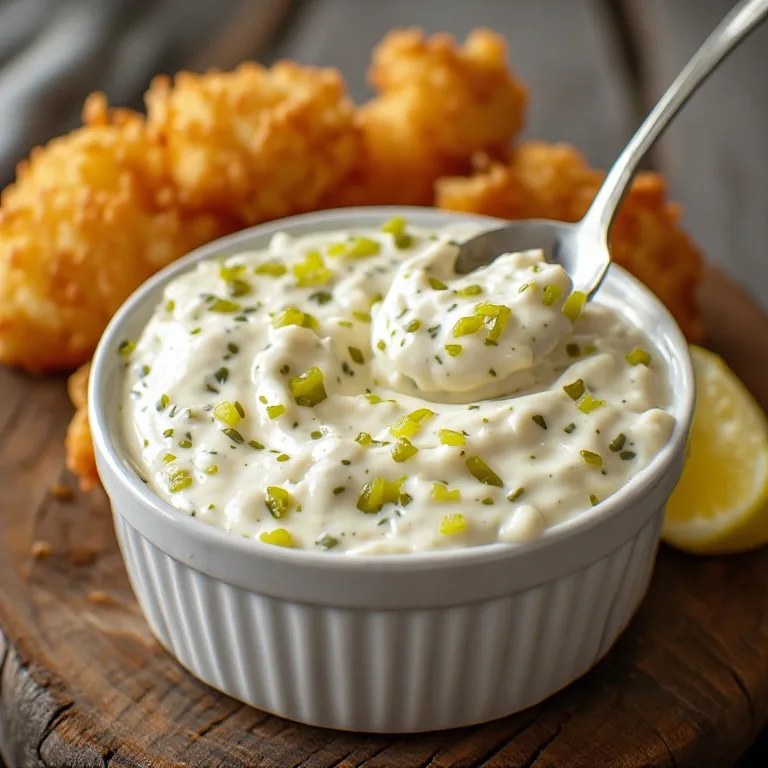
  • Fish sandwiches and po’boys — the obvious use; it spreads cleanly on buns without overloading the fish
  • Fish tacos — stir it into shredded cabbage for a fast slaw-sauce hybrid, or use it straight as the drizzle
  • Crab cakes — the mild sweetness complements crab without competing the way a strongly acidic tartar does
  • Fish sticks — the way nature intended them to be eaten
  • Fried shrimp or calamari — when you want something gentler than cocktail sauce
  • BLTs — the dill-and-mayo combination works surprisingly well against crispy bacon

For a comparison with the sweeter Long John Silver’s version — which is thicker, dip-style, and built from sweet relish — see the Long John Silver’s tartar sauce recipe. Same pantry, different balance targets.

🥗

Make It Healthier

Love McDonald's Tartar Sauce but want a lighter version? Try these simple swaps:

  • ✓Use avocado-oil mayonnaise instead of soybean-oil mayo — same texture and neutral flavor, significantly better fat profile.
  • ✓Greek yogurt can replace up to half the mayo for extra protein; the tanginess works well with the dill relish without changing the sauce's character.
  • ✓Reduce the sugar to a pinch or omit it entirely if you prefer a sharper tartar — it won't taste like McDonald's but it'll still be excellent with fried fish.
  • ✓For lower sodium, use unsalted mayo and reduce added salt to 1/8 teaspoon; the relish contributes enough brine to keep the flavor lively.

Frequently Asked Questions

What is McDonald's tartar sauce made of?

McDonald's tartar sauce is made from soybean oil-based mayonnaise, dill pickle relish, sugar, onion, salt, and stabilizers. The at-home version that comes closest to the commercial sauce: 1/2 cup real mayonnaise, 2 tablespoons drained dill pickle relish, 1/2 teaspoon granulated sugar, 1/4 teaspoon onion powder, and 1/4 teaspoon kosher salt. Mix, refrigerate at least 30 minutes, and it's ready. The commercial formula uses stabilizers and preservatives that extend shelf life; the homemade version keeps for up to 2 weeks in the fridge.

Does McDonald's use dill relish or sweet relish in their tartar sauce?

Dill pickle relish — with a small amount of added sugar to provide mild sweetness. This is the key detail most copycat recipes get wrong, often substituting sweet relish entirely. McDonald's tartar sauce has a distinctive tangy-sweet balance: the tang comes from the dill pickles, and the sweetness is added separately via sugar rather than being built into a sweet relish's brine. Using sweet relish produces a candier, less tangy sauce. If you want an easy swap and don't have dill relish, finely chop dill pickles — any whole kosher dill — and use those.

What's the difference between McDonald's tartar sauce and Long John Silver's tartar sauce?

Both are sweet-leaning mayo-based tartar sauces, but they differ in sweetness source and texture. McDonald's uses dill relish + a small amount of added sugar, producing a tangy-forward sauce with restrained sweetness that spreads thinly and evenly on a bun. Long John Silver's uses sweet pickle relish and slightly more sugar, making it sweeter and thicker — built for scooping alongside fish planks rather than spreading. McDonald's tartar is a bun sauce; LJS's is a dipping sauce. Both are worth knowing; they use the same pantry.

Can I use this tartar sauce on things other than a Filet-O-Fish?

Absolutely — it's a versatile condiment. Use it as a spread on any fish sandwich or shrimp po'boy, as a dipping sauce for crab cakes or fish sticks, stirred into fish tacos in place of crema, or as a spread on a BLT where its mild sweetness plays against crispy bacon. It also works well as a dip for fried calamari or shrimp cocktail when you want something gentler than cocktail sauce. Any fried or baked seafood benefits from it.

Why does my homemade tartar sauce taste flat?

Usually one of two problems: not enough rest time, or too little salt. Fresh tartar sauce always tastes slightly thin and one-dimensional — the onion powder hasn't hydrated, the sugar hasn't dissolved fully, and the relish brine hasn't integrated into the mayo. After 30 minutes in the fridge those problems resolve. If it still tastes flat after resting, add salt in 1/8-teaspoon increments and taste after each. A small amount of salt makes the sweetness pop rather than dull. Also check that you drained the relish — excess brine dilutes the sauce and makes it watery.

How do I drain pickle relish without a strainer?

Spoon the relish into the center of a paper towel, fold the edges up, and gently squeeze over the sink. It takes about 15 seconds and removes enough brine to prevent the sauce from going watery. If you want to be more thorough, push the relish around in the paper towel twice. You'll see a surprising amount of liquid come out. This step is especially important if you're making a small batch — even a teaspoon of excess brine noticeably thins a half-cup of sauce.

How long does homemade McDonald's tartar sauce last?

Up to 2 weeks in an airtight container in the refrigerator. Because it is built on commercial mayonnaise (already a shelf-stable emulsion) with pickled ingredients, it keeps well. The flavor improves over the first 2 to 3 days. Do not freeze it — the emulsion breaks on thaw and the sauce becomes grainy. Check at 10 days; if it looks and smells clean, it is still good. Always use a clean spoon so you don't introduce bacteria into the jar.

Is McDonald's tartar sauce the same as their Big Mac sauce?

No — they are completely different sauces. McDonald's Big Mac Sauce is built on Dusseldorf mustard, paprika, garlic powder, onion powder, sweet relish, and white wine vinegar — it has a distinct orange-tan color and a savory, mustard-forward flavor. McDonald's tartar sauce is white, mayo-based with dill relish and sugar, and is only used on the Filet-O-Fish. Big Mac sauce goes on beef burgers; tartar sauce goes on fried fish. They do not taste alike.

Love this recipe? Share it!

Free PDF: our 12 most-wanted copycat recipes — instant download.

Made it? Buy us a coffee

Every recipe here is free, with no paywalls. If this one was a hit at your table, a small tip keeps new copycats coming.

$

McDonald's is a trademark of its owner, used here only to describe the dish this recipe recreates. This is an independent copycat written in our own words — Copycat Spices is not affiliated with, endorsed by or sponsored by McDonald's.

Ratings & Reviews

—
No ratings yet

Rate this recipe

Click a star to rate

Leave a Review

0/500

CS

Copycat Spices Editorial

Researched + fact-checked. Every recipe on Copycat Spices is built from published sources — official ingredient lists, brand-published recipes, interviews and food-science references — and fact-checked before it goes live, then written as clear, step-by-step instructions for home cooks of all skill levels.

Learn more about our mission →