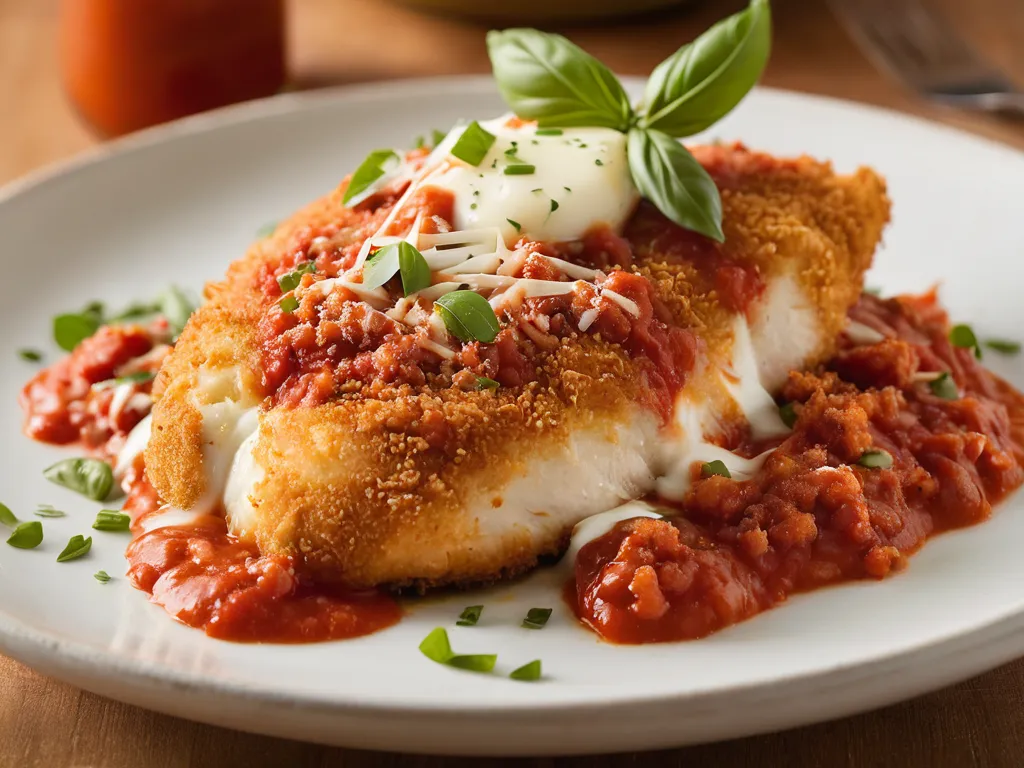
Copycat Olive Garden Chicken Parmigiana
Olive Garden’s Chicken Parmigiana is a constant on the menu for a reason: the formula works. Breaded chicken, marinara, melted cheese over pasta. Simple and satisfying. But the restaurant version is reliably more moist and deeply seasoned than most homemade attempts, and two specific techniques account for most of that gap.
The first is brining the chicken before it gets breaded. Salt water penetrates the protein, seasons it all the way through, and changes the muscle fibers so they hold onto moisture instead of expelling it during frying and baking. The second is that Olive Garden serves two thin cutlets per person — not one large breast. That means more surface area, more crust, and more sauce coverage per serving.
Fix those two things and you’re most of the way there.
TL;DR
Brine chicken breasts 30–60 min in salted water, pat dry. Slice each breast horizontally into 2 thin cutlets (8 total), pound to ½ inch. Set up breading: flour → egg → Italian breadcrumbs + Parmesan. Fry in neutral oil at 350°F for 3–4 min per side. Arrange in baking dish, spoon marinara over each, top with mozzarella AND Parmesan. Bake at 425°F for 12–15 min. Serve 2 cutlets per person over spaghetti. OG official: ~1,020 cal / 51g fat / 64g protein / ~3,300mg sodium with pasta.
What Most Copycat Recipes Get Wrong
No brine. This is the single biggest gap between homemade and restaurant versions. Most recipes pound the chicken and go straight to the breading station. The result is chicken that tastes flat and dries out during the oven finish. A 30-minute brine costs nothing and the difference is evident.
One large breast instead of two thin cutlets. Olive Garden portions the dish as two breaded pieces per person. Slicing each breast horizontally makes thinner cutlets with more surface area — more crust, more contact with the marinara, and even cooking throughout with no thick raw center.
Mozzarella-only topping. Olive Garden’s own menu says “melted mozzarella and Parmesan cheese.” The Parmesan layer on top browns slightly in the oven and adds a salty, sharp finish the mozzarella-only version doesn’t have.
Pre-shredded mozzarella. Anti-caking agents in bagged shredded cheese coat the shreds and prevent proper melting — the cheese looks grainy or separated instead of smooth and glossy. Buy a block of low-moisture mozzarella and shred it yourself.
Jarred marinara without selection. The sauce sits front and center on this dish. Brands with added sugar change the flavor register noticeably. Either make a quick scratch marinara (20 minutes) or pick a jarred sauce with a short ingredient list.
The Brine
Dissolve 1 tablespoon kosher salt and 1 teaspoon sugar in 3 cups cold water. Submerge the chicken breasts whole (before slicing) and refrigerate 30–60 minutes. The sugar is a minor addition that rounds the flavor slightly and helps the crust brown — not sweetness you’d identify, just a bit less flat. Do not brine past 90 minutes; the texture softens too much.
After the brine, pat the chicken completely dry with paper towels. Every drop of surface moisture has to come off. Wet chicken hitting hot oil sputters and the breading steams instead of crisping.
Slicing and Pounding
Hold each brined, dried breast flat on a cutting board. Slice horizontally through the center — all the way through — to make 2 separate thinner pieces. You’ll have 8 cutlets from 4 breasts, 2 per serving.
Place each cutlet between sheets of plastic wrap and pound to an even ½-inch thickness. The goal is uniform thickness across the entire surface, especially through the thicker center. Uneven cutlets produce overcooked edges and undercooked middles, and different areas of the breading brown at different rates.
The Breading
Mix the Parmesan into the Italian breadcrumbs before setting up the station. Parmesan in the crust means flavor throughout the breading — not just on top — and it helps the coating brown to a deeper golden color than breadcrumbs alone.
Press each cutlet firmly into the breadcrumb mixture. Don’t just roll it and lift — press the edges and work the coating into the surface. Then set the breaded cutlets on a wire rack and let them rest 5 minutes before frying. This short rest lets the egg and crumbs form a more cohesive layer that stays attached instead of sliding off in the pan.
Oil Temperature
Add enough neutral oil to come about ¼ inch up the sides of the pan. Heat to 350°F — use a thermometer. Below 325°F the breading absorbs oil and goes greasy without crisping. Above 375°F the crust burns before the chicken cooks through. Getting the temperature right is more important than any other single step in frying.
Cook in batches of 2–3 cutlets with space between each. Crowding drops the oil temperature and causes the cutlets to steam rather than fry. Transfer finished cutlets to the wire rack, not flat on paper towels — the underside of the crust needs airflow or it softens from trapped steam.
The Marinara
A simple scratch version takes 20 minutes and is noticeably brighter and less sweet than most jarred alternatives: sliced garlic in olive oil until just golden, then 28 ounces of crushed canned tomatoes, salt, crushed red pepper flakes, and basil. Simmer uncovered until slightly thickened. This can be made ahead and reheated.
For a shortcut, choose a jarred marinara without added sugar (check the second or third ingredient). Warm the sauce before spooning it over the cutlets — cold sauce on a hot baking dish extends the time needed to heat through and can result in uneven melting.
Cheese and the Oven Finish
Use low-moisture mozzarella you’ve shredded yourself, or fresh mozzarella sliced thin and patted dry. Fresh mozzarella carries more water; un-dried, it releases liquid in the oven and makes the breading underneath damp and soft.
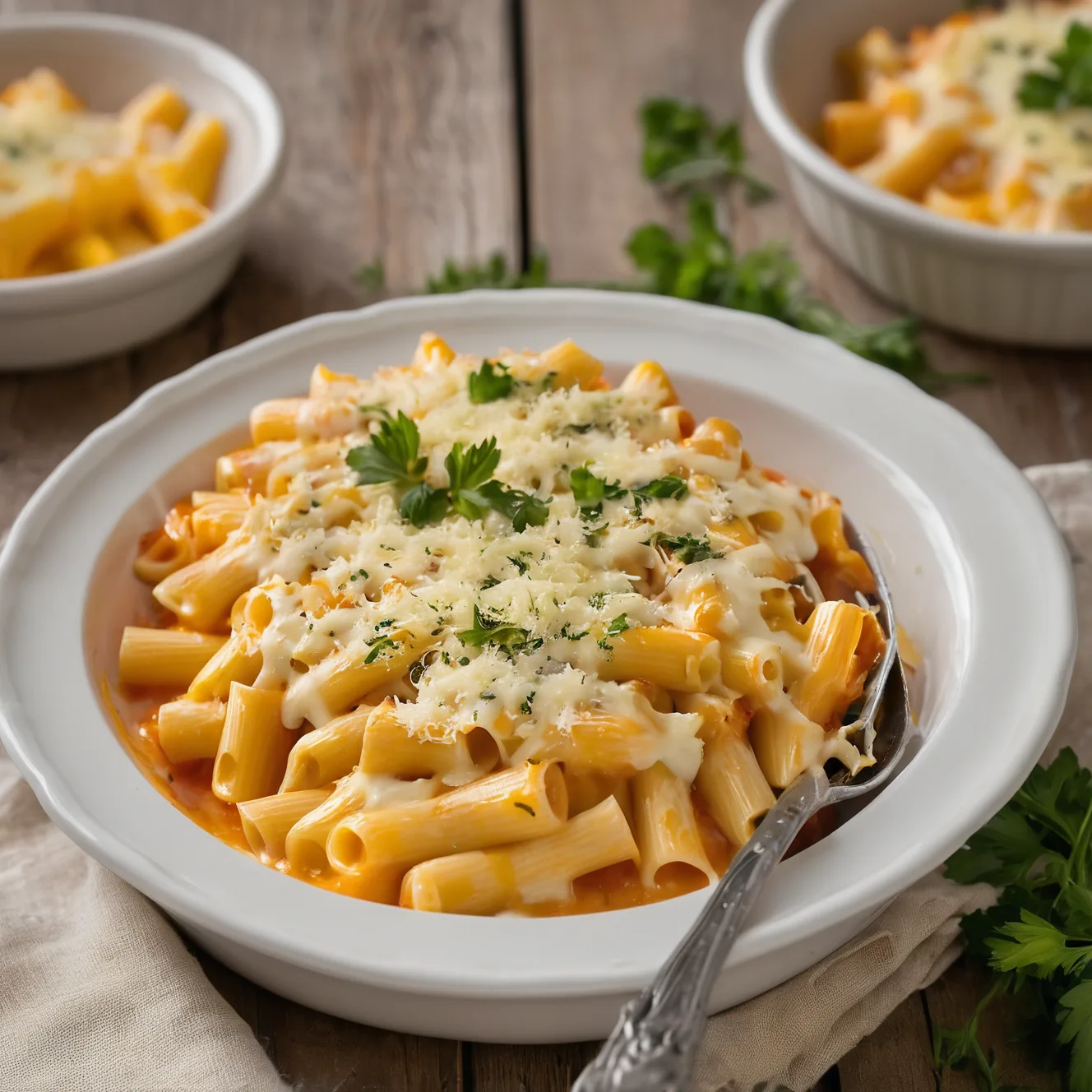
Distribute the mozzarella evenly across all 8 cutlets. Then add a generous layer of freshly grated Parmesan. At 425°F for 12–15 minutes, the Parmesan browns slightly at the edges and forms a thin golden film over the mozzarella — that’s the visual indicator the dish is done and the detail that makes the restaurant version look and taste different from a mozzarella-only cap.
Serving
Plate 2 cutlets per person over spaghetti. Spoon extra warm marinara over the pasta alongside. Pour the sauce on the pasta — not back over the chicken — or the crust softens. The full Olive Garden experience includes copycat breadsticks and the house Italian dressing on a side salad.
Cost vs. the Restaurant
Olive Garden’s Chicken Parmigiana runs approximately $18–20 with pasta (prices vary by location and change over time). Plus tax and tip, that’s roughly $25–28 per person before drinks. The homemade version runs about $4–5 per serving: chicken breasts, canned tomatoes, mozzarella and Parmesan, pasta, and pantry staples.
| Olive Garden | This Copycat | |
|---|---|---|
| Price per serving | ~$18–20 (with pasta) | ~$4–5 (with pasta) |
| Calories | ~1,020 (fried + pasta) | ~650 (no pasta) |
| Fat | 51g | ~25g |
| Protein | 64g | ~55g |
| Sodium | ~3,300mg | ~900mg |
| Cutlets per serving | 2 thin cutlets | 2 thin cutlets |
| Active time | — | ~35 min (+ brine) |
Variations
Grilled Chicken Parmigiana: Skip the breading entirely. Brine and pound the chicken, then grill or pan-sear over medium-high heat 4–5 minutes per side until 165°F. Transfer to a baking dish, top with marinara, mozzarella, and Parmesan, and broil 3–4 minutes to melt. Olive Garden’s Grilled Chicken Parmigiana runs about 810 calories with spaghetti — roughly 210 fewer than the fried version (~1,020) and about 18g less fat — because you skip the breading and frying oil.
Air fryer: Bread normally, spray generously with cooking oil spray, air fry at 375°F for 8–10 minutes per side. Transfer to a baking dish, top with sauce and cheese, bake at 425°F for 8–10 minutes. The crust is slightly drier than pan-fried but the chicken stays moist, especially after brining.
Chicken Parm sandwich: Serve a single cutlet in a hoagie roll with marinara and melted mozzarella. The cutlet size fits a roll naturally and uses the same sauce and cheese — no extra preparation beyond toasting the bread.
Storage and Reheating
Store leftover chicken (without pasta) in an airtight container in the refrigerator for up to 3 days. Reheat in a 350°F oven for 10–12 minutes — not the microwave, which turns the breading into a soft, damp layer. The crust won’t be quite as crisp as it was fresh, but it recovers significantly.
For freezing, fry the cutlets and let them cool completely. Freeze flat on a sheet pan first, then transfer to freezer bags. Reheat from frozen at 350°F for 20–25 minutes, then top with marinara and cheese and finish at 425°F for 10 minutes to melt. Add the pasta fresh when serving.
More Olive Garden Recipes
- Copycat Olive Garden Stuffed Mushrooms — the natural appetizer before the chicken parm; takes 25 minutes
- Copycat Olive Garden Chicken Alfredo — the other Olive Garden chicken entrée; make both to settle the debate
- Olive Garden Salad Dressing — the scratch formula for the house Italian dressing that comes with every entrée
- Olive Garden Chicken Gnocchi Soup — if you want a soup course before the main
See all Olive Garden copycat recipes →