


The One Technique That Actually Matters
Most Halloween deviled egg eyeball recipes tell you to draw red lines on the white with a toothpick. It works. It also looks like someone drew red lines on a deviled egg.
The crack-soak method is different. You boil the eggs, cool them completely, and then tap the shell all over with a spoon until it’s crackled like a mosaic — still on the egg, just fractured throughout. Then you drop the eggs into cold water stained with red liquid food dye and refrigerate them for two hours, or overnight. When you peel them, the red has crept through every crack in the shell and the membrane, leaving a network of irregular veins inside the white itself.
The key word is irregular. The veins go where the shell cracked, which is random and asymmetric — exactly what real bloodshot eyes look like. No painted-on version can replicate that because a human hand draws uniform lines.
Three Things Most Deviled Egg Eyeball Recipes Get Wrong
The wrong eggs. Fresh farm eggs don’t crack-soak well — the membranes grip the shell too tightly, the crack network doesn’t open, and the dye can’t penetrate. Use grocery store eggs that are 7–10 days old. The air pocket has expanded slightly, the membrane has loosened, and they peel cleanly without tearing the white (which would ruin the smooth sclera look).
Wet whites. After peeling, the egg white cups are wet. If you pipe the filling into a wet cup, it slides and the dome collapses — taking the 3D eye effect with it. Pat the inside of each cup dry with a paper towel before filling. It’s a 10-second step most recipes don’t mention.
Warm filling. The yolk mixture needs to be cold before you pipe it. Warm filling doesn’t hold a dome — it spreads flat. Mix the filling, taste it, adjust the seasoning, and then refrigerate it for at least 20 minutes before piping. The dome is what gives the egg its eyeball shape.
The Filling: Steakhouse, Not Church-Supper
The canonical Halloween deviled egg uses sweet pickle relish — and that’s a Southern potluck choice that made sense for that context. For this recipe, the filling competes with a salty olive garnish, and sweet-tangy filling against a salty-briny topping is a bad balance.
The steakhouse version: Duke’s mayo, Dijon mustard, white wine vinegar, salt, white pepper. Savory and slightly sharp. No sweetness. The Dijon gives enough brightness that you don’t miss the relish, and the vinegar keeps it from tasting flat.
Building the Eye
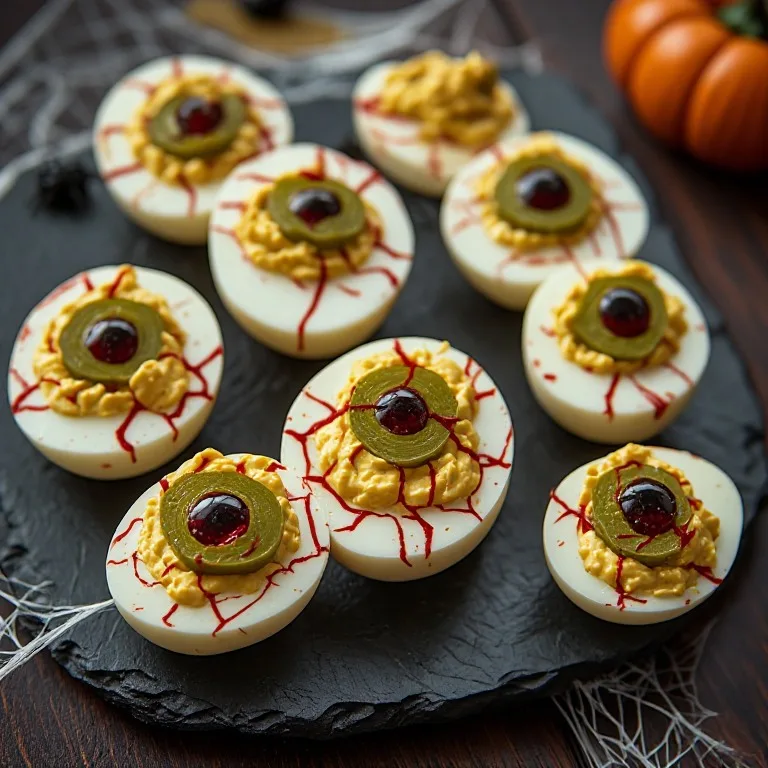
The pimento-stuffed green olive is the whole trick. Slice it crosswise into rounds — the cross-section shows a green ring (iris) with a red pimento center (pupil). Press one round into the center of each filled dome. It sinks in just slightly and stays put without sliding.
For a more sinister look, lay a thin round of black olive on top of the pimento, centered. Now you have three layers: white sclera, green iris, black pupil. It reads as an eye from across the room.
Let the red gel veins dry for 5 minutes before placing the olive — wet gel smears under the olive and makes the whole center look muddy.
Make-Ahead Plan
The crack-soak eggs can be prepared up to 24 hours ahead: finish the soak, peel, dry, and store the naked whites on a paper-towel-lined tray covered loosely with plastic wrap in the fridge. Make and refrigerate the filling separately. Pipe, garnish, and draw the veins the day of the party — fully assembled eggs weep condensation overnight and the drawn veins blur.
Round Out the Halloween Table
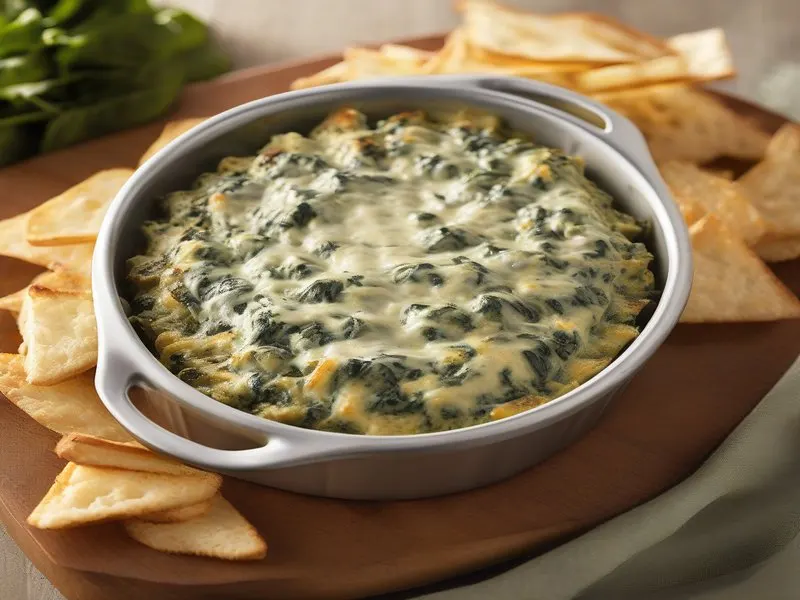
These eyeballs are the savory anchor of a spooky spread. Pair them with a hot dip like Applebee’s spinach & artichoke dip, a themed dessert like graveyard brownies, and a punch — either the kid-friendly witches’ brew or the grown-up poison apple punch. Together they cover appetizer, dessert, and drink without any of them competing for the oven at the same time.