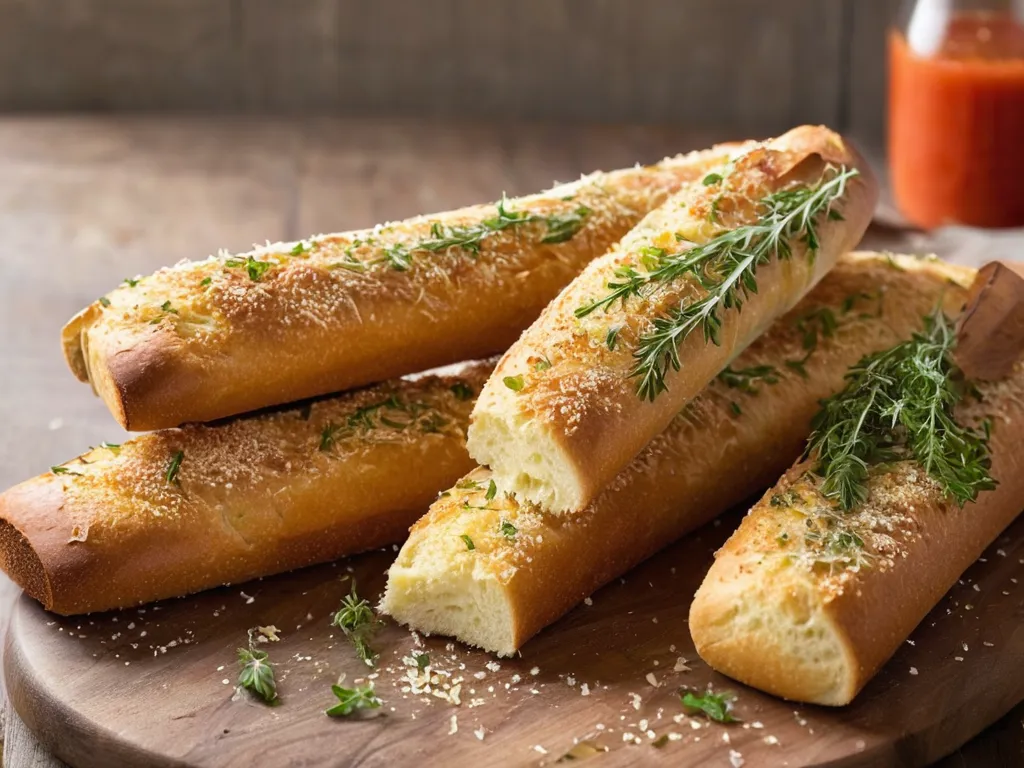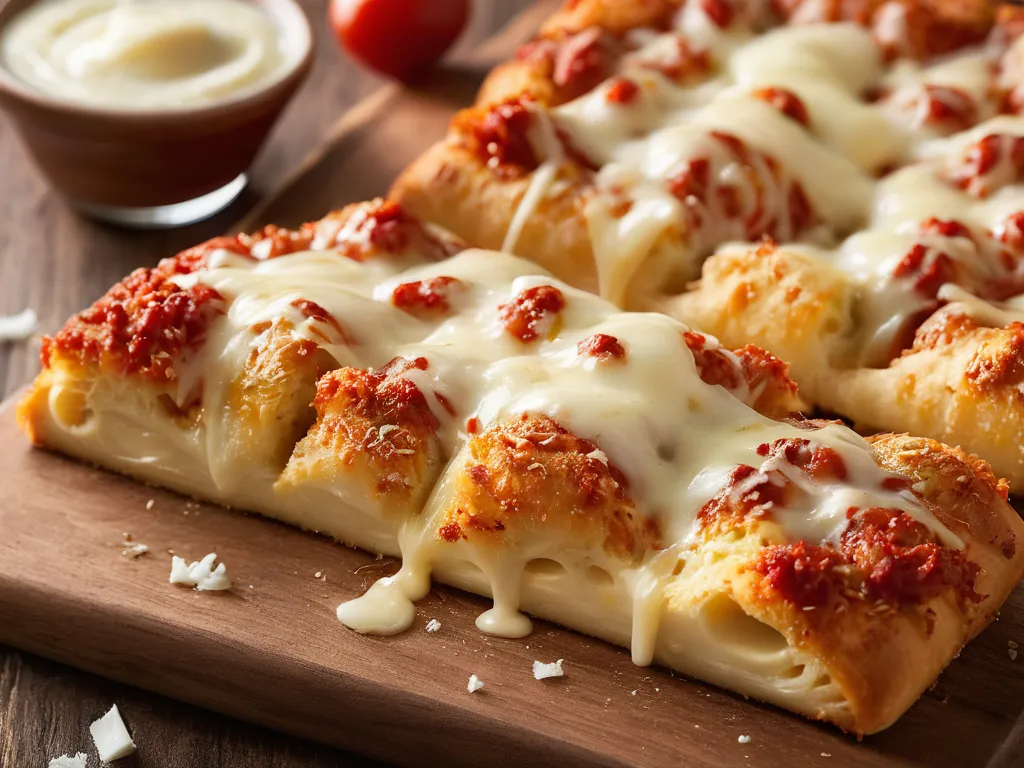
Pizza Hut Cheese Sticks are not what most people think when they hear “cheese sticks.” There are no breadcrumbs, no egg wash, no frying. They’re a slab of the same soft pull-apart breadstick dough Pizza Hut uses for their regular breadsticks — same yeast, same butter, same bake at high heat — except the top gets buried in shredded mozzarella and Parmesan before it goes in the oven. The cheese melts into the surface and browns in spots, and you pull them apart at the table.
Pizza Hut sells an order of 8 for around $7. This recipe makes the same batch for about $4–5 in ingredients, in under two hours start-to-finish (45 of those minutes are hands-off rise time).
What Makes Pizza Hut Cheese Sticks Different from Their Breadsticks
The dough is identical. The difference is entirely in the topping. Regular Pizza Hut breadsticks come out of the oven and get brushed with a garlic-Parmesan butter — that’s the entire topping. For cheese sticks, you add a thick layer of shredded mozzarella (and some Parmesan) directly on the raw dough before baking. During the 10–12 minutes in the oven, the cheese fully melts and bonds to the dough surface, then gets a second hit of garlic butter the moment it comes out.
The result has a distinct texture: the bottom and short edges of each stick have the slight chew of baked bread, but the top is covered in a continuous, stretchy cheese layer that tears when you pull them apart. The sides — where the strips were touching during baking — stay steam-soft.
Why Block Mozzarella, Not Bag
Pre-shredded mozzarella is coated in potato starch or cellulose to prevent clumping. That coating is useful in a bag but a problem in the oven — it prevents the shreds from fully melting together, creates a grainy texture, and promotes uneven browning. The cheese browns in isolated clumps instead of across the whole surface.
Buy a block of low-moisture, part-skim mozzarella and shred it yourself using the large holes of a box grater. It takes three minutes. The melt is completely different: clean, glossy, and uniform. It pulls in long, satisfying strands when you separate the sticks.
Don’t use fresh mozzarella (the water-packed kind). It holds too much moisture, which steams the dough surface and prevents the cheese from browning properly. You’ll end up with soggy bread and pale, watery cheese.
The Garlic Butter — Split It
The recipe calls for the garlic butter to be split in half: half goes under the cheese before baking, half goes on top after baking.
The under-cheese layer gives the cheese something to grip and adds garlic flavor that’s baked directly into the dough surface — you taste it in every bite. The after-bake brush adds the aromatic hit you get when garlic butter contacts still-hot food: the butter soaks in, the garlic perfume rises, and the surface glistens exactly the way it does in the Pizza Hut box.
If you skip the pre-bake layer, the cheese slides around more and the bottom layer of the topping tastes flat. If you skip the post-bake layer, the cheese looks dry and the restaurant-style aroma isn’t there.
Cut Before Baking
Scoring the slab into 8 sticks before it goes in the oven — while keeping them touching — does two things. First, the cuts become natural tear lines after baking so you don’t have to saw through cheese and dough to separate them. Second, the score marks let a small amount of steam escape at the edges of each strip, which helps the dough cook through without getting gummy under the cheese.
Don’t use a ruler. Just eyeball 8 even strips. They don’t have to be perfect; you’re not serving them at a restaurant.
Cost Comparison
| Pizza Hut | Homemade | |
|---|---|---|
| Price per order | ~$6.99–$8.49 | ~$4–5 |
| Sticks per order | 8 | 8 |
| Marinara included | Small cup | Made or from jar |
| Calories per stick | ~170 | ~310 (larger, more cheese) |
The cost delta narrows if you buy pizza dough from the store (~$2 for a tube), though the texture is slightly chewier. The time investment with homemade dough is 20 minutes active work plus a 45-minute rise — not bad for a batch that feeds 4.
Variations
Stuffed Cheese Sticks: Before baking, lay strips of string cheese lengthwise in the center of the dough rectangle. Fold each side of the dough over to enclose the cheese, press to seal, then flip the whole slab seam-side-down. Top with garlic butter, mozzarella, and Parmesan, then bake. The center is molten cheese inside.
Four Cheese Version: Replace half the mozzarella with a blend of provolone, fontina, and mild cheddar. The fontina adds a nutty, buttery note; the cheddar gives the topping a slightly sharper edge. Still holds the pull-apart quality.
Spicy Cheese Sticks: Mix 1/2 teaspoon red pepper flakes into the garlic butter before applying. Add a few thin slices of fresh jalapeño on top of the cheese before baking. The jalapeño caramelizes and chars slightly at 450°F.
Using Store-Bought Dough: A 13.8-oz tube of refrigerated pizza dough (like Pillsbury) cuts the total time to about 30 minutes. Unroll the dough onto a greased sheet pan, stretch it to a 10x12-inch rectangle, apply garlic butter, cheese, and bake at 425°F for 10–12 minutes. The result is denser and chewier than the homemade version but genuinely good and fast.
Storage and Reheating
Same day: Leave them on the pan at room temperature, loosely covered in foil. Reheat the whole slab in a 350°F oven for 5–6 minutes. The cheese re-melts and the bread softens.
Next day: Store in an airtight container or zip-lock bag. Reheat in a 350°F oven for 6–8 minutes — brush with a tiny bit of melted butter first to prevent drying. The cheese sticks are perfectly good the next day; they just need heat to come back.
Reheating tip: The microwave makes the bread rubbery and the cheese uneven. The oven is the right call.
Freezing: Bake and cool completely. Wrap individual sticks or small groups in foil and freeze up to 2 months. Reheat from frozen at 350°F for 12–14 minutes. The texture after freezing is slightly softer, but the flavor is essentially the same.
Tips for Getting It Right
- Don’t skip the rise. Forty-five minutes of rise time is what separates a light, airy stick from a dense, bread-like one. Pizza Hut’s dough has a distinct softness that only comes from a proper rise.
- Keep them touching. The contact between strips during baking creates steam, which keeps the sides of each stick soft and pillow-like. Space them apart and you get crusty edges.
- Hot oven. 450°F is the right temperature. A lower oven gives you pale cheese and undercooked centers; a higher one burns the edges before the cheese bubbles.
- Rest 2 minutes before pulling. The cheese is molten the second the pan comes out of the oven. Pulling the sticks apart immediately drags the cheese off in sheets. Wait two minutes; the cheese firms just enough to hold onto the dough.
For the plain version without the cheese layer, see Copycat Pizza Hut Breadsticks. For the full Pizza Hut menu at home, browse the Pizza Hut copycat hub.