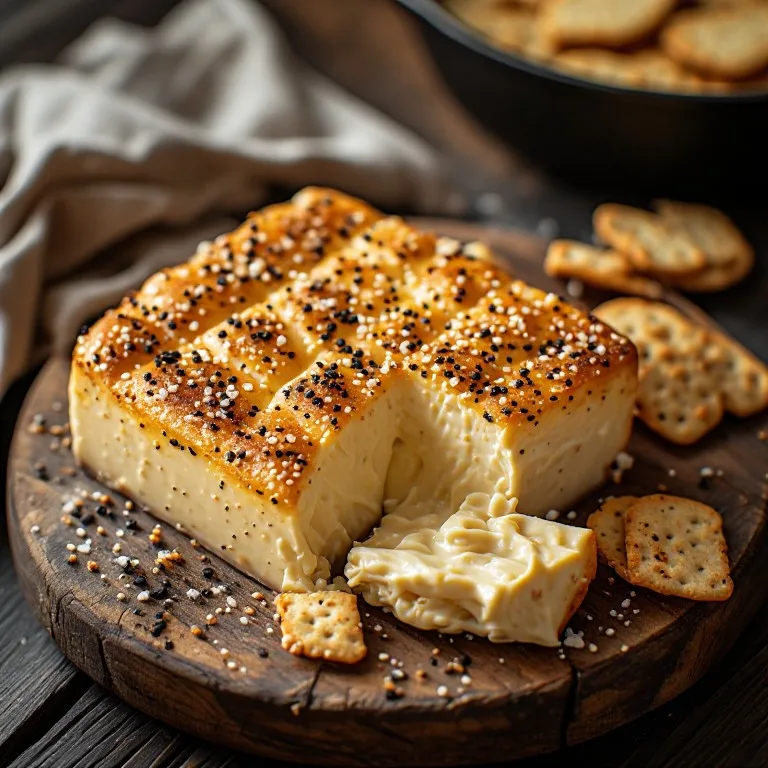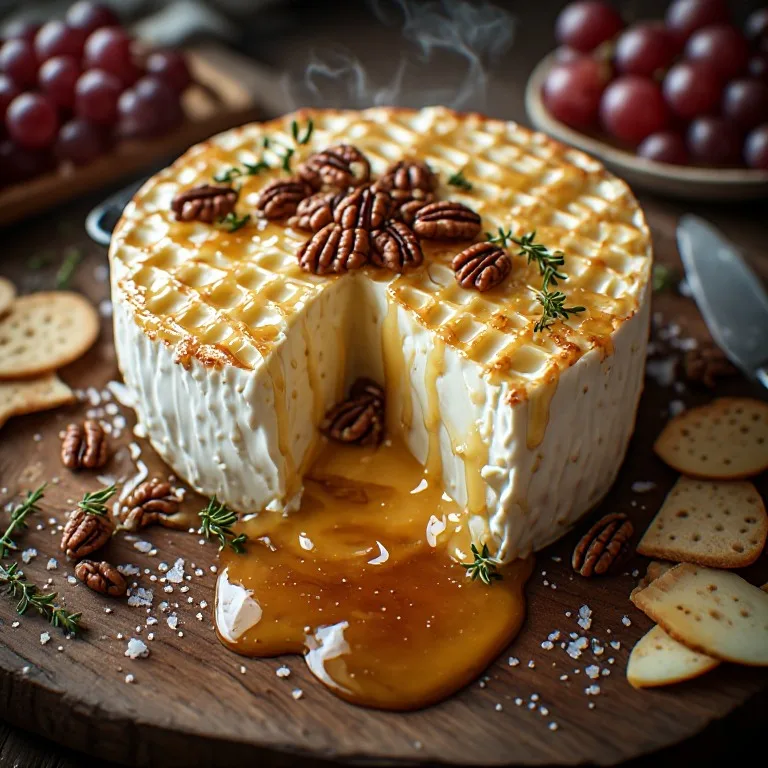


Every fall, the same format goes viral: a whole wheel of brie comes out of the oven glistening, the top is scored in a crosshatch that has started to ooze, someone drizzles hot honey in long ribbons over the top, scatters candied pecans, drops a few sprigs of thyme. The comments fill up with “I’m making this for every party from now on.”
The reason it keeps coming back is that it works. Warm brie is genuinely one of the best things you can put on a table — creamy, rich, funky-mild — and the TikTok version solved the two problems that made baked brie underwhelming for decades: the toppings and the technique.
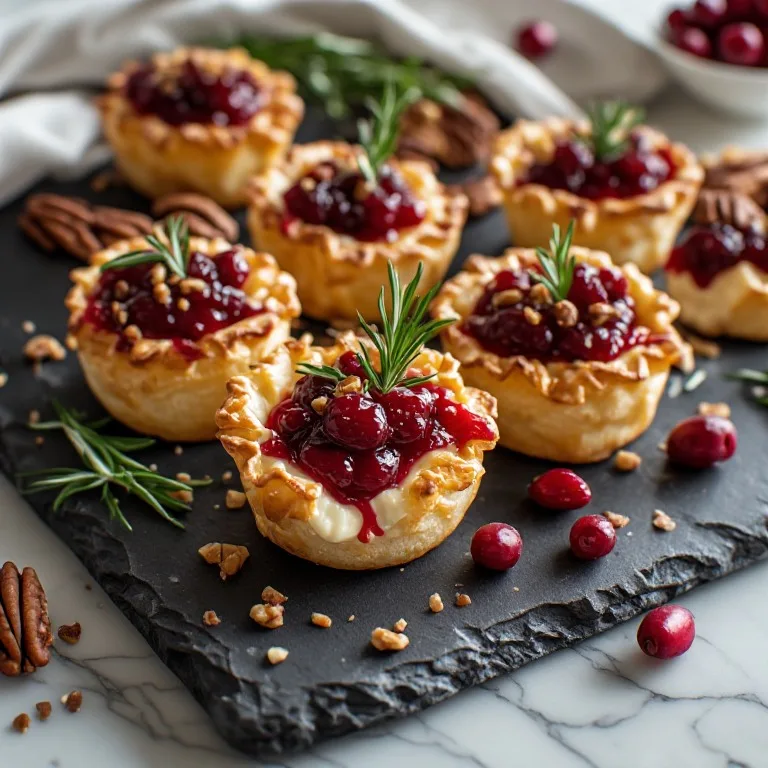
There are three approaches worth knowing: the scored-and-topped version (this recipe — 20 minutes, no pastry), the jam variation (spread jam on the scored top before baking, then add nuts after), and the Brie en Croûte (wrapped in puff pastry, baked until golden — impressive but 45 minutes). All three are in this guide.
Three Things Most Baked Brie Recipes Get Wrong
1. Skipping the Score
The brie rind is a tight, elastic barrier — like a natural sausage casing. Without scoring, the heat from the oven softens the interior paste but the rind holds it under pressure. You end up with a warm, puffed-looking wheel that you have to cut open at the table. The interior is hot but nothing oozes. The presentation is underwhelming.
Scoring the top rind in a crosshatch or hashtag pattern (4–6 cuts in each direction, just through the rind, about ¼ inch deep) breaks the seal. The softening interior has a release point. It rises through the cuts and pools visibly at the top — the actual “melted brie oozing” look that makes TikTok baked brie worth sharing.
The cuts don’t need to be deep. You’ll feel the knife break through the rind and meet the softer paste underneath; stop at that depth. Too deep and you puncture the interior before baking, losing cheese into the dish before it’s ready.
2. Overbaking
Most baked brie recipes suggest 375°F for 15–20 minutes. That’s too hot and too long for an 8-oz wheel. At that time and temperature, the milk fat starts separating from the protein — the cheese turns oily and grainy rather than creamy and oozy. There’s no fix once this happens.
The target is 350°F for 12–15 minutes. Judge by jiggle, not by time: nudge the baking dish. If the sides of the wheel have visible movement — the same jiggle you’d look for in a properly set custard — the interior is fully melted and the cheese is at peak creaminess. Pull it immediately. It will continue to melt slightly for another 30–60 seconds outside the oven from residual heat.
Beyond 15 minutes at 350°F, you’re gambling with the texture. The window is shorter than it seems.
3. Honey Alone
Warm brie drizzled with honey tastes fine. It tastes one-dimensional. The honey sweetness and the brie richness are both heavy — they don’t contrast each other, they reinforce each other until it becomes cloying after a few bites.
Three additions change everything:
Texture: Candied pecans or toasted walnuts, roughly chopped. The crunch against oozy cheese is a textural contrast that makes each bite interesting rather than just rich.
Aromatics: Fresh thyme or rosemary. Herbal brightness cuts through the fat and gives the cheese somewhere to go. A single sprig laid across the top looks like a restaurant appetizer.
Heat and acid: Hot honey (chili-infused) instead of regular honey. The gentle heat from chili balances the richness of the cheese in a way that plain honey can’t — it’s the difference between a dish that’s pleasant and one you keep going back to.
All three together take 30 seconds to add after the brie comes out of the oven. None of them require cooking. The result looks and tastes deliberately composed.
The Jam Variation (Fall)
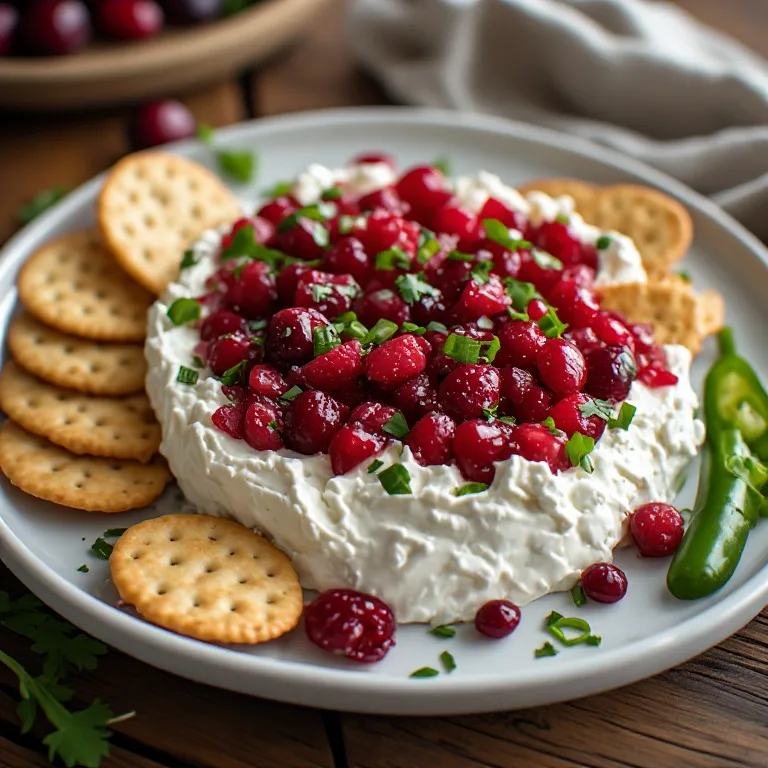
For a fall or Thanksgiving version, add a jam layer before baking: after scoring the top, spread 2 tablespoons of fig jam, raspberry jam, or whole-berry cranberry sauce over the scored surface. The jam bakes into the cheese slightly, creating a sweet-tart pocket that contrasts the richness. After baking, still add the nuts and thyme — the jam layer needs the textural contrast even more than the plain version.
Fig jam + candied walnut + thyme is the combination. Raspberry + toasted pecan + flaky salt is also strong. Cranberry + orange zest + pecan is the Thanksgiving table version.
Brie en Croûte (Puff Pastry)
For a more impressive presentation: thaw one sheet of puff pastry (40 minutes at room temperature). Lay it flat. Place the scored brie in the center. Optional: spread jam on top. Fold the pastry corners up and over, pinching the seams. Brush all over with egg wash. Bake seam-side down at 400°F for 20–25 minutes until deeply golden. Rest 5 minutes before cutting. The pastry crust should be genuinely brown — pale pastry is underbaked and gummy. Pull it when it’s truly golden.
Serving
Pull everything out before the brie goes in the oven — this dish has no grace period. Once it comes out, you’re at the table in 60 seconds:
| Pairing | Notes |
|---|---|
| Raincoast Crisps (fig and olive) | Best overall — the fruit-nut crisps mirror the topping |
| Sliced baguette, toasted | Great structural choice for generous scooping |
| Apple slices | Genuinely excellent — cold crisp fruit + warm brie + honey is the best bite |
| Pear slices | More delicate than apple, pairs beautifully with fig jam variation |
| Grapes | Classic, works well as a palate cleanser between bites |
| Water crackers | Neutral vehicle; fine but not interesting |
Cheese Selection
Any 8-oz wheel labeled Brie or Camembert works. Notes:
Brie de Meaux (French, AOC): the original and benchmark — mild, creamy, slightly buttery. Best for a crowd where you want mass appeal.
Camembert (French): earthier, more pungent, stronger mushroom quality. Intensifies beautifully when baked. Better for a smaller group that appreciates funky cheese.
Double or triple crème Brie: higher fat content (double crème is 60%+ fat in dry matter, triple crème 75%+, vs. standard ~50%). Richer, more decadent, slightly less structural — it can spread thinner in the oven. Worth it for an occasion; more forgiving of slight overbaking because the higher fat content takes longer to separate.
Buy from a cheese counter rather than the pre-packaged grocery option when possible. Pre-packaged Brie is often slightly underripe (firmer, less oozy potential) or past peak. A good counter cheese will tell you the ripeness by touch — it should give slightly when you press the center through the wrapper.